Liquid AI released an experimental DSpark draft model for their vision-language model LFM2.5-VL-3B. The drafter adds a speculative decoding path that trades a minimal increase in memory footprint for a larger speedup without changing output quality. The 280M-parameter drafter, a 4-layer attention-only transformer, captures the target model’s hidden states at fixed tapped layers to draft a block of candidate tokens. On an M5 Max, decoding runs 2.30x to 3.13x faster by task, with end-to-end latency improvements of 1.56x to 2.62x. The drafter ships with day-one support for llama.cpp, MLX-VLM, and SGLang, and is available on Hugging Face in Safetensors and GGUF formats.
Context
Liquid AI released an experimental DSpark draft model for their vision-language model LFM2.5-VL-3B. The drafter adds a speculative decoding path that trades a minimal increase in memory footprint for a larger speedup without changing output quality. The drafter has approximately 280M parameters and increases the deployed model’s parameter count by just 8.9%.
Approach / What changed
The DSpark draft model is a 4-layer attention-only transformer with 280M parameters that captures the target model’s hidden states at fixed tapped layers and conditions on them to draft a block of candidate tokens. Image patches and text tokens are projected into a shared representation before those layers, so the drafter operates on hidden-state vectors of identical dimensionality regardless of input modality. The inference algorithm is unchanged from the text models.
Takeaways
1
The DSpark draft model for LFM2.5-VL-3B adds 280M parameters (8.9% increase) and provides decode speedups up to 3.13x on device and 2.66x on an H100.
2
Speculative decoding speeds up only the decode phase, not vision encoding or prefill, so end-to-end gains are capped by Amdahl’s law when those stages dominate wall time.
3
The vision drafter uses the same architecture as text drafters, projecting image patches and text tokens into a shared representation so the drafter operates on hidden-state vectors of identical dimensionality.
FAQ
Why is the end-to-end speedup smaller than the decode speedup?
Speculative decoding speeds up only the decode phase, not vision encoding or prefill. When those stages already take up much of the wall time, even a large decode speedup gives only a modest end-to-end gain. This is Amdahl's law, where the overall speedup is capped by the part of the workload that isn't accelerated.
What is the memory cost of the DSpark drafter?
The drafter adds 280M parameters, which is 8.9% on top of the 3B target model. The decoder stack (4 layers) is 193.0M, hidden-state projection is 21.0M, Markov head is 65.5M, and norms plus confidence head is 6.4k.
How does the vision drafter handle both image and text inputs?
The vision drafter uses the same architecture as the text LFM2.5-DSpark drafters. Image patches and text tokens are projected into a shared representation before the tapped layers, so the drafter operates on hidden-state vectors of identical dimensionality regardless of input modality.
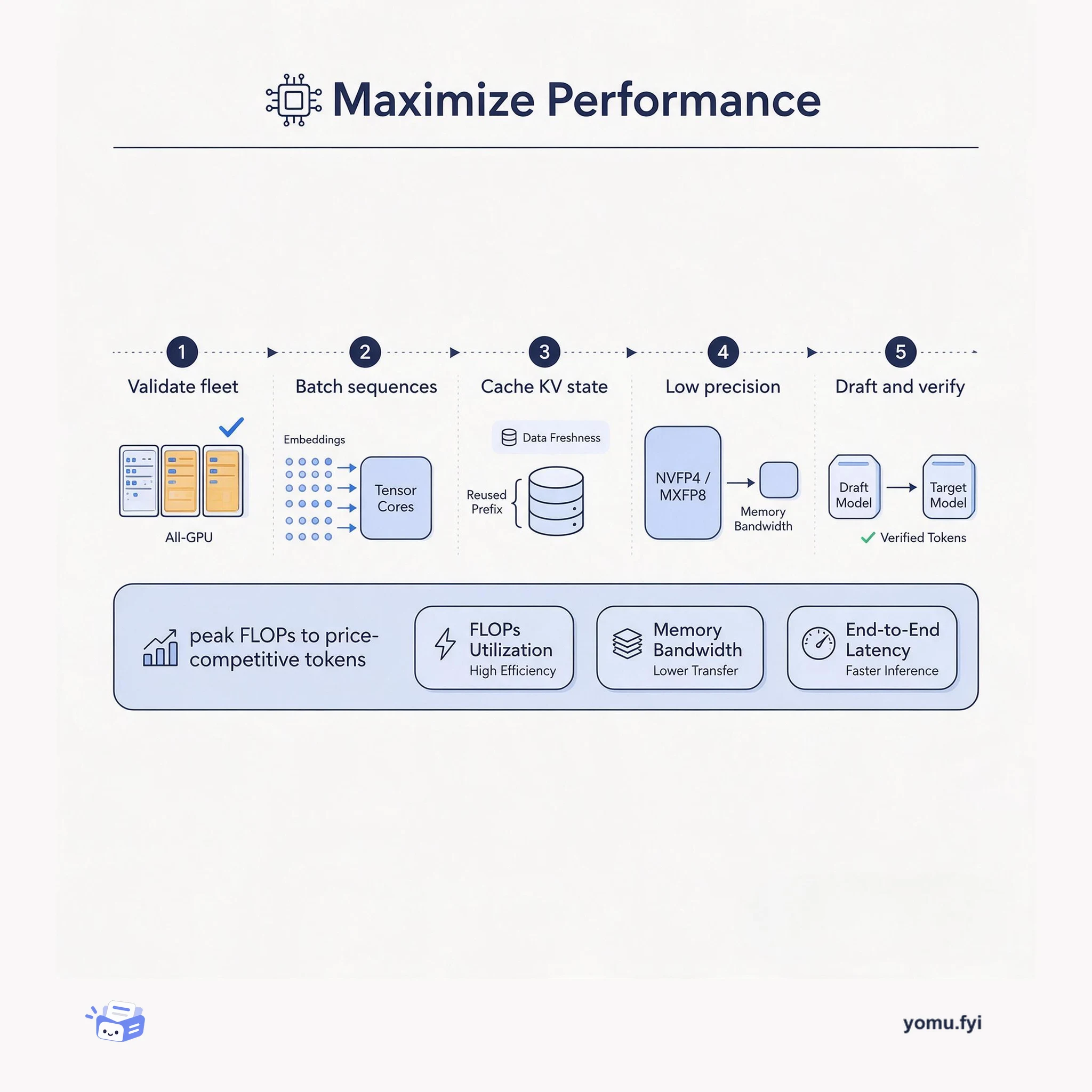
Blackwell inference is a pipeline, not a chip upgrade. This explainer walks five stages — fleet validation, batching, KV caching, low-precision kernels, and speculative decoding — that turn peak FLOPs into cheap tokens.
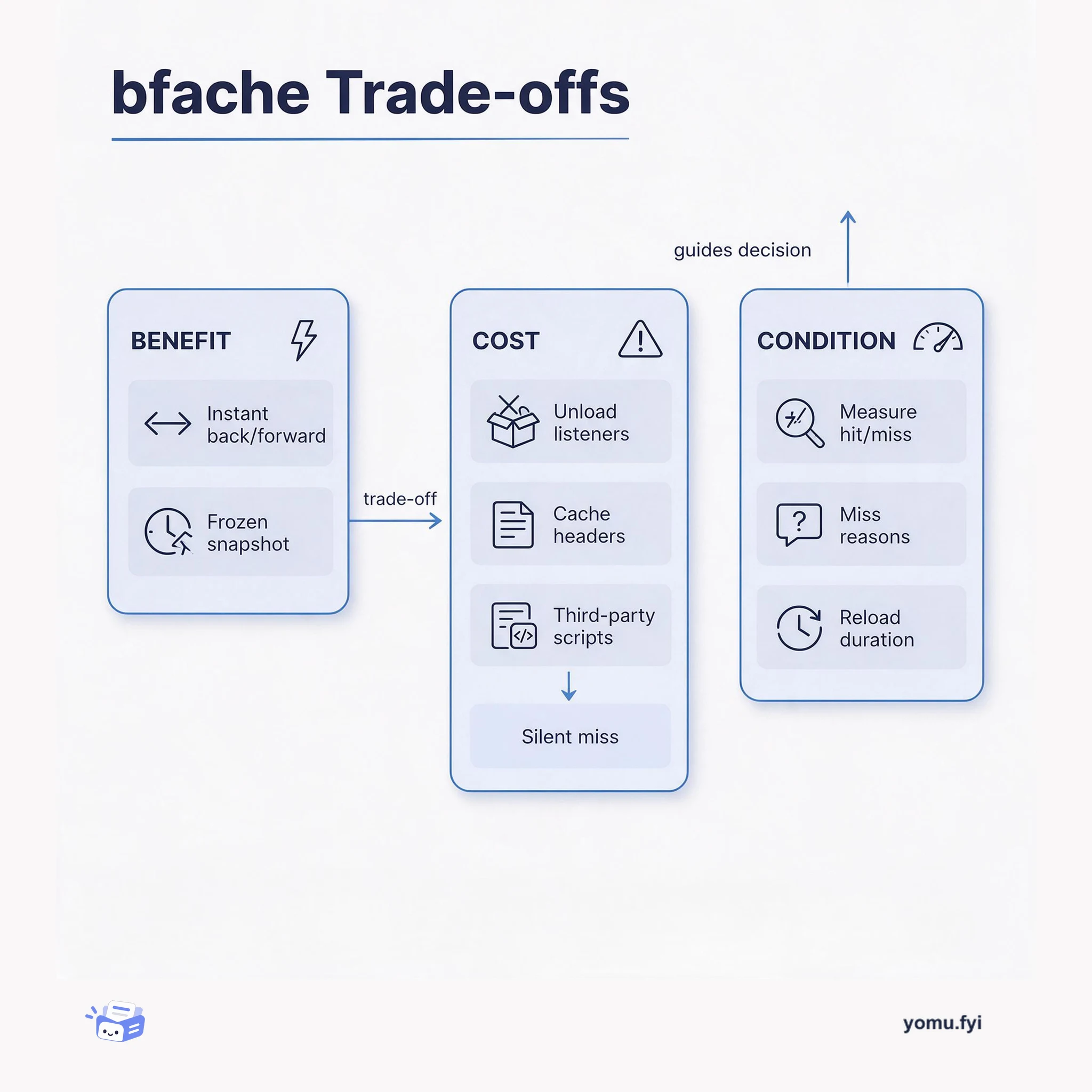
bfcache freezes page snapshots for instant back/forward navigation, but unload listeners, cache headers, or third-party scripts can silently disable it. This explainer maps the trade-offs and the metrics that reveal them.
Keep reading
Related reading
The Good Stuff
Paid picks we use ourselves. Links carry a referral code — a subscription through one earns us a commission at no extra cost to you.