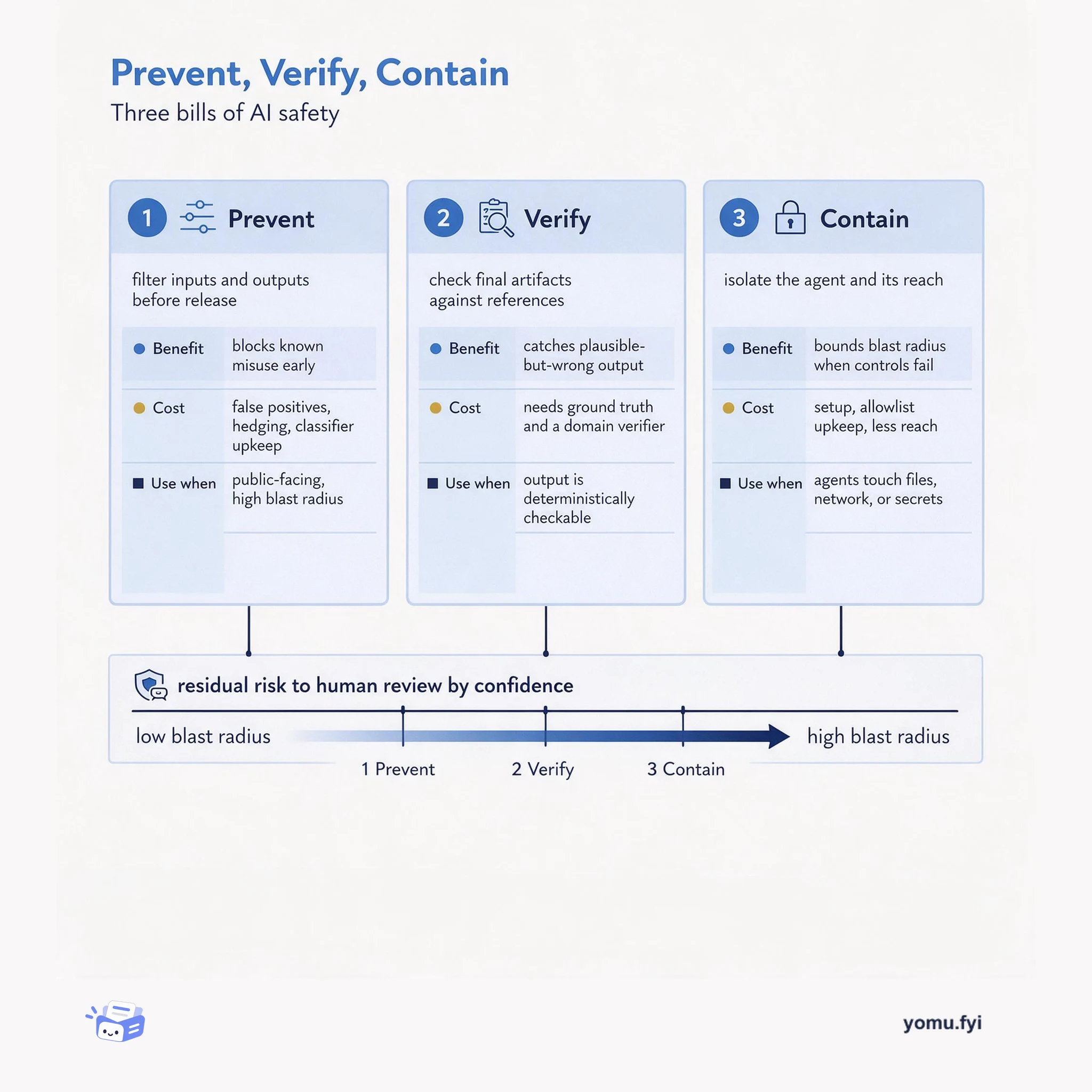
Prevent, Verify, Contain: The Three Bills of AI Safety
AI safety is a budget: prevention, verification, and containment each buy different protection at a different cost. This map shows what each control costs and when it pays off.
bfcache freezes page snapshots for instant back/forward navigation, but unload listeners, cache headers, or third-party scripts can silently disable it. This explainer maps the trade-offs and the metrics that reveal them.
The back/forward cache (bfcache) freezes a page snapshot so back and forward navigation feels instant. Its benefit is a large perceived performance win, but the cost is fragility: unload listeners, cache-control headers, or third-party scripts can silently prevent it from being used. The condition for managing this trade-off is measurement. Sentry's bfcacheMetricsIntegration models hit/miss outcomes, miss reasons, and fallback reload duration as application metrics. Engineers can break down bfcache health by route, release, or browser and catch regressions. The decision is whether to invest in bfcache optimization and monitoring; an unobserved performance feature is one you cannot trust.
Unload listeners, cache-control headers, and third-party scripts can prevent bfcache from being used. The notRestoredReasons API in Chromium reports why a page was not restored, but detailed reasons are currently Chromium-only.
Sentry's bfcacheMetricsIntegration models a navigation hit/miss counter, a per-reason miss counter, and a fallback reload duration distribution as application metrics. You can query them by route, release, or browser to find regressions.
It is worth it when users frequently navigate back and forward and you can monitor miss reasons. The benefit is instant restores; the cost is fragility and measurement overhead, so the condition is having telemetry in place before optimizing.
The posts behind it
 Salesforce · · Problem & solution
Salesforce’s Cloud Atlas team operates a globally distributed identity data store that must maintain five nines of availability, roughly five minutes of downtime per year. The team redesigned service protection after per-instance rate limiting proved insufficient under autoscaling and increasingly bursty, unpredictable agent-driven traffic. The new approach combines intelligent load shedding, which monitors queue time as an early indicator of system pressure before error rates spike, with coordinator-free global quota management. Servers independently measure and share customer usage to throttle noisy tenants without a centralized coordinator, preventing one customer’s surge from affecting others. This design prevents cascading failures by shedding lower-priority work before overload spreads across dependent services, ensuring graceful degradation rather than widespread outage.
 Hugging Face · · Announcement
Liquid AI released an experimental DSpark draft model for their vision-language model LFM2.5-VL-3B. The drafter adds a speculative decoding path that trades a minimal increase in memory footprint for a larger speedup without changing output quality. The 280M-parameter drafter, a 4-layer attention-only transformer, captures the target model’s hidden states at fixed tapped layers to draft a block of candidate tokens. On an M5 Max, decoding runs 2.30x to 3.13x faster by task, with end-to-end latency improvements of 1.56x to 2.62x. The drafter ships with day-one support for llama.cpp, MLX-VLM, and SGLang, and is available on Hugging Face in Safetensors and GGUF formats.
 Sentry · · Announcement
The back/forward cache (bfcache) allows instant page restores by freezing snapshots, yet its hits register no events in traditional telemetry, creating a blind spot for teams. Sentry’s bfcacheMetricsIntegration fills this gap by modeling three browser-provided signals as application metrics: a navigation counter with hit/miss outcome, a per-reason counter for misses via the notRestoredReasons API, and a distribution of fallback reload duration. The integration is opt-in and launched in JavaScript SDKs v11; detailed miss reasons are currently Chromium-only due to browser API support. Users can query these metrics to break down bfcache health by route, release, or browser, enabling discovery of regressions caused by unload listeners, cache-control headers, or third-party scripts. This turns the bfcache from an invisible performance feature into a measurable, trackable signal that teams can monitor and improve.
 Github · · Problem & solution
Rendering a pull request with over a million changed lines and hundreds of threaded comments requires a fundamentally different architecture than a code-only diff. The standard virtualized approach fails because comment heights depend on render-time factors like markdown wrapping, expandable sections, and reply composers. The team split the document’s height into two independent domains: deterministic code geometry and dynamic block geometry for comments. A single idle- and scroll-gated measurement pass, scoped to the viewport, corrects heights without causing reflows mid-scroll. The result is a pull request view where a million-line diff with hundreds of comments opens, scrolls, and behaves like a normally sized pull request.
 Red Hat · · Problem & solution
Default inference configurations for large language models often leave significant performance unused, even on expensive hardware like 16 NVIDIA H200 GPUs across two nodes. The author tested this setup with vLLM and Red Hat AI Inference 3.4 on a CoreWeave Kubernetes cluster, using enterprise RAG workloads with 2,000-token inputs and 100 concurrent users. By systematically comparing aggregated and prefill-decode (PD) disaggregated architectures, and tuning tensor parallelism (TP) and PD split, latency was dramatically reduced. For Qwen3-32B, time-to-first-token (TTFT) on the best aggregated configuration (2xTP8) dropped from 995ms to 304ms, and with optimized routing to 287ms — a 71% improvement without hardware changes. For Llama-70B, TTFT fell from 1,292ms to 463ms, a 64% gain. The author also built ServeIt Studio, an open-source tool that automates the full optimization pipeline on Kubernetes.
More like this
AI safety is a budget: prevention, verification, and containment each buy different protection at a different cost. This map shows what each control costs and when it pays off.
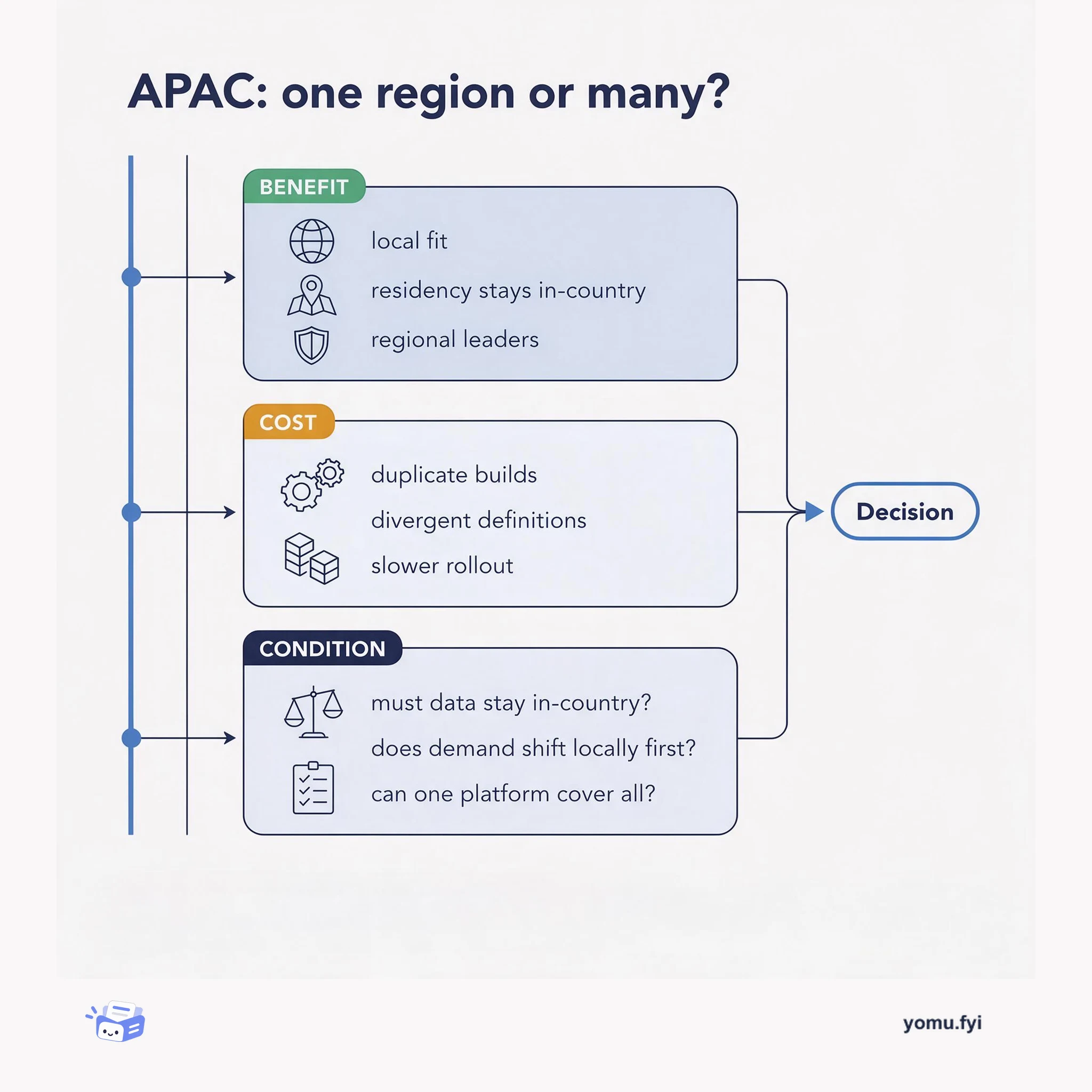
APAC is a federation of markets, not a single deployment region. This diagram maps the tradeoff between local autonomy and one shared platform, and the conditions that decide it.
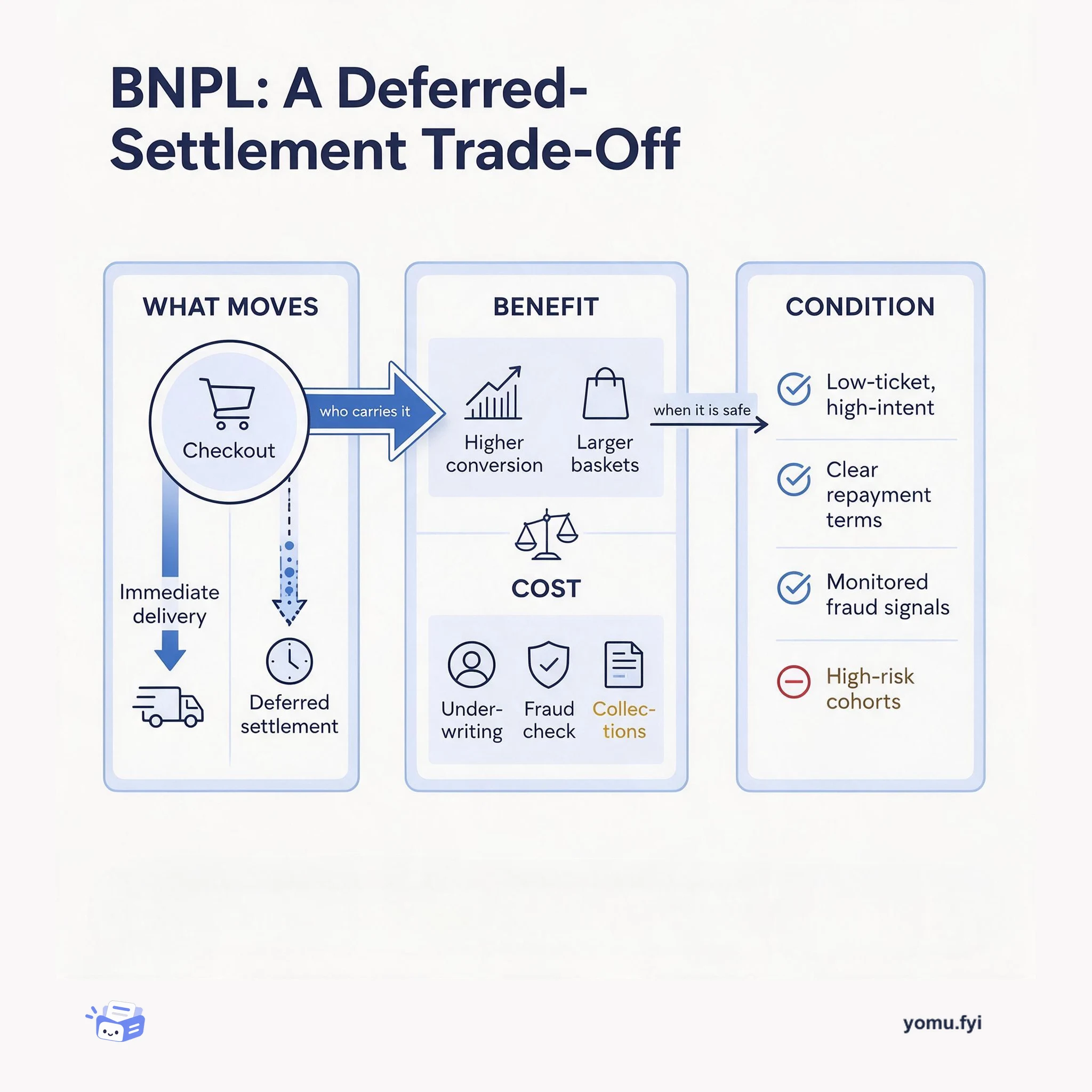
Buy Now, Pay Later is a deferred-settlement trade-off: merchants gain conversion while underwriting, fraud, and collections risk move elsewhere. This diagram maps the benefit, the cost, and the condition that decides.
The Good Stuff
Paid picks we use ourselves. Links carry a referral code — a subscription through one earns us a commission at no extra cost to you.
One useful email. Unsubscribe anytime.