The workflow replaces a manual, fragmented process for turning a simple ServiceNow connectivity request into firewall changes. Event-Driven Ansible connects ServiceNow, GitHub, an LLM, and two Palo Alto Networks firewalls, checking drift, gathering topology data, and coordinating structured rule proposals, pull requests, and workflow records. Ansible Automation Platform keeps credentials away from the AI and deploys approved rules through a deterministic, idempotent path after engineer and CAB approvals. GitHub’s main branch records the last successful state, proposed changes are reviewed as Configuration as Code, and execution stops when live configuration differs from the intended state. The lab demonstrates partial coverage, no coverage, and an unresolvable request; failed deployments can roll back, while an undefined Palo Alto Networks App-ID stops the workflow for human intervention.
Context
The source describes a manual, slow, and fragmented process for handling firewall connectivity requests, involving tickets, email and chat, information gathering, technical analysis, manual firewall changes, and duplicated documentation across disconnected systems.
Approach / What changed
Event-Driven Ansible orchestrates ServiceNow, GitHub, an LLM, and two Palo Alto Networks firewalls. The LLM analyzes network paths and proposes structured rules, while humans approve a pull request and ServiceNow change request before Ansible Automation Platform validates, deploys, records, and potentially rolls back the change.
Takeaways
1
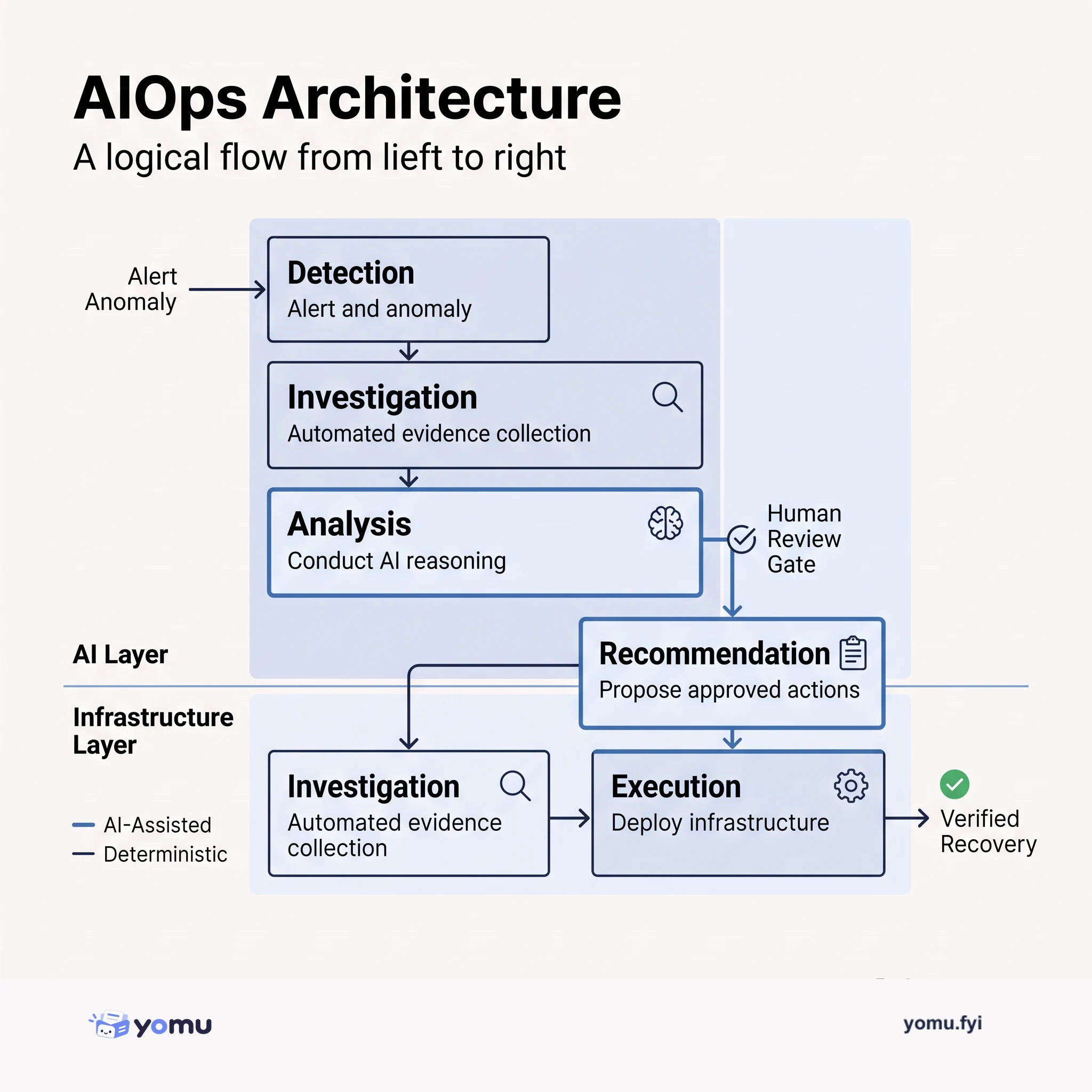
The LLM proposes firewall rules, traffic-path analysis, rationale, and change-record content, but it does not connect to devices, access credentials, or deploy changes.
2
The workflow uses two human approval gates: engineer approval of the GitHub pull request and Change Advisory Board approval of the ServiceNow change request.
3
Drift detection compares live firewall configuration with GitHub’s intended state; mismatches stop execution and are recorded in ServiceNow rather than allowing automation to proceed.
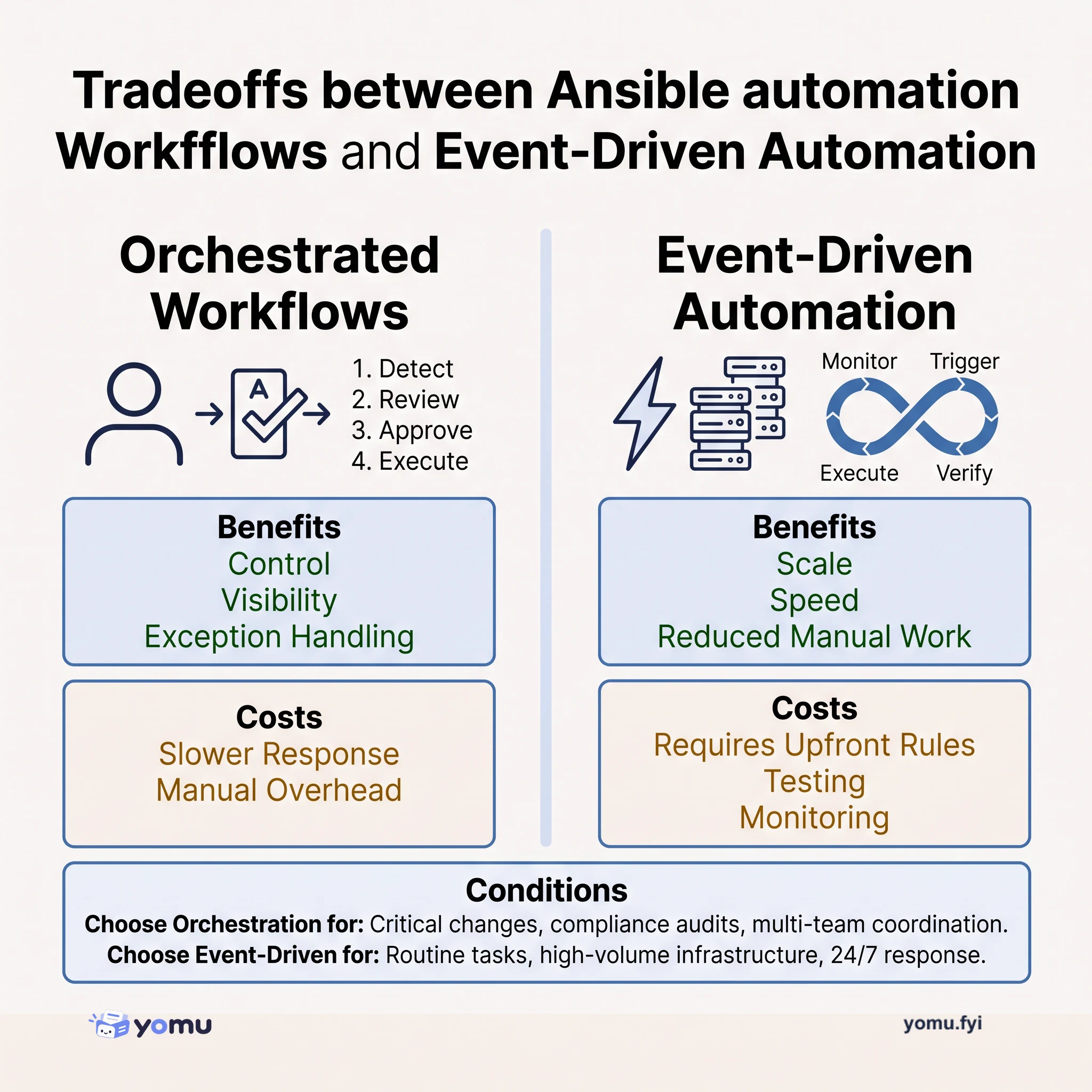
Ansible excels at two different jobs: orchestrating multi-step infrastructure workflows and automating routine tasks hands-off. Learn the tradeoff between control and scale that should guide your choice.
AIOps automates the detect-investigate-analyze-recommend-execute-verify cycle by combining AI reasoning with infrastructure automation, keeping humans in control of credentials and final decisions.
Keep reading
Related reading
The Good Stuff
Paid picks we use ourselves. Links carry a referral code — a subscription through one earns us a commission at no extra cost to you.