AIOps automates the detect-investigate-analyze-recommend-execute-verify cycle by combining AI reasoning with infrastructure automation, keeping humans in control of credentials and final decisions.
AIOps integrates artificial intelligence into operations workflows to accelerate incident response from detection through remediation. The core pattern chains five stages: detection identifies anomalies or alerts, investigation gathers evidence through automated collection, analysis applies AI reasoning to root causes, recommendation proposes approved actions, and execution deploys changes through deterministic infrastructure-as-code tools. The architecture separates probabilistic reasoning (handled by AI) from deterministic execution (handled by infrastructure platforms like Ansible), ensuring that AI informs decisions but does not directly access credentials, inventory, or production systems. This separation preserves auditability, compliance, and human accountability while reducing mean time to resolution.
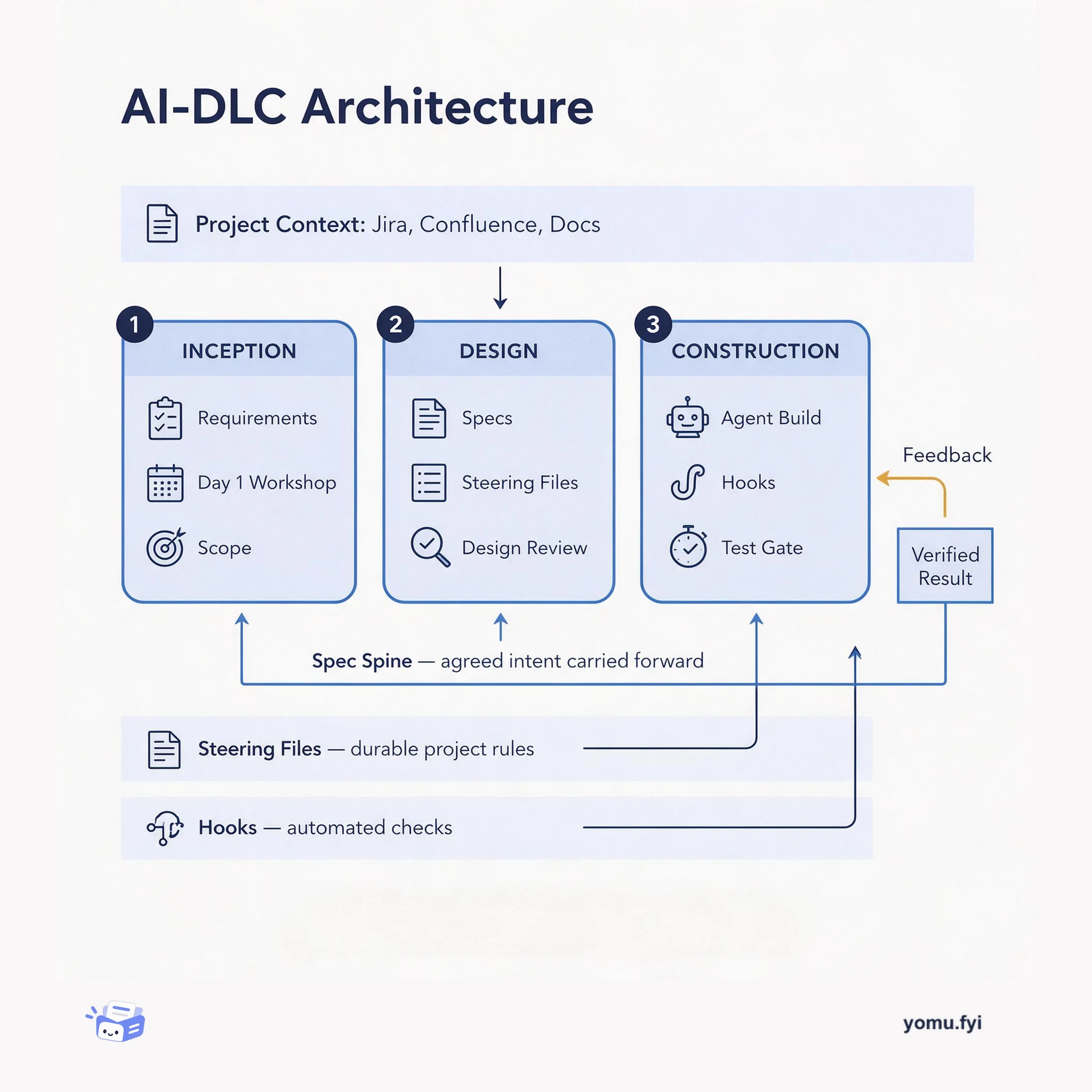
AI-DLC is an AI-driven development lifecycle that runs delivery through Inception, Design, and Construction, with specs, steering files, and hooks keeping agents aligned to agreed intent.
Apple Silicon's defining choice is one shared memory pool for CPU, GPU, and Neural Engine. This diagram maps that fabric, the on-package bandwidth it buys, and the scaling limits it imposes.
Antimicrobial resistance surveillance is a layered data architecture: raw reads and demand signals flow in, get normalized into governed tables, and answer plain-language queries. The diagram maps each boundary.
The Good Stuff
Paid picks we use ourselves. Links carry a referral code — a subscription through one earns us a commission at no extra cost to you.