APAC Is Not One Region: The Regionalize vs. Standardize Tradeoff
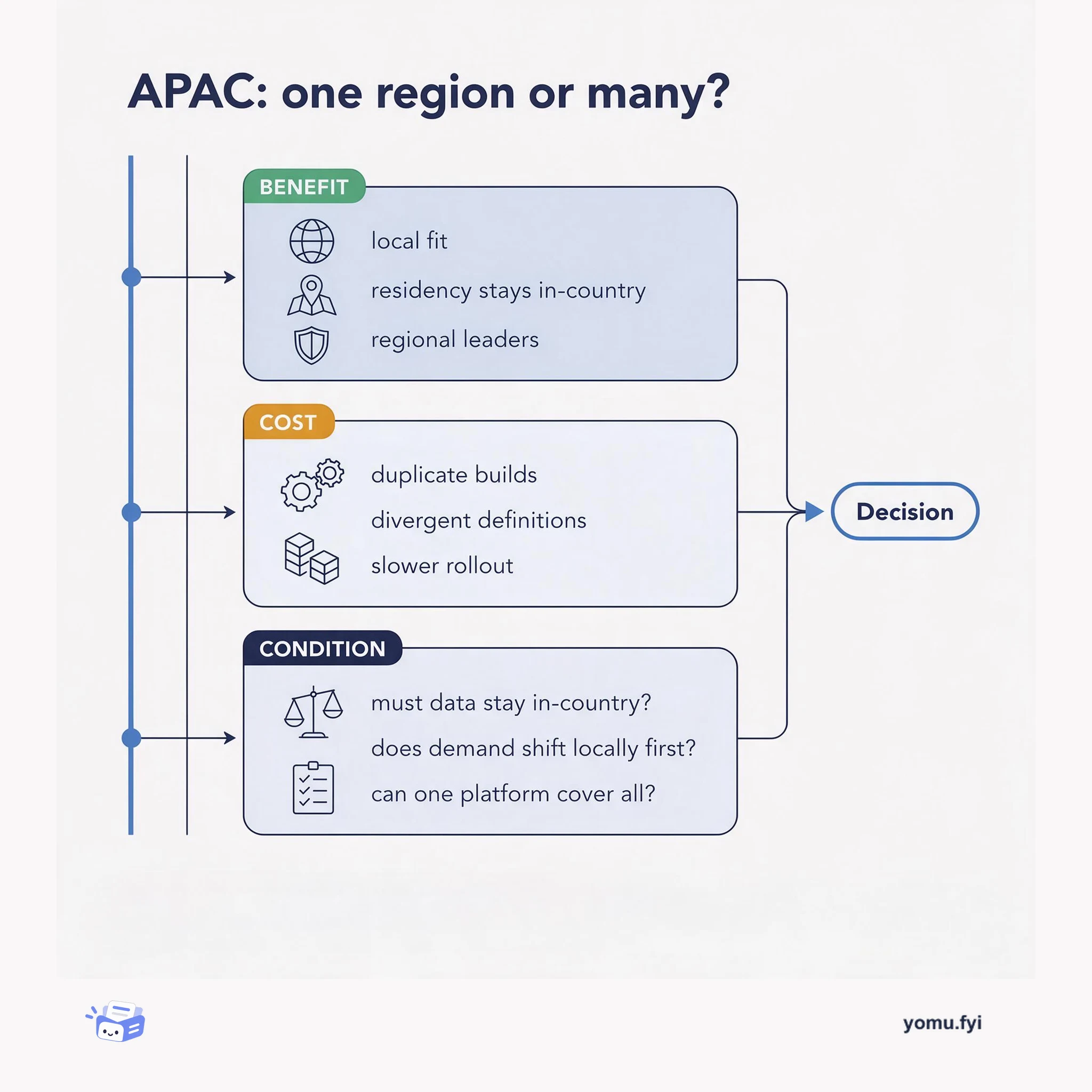
APAC is a federation of markets, not a single deployment region. This diagram maps the tradeoff between local autonomy and one shared platform, and the conditions that decide it.
Ansible excels at two different jobs: orchestrating multi-step infrastructure workflows and automating routine tasks hands-off. Learn the tradeoff between control and scale that should guide your choice.
Ansible is a configuration management and automation platform that can run in two modes: orchestrated workflows where engineers approve and execute each step, and event-driven automation that detects changes and responds without human intervention. The orchestration path gives you visibility, approval gates, and the ability to handle exceptions; the event-driven path scales to hundreds of systems but requires upfront investment in rules, monitoring, and testing. Understanding which mode fits your workload—whether you need human judgment or deterministic response—is the key decision that determines whether Ansible becomes a bottleneck or a force multiplier.
The posts behind it
 Red Hat · · Problem & solution
Red Hat Advanced Cluster Security for Kubernetes exposes an image-scanning API through Central, but upgrades and restarts can interrupt CI/CD pipelines. The reference architecture uses two independent Central Service instances—primary and failover—with separate databases, scanner deployments, and namespaces, plus a client-side script that probes the primary’s health endpoint before each scan and falls back when needed. Operators install the failover instance, duplicate image registry integrations and build-time policies, configure CI authentication, and pause reconciliation on the failover Central custom resource while upgrading the primary, then resume it to upgrade the second instance. This avoids scan API unavailability during the staged upgrade process, but failover caches are cold, requiring temporarily longer scans and additional registry traffic. The instances do not synchronize databases, caches, configuration, or vulnerability updates, and the design does not provide general-purpose HA for secured cluster services or delegated scanning.
Red Hat · · TutorialThis tutorial builds an AIOps workflow for diagnosing and remediating a deliberately induced CPU incident in a product catalog application running on an AWS EC2 instance with RHEL. An Ansible investigation playbook collects CPU utilization, top processes, application status, and HTTP health evidence, which Claude Code analyzes through MCP to identify the Python process as the likely contributor and recommend the approved “AIOps - Remediate High CPU” Job Template. AI does not access the host directly: Ansible Automation Platform retains responsibility for credentials, inventory, execution, and remediation. The remediation changes the application from HTTP 503 and degraded to HTTP 200 and healthy, while a final health check confirms recovery and completes the detect-investigate-analyze-recommend-execute-verify sequence.
 Clickhouse · · Explainer
ClickHouse 26.8 introduces pipelined SQL, extending the earlier ability to place FROM before SELECT with a |> operator for sequencing query transformations. Using the UK property prices dataset, the post compares conventional, FROM-first, and pipelined forms for filtering London sales, aggregating median prices by district, ordering results, and limiting output. Each pipeline stage acts as a complete-query checkpoint, while EXPLAIN SYNTAX shows that ClickHouse translates the syntax into nested standard SQL and optimizes the complete query without materializing every intermediate result. The syntax also supports EXTEND, reuse of aggregation aliases in later stages, views, and INSERT ... SELECT statements, though stage order affects which rows feed subsequent aggregations in these examples; the conclusion is that pipelines complement rather than replace conventional SQL.
Red Hat · · Problem & solutionThe workflow replaces a manual, fragmented process for turning a simple ServiceNow connectivity request into firewall changes. Event-Driven Ansible connects ServiceNow, GitHub, an LLM, and two Palo Alto Networks firewalls, checking drift, gathering topology data, and coordinating structured rule proposals, pull requests, and workflow records. Ansible Automation Platform keeps credentials away from the AI and deploys approved rules through a deterministic, idempotent path after engineer and CAB approvals. GitHub’s main branch records the last successful state, proposed changes are reviewed as Configuration as Code, and execution stops when live configuration differs from the intended state. The lab demonstrates partial coverage, no coverage, and an unresolvable request; failed deployments can roll back, while an undefined Palo Alto Networks App-ID stops the workflow for human intervention.
More like this
APAC is a federation of markets, not a single deployment region. This diagram maps the tradeoff between local autonomy and one shared platform, and the conditions that decide it.
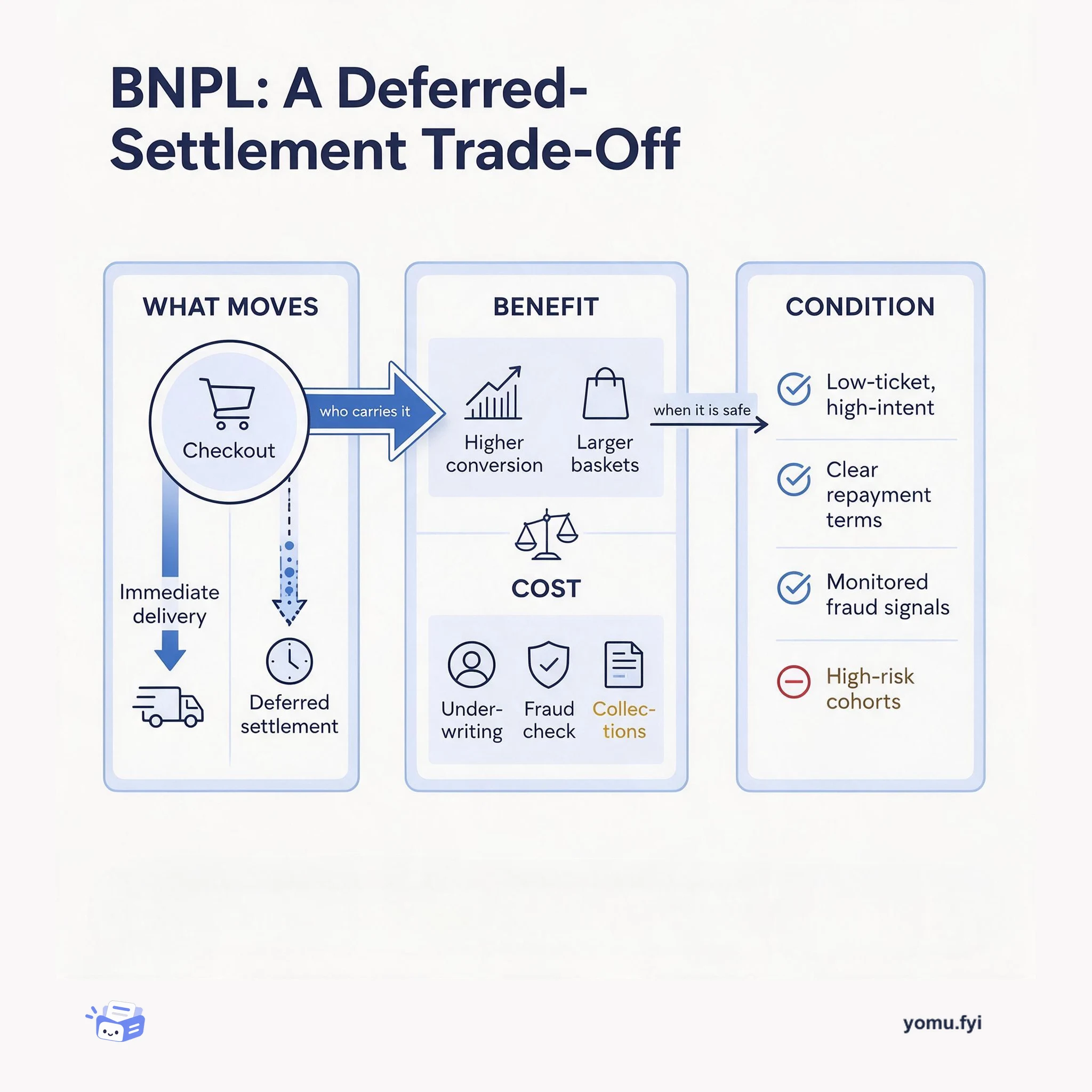
Buy Now, Pay Later is a deferred-settlement trade-off: merchants gain conversion while underwriting, fraud, and collections risk move elsewhere. This diagram maps the benefit, the cost, and the condition that decides.
Bare metal gives engineers direct control over GPU, network, and virtualization layers, but it shifts elasticity and lifecycle work onto the team. This trade-off map shows when that bargain pays off.
The Good Stuff
Paid picks we use ourselves. Links carry a referral code — a subscription through one earns us a commission at no extra cost to you.
One useful email. Unsubscribe anytime.