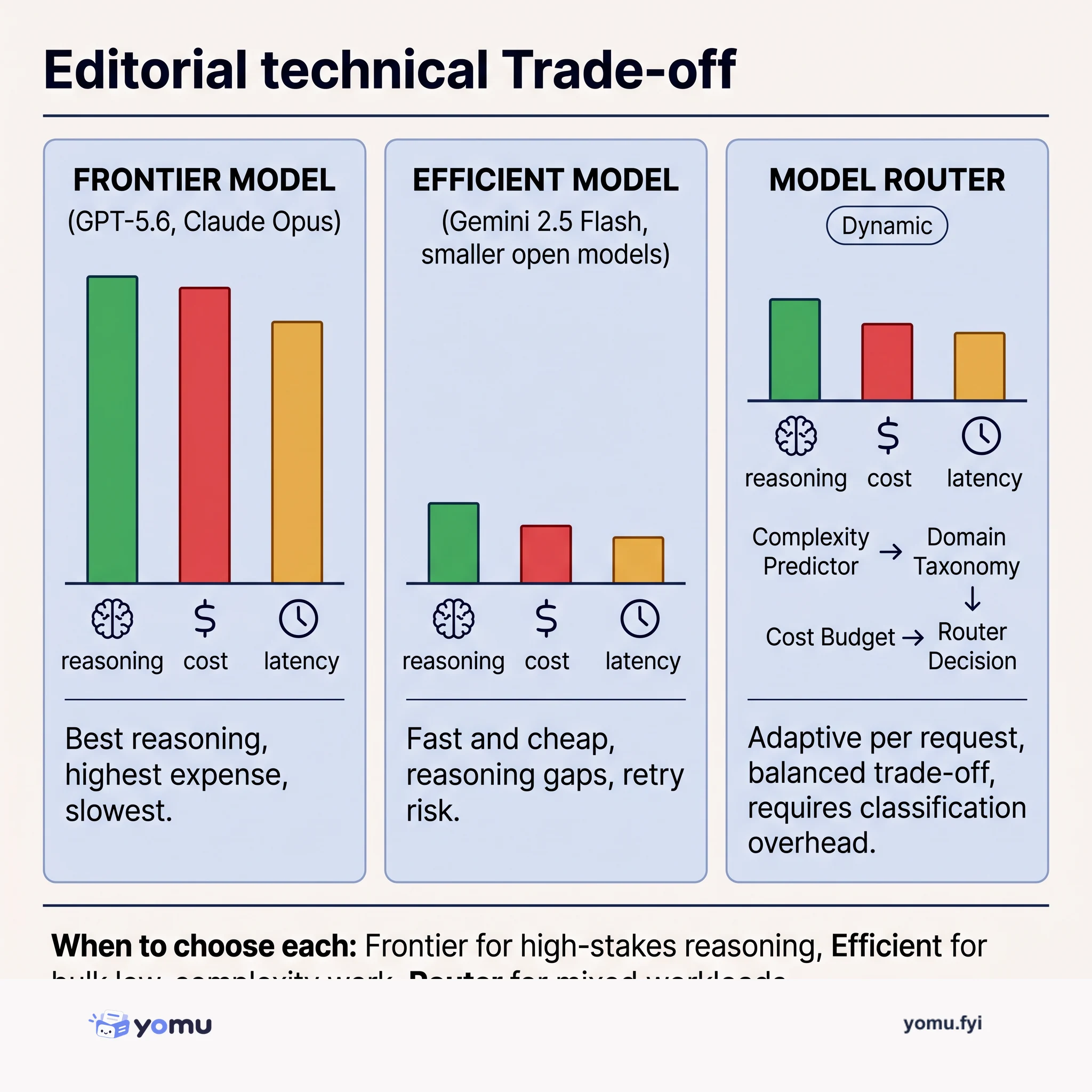
AI Model Selection: Cost vs. Capability Trade-offs
Understand how to choose between frontier models, efficient alternatives, and routing systems by weighing capability gains against token costs and latency constraints.
 CursorJordan TopoleskiAnnouncement
AI spending has moved from experimental pilots into a recurring operating expense, reaching $1.5 trillion globally in 2025, while only 39% of organizations in a cited McKinsey study could trace AI investment to enterprise-level EBIT impact. The launch introduces the Cursor CFO Council, a quarterly forum for finance leaders that will develop shared frameworks for AI productivity, returns on intelligence, model allocation, and cost management. Analyses using Cursor data found higher token usage associated with higher median year-over-year revenue growth, while usage rose after model improvements, especially for high-complexity work. Yet adoption and benefits are concentrated: p99 developers produced 46x more AI-assisted lines per day than median active users, and agent-request costs varied nearly ninefold across model families. With usage-based pricing making intelligence a less predictable variable cost, the council will meet beginning in August to advance measurable and efficient AI economics.
AI investment is becoming a major recurring operating expense, but the source says only 39% of organizations in a cited McKinsey study can trace it to enterprise-level EBIT impact. Adoption, usage, benefits, and unit costs are uneven, while usage-based pricing makes intelligence harder to predict as a variable cost.
The Cursor CFO Council will bring finance leaders together quarterly in rotating cities, beginning in August, to compare practices and develop shared benchmarks for AI productivity, frameworks for measuring returns on intelligence, and practical approaches to model allocation and cost management.
A BCG analysis using Cursor data found 16.5% median year-over-year revenue growth among companies in the highest token-usage quintile, versus 5.1% in the lowest quintile.
P99 developers produced 46x more AI-assisted lines per day than median active users and merged 15x more pull requests per week than median active pull request authors.
Cost per agent request varied nearly ninefold across model families, while cost per accepted line varied roughly sevenfold, supporting access to multiple models and providers.
Summaries are generated from the original by a language model. Check the original before relying on it.
See the idea
Understand how to choose between frontier models, efficient alternatives, and routing systems by weighing capability gains against token costs and latency constraints.
Keep reading
The Good Stuff
Paid picks we use ourselves. Links carry a referral code — a subscription through one earns us a commission at no extra cost to you.
One useful email. Unsubscribe anytime.
