AI code agents that require constant permission prompts create a new form of friction similar to old copy-paste workflows. The Sprite environment solves this by giving agents unrestricted access to a fully isolated computer where they can install dependencies, start servers, and test endpoints without human intervention. Preinstalled tools such as test runners, service logs at known paths, and checkpoint-based rollback enable agents to write code, run it, observe failures, and fix issues autonomously. Additional tools like curl, jq, sqlite3, and network debugging utilities support API testing, database inspection, and network troubleshooting. The result is a tight closed loop where the agent can build, test, and ship without prompting the developer, turning the developer into the idea person rather than middleware.
Approach / What changed
A dedicated, isolated compute environment (Sprite) that preinstalls testing, debugging, and observability tools so AI code agents can autonomously build, test, and iterate without requiring developer permission prompts or manual checks.
Takeaways
1
Sprite environments provide agents with checkpoint-based rollback, allowing them to snapshot the entire environment before risky actions and roll back in seconds, making aggressive experimentation cheap.
2
Preinstalled tools like test runners (node –test, pytest, go test), service log access, curl, jq, and sqlite3 enable agents to test code, inspect databases, and debug networks autonomously without human feedback.
3
Adding Playwright for browser automation allows agents to write tests, screenshot pages, and verify actual rendering, completing the closed loop for front-end development.
FAQ
How does a Sprite reduce permission prompts for AI agents?
In a Sprite, the agent works in a fully hardware-isolated computer where the answer to 'can I try this' is always yes. It does not need guardrails or baby proofing, so it can install dependencies, start servers, and test endpoints without asking for permission.
What preinstalled tools help an agent test its own work?
Sprite comes with test runners, service logs at /.sprite/logs/services/, API testing tools (curl, jq, httpx), database inspection (sqlite3), and network debugging utilities (ss, dig, curl -v). These let the agent write code, run tests, see failures, and fix issues autonomously.
How can an agent perform browser-based testing in a Sprite?
The agent can install Playwright with two commands (npm install playwright and npx playwright install chromium). It can then write tests, take screenshots, and verify what is actually rendering, enabling it to catch issues like broken redirects without developer involvement.
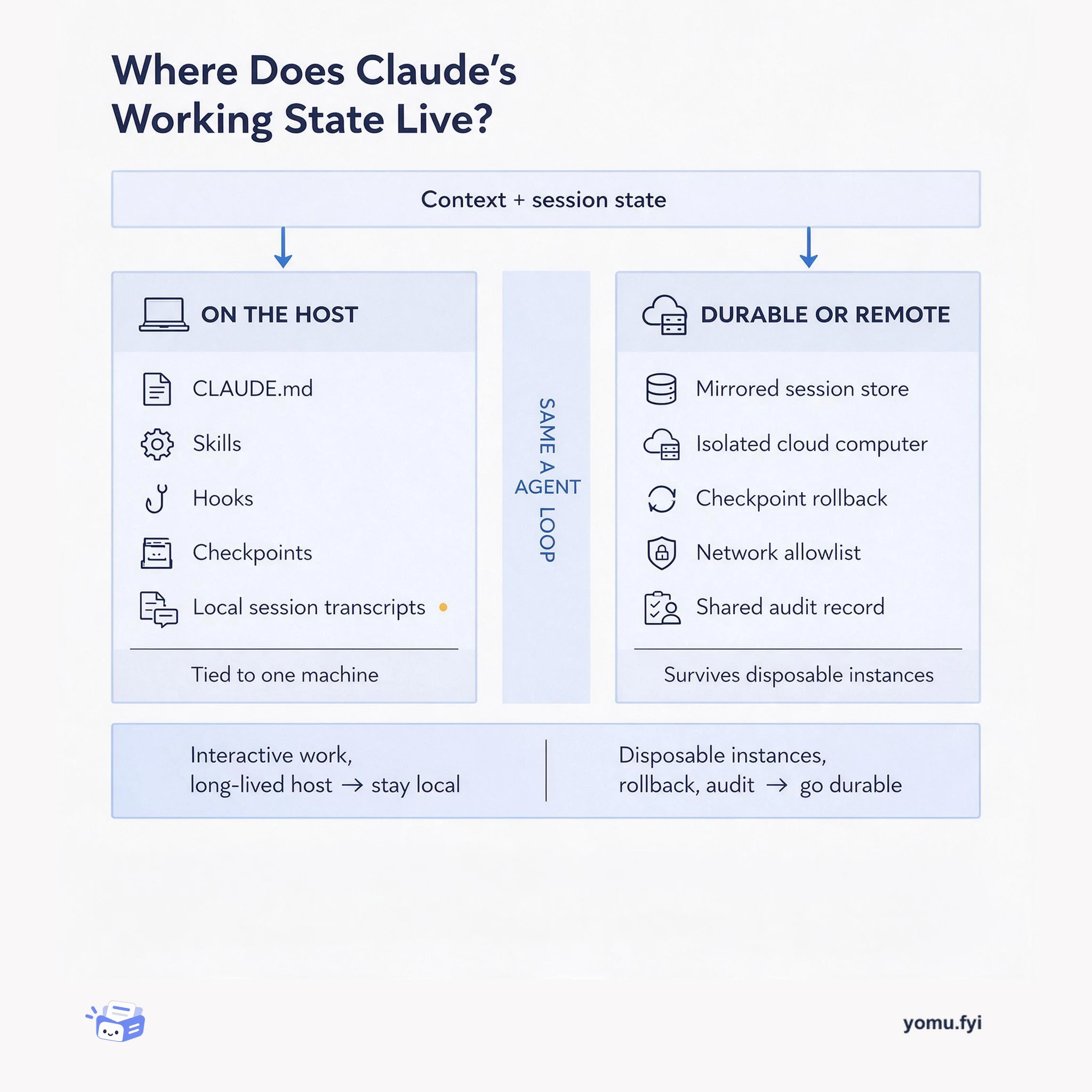
Compare two places to keep Claude's working state: curated files on your own machine versus a durable session store or isolated cloud computer, and learn which one fits your deployment.
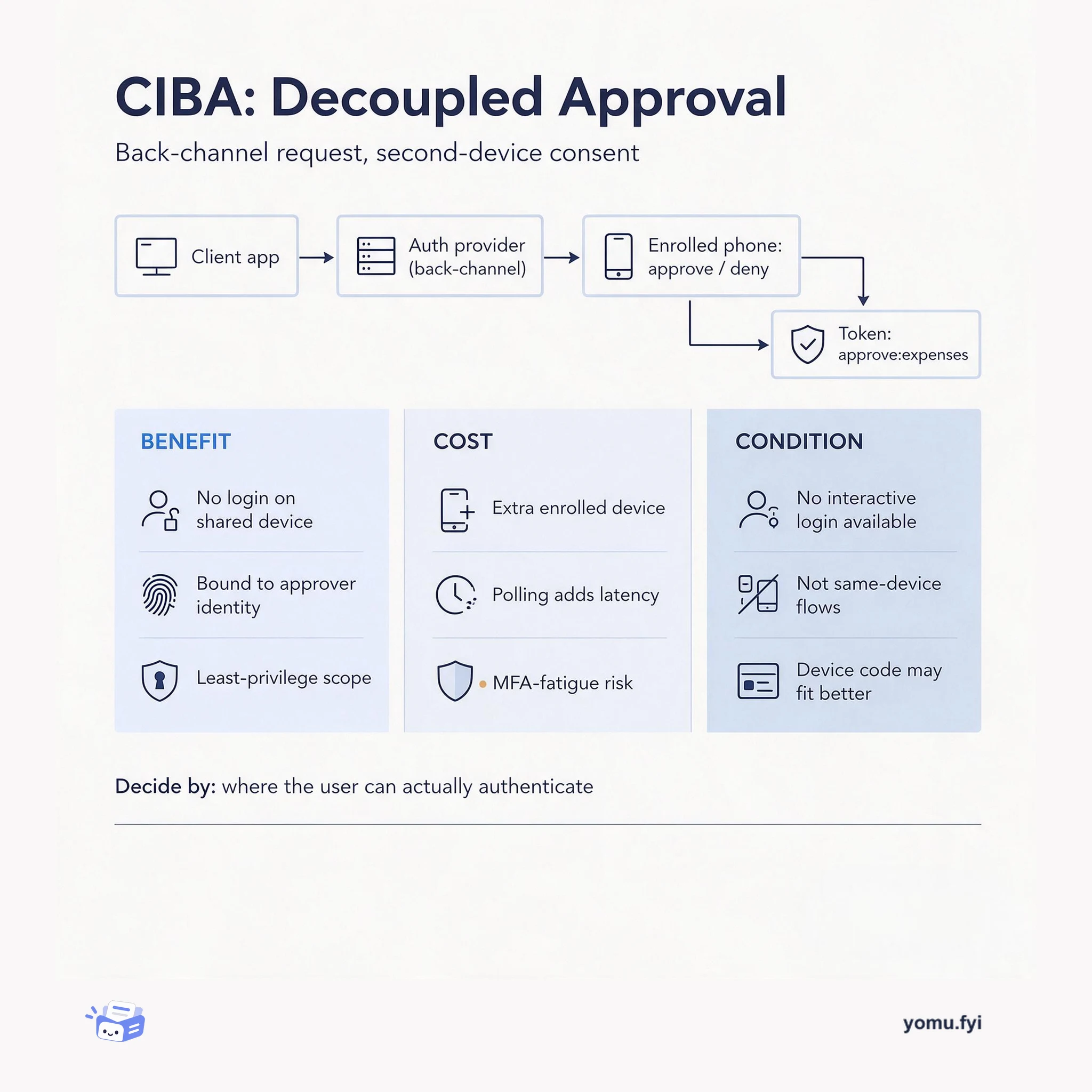
CIBA moves authentication off the device in use: the client sends a back-channel request and the user approves on an enrolled phone. See what that buys and what it costs.
Keep reading
Related reading
The Good Stuff
Paid picks we use ourselves. Links carry a referral code — a subscription through one earns us a commission at no extra cost to you.