CIBA Trade-offs: Approve on a Second Device, Not the One in Use
CIBA moves authentication off the device in use: the client sends a back-channel request and the user approves on an enrolled phone. See what that buys and what it costs.
CIBA (Client-Initiated Backchannel Authentication) decouples authentication from the application: the client sends a back-channel request to an OAuth 2.0 / OpenID Connect provider, and the user approves it on a separately enrolled phone or smartwatch. The flow returns a narrowly scoped token, so an expense agent can record a decision with an approve:expenses scope instead of borrowing a broad session. The trade-off is real: you gain least-privilege approval cryptographically bound to the approver's identity, but you add a second device, polling latency, and a new MFA-fatigue surface. Use it when the device in use cannot run an interactive login, and not for same-device flows.
FAQ
When should I use CIBA instead of the device code flow?
CIBA fits when the consumption device cannot run an interactive login, such as a POS terminal, kiosk, or a support agent working from a phone call, and the user has a separately enrolled device to approve on. Device code flow is the safer choice when the same device can display a code and complete the flow. CIBA should not be used for same-device flows.
Why does a CIBA push include a binding message?
The binding message describes the specific request, such as expense ID, amount, and vendor, so the approver can decide from a lock screen without opening the app. It ties the consent to one transaction rather than a blind prompt, and downstream services can verify the resulting decision. Without it, the approval carries no context.
What is the main risk of a CIBA approval flow?
The dominant risk is MFA-fatigue-style attacks, where repeated approval pushes wear the user down until they accept one. Rate limits, short expiries, and clear binding messages reduce that exposure. Also plan for latency: poll mode adds round trips, while ping and push modes deliver tokens faster.
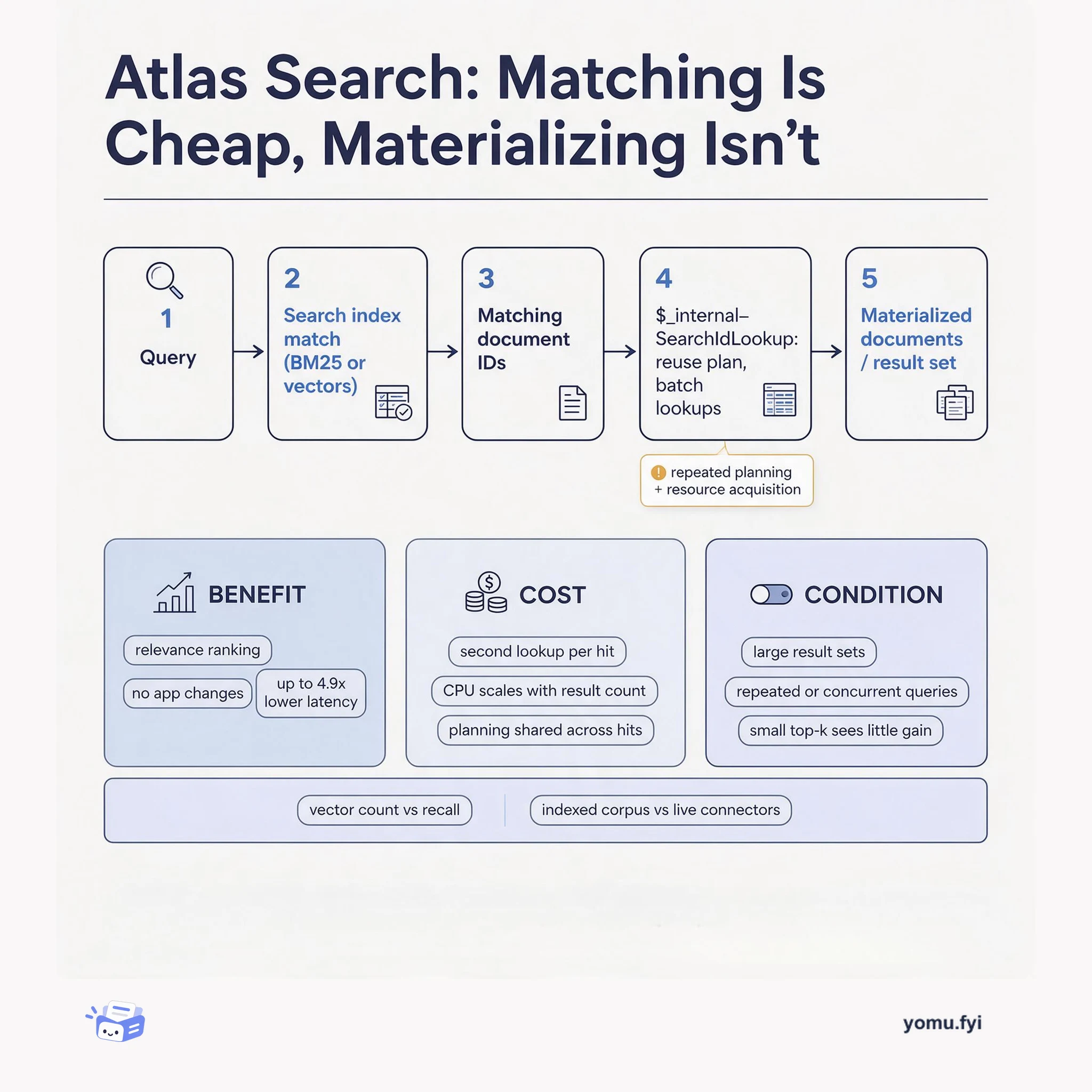
Atlas Search finds matching document IDs fast, but materializing each hit from the collection is where the latency and CPU go. This trade-off map shows the benefit, the cost, and the condition for accepting that second phase.
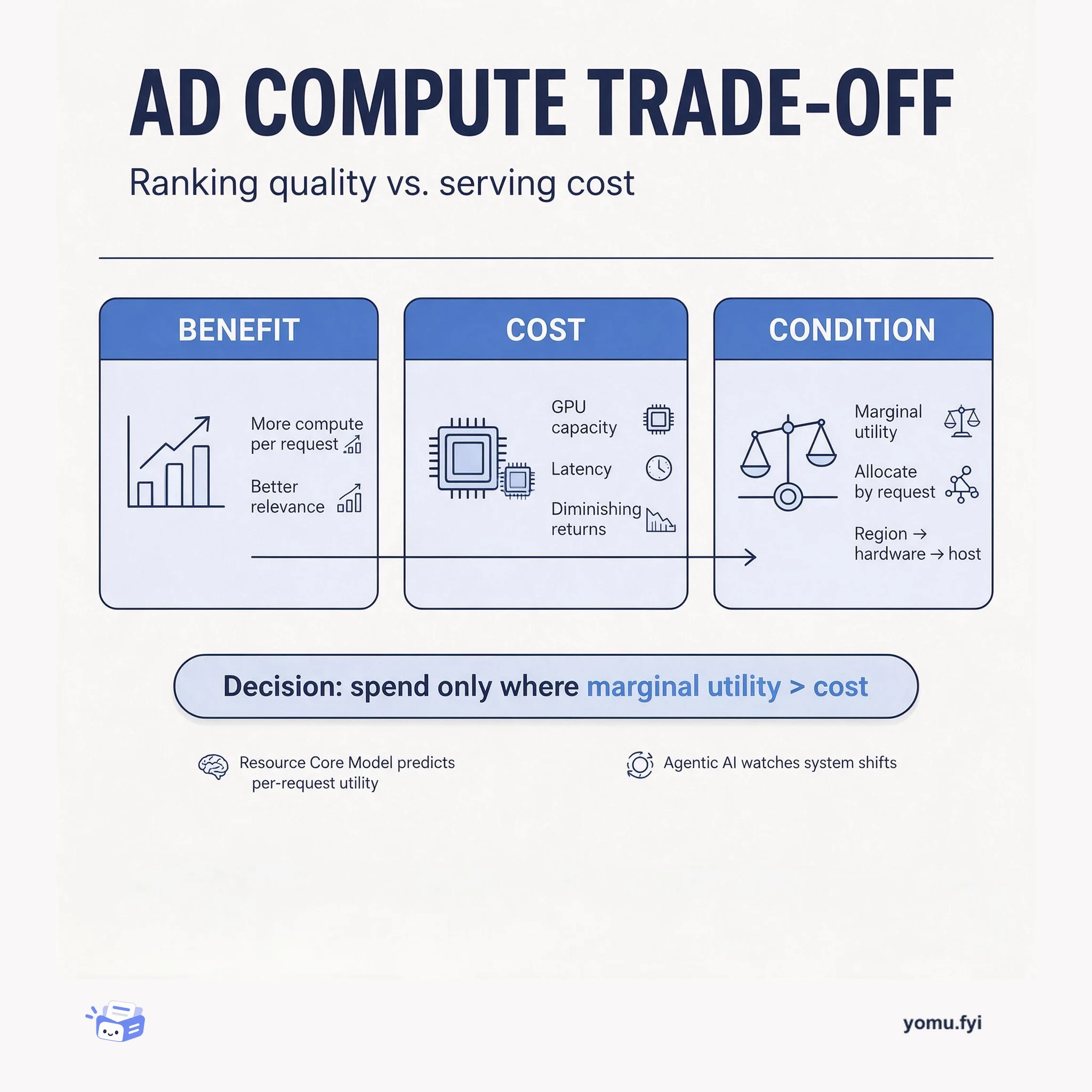
Ad ranking is a compute trade-off: more resources per request can improve relevance, but GPU capacity and latency are finite. Learn how to allocate by marginal utility instead of uniformly.
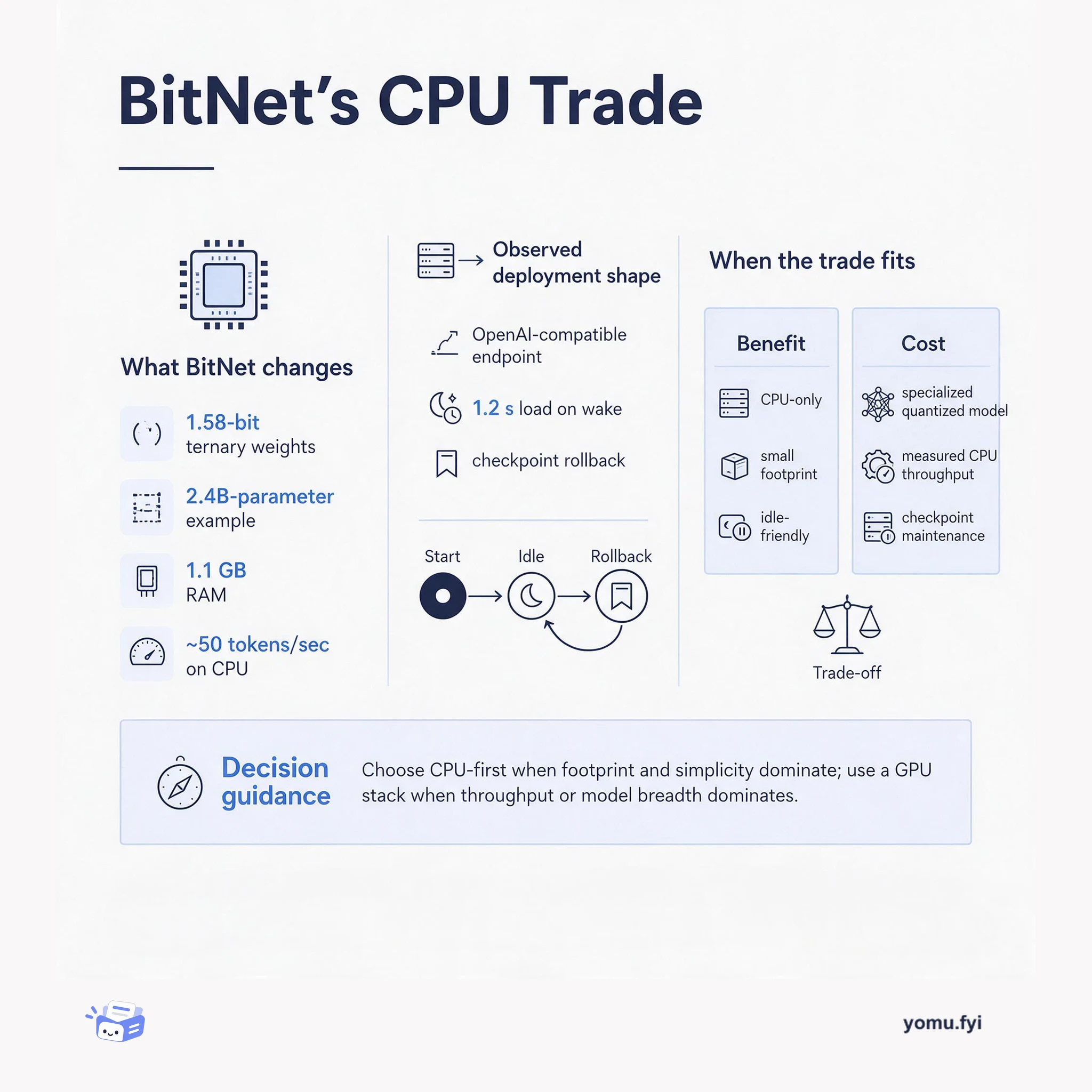
BitNet trades floating-point precision for a tiny, CPU-friendly footprint. This diagram maps the payoff—small memory and local serving—against the constraints that decide when the trade is worth it.
The Good Stuff
Paid picks we use ourselves. Links carry a referral code — a subscription through one earns us a commission at no extra cost to you.