Level 5 covers operability for LLM systems: daily running, cost control, provider outage survival, and fast shutdown on misbehavior. A single gateway funnels all model traffic, measuring cost, routing requests, enabling failover, and hosting an instantaneous kill switch; a shared decision_id threads metrics, logs, traces, and the audit ledger. Observability supplements RED metrics with a decision layer capturing auto vs. human splits, guardrail blocks, judge disagreements, token spend per tenant and capability, and shadow-eval pass ratios via tiered structured logs. Cost controls attribute spending at the gateway per tenant and capability, with hard budget ceilings; optimization follows order: skip model, batch, cache, right-size, trim—each step profiled against quality. The platform spine includes stateless agent services, the gateway, an audit datastore, cache, secrets store, and object storage—scoped with least-privilege IAM and encryption, avoiding queues or vector stores until warranted.
Context
This post is the fifth part of a six-level maturity model for running LLM systems in production, detailing the operability layer.
Approach / What changed
It prescribes a single model gateway as the central chokepoint for cost measurement, routing, failover, and kill-switch control; a decision-layer observability framework with tiered logging and decision-level tracing; symptom-based alerts; structured cost optimization steps; and a minimal infrastructure spine with least-privilege IAM and encryption.
Takeaways
1
A single model gateway centralizes cost measurement, routing, failover, and kill-switch control for all LLM traffic, making operability manageable.
2
Observability requires a decision layer beyond standard RED metrics: capturing auto/human decision splits, guardrail blocks, judge disagreements, and token spend per tenant and capability.
3
Cost optimization should follow a disciplined order—skip model, batch, cache, right-size, trim—profiling quality baseline at each step before proceeding.
FAQ
What is the central architectural pattern for operability?
The post advocates a single model gateway that funnels all LLM calls, providing a chokepoint for cost measurement, routing, failover, and the kill switch, with a shared decision_id linking metrics, logs, traces, and the audit ledger.
How should production LLM costs be controlled?
Costs are attributable per tenant and capability at the gateway; enforce a hard budget ceiling per time window, then apply optimization steps in order: skip model, batch, cache, right-size, trim—each verified against a quality baseline.
What are the essential platform components for operability?
The minimal spine includes stateless agent services, a model gateway, an audit datastore, a cache, a secrets store, and object storage, with least-privilege IAM and encryption; queues and vector stores are added only when a concrete workload requires them.
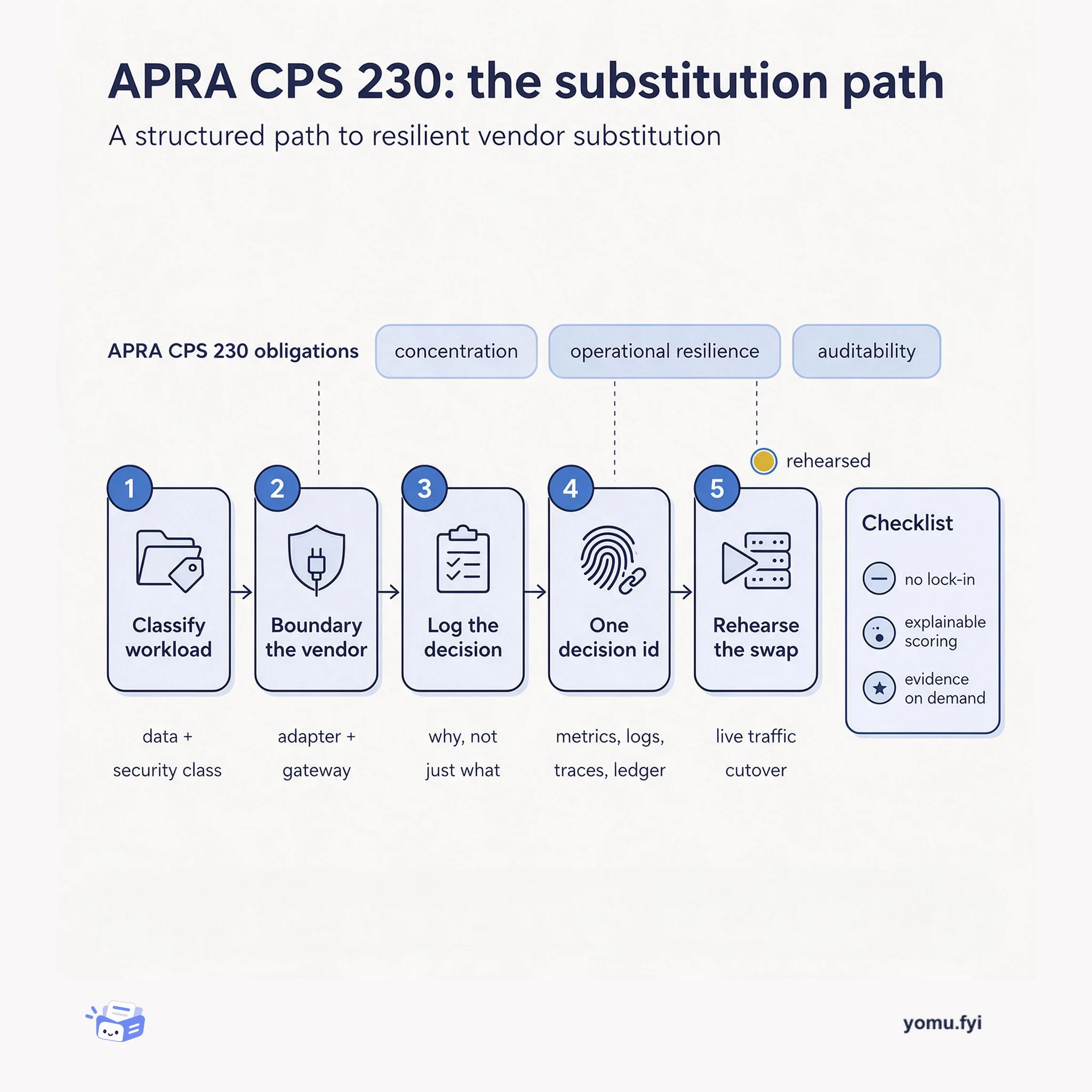
APRA's April 2026 letter flags single-provider concentration as a CPS 230 risk, so AI stacks need a rehearsed substitution path. This flow maps five stages, from workload classification to provider swap.
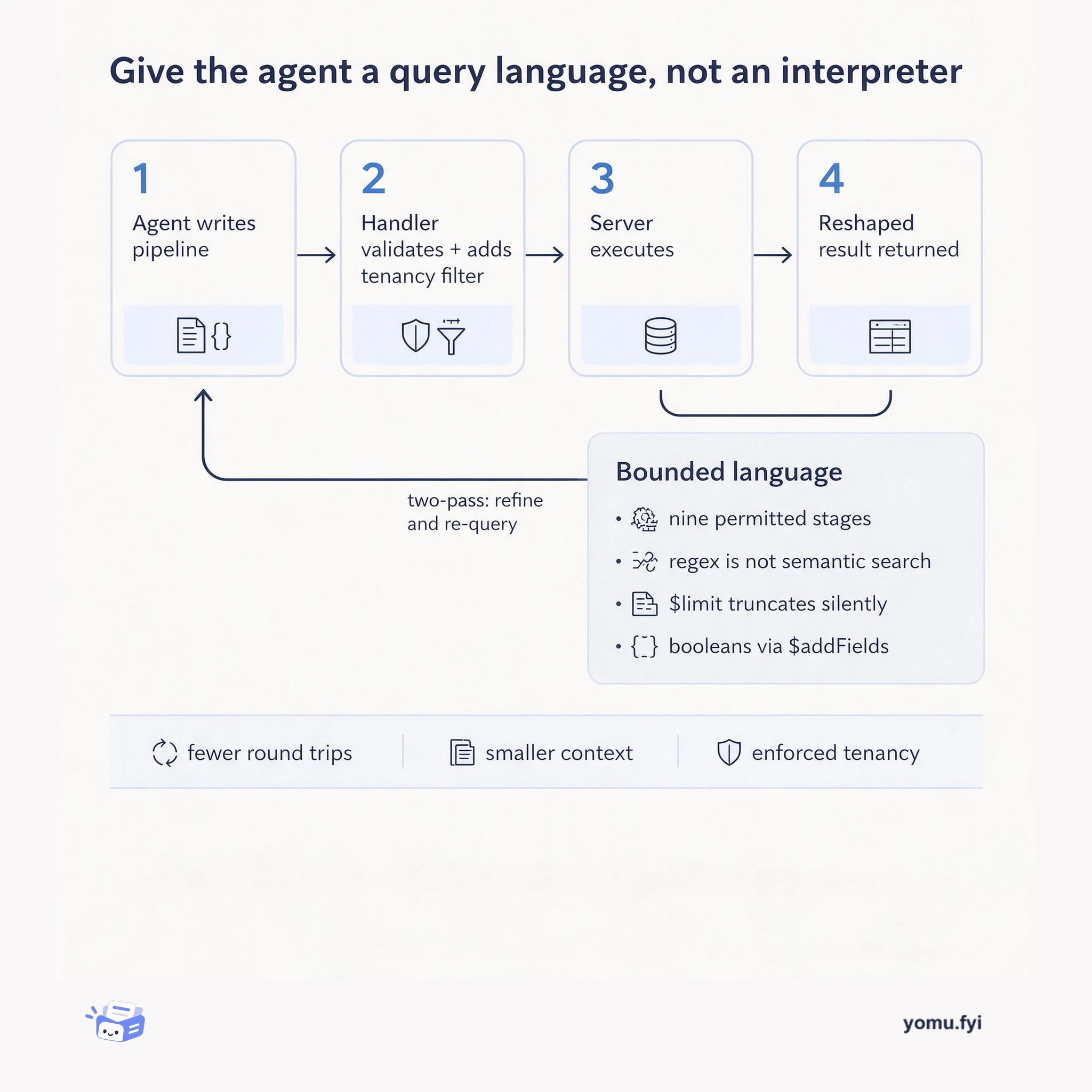
A four-step pattern for letting a document agent write validated aggregation pipelines instead of arbitrary code, so results come back shaped and tenancy stays enforced.
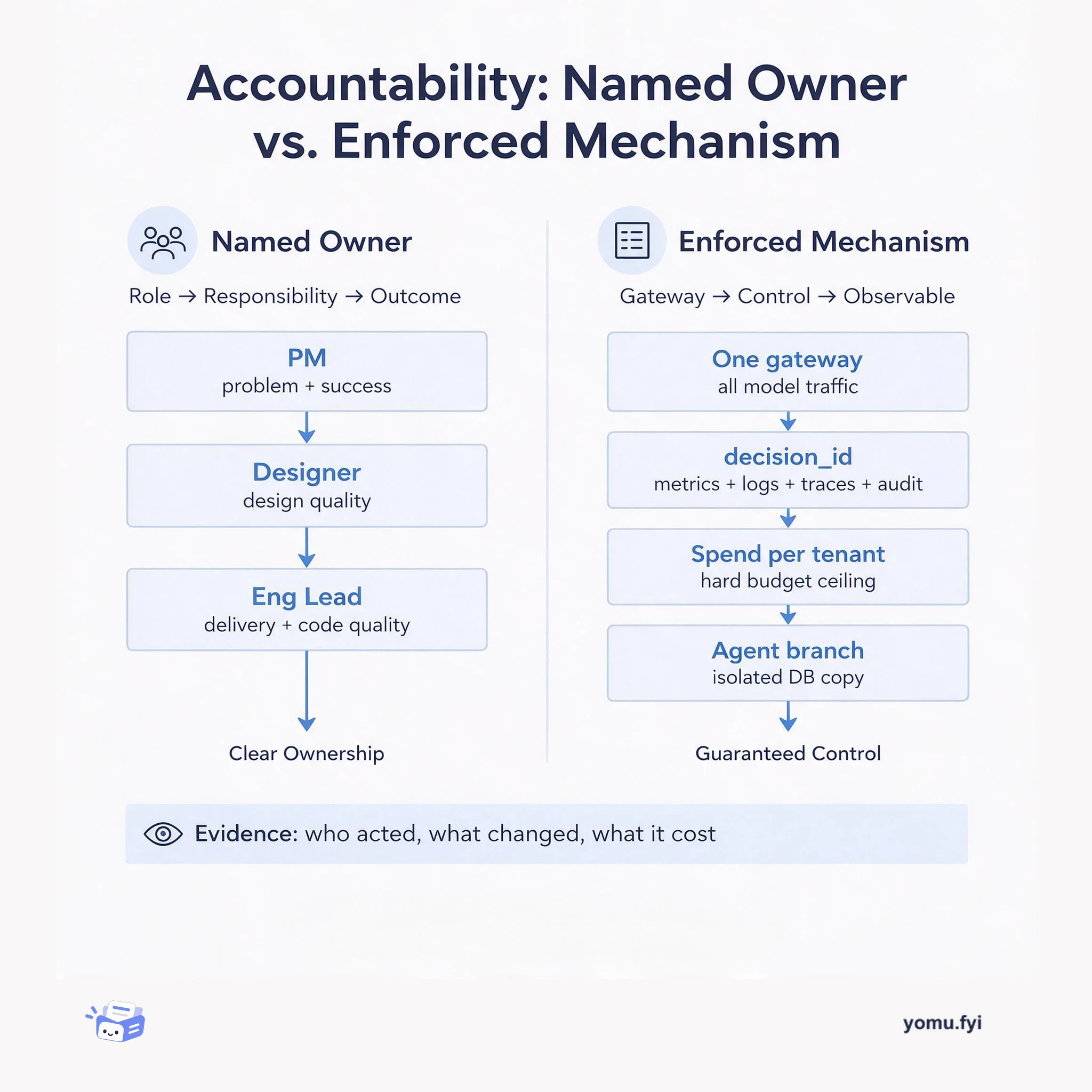
A side-by-side comparison of the two accountability models engineers actually rely on: a named human owner per outcome, and system-enforced traces, budgets, and isolation.
Keep reading
Related reading
The Good Stuff
Paid picks we use ourselves. Links carry a referral code — a subscription through one earns us a commission at no extra cost to you.