One Pool, Many Engines: The Architecture of Apple Silicon
Apple Silicon's defining choice is one shared memory pool for CPU, GPU, and Neural Engine. This diagram maps that fabric, the on-package bandwidth it buys, and the scaling limits it imposes.
Loading…
Topic
3 posts about macOS. Every summary links to the original.
See the idea
Apple Silicon's defining choice is one shared memory pool for CPU, GPU, and Neural Engine. This diagram maps that fabric, the on-package bandwidth it buys, and the scaling limits it imposes.
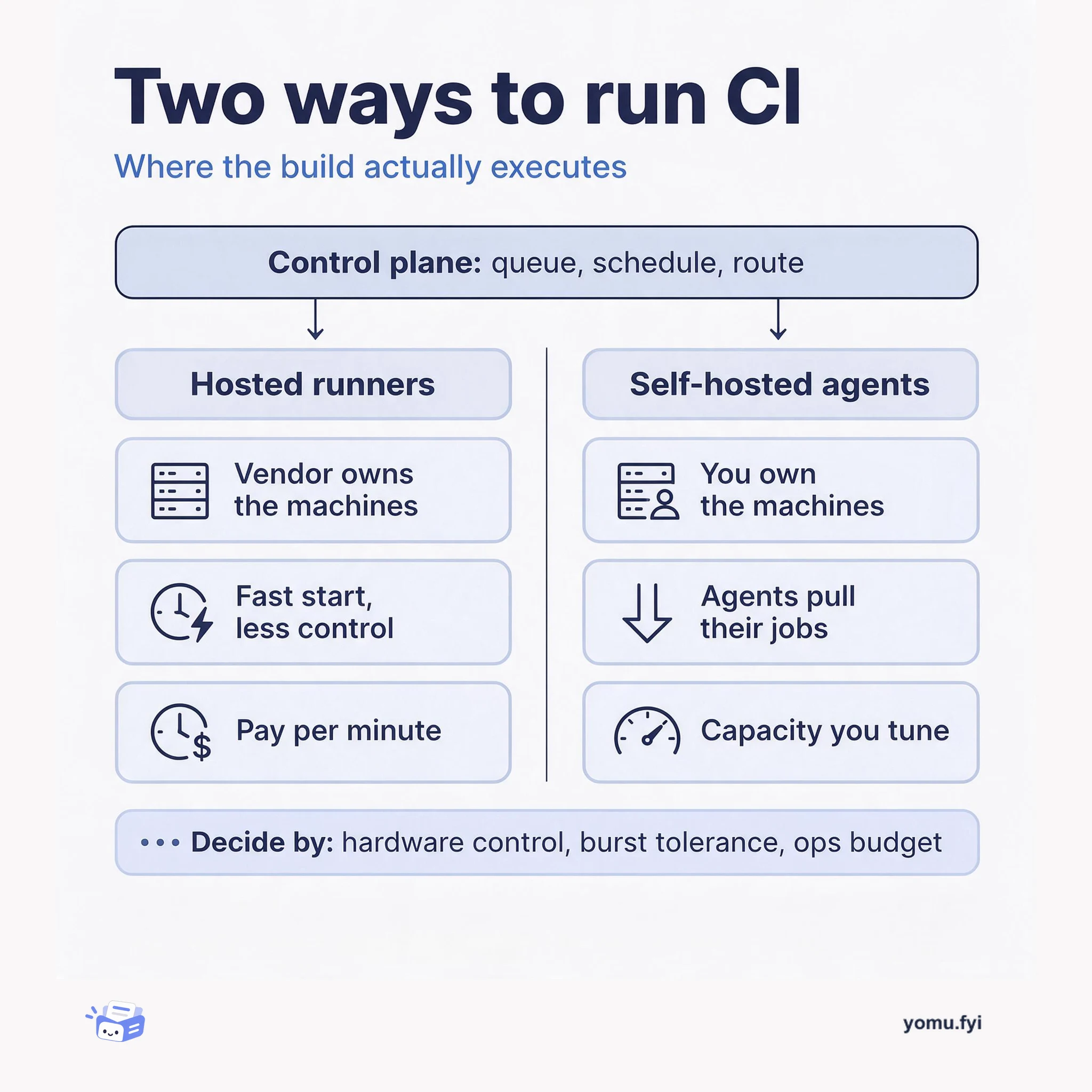
Buildkite splits CI into a hosted control plane and agents you run on your own machines. This comparison weighs that self-hosted agent model against fully hosted runners so you can pick the right fleet.
The Good Stuff
Paid picks we use ourselves. Links carry a referral code — a subscription through one earns us a commission at no extra cost to you.
Newest first
Toolbox App 3.8 addresses IDE update handling on macOS and restores keyboard navigation in project and tool lists. On macOS, manual IDE updates remain available when the system incorrectly reports an installation directory as non-writable, with instructions shown if macOS blocks the update. On Windows, Ctrl+1 and Ctrl+2 switch between the Tools and Projects tabs, while the Up Arrow, Down Arrow, Page Up, Page Down, Home, and End keys navigate lists, including filtered results. Cleanup of leftover IDE directories now displays progress for each tool and the full operation, and disables delete controls until cleanup and rescanning finish, preventing duplicate cleanup starts.
On 27 November 2018, Eric Fung, a Senior Data Scientist, presented “How the Command Line Can Empower You,” a 45-minute talk followed by 15 minutes of questions and answers. The presentation addresses work that often happens outside an IDE, including interacting with APIs, creating screenshots, and massaging data, and shows how command-line tools can simplify, improve, or automate those tasks. Using real-world examples, Fung covers typing less in the terminal, searching files, manipulating images and JSON files, and generating code automatically without point-and-click interaction. The presentation focuses on software for macOS, while noting that Linux and Windows users can benefit because many mentioned tools are cross-platform; the presentation can be watched online and speaker notes can be downloaded.
Shopify needed a unified CI/CD system that could give iOS developers the same reliable, disposable build environments already used for Linux and Android projects. An earlier VMware ESXi setup used a shared storage area network, but its maintenance burden and write throughput limit created stability and scalability problems. The replacement uses Anka, a Docker-like macOS virtualization layer built on Apple’s Hypervisor.framework: one Core i7 Mac Mini runs one VM with local storage, while layered images are pushed to registries and pulled across two MacStadium data centers. Buildkite agents clone temporary snapshots, boot suspended VMs in under a second, run steps, upload artifacts, and delete the VMs afterward. Shopify reports about 350 iOS build jobs per hour for roughly 60 iOS developers, with easier Xcode and macOS upgrades, no shared-storage single point of failure, and horizontal scaling, although capacity remains manually adjusted and spiky demand can increase queue times.
The best engineering reads, once a week.