A comparison of what AI models should learn versus what agent infrastructure must enforce. See how reasoning, permissions, isolation, budgets, and observability split across the boundary.
As AI models improve, teams face a recurring decision: absorb a capability into the model, or enforce it in the surrounding harness? This explainer compares model-side capabilities such as reasoning, coding, tool use, and memory with harness-side enforcement such as identity, permissions, isolation, budgets, and observability. The key condition is that better models make weak harnesses more dangerous, so enforcement must stay outside the model even as capabilities move in. Engineers can use this boundary to diagnose where an agent's controls belong and avoid removing scaffolding too early.
FAQ
How do I decide what to absorb into the model versus keep in the harness?
Absorb capabilities the model can reliably learn, such as planning, tool use, and reasoning. Keep enforcement properties—permissions, identity, isolation, and budgets—as hardened infrastructure outside the model. The harness engineering post warns that removing enforcement scaffolding as models improve is dangerous.
Does a stronger model make a weak harness safer or more dangerous?
More dangerous. The better the model gets, the more it can chain vulnerabilities across trust boundaries when the harness gives it paths around controls. A breach at Hugging Face showed this pattern, so enforcement must remain outside the model.
What practical layers enforce controls in an enterprise AI agent?
Use an API gateway for identity and policy, sandboxed containers for isolation, a gateway layer for model routing and budgets, and distributed tracing for observability. These map to zero trust, defense in depth, and fail-safe defaults from the governed agent reference architecture.
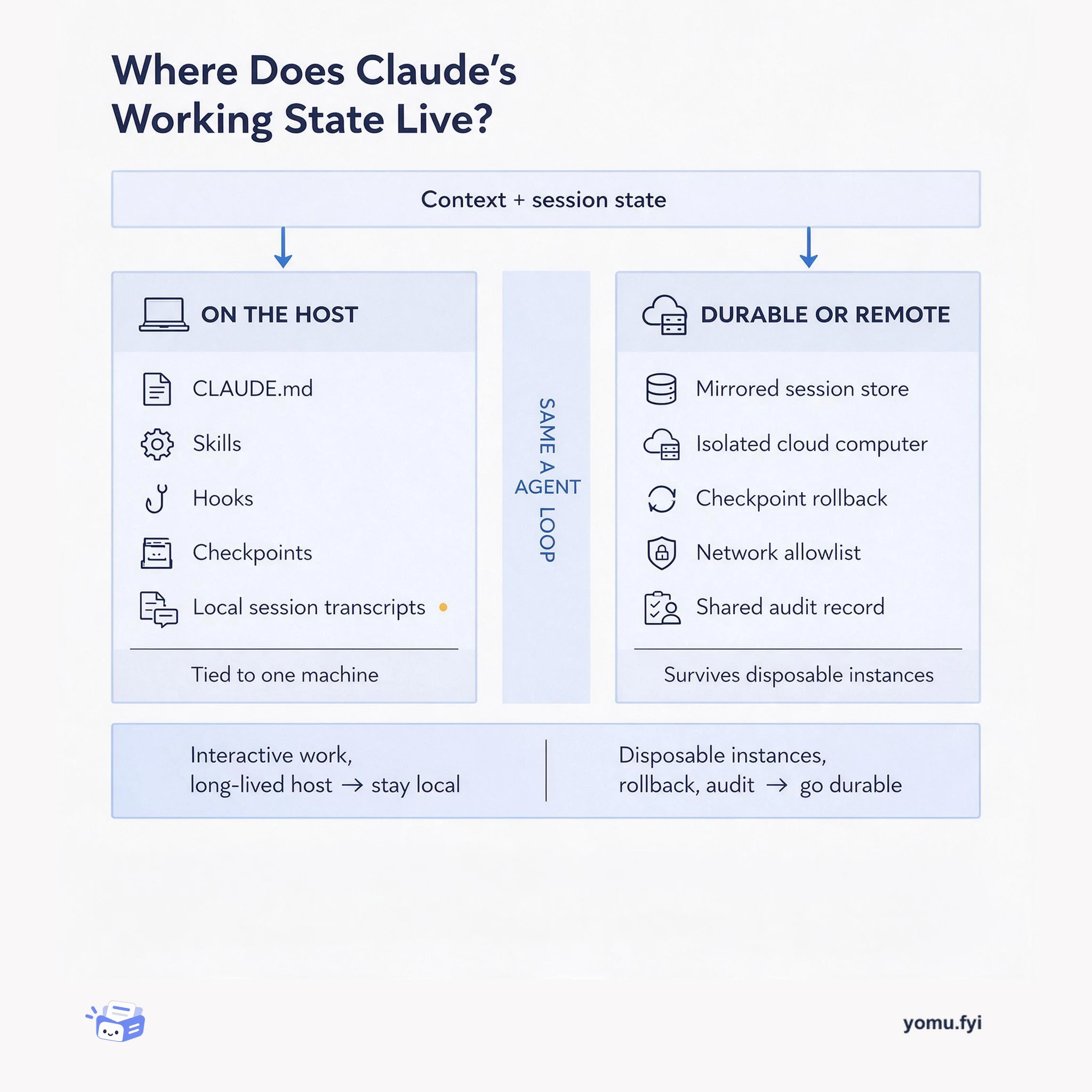
Compare two places to keep Claude's working state: curated files on your own machine versus a durable session store or isolated cloud computer, and learn which one fits your deployment.
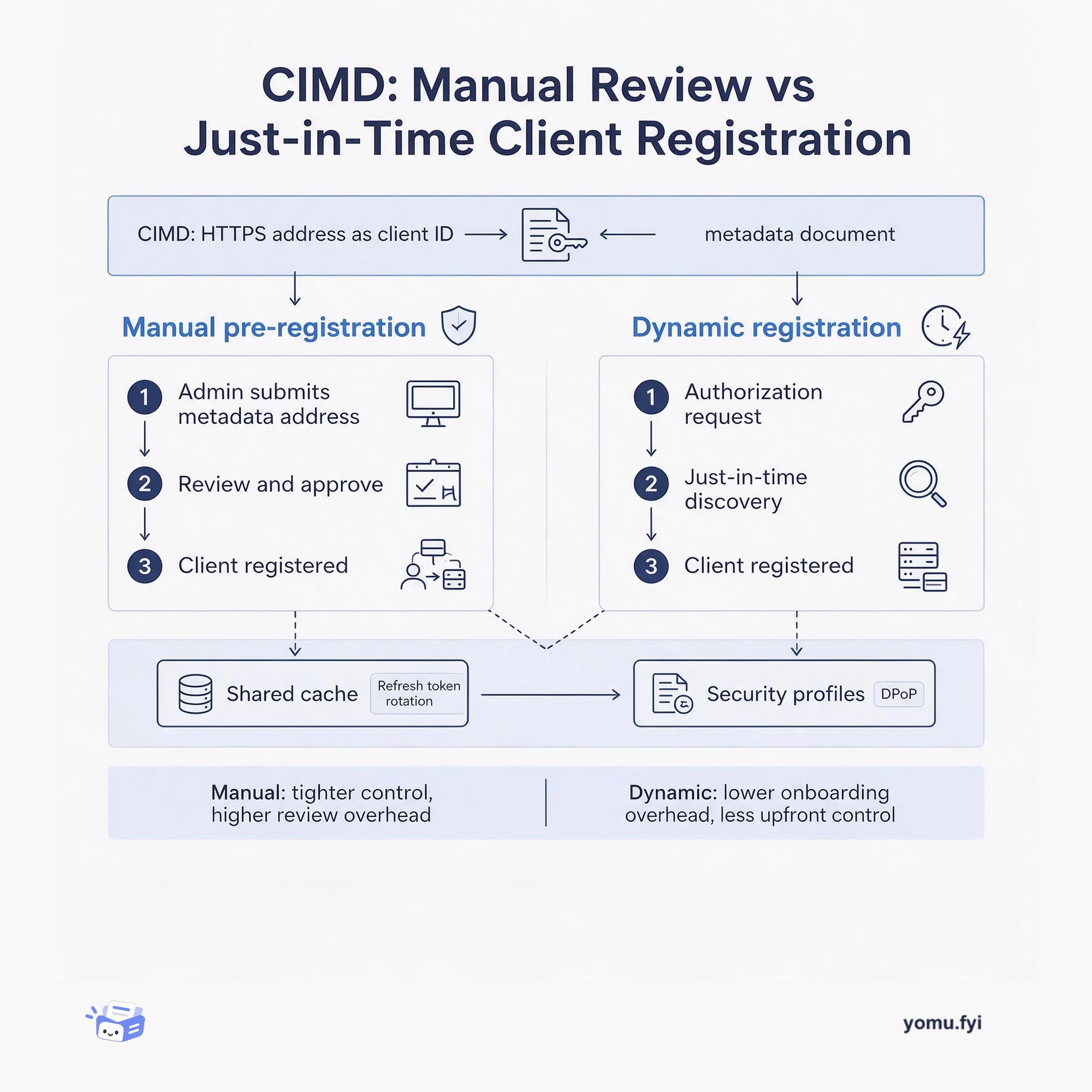
CIMD uses an HTTPS URL as an OAuth client identifier that points to a metadata document. This comparison shows when to pre-register clients manually and when to let dynamic discovery handle agent onboarding.
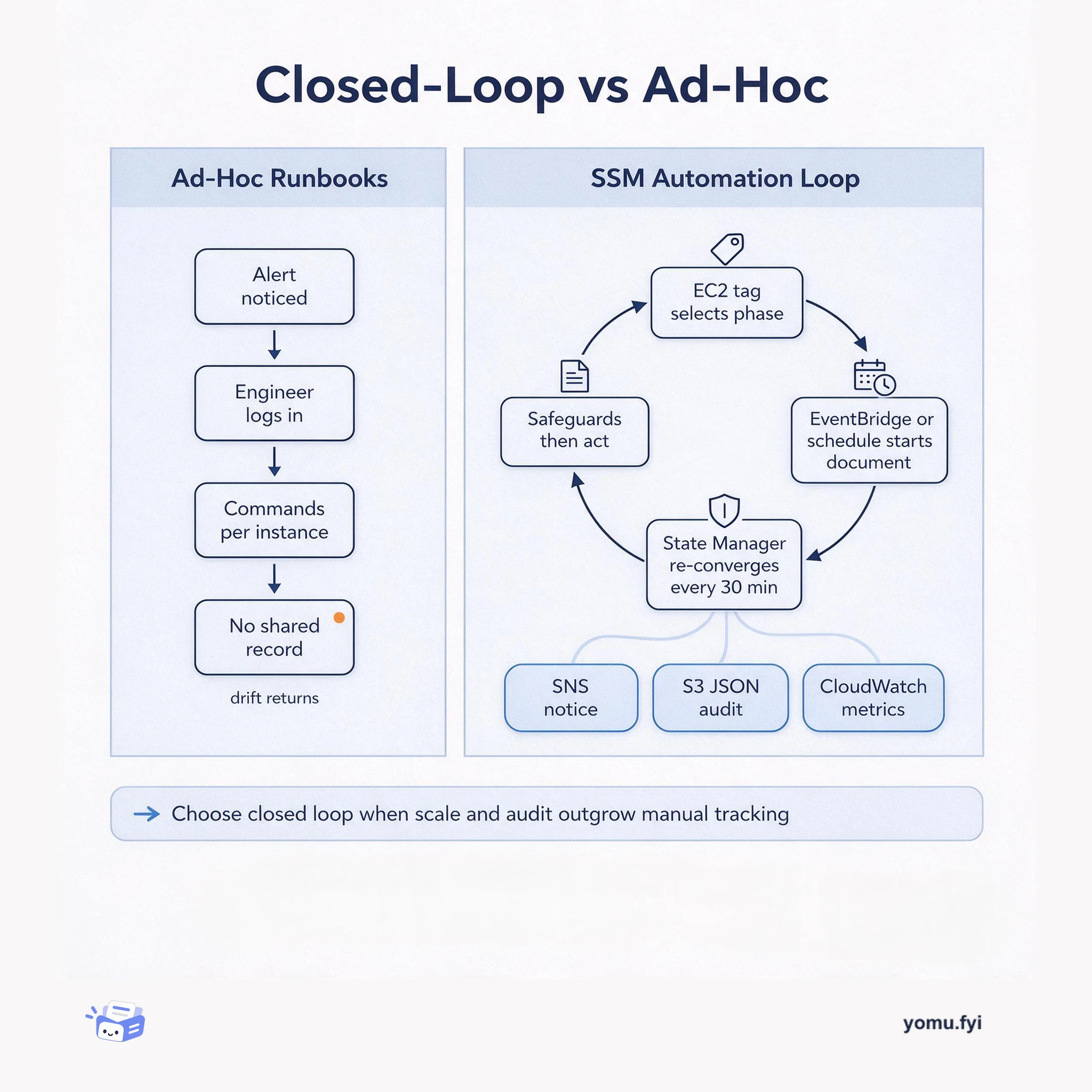
A side-by-side comparison of ad-hoc, human-run remediation and tag-driven AWS Systems Manager Automation, showing what each costs in audit trail, drift, and time to recover.
The Good Stuff
Paid picks we use ourselves. Links carry a referral code — a subscription through one earns us a commission at no extra cost to you.