Circuit Breakers: The Recovery Loop That Spends Capacity
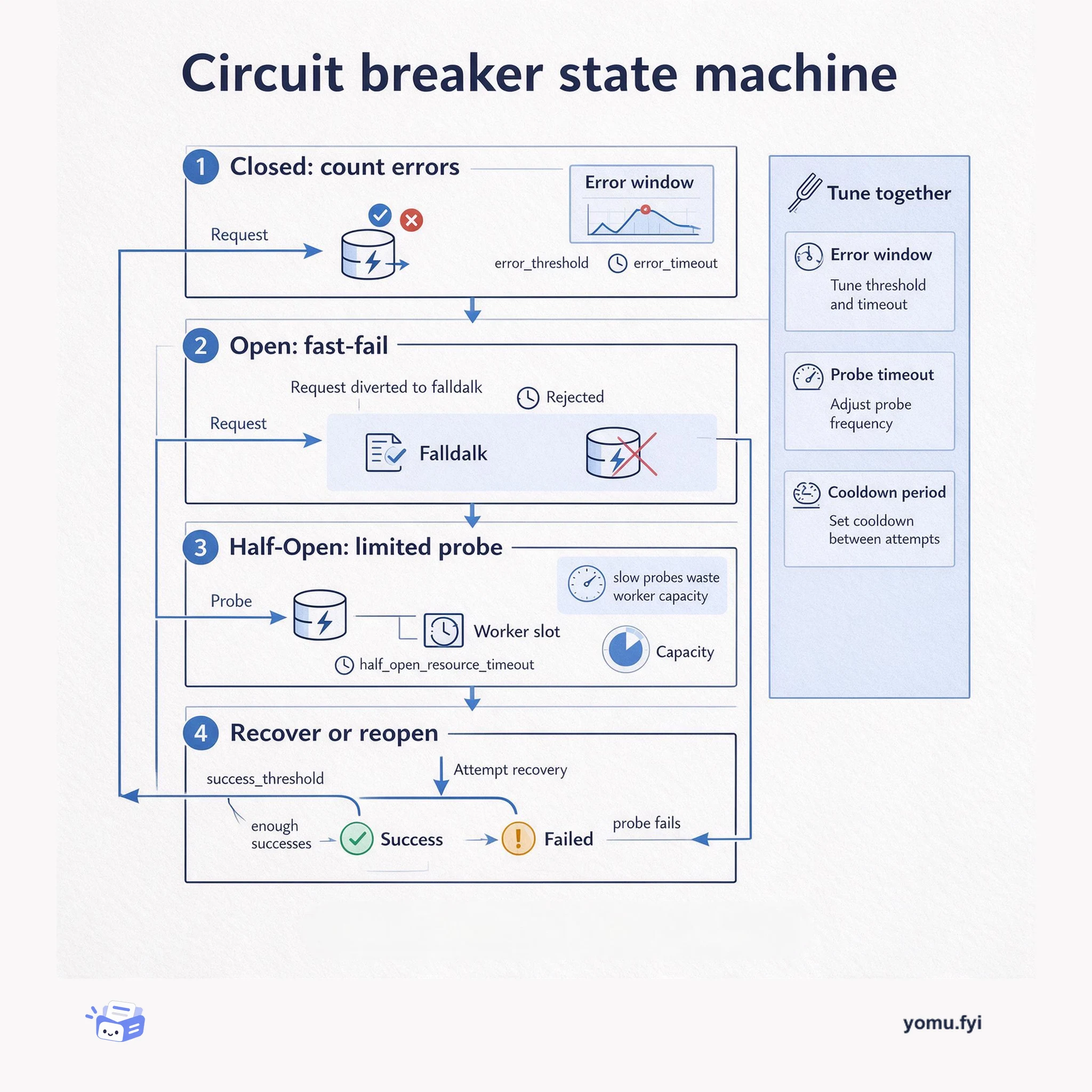
A circuit breaker turns dependency failures into fast failures, then probes for recovery. See the state loop and how half-open probes can quietly consume worker capacity.
Follow one contact through a call center: arrival, routing, handling by a human or AI agent, resolution, and the cost-per-contact math that decides which path to use.
A call center is a pipeline that turns an incoming or outgoing contact into a resolved outcome. A contact arrives over voice, SMS, or chat, gets identified and routed to the right queue, and is handled either by a human agent with assistance or by an AI agent that runs the conversation itself. The final stages are resolution and measurement: cost per contact, resolution rate, and human review of AI answers. Seeing the whole flow lets an engineer compare per-minute, per-hour, and per-resolution pricing models and judge where automation or human oversight actually belongs.
Per-minute and per-hour pricing ties cost to agent time, which is why inbound support is often quoted per minute and outbound calling per hour. Providers using AI agents can instead charge per conversation or per resolution, tying cost to outcomes rather than time. To compare the three models fairly, divide total cost by total contacts handled to get a cost per contact.
The posts behind it
 AWS · · Problem & solution
Novus Hi-Tech needed a system to act on fleet data from thousands of vehicles across 10 countries, not just display it. They collaborated with the AWS PACE team to build FleetGPT, a multi-agent system using Strands Agents SDK and AWS managed AI services. FleetGPT replaces fixed dashboards with a natural language interface for dynamic querying, investigation, and insight generation, and automates real-time safety interventions via AI-powered voice calls. The system achieved a 46 percent reduction in road-behavior violations and a 55 percent drop in drowsiness alerts per 1,000 km. Warning validation time dropped from minutes to seconds, and fleet managers gained self-service analytics without engaging the data team.
 Salesforce · · Problem & solution
The Agentforce team at Salesforce faced the challenge of using AI to help build and maintain the Atlas Reasoning Engine without compromising reliability. The central risk was that AI could diagnose problems, modify the engine, test fixes, and review its own work while being confidently wrong. To address this, the team built an integrated engineering knowledge base using semantic retrieval to connect fragmented knowledge across incidents, fixes, and discussions. They implemented layered AI evaluation with an agent-as-a-judge model and human oversight, using different models to review work from different perspectives to avoid self-preference bias. As a result, typical bug-resolution time dropped from two to four weeks to one or two days, and system availability reached 100% in weekly reports during the observed period.
 Twilio · · Explainer
Broadcast text messaging sends a single SMS or MMS to many recipients at once, with each person receiving it as an individual private text. Unlike group MMS, recipients cannot see each other’s phone numbers or replies, and there is no cap on list size. Businesses use broadcasts for appointment reminders, feedback requests, customer service updates, and time-sensitive promotions. Compliance requires opt-in consent, easy opt-out instructions, sender registration (A2P 10DLC or toll-free verification), and identifying the business in the message. A platform like Twilio handles delivery, opt-out management, and scheduling at any scale.
 Databricks · · Problem & solution
Public sector organizations face unique governance challenges when adopting AI, including data residency restrictions, cost control, and model access, which often cause projects to stall because compliance and budget teams cannot get the answers they need. Traditional AI tools and third-party coding agents were not designed to address these requirements, leaving agencies unable to show regulators where data goes or which teams are driving spending. Databricks addresses this with Unity Gateway, a centralized AI governance solution built into its platform, allowing administrators to control which models are enabled, set hard spending caps by user or team, and enforce data residency policies. The platform also uses Smart Routing to direct routine tasks to lower-cost models, stretching budgets further without sacrificing quality. By providing unified visibility and controls, Unity Gateway enables public sector organizations to adopt AI at scale while meeting strict compliance and budget requirements, reversing the pattern of stalled adoption.
Twilio · · ExplainerCall center outsourcing costs in 2027 range from $0.50 to $1.75 per minute for inbound support and $10 to $50 per hour for outbound calling, depending on location and complexity. Upfront setup costs cover new hardware, software, or training the provider needs. Fixed monthly or usage-based rates typically include staff, equipment, operations, monitoring, and reporting. Some providers, especially those using AI agents, charge per conversation or per resolution, tying cost to outcomes instead of agent time. Businesses should calculate cost per contact by dividing total costs by total contacts handled to compare in-house, outsourced, and AI-assisted options.
More like this
A circuit breaker turns dependency failures into fast failures, then probes for recovery. See the state loop and how half-open probes can quietly consume worker capacity.
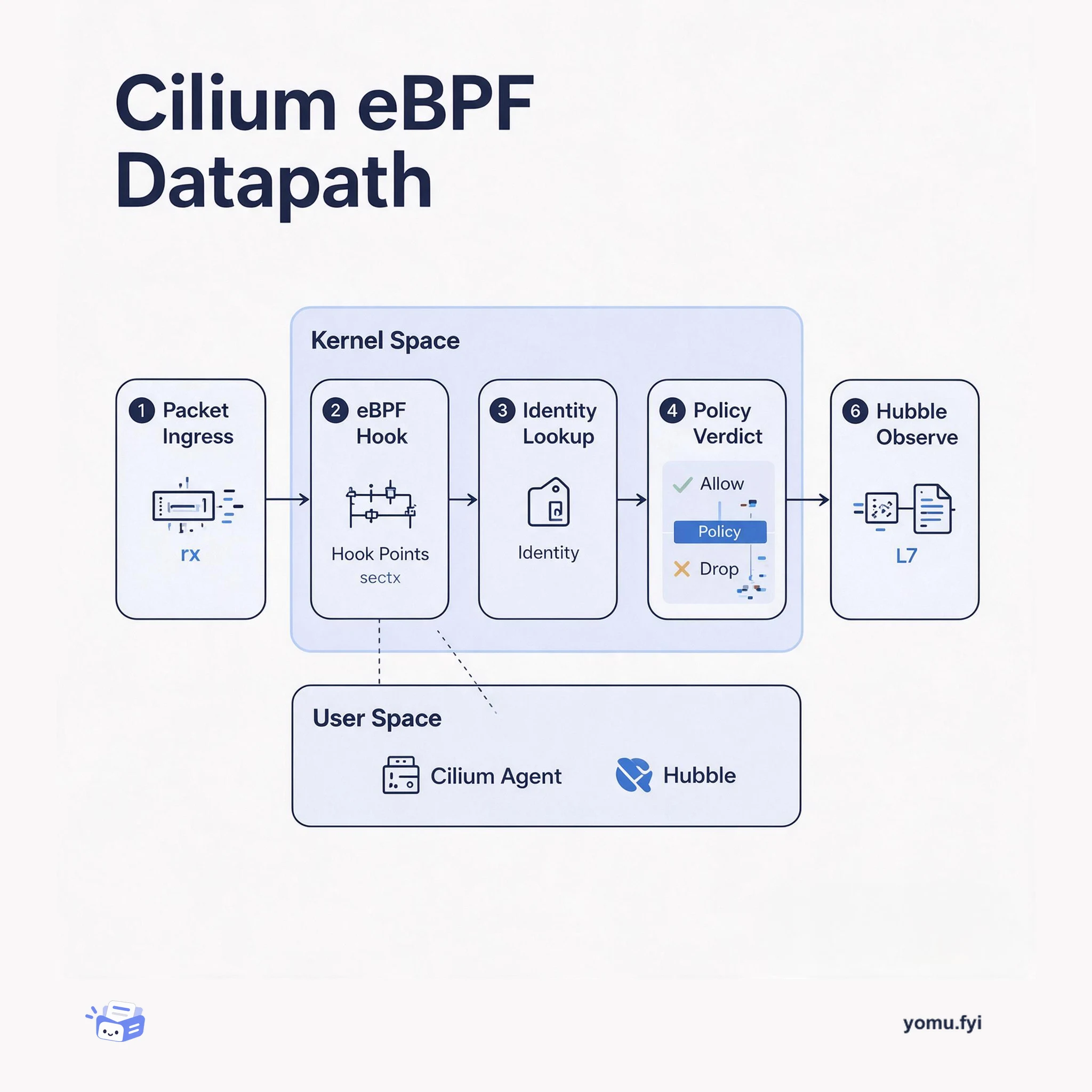
Cilium uses eBPF programs in the Linux kernel to enforce identity-based network policies and capture L7 observability for Kubernetes workloads. This diagram traces the path from packet arrival to policy verdict and Hubble flow.
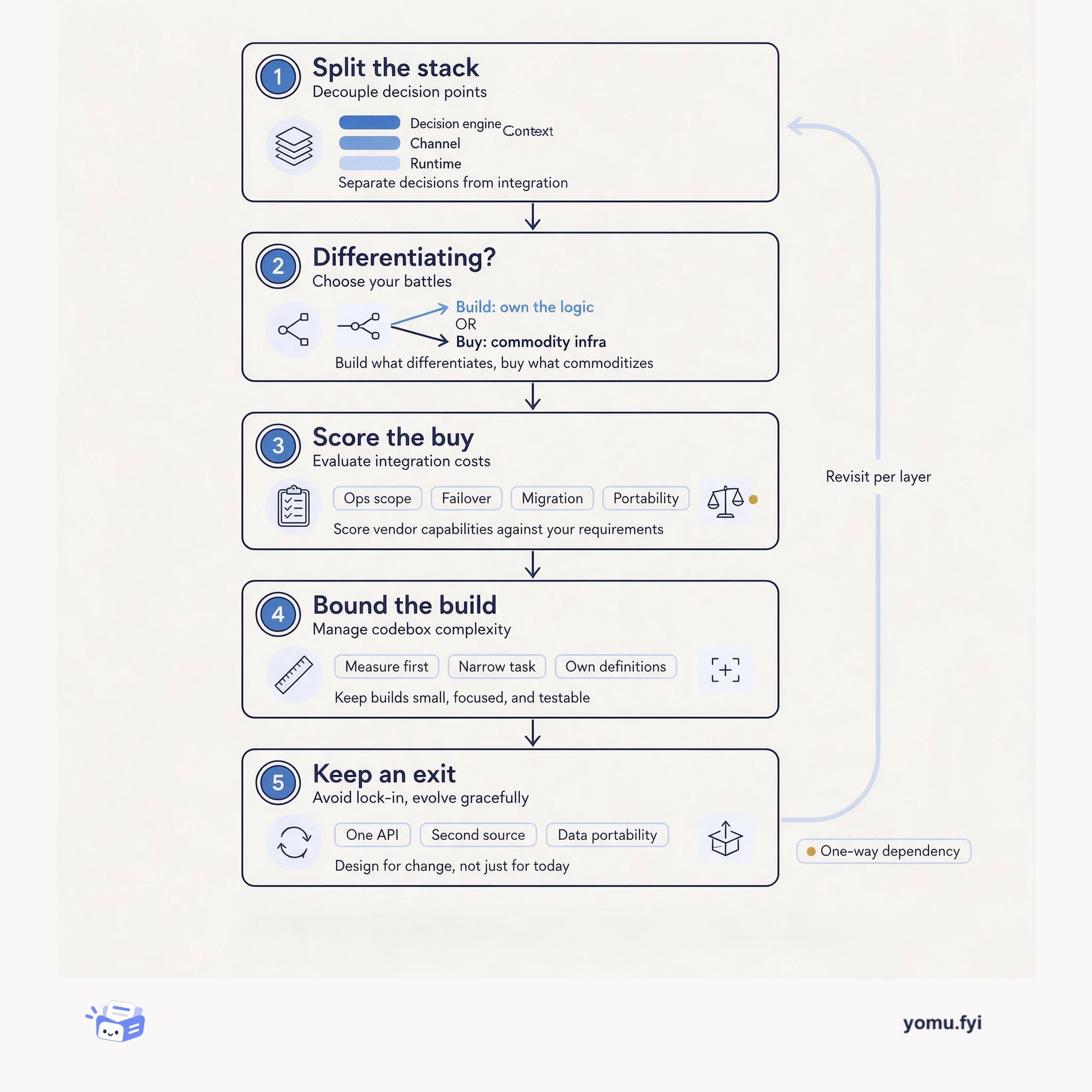
Build vs. buy is a per-layer decision, not a single platform choice. This flow splits a system into layers, tests each for differentiation, then sets the buy criteria and the exit path.
The Good Stuff
Paid picks we use ourselves. Links carry a referral code — a subscription through one earns us a commission at no extra cost to you.
One useful email. Unsubscribe anytime.