From Ringing Line to Resolved Contact: How a Call Center Works
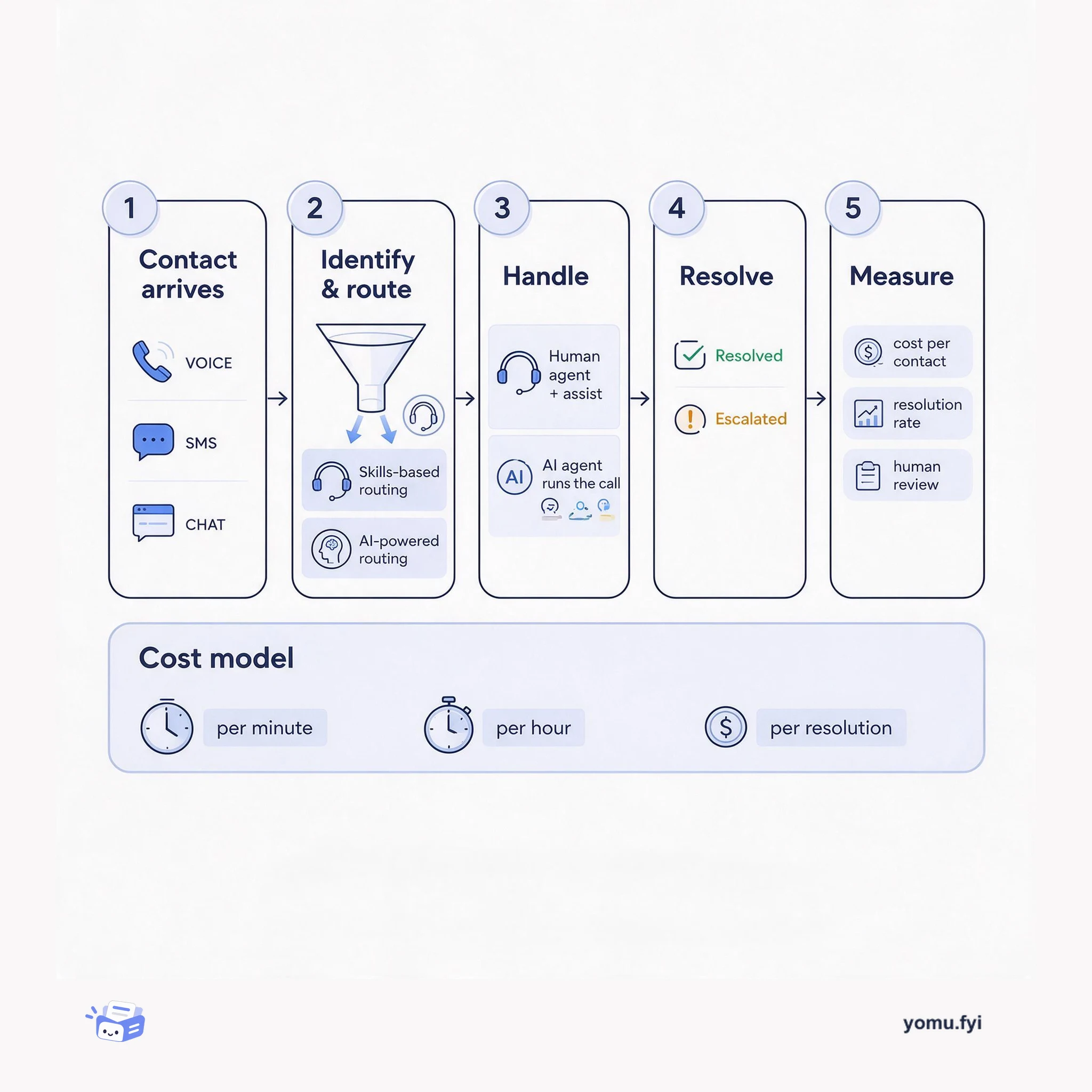
Follow one contact through a call center: arrival, routing, handling by a human or AI agent, resolution, and the cost-per-contact math that decides which path to use.
A certification path breaks one big credential into a sequence: role-based training, milestone Skill Badges, an exam, and a shareable record. Here is how each stage builds on the last.
Professional certification is not a single exam, it is a path. A learner picks a role track, works through training modules, and earns Skill Badges at milestones, so progress becomes visible before the final test. Completing the path unlocks the certification exam, which validates broader job-role expertise rather than one focused skill. The credential only counts if it can be checked, so it is published to a verifiable profile: incremental proof first, then a verified claim.
A Skill Badge recognizes a focused skill earned while moving through training, so progress is visible before the end. A certification validates broader job-role expertise and normally requires passing an exam. In the MongoDB tracks, badges are milestones along the path and the certification is the end state.
Milestone recognition keeps learners engaged instead of waiting until the very end for any signal. It also makes partial progress legible: a badge names one specific skill, while the certification still stands for the whole role. Both can be shared through a credential profile such as Credly.
Look for a verifiable published record rather than a claim on a résumé or profile bio. Credentials are shared through dedicated profiles, and platforms such as Stack Overflow's Developer Story are built around verifiable expertise. Verification is the step that turns training into something an employer can actually check.
The posts behind it
 Google · · Announcement
DevFest, the annual community-led event series hosted by Google Developer Groups, returns for 2026 with the theme of building, securing, and scaling in the agentic era. The series runs from October 1 through December 31, 2026, spanning more than 800 events in 115 countries with nearly one million attendees. Sessions and workshops cover Google AI technologies as well as dedicated tracks for Google Cloud, Android, and Web. Events are organized locally in regional languages and feature speakers such as Google Developer Experts, Google engineers, and local innovators. Community outcomes cited include a real-time transcription tool built in two weeks by local organizers for deaf attendees in Ireland and a Tashkent gathering of over 5,000 participants launching collaborative projects.
 Stack Overflow · · Explainer
Reports of Stack Overflow’s death are exaggerated, as the company adapts to AI-driven changes; 64% of developers in the 2026 survey visit less for simple questions but rely on the site for advanced questions and verification of AI answers. The human-validated content created on Stack Overflow trains large language models and strengthens retrieval systems, often encountered through different interfaces like IDEs. The beta of Stack Overflow for Agents is an API-first knowledge exchange where AI agents can share and verify solutions, and the revived Developer Story lets developers showcase expertise verifiably. Stack Internal, the governed AI context layer for enterprises, captures organizational knowledge with provenance and trust signals, bringing in subject-matter experts when validation is needed. By evolving from a Q&A site into knowledge infrastructure that supports developers, companies, and AI systems, Stack Overflow is not disappearing.
 Jetbrains · · Announcement
JetBrains Academy’s October digest announces AI.js Day 2026, a free online broadcast on November 13 where frontend developers can ask experts from Figma, Chrome, and Storybook about AI tensions. The digest highlights JetBrains Air, which lets developers delegate boilerplate code to an agent while retaining review control with diffs, tests, and the debugger. A free Junie Lite configuration is available until December 31, 2026, requiring only a JetBrains Account. New learning resources include a Coursera specialization, Python Development Essentials for Science and Data, covering Python from Scratch, NumPy Essentials, and pandas Essentials. A free DeepLearning.AI course on AI coding workflows shows how to move from Claude Code to fully local setups, and three Full Stack Python Architect courses pair Django, FastAPI, or Flask with React and vibe coding.
 MongoDB · · Announcement
MongoDB has updated three certification tracks—Associate Data Modeler, Database Administrator, and Atlas Administrator—so their learning paths now align with Skill Badges. Learners earn Skill Badges as they progress through training, giving milestone recognition instead of waiting until the end. Completing the full certification learning path unlocks 50% off the certification exam. The Data Modeler path covers data modeling, schema patterns, and schema optimization; the Database Administrator path covers querying, indexing, monitoring, performance tuning, security, and sharding; the Atlas Administrator path covers database administration, security, networking, and data resiliency in Atlas environments. Skill Badges recognize focused skills, while certification validates broader professional job-role expertise, and both can also be shared through Credly.
More like this
Follow one contact through a call center: arrival, routing, handling by a human or AI agent, resolution, and the cost-per-contact math that decides which path to use.
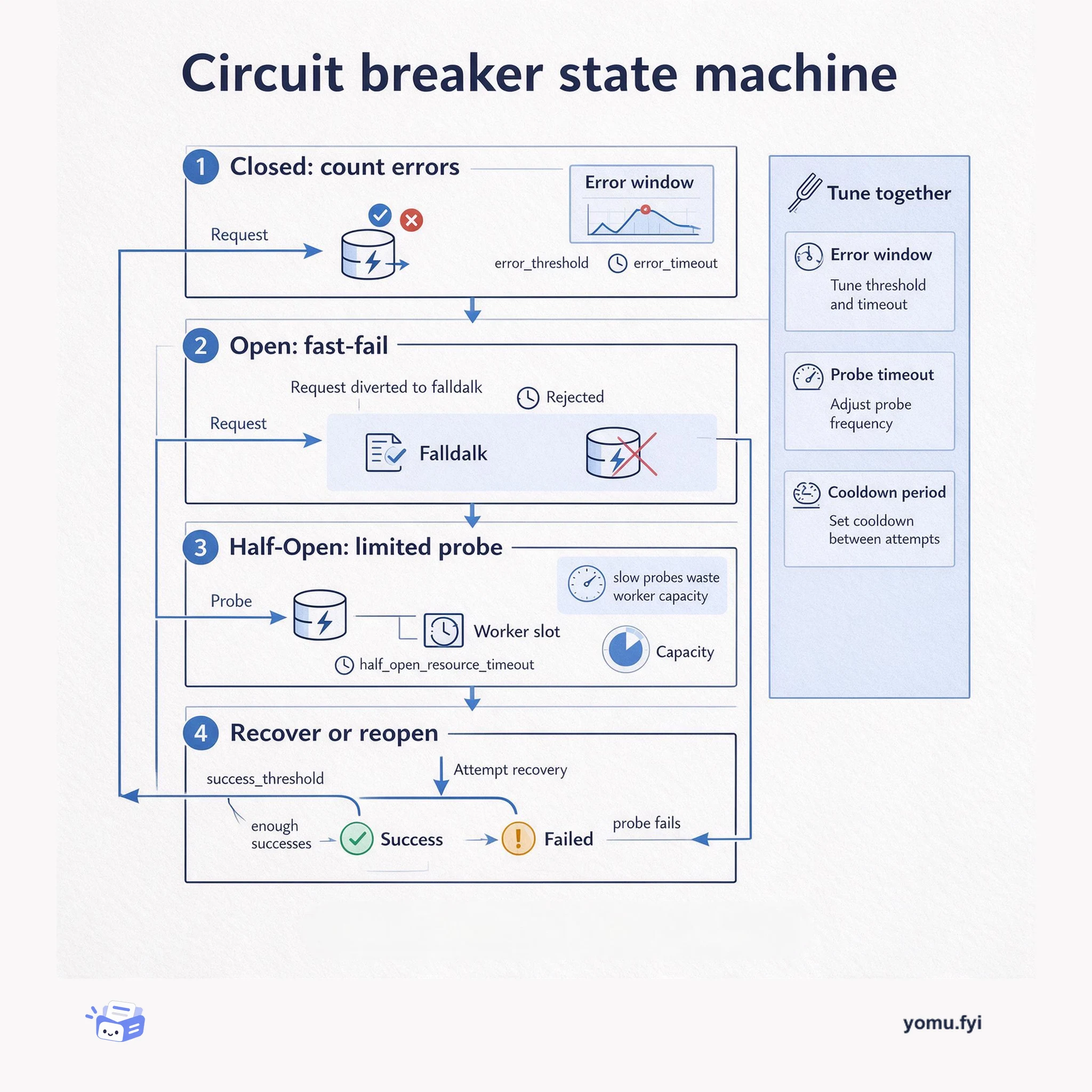
A circuit breaker turns dependency failures into fast failures, then probes for recovery. See the state loop and how half-open probes can quietly consume worker capacity.
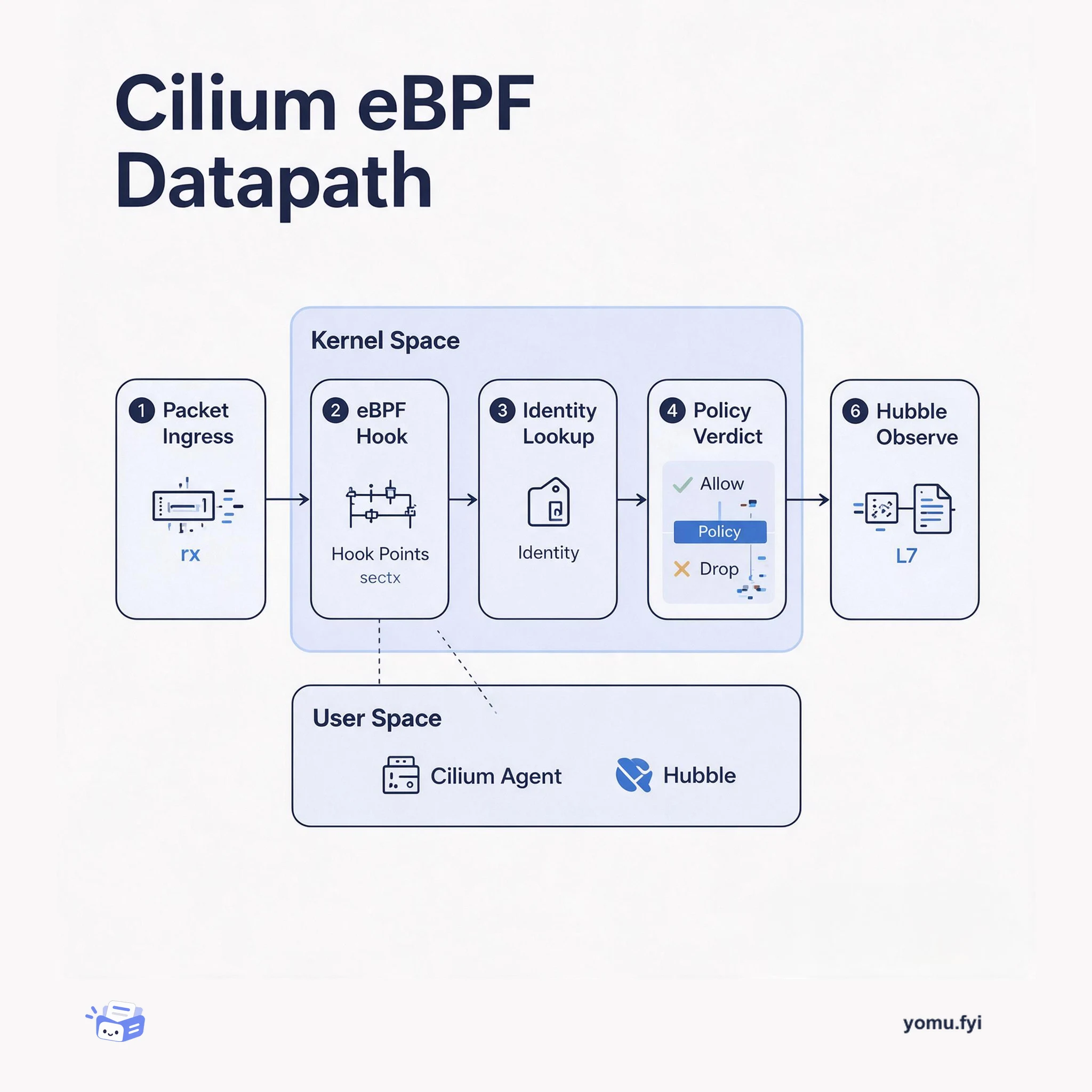
Cilium uses eBPF programs in the Linux kernel to enforce identity-based network policies and capture L7 observability for Kubernetes workloads. This diagram traces the path from packet arrival to policy verdict and Hubble flow.
The Good Stuff
Paid picks we use ourselves. Links carry a referral code — a subscription through one earns us a commission at no extra cost to you.
One useful email. Unsubscribe anytime.