APAC Is Not One Region: The Regionalize vs. Standardize Tradeoff
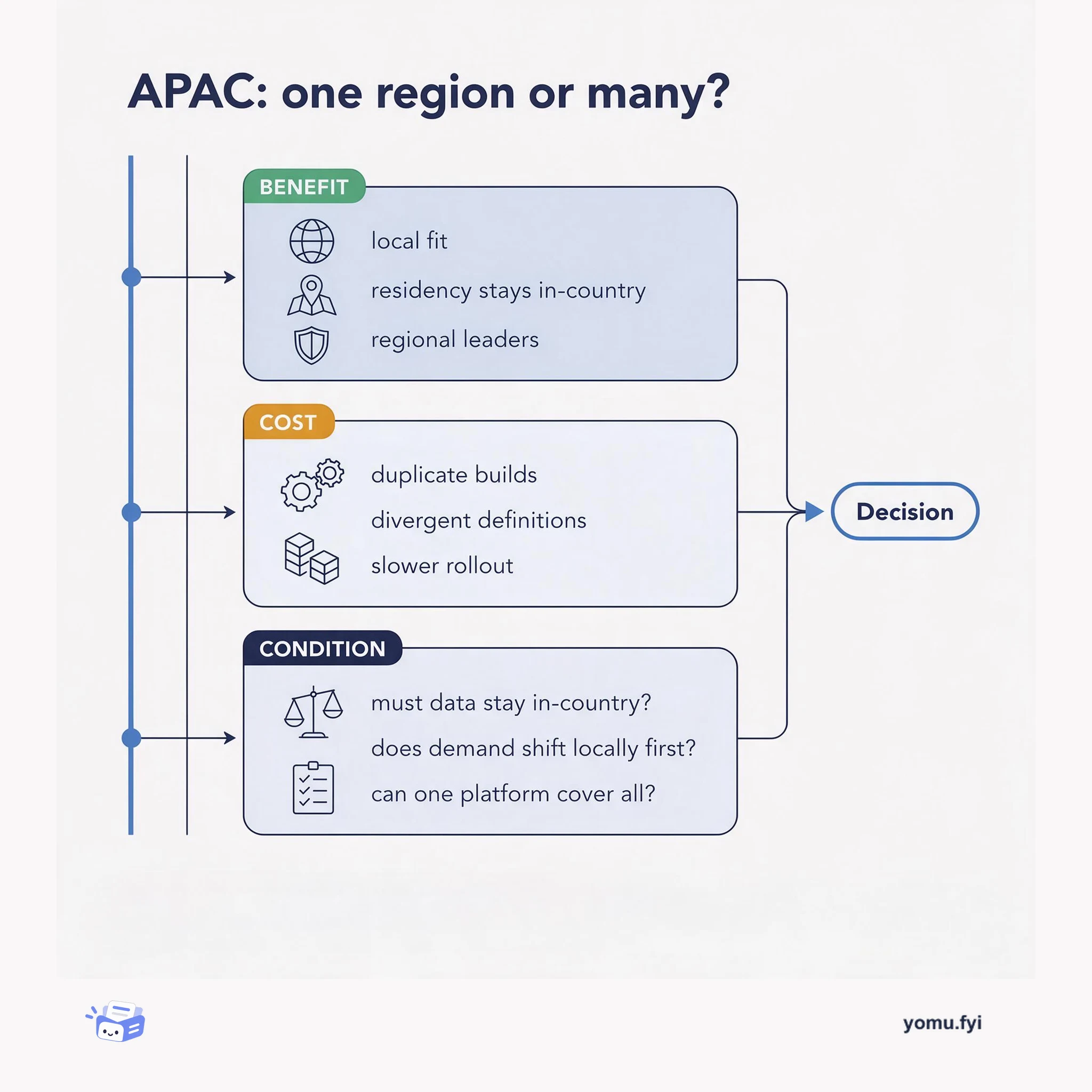
APAC is a federation of markets, not a single deployment region. This diagram maps the tradeoff between local autonomy and one shared platform, and the conditions that decide it.
 DatabricksDatabricks StaffProblem & solution
The post argues that model intelligence is no longer the bottleneck for enterprise AI; the real gap is business context — the unique knowledge about an organization’s processes, customers, and products. Without proper grounding, agents resort to brute force, iterating through guesses and burning tokens while producing unreliable answers. While building a well-grounded agent for a single domain is now easier, scaling context across hundreds of agents in an enterprise remains unsolved due to fragmentation, fast-changing definitions, and differing team-specific interpretations of the same concepts. Genie Ontology addresses this by providing a unified, governed context layer that combines intentionally curated knowledge with automatically learned observations from system usage. This enables every agent connected to Databricks to work from the same consistent business understanding, supporting accurate answers without each agent rediscovering the business from scratch.
An interview with Ken Wong, Sr. Director of Product Management at Databricks, adapted from a webinar. It discusses why model intelligence is no longer the bottleneck for enterprise AI and identifies the enterprise context gap as the primary challenge. Genie Ontology is presented as the solution.
Genie Ontology provides a unified context layer that combines intentionally curated knowledge with automatically learned observations from system operations, giving all agents connected to Databricks a shared, governed understanding of the business.
Enterprise AI’s bottleneck is not model intelligence but business context — the unique knowledge about an organization’s operations, customers, and products that differentiates its AI from competitors.
Agents without proper grounding attempt brute-force iteration, which is slow, token-intensive, and produces unreliable answers because they lack an authoritative retrieval strategy.
Context is fragmented across tools, changes too quickly for upfront formal modeling, and different teams often define the same term differently, requiring systems that can hold multiple definitions and reason through ambiguity.
Existing techniques like memory or system prompts provide personalization for individual interactions, not grounding in an organization's authoritative knowledge sources. Enterprise context requires tapping into company-specific data and definitions that differentiate the business, which goes beyond remembering user preferences.
Genie Ontology holds multiple, sometimes conflicting definitions at once, such as sales' and finance's different definitions of 'bookings.' It lets the agent reason through which definition applies based on who is asking and why, preserving necessary nuance.
Single-agent context is easier to curate for one domain because you only need to model that specific area. Scaling to many agents requires unified governance, a clear source of authority, and the ability to capture dynamic, changing information without upfront modeling for every piece, which traditional approaches can't handle.
Summaries are generated from the original by a language model. Check the original before relying on it.
See the idea
APAC is a federation of markets, not a single deployment region. This diagram maps the tradeoff between local autonomy and one shared platform, and the conditions that decide it.
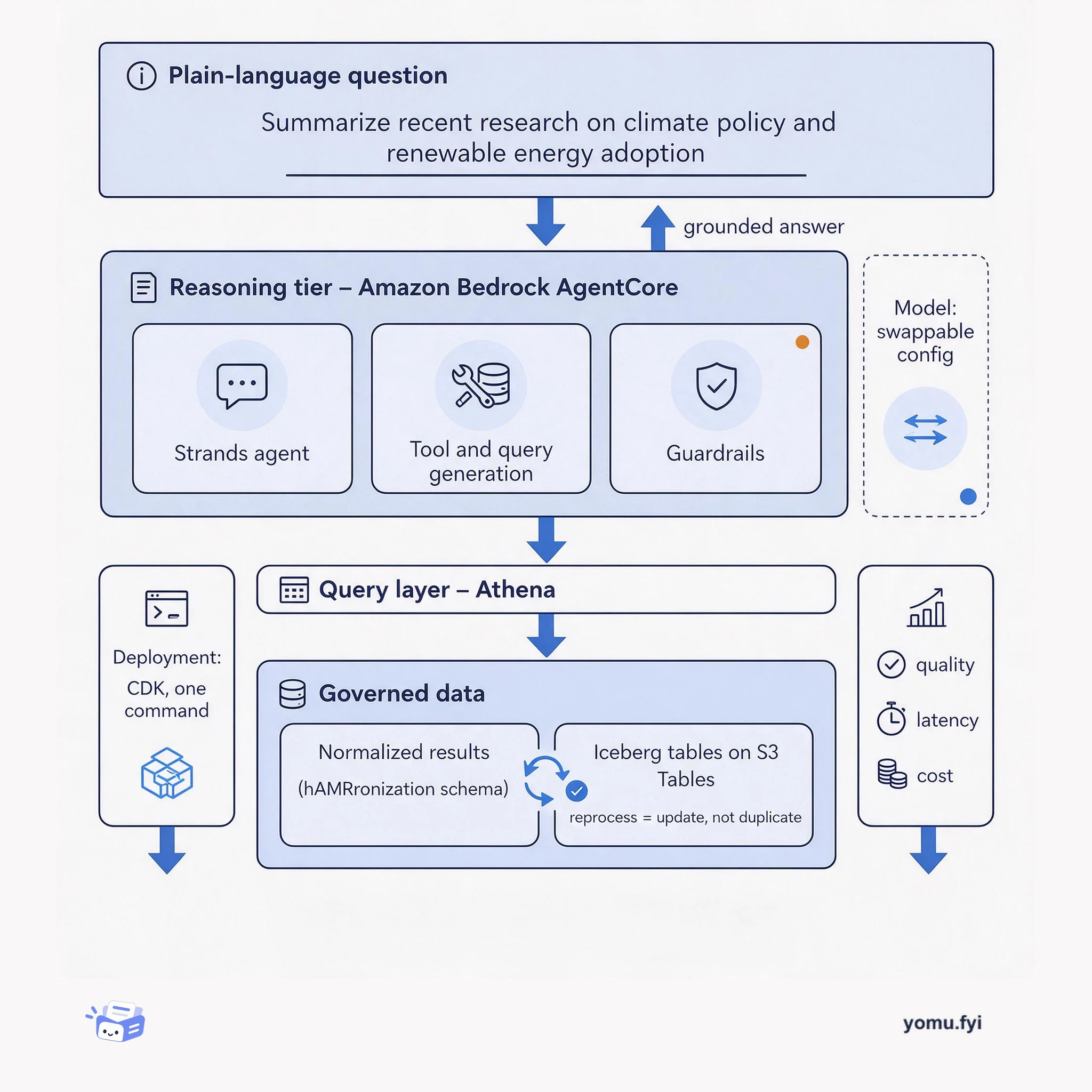
Amazon Bedrock is the managed reasoning tier in an agent architecture, not the whole system. This layered view shows the pipelines, governed tables, query layer, and guardrails around it.
Keep reading
The Good Stuff
Paid picks we use ourselves. Links carry a referral code — a subscription through one earns us a commission at no extra cost to you.
One useful email. Unsubscribe anytime.