The Basecamp Tradeoff: Small Team, Long Product Life
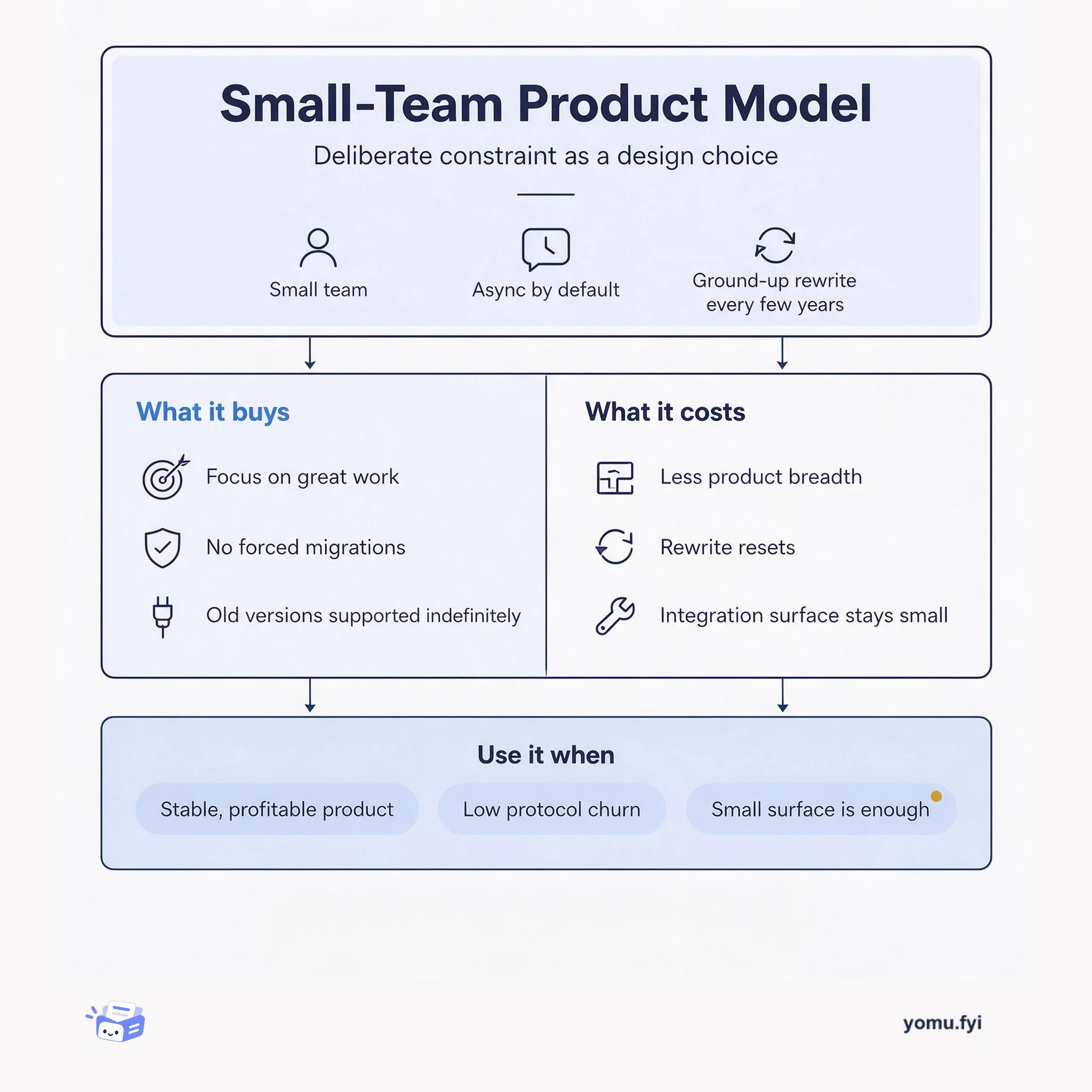
Basecamp keeps a small team, rewrites the product every few years, and supports old versions indefinitely. This diagram maps what that constraint buys, what it costs, and when it fits.
 TwilioJesse SumrakExplainer
Thirty percent of businesses say their tech stacks cannot keep up with customer expectations, but CIOs in Twilio’s Innovators Report modernized customer engagement without full platform replacements. They placed an orchestration layer above systems of record, integrated voice and messaging into existing CRMs, retained control of core decision engines through APs, unified real-time data before scaling A, and shipped gradual changes using sandboxes and feature flags. Sweetwater enabled 850 agents with 50,000 texts and 40,000 calls daily, while WestC achieved 50 to 80 percent higher RCS conversion rates than SMS or email. Lendi Group’s CTO advises unifying the data layer first, as 84 percent of brands say their A can access customer history but only 40 percent design personalization around it. Modernizing the seams between systems is cheaper and safer than replacement, since a non-working layer leaves underlying systems intact.
Many organizations believe their tech stacks cannot keep up with customer expectations, but CIOs in Twilio’s Innovators Report demonstrate that modernizing customer engagement is possible without replacing existing systems. The article outlines five patterns for layering new capabilities over legacy infrastructure.
Place an orchestration layer above existing systems of record; integrate communication APIs into the current CRM; retain control of the decision engine; unify the data layer before scaling AI; and ship changes gradually using sandboxes and feature flags.
WestCX achieved 50 to 80 percent higher RCS conversion rates than SMS or email and a 20 percent revenue uplift by layering orchestration across existing systems without replacement.
Sweetwater deploys new contact center configurations in under two days using sandboxes, feature flags, and automated compliance checks built into its CRM.
Lendi Group’s CTO recommends unifying the real-time data layer before scaling AI, as fragmented data reproduces fragmentation at higher speeds.
Yes. WestCX built its orchestration platform across existing EHRs, CRMs, and CCaaS systems instead of replacing them, and Sweetwater integrated voice and messaging into its existing CRM.
Yes. Lendi Group's CTO recommends unifying the real-time data layer before scaling AI. Twilio research found 84 percent of brands say their AI can access customer history while only 40 percent design personalization around it.
Nova Gestões' CTO recommends keeping your own orchestration layer and decision engine, integrating through documented APIs instead of handing over core business logic.
Summaries are generated from the original by a language model. Check the original before relying on it.
See the idea
Basecamp keeps a small team, rewrites the product every few years, and supports old versions indefinitely. This diagram maps what that constraint buys, what it costs, and when it fits.
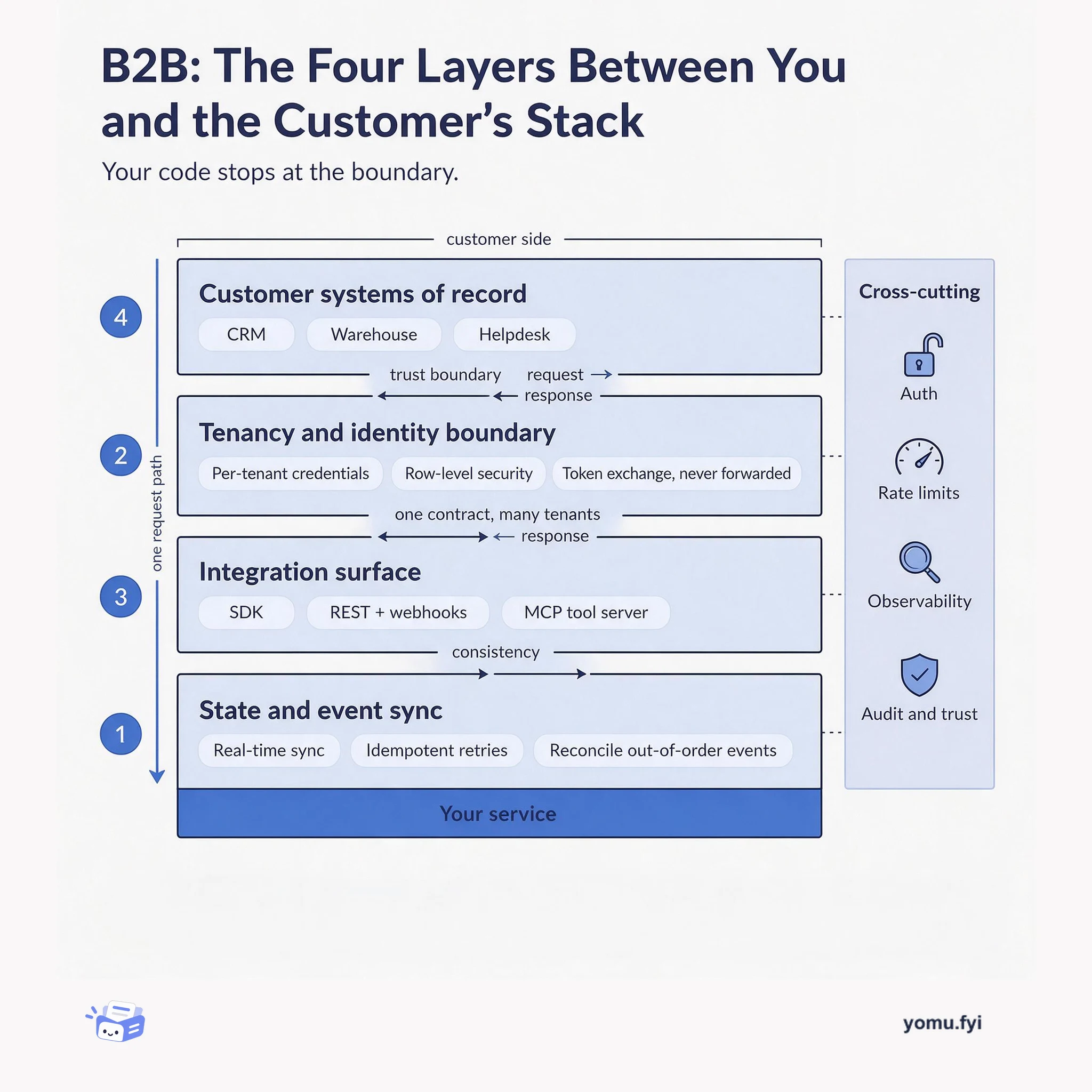
In B2B, most of the engineering lives in the seams: the tenancy boundary, the integration surface, state sync, and the cross-cutting trust rail. This diagram maps those four layers end to end.
Keep reading
The Good Stuff
Paid picks we use ourselves. Links carry a referral code — a subscription through one earns us a commission at no extra cost to you.
One useful email. Unsubscribe anytime.