The Basecamp Tradeoff: Small Team, Long Product Life
Basecamp keeps a small team, rewrites the product every few years, and supports old versions indefinitely. This diagram maps what that constraint buys, what it costs, and when it fits.
Basecamp's engineering model trades breadth for longevity. A deliberately small team, asynchronous written communication, and a ground-up rewrite every few years keep the product focused, while older versions are supported indefinitely so customers are never forced onto the vendor's release schedule. The explainer weighs what that constraint buys against what it costs, then names the conditions that make it the right call. The same ownership boundary appears elsewhere: teams that keep their surface small can avoid building an internal AI context layer or a duplicated operations stack, while platform teams that must own that layer inherit compounding maintenance.
FAQ
When does keeping the product surface small stop being an advantage?
When the product's value depends on an ecosystem you must operate, such as tool integrations or an internal knowledge layer. Those teams end up owning authentication, rate limiting, health checks, and content maintenance anyway, and that maintenance compounds as vendor APIs and content change. Keeping the surface small only pays off if someone else absorbs that operational layer.
What does async-first communication cost a team?
An async, organized communication model favors focus over instant reply and avoids the interruptions of chat-first coordination. The tradeoff is latency, since decisions depend on written clarity and can take longer to converge than a quick thread. Teams get fewer context switches in exchange for slower real-time coordination.
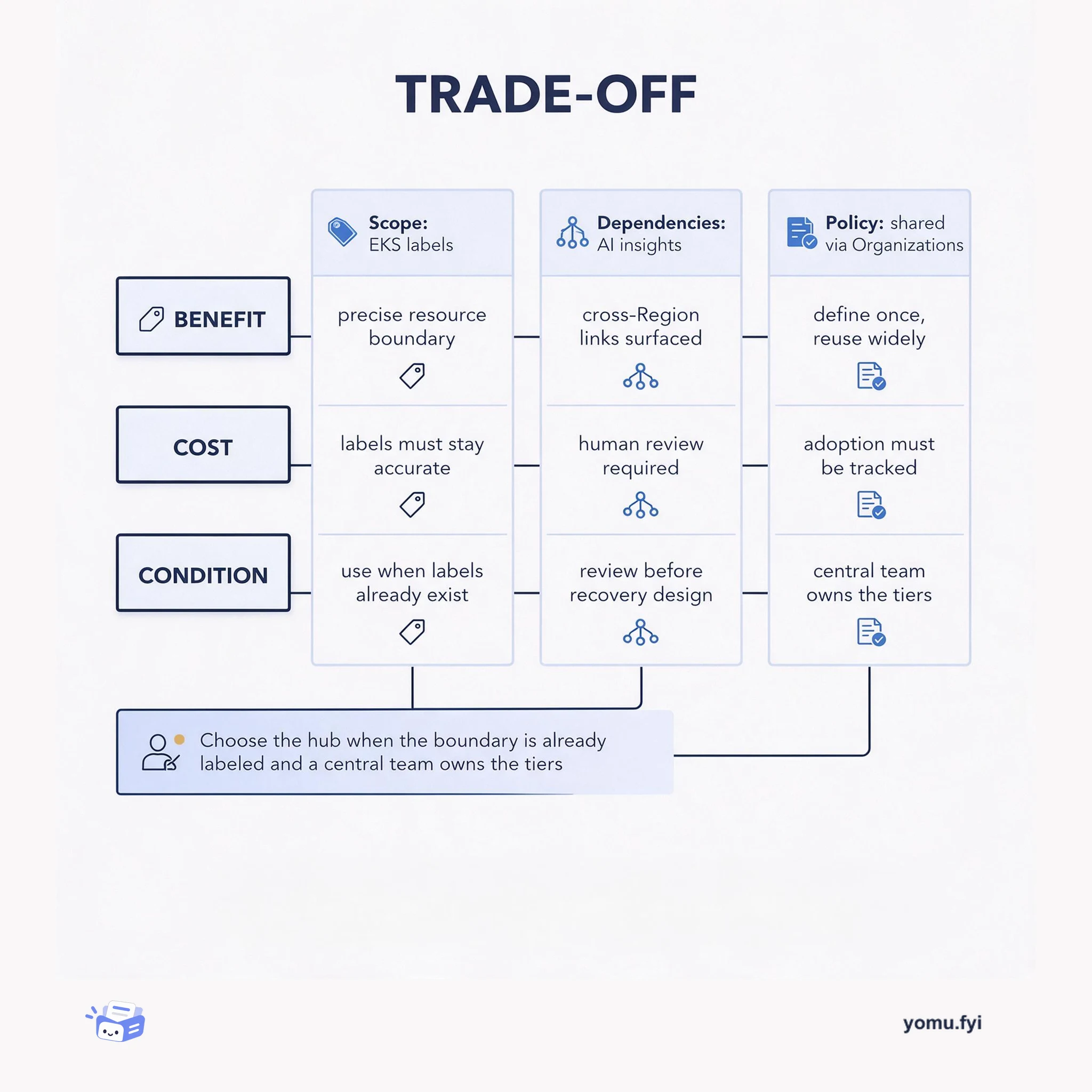
AWS Resilience Hub turns resilience goals into scoped, shareable policies. This explainer maps three trade-offs: label precision versus upkeep, central policy versus local adoption, and assessment versus drift.
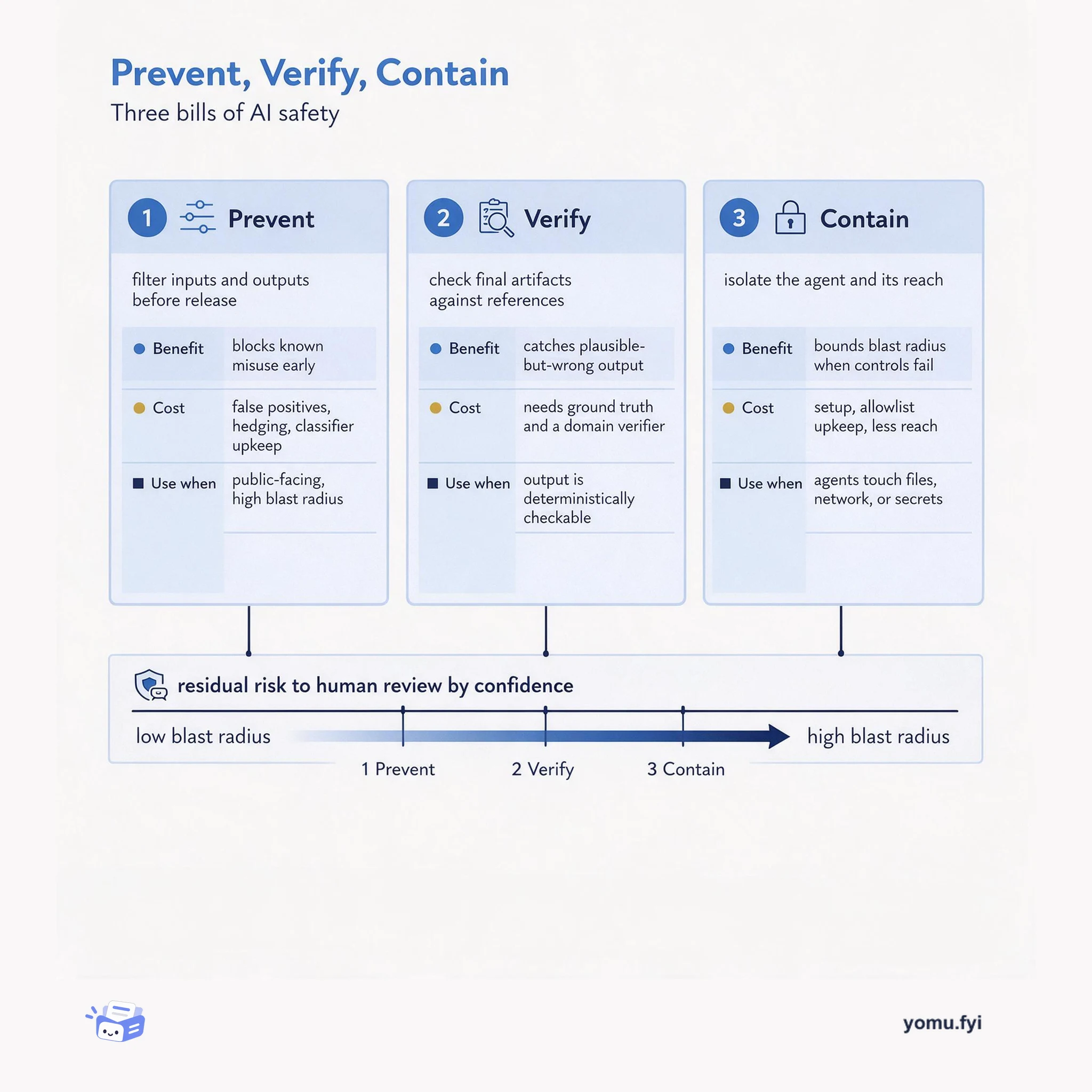
AI safety is a budget: prevention, verification, and containment each buy different protection at a different cost. This map shows what each control costs and when it pays off.
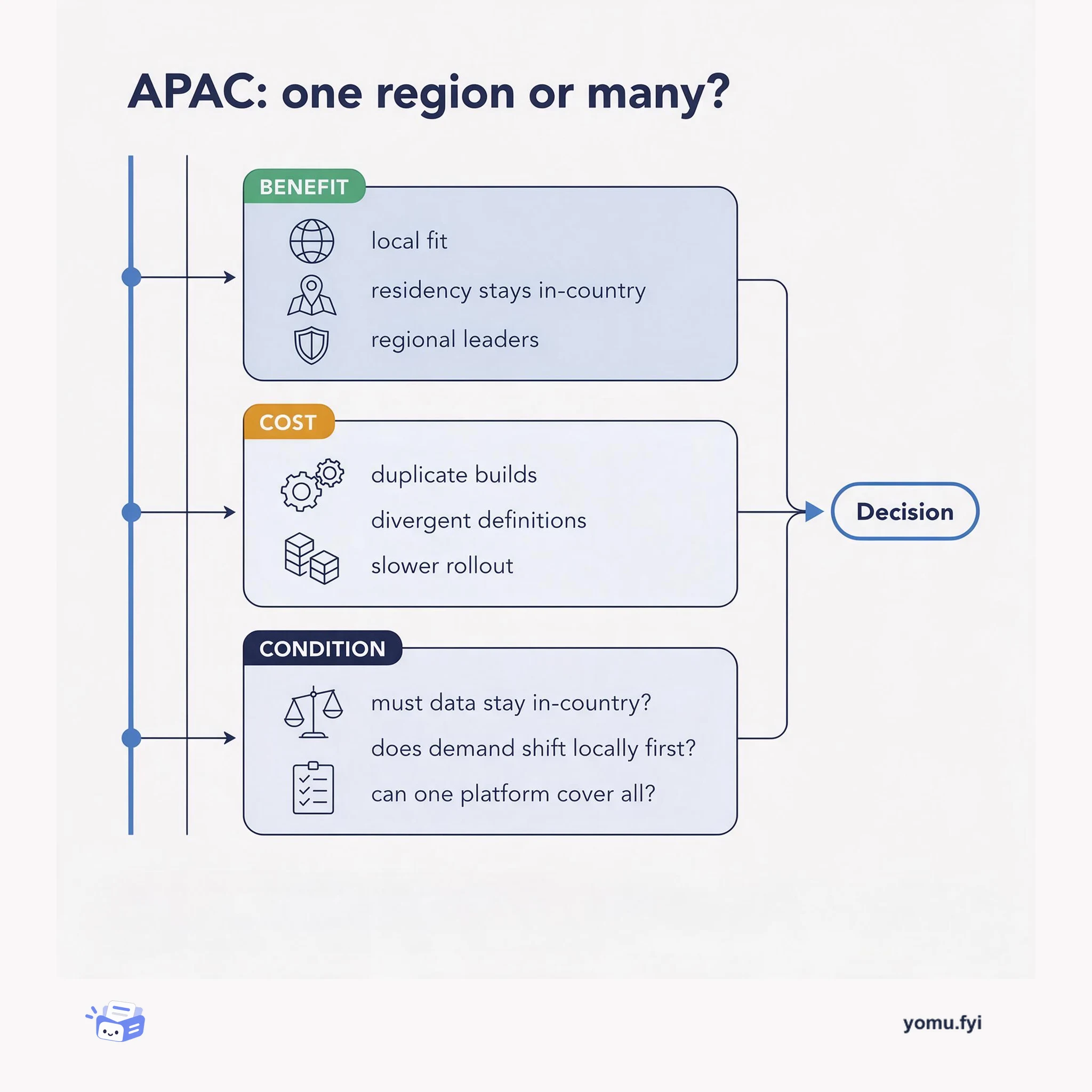
APAC is a federation of markets, not a single deployment region. This diagram maps the tradeoff between local autonomy and one shared platform, and the conditions that decide it.
The Good Stuff
Paid picks we use ourselves. Links carry a referral code — a subscription through one earns us a commission at no extra cost to you.