How to Build an ASL Gloss Workflow That Keeps Context
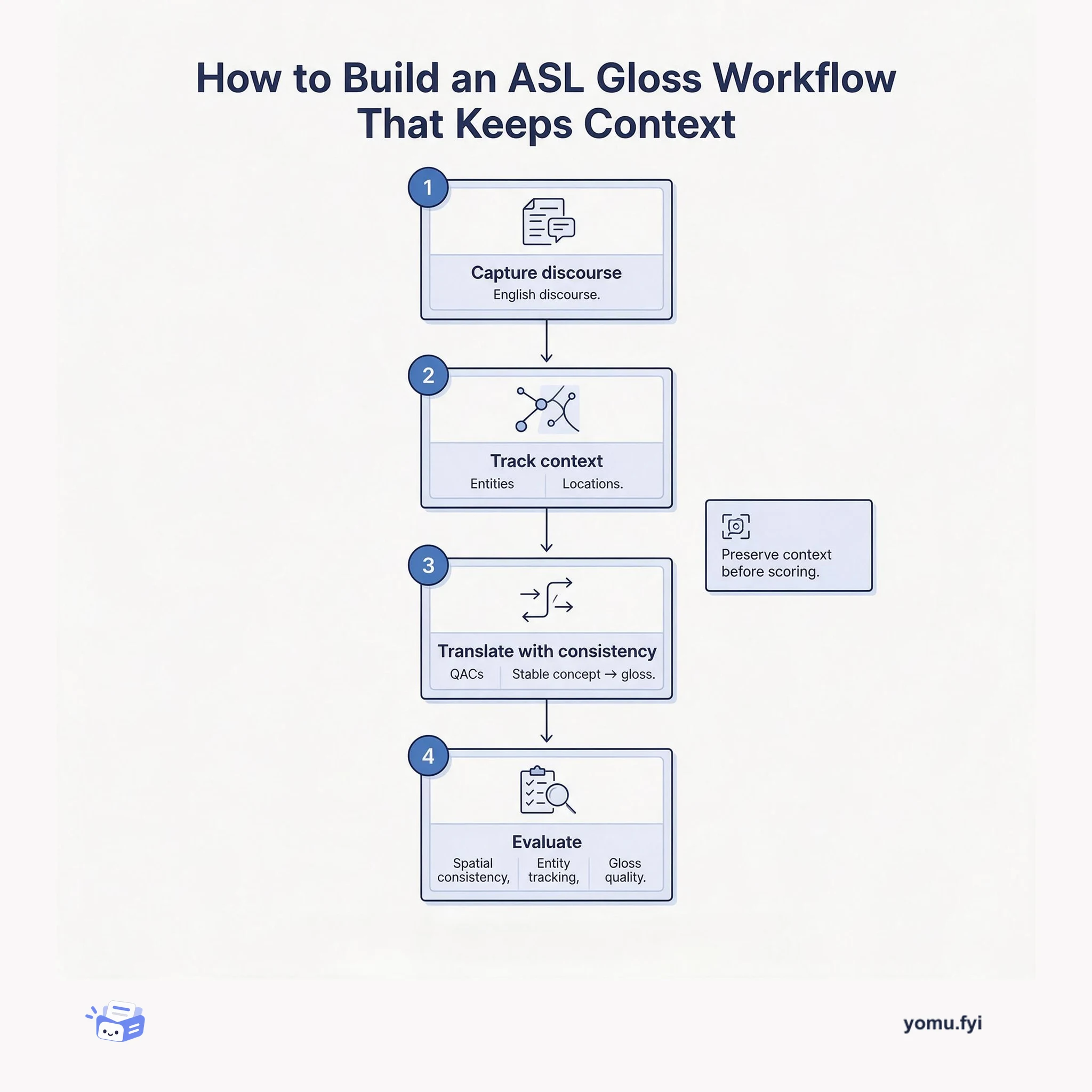
Learn a practical workflow for translating English discourse into ASL gloss while preserving spatial references, question-answer structure, and consistent concept-to-gloss mappings.
Loading…
Topic
508 posts about AI. Every summary links to the original.
See the idea
Learn a practical workflow for translating English discourse into ASL gloss while preserving spatial references, question-answer structure, and consistent concept-to-gloss mappings.
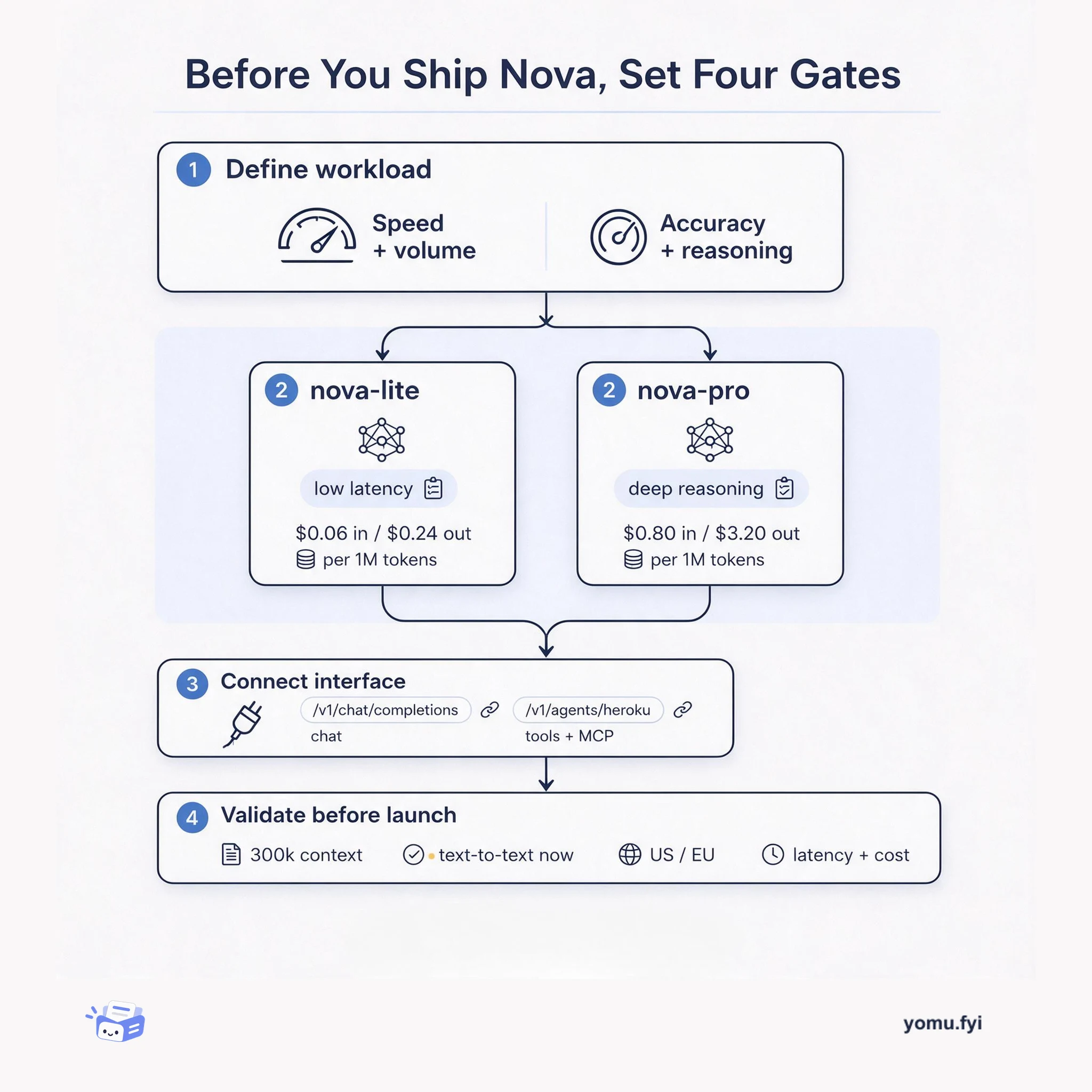
A practical checklist for putting Amazon Nova into an application: choose nova-lite or nova-pro by workload, expose tools, and verify context, modality, region, and cost constraints.
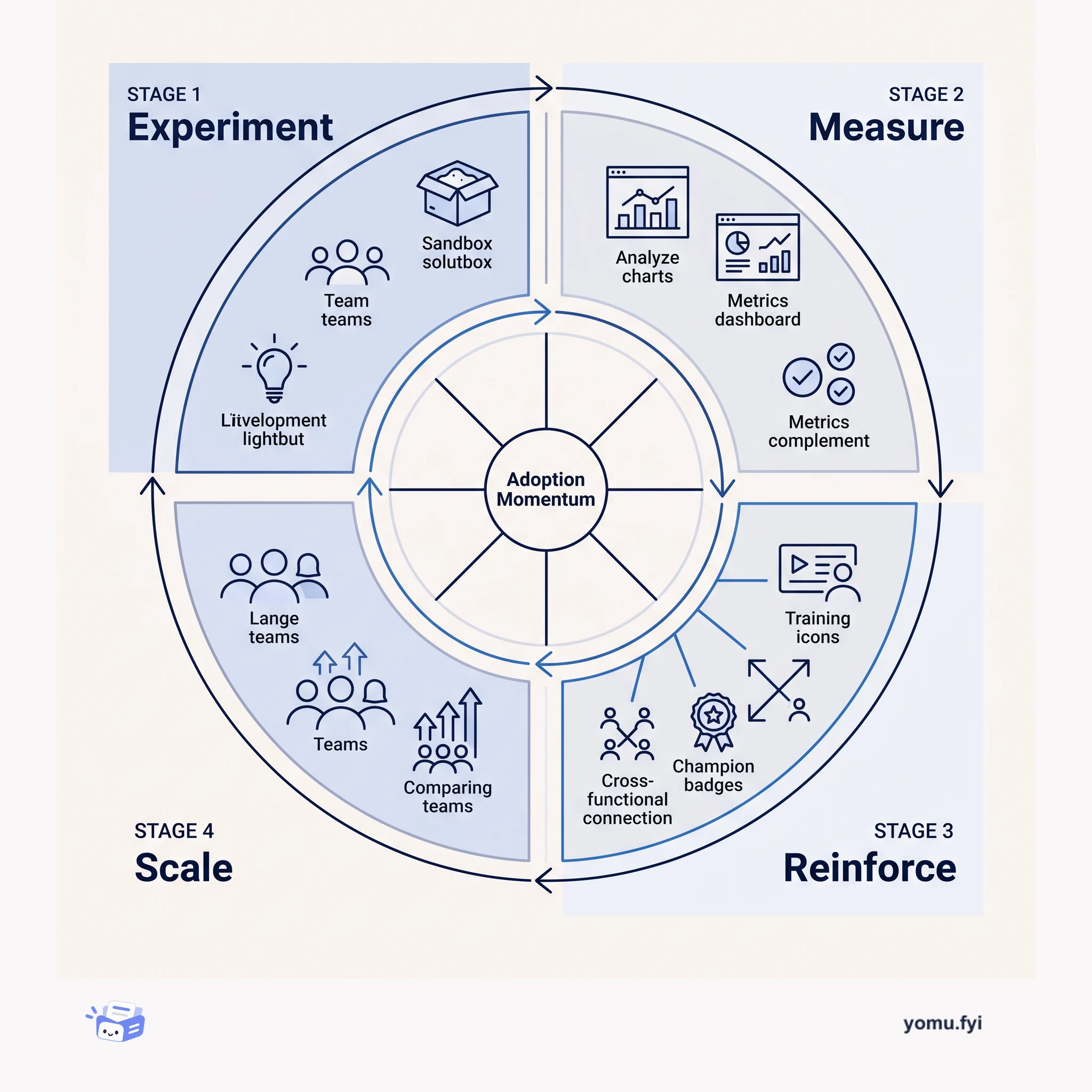
Adoption moves through experimentation, measurement, and reinforcement loops. Learn how leading companies build momentum from pilot programs into enterprise-wide habits and measurable business impact.
The Good Stuff
Paid picks we use ourselves. Links carry a referral code — a subscription through one earns us a commission at no extra cost to you.
Newest first
The walkthrough shows how to connect an OpenAI custom GPT to a Node.js backend that provides natural-language access to an employee directory. It builds an Express API with a POST /search endpoint, where OpenAI’s Chat Completions API converts a user’s question into a single SQL query, the database returns rows, and a second OpenAI call turns those rows into a natural-language response. The project uses Heroku Postgres, environment configuration, bearer-key authentication, Swagger UI, and an OpenAPI specification imported into the GPT action. The deployment flow covers seeding dummy records, deploying from a GitHub-connected repository, and configuring the action to call the hosted API, while noting that data leaves Heroku’s trust boundary for OpenAI services.
eBay sets out principles for developing and using AI-powered customer tools and services while addressing safety and community needs. Its framework covers reliability, safety, security, inclusivity, equity, fairness, accountability, lawfulness, privacy by design, and transparency. The company says it rigorously tests AI technologies, protects confidential data used to train or operate systems, includes measures to avoid excluding groups, and applies quality and safety checks to datasets. It also calls for human oversight throughout development, launch, and monitoring, risk-based decisions, regulatory compliance, and privacy-focused design using state-of-the-art methods. For users, eBay says transparency may involve disclosures within an experience or broader communication, depending on lifecycle stage and the audience.
eBay Chief AI Officer Nitzan Mekel-Bobrov discusses his role, artificial intelligence’s changing landscape, and eBay’s position in ecommerce. He says the company’s powerful private cloud, combined with integration with public cloud providers, supports AI at scale and in real time. As a two-sided marketplace, eBay can apply AI to sellers and buyers through a magical listing tool for complex specifications, assistance finding hard-to-find items, and image generation that improves and expands user-provided visuals. For buyers, it can also interpret a vehicle problem, identify needed items and options, and present them without requiring a search through listings. Looking ahead, Mekel-Bobrov describes AI shopping assistants as category-informed chatbots that may act autonomously toward desired outcomes rather than merely execute assigned tasks.
The post explains how graphics hardware evolved from CPU-offloaded video rendering into modern GPUs and why those devices now matter for AI/ML. It traces the path from the Commodore 64’s VIC-II and 3D accelerator cards through Quake, Tomb Raider, integrated graphics, and increasingly parallel hardware, while describing components such as framebuffers, command processors, shader hardware, memory, and display outputs. It then connects shader and CUDA cores to workloads including GPT-2, Stable Diffusion, and speech or text processing, and presents model chaining as more useful than treating models as isolated tools. A conference-video workflow combines ffmpeg, Whisper, subtitle segmentation, a large language model, Markdown, and human review to produce accessible written material. The conclusion distinguishes graphics-capable cards from A100 accelerators, which the post says cannot process graphics or encode video but are highly effective for AI/ML workloads.
The post argues that applications with critical AI features should avoid relying on proprietary, externally hosted models such as OpenAI’s ChatGPT and consider self-hosted open source alternatives. It identifies single-provider, regulation or policy, financial, and governance risks, illustrating the first with a Personal AI Fitness Trainer that failed during an OpenAI outage on November 8, 2023. When the AI is the app’s primary value proposition, an outage, changed behavior, denied usage, price increase, or provider leadership crisis can make the service unusable or threaten the business; less-central integrations may instead cause only degraded experience. Self-hosting a model can insulate an application from provider interruptions, licensing or usage-fee changes, regulator- or company-driven behavior changes, and leadership turmoil, while introducing GPU capital and operating costs with rented cloud GPU access available as an alternative to owning GPUs.
The AI and Identity - Okta Hackathon 2023 challenged developers to build applications combining identity standards with AI, drawing 576 registrants, 22 submissions, and nine eligible entries. Judges selected Facets Wellness App for first place and $10,000 plus a future Okta Dev Advocacy Podcast appearance; IHealthHist took second with $5,000, and AITrainsYou.com took third with $3,000. Facets provides snippet-based wellness modules for emotional regulation and intelligence, journaling, values, and goals, while the other winning projects address medical-history storage and AI-powered team learning. converse.ai received the $500 honorable mention for document conversations, with judging comments citing implementations of OIDC, SCIM, and AI across the winners. Separate “most supportive hacker” prizes went to Hong Tran, Monish Basaniwal, and Deependra Gaur for forum support and guidance.
Ramp describes principles for building customer-focused AI, contrasting embedded outcomes with superficial chatbot experiences it calls “AI washing.” The approach emphasizes integrating models into workflows, separating general models trained on aggregated and masked data from sensitive models that use private customer data temporarily through in-context learning, and requiring explicit opt-in for sharing contract data. It prioritizes user control and feedback over lengthy explanations, while using guardrails that constrain outputs through predefined interactive data blocks rather than relying only on censorship filters. Ramp cites contract term extraction, spend intelligence, pricing benchmarks, Copilot, and Jsonformer as examples of these practices. The stated goal is AI that saves customers time and money while protecting privacy and producing safer, more useful results.
The post argues that “prompt design” better describes prompt construction than “prompt engineering,” comparing it with web design. It frames prompts as clear communication with dynamic inputs that must adapt to changing content and context-window limits, then identifies shared practices such as inspecting rendered output, using composable declarative components, and pursuing precise formatting. For LLM agents, the analogy extends to interactive websites whose prompts re-render after function calls, although text-only output and caching constraints differ. This perspective motivates Priompt, a React-like, JSX-based library used internally at Cursor, with a preview site that renders prompts using real request data and serialized props; the author considers JSX more ergonomic than string templates while noting that model capabilities and platform abstractions may weaken the analogy over time.
The best engineering reads, once a week.