The Adoption Flywheel: From Experimentation to Scaled Use
Adoption moves through experimentation, measurement, and reinforcement loops. Learn how leading companies build momentum from pilot programs into enterprise-wide habits and measurable business impact.
Technology adoption rarely happens through mandates alone. The most successful programs combine small, practical experiments with clear measurement and feedback loops that build organizational confidence and usage momentum. By starting with sandbox environments, departmental champions, and documented wins, teams create proof points that justify broader rollout. Measurement—tracking usage, new use cases, satisfaction, and business outcomes—reveals what works and what needs adjustment. Reinforcement through training, peer champions, and cross-functional partnerships then accelerates adoption into lasting work habits. Understanding this cycle helps engineers and leaders design adoption strategies that stick.
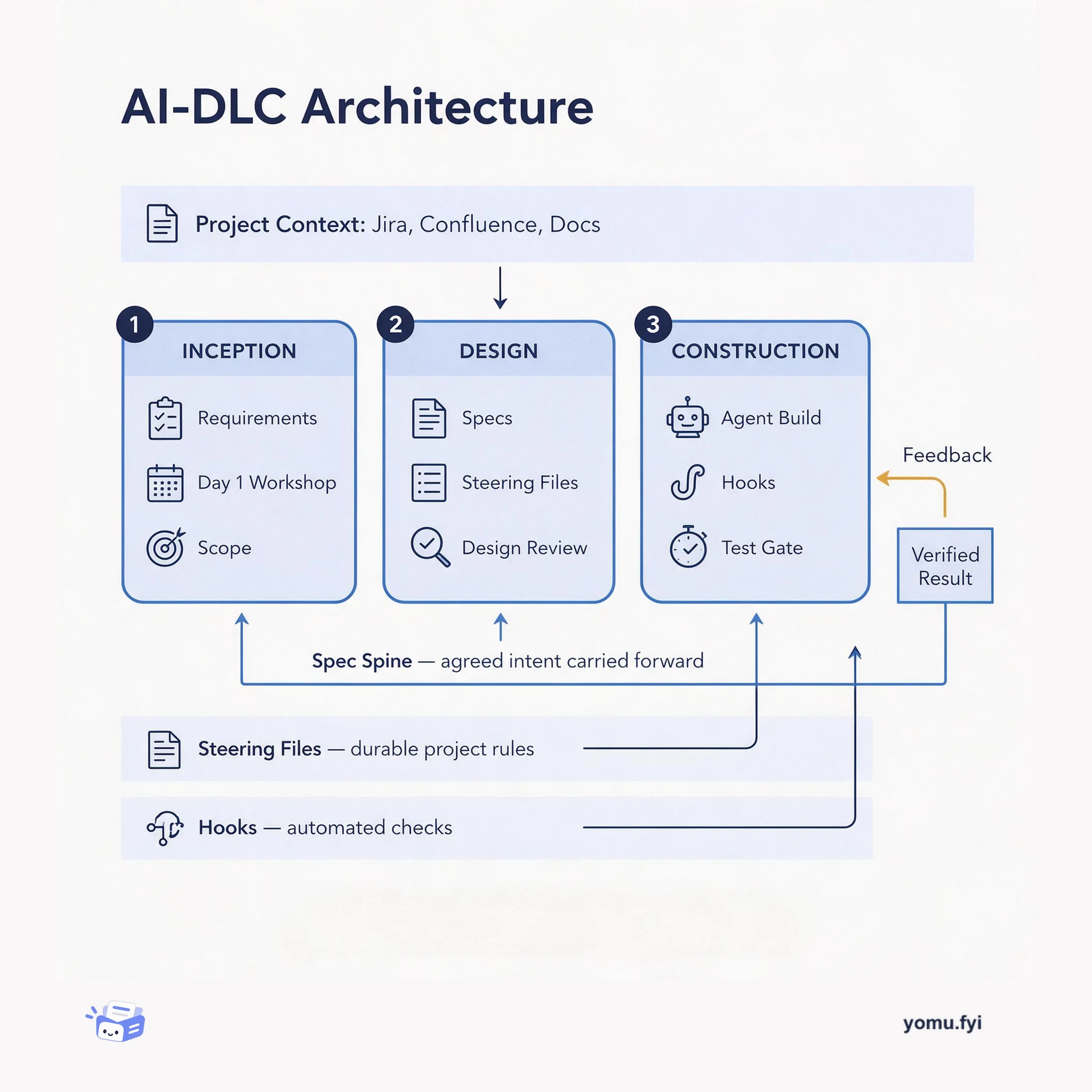
AI-DLC is an AI-driven development lifecycle that runs delivery through Inception, Design, and Construction, with specs, steering files, and hooks keeping agents aligned to agreed intent.
Apple Silicon's defining choice is one shared memory pool for CPU, GPU, and Neural Engine. This diagram maps that fabric, the on-package bandwidth it buys, and the scaling limits it imposes.
Antimicrobial resistance surveillance is a layered data architecture: raw reads and demand signals flow in, get normalized into governed tables, and answer plain-language queries. The diagram maps each boundary.
The Good Stuff
Paid picks we use ourselves. Links carry a referral code — a subscription through one earns us a commission at no extra cost to you.