Bare Metal: Performance Bet vs. Operations Tax
Bare metal gives engineers direct control over GPU, network, and virtualization layers, but it shifts elasticity and lifecycle work onto the team. This trade-off map shows when that bargain pays off.
Loading…
Topic
144 posts about Kubernetes. Every summary links to the original.
See the idea
Bare metal gives engineers direct control over GPU, network, and virtualization layers, but it shifts elasticity and lifecycle work onto the team. This trade-off map shows when that bargain pays off.
Argo CD is a GitOps controller that treats Git as the desired state and continuously reconciles it against what actually runs in each cluster. It maps the parts of that loop and why pull-based agents change its scale.
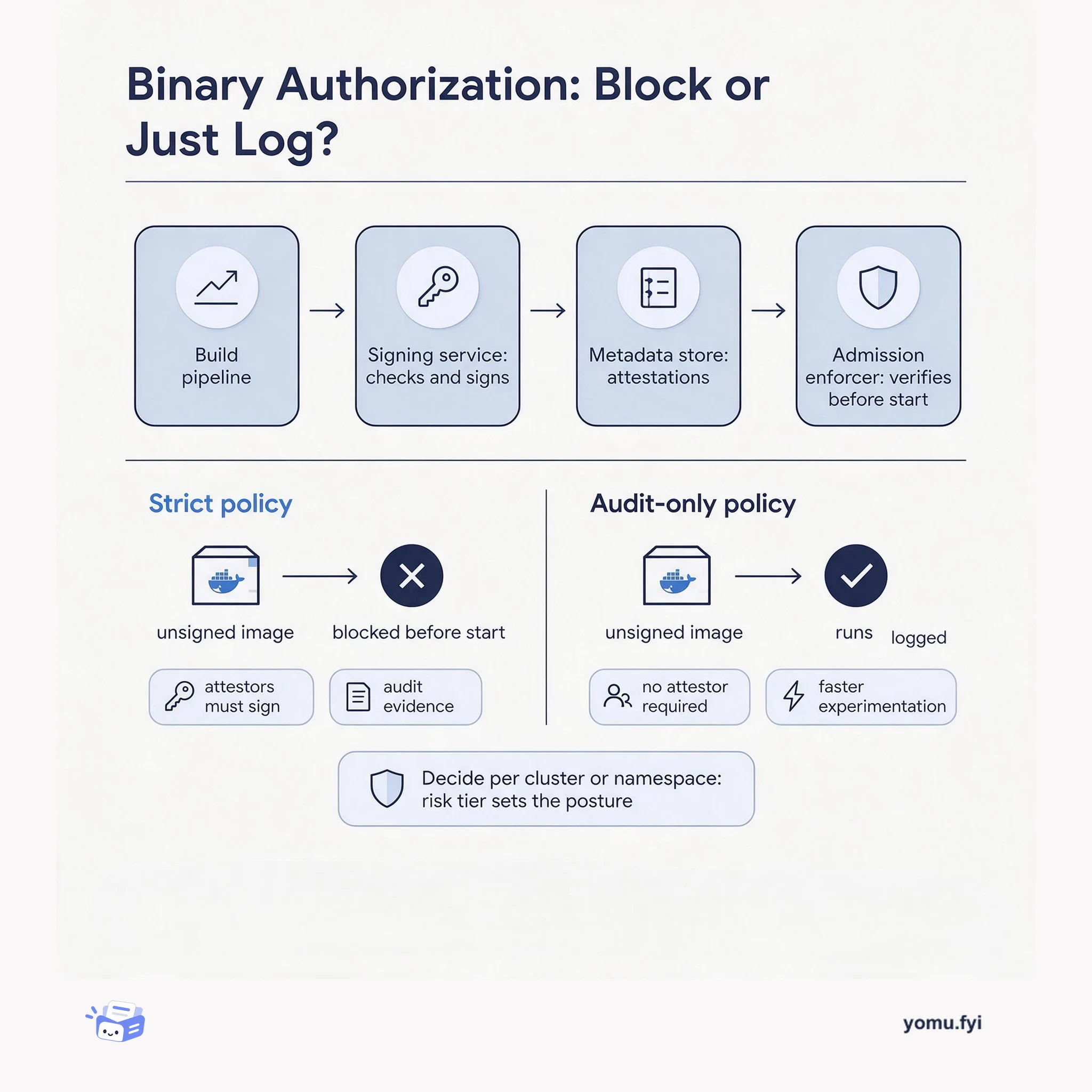
Binary Authorization blocks container images that lack the attestations a cluster policy requires. This comparison sets a strict blocking posture beside an audit-only one, and shows how to choose between them.
The Good Stuff
Paid picks we use ourselves. Links carry a referral code — a subscription through one earns us a commission at no extra cost to you.
Newest first
Shopify’s infrastructure uses Kubernetes to serve millions of requests per minute, and its growth exposed ingress performance problems during frequent application deployments. After replacing Google Cloud Load Balancer Controller (glbc) with endpoint-aware ingress-nginx, the Edgescale team focused on reducing the NGINX reloads that caused latency increases. They added dynamic configuration: the controller POSTs endpoint lists to an NGINX HTTP endpoint, where lua-nginx-module updates an in-memory shared dictionary instead of regenerating the configuration file and reloading NGINX. Reload avoidance preserves keepalive connections and load-balancing state while reducing the resource effects of replacing worker processes. Tests found ingress-nginx outperformed glbc by multiple orders of magnitude at the 99.99th latency percentile or higher, while dynamic configuration produced its largest gains during deploys, especially beyond the 80th percentile.
Shopify announces that it is building its Cloud with Google after more than a decade of operating the foundation of its commerce cloud through its own data centers and incremental public-cloud adoption. Its infrastructure evolved from database and application sharding, performance testing, automated failovers, and Docker-based immutable infrastructure toward Kubernetes orchestration, after the company initially built minimal container-management features itself. During the migration, Shopify created Shop Mover, a selective database migration tool that rebalances shops between shards with an average of 2.5s downtime per shop, and moved more than 50% of data-center workloads to Google Cloud. It also grew to more than 400 production services, consolidated them on Kubernetes through a platform-as-a-service, and contributed to and used Grafeas for software supply-chain auditing and governance.
Kubernetes Deployments provide declarative updates for Pods and ReplicaSets, enabling application versions to roll out gradually rather than restarting every Pod at once. The Deployment controller uses informers and triggers for Deployment, ReplicaSet, and Pod events, then synchronizes state by creating ReplicaSets and scaling old and new sets according to replica counts, max surge, and available Pods. During a rolling update, it waits for new Pods to respond before terminating old ones; progress deadlines help detect stalled rollouts, including crash loops. After completion, old ReplicaSets are cleaned up but a configured number is retained for rollback, which requires changing image tags rather than continually using :latest. The post also shows a Go informer that watches Deployment creation and update events and explains that the trigger-based design supports custom controllers.
Shopify describes using Grafeas and Kritis to govern container software across a platform handling more than 6,000 container builds per day and 330,000 images in its primary registry. Grafeas serves as a central store for metadata about container origins, builds, base images, layers, registry pulls, installed packages, vulnerabilities, and deployment status, supporting auditing and lifecycle strategies. During CI, audits produce attestations, which Shopify signs with PGP; Kritis uses named attestation authorities and Kubernetes policies to require specific attestations before deployment. Policies can require containers to be built by Shopify, sourced from a trusted repository, free of newly introduced vulnerabilities, tested, non-root, and deployed with the appropriate security context. Shopify also generates attestations from kubeaudit results for workload manifests, helping catch runtime-security regressions before deployment.
The best engineering reads, once a week.