Brand: Artifact vs Operating System
Compare two mental models for brand: a static artifact (logos, guidelines, centralized control) and a living operating system (values, APIs, support, trust). See which choices fit your engineering team.
Binary Authorization blocks container images that lack the attestations a cluster policy requires. This comparison sets a strict blocking posture beside an audit-only one, and shows how to choose between them.
Binary Authorization is admission-time control over which container images are allowed to start in a cluster. It has three moving parts: a metadata store that records signatures, an enforcer that blocks non-compliant images before their containers start, and a signing service that runs checks in the build pipeline and writes attestations. The real design decision is posture, not tooling. A strict policy blocks anything the required attestors have not signed, which produces audit evidence but slows experimentation; a permissive policy lets unsigned images run with weaker guarantees. Most teams run both, scoping strictness per cluster or namespace so compliance and fast iteration coexist.
At admission time in the cluster, before the container starts. Because Kubernetes does not verify Docker image signatures by default, a cluster policy requires specified attestors to sign an image; images that are invalid or unsigned are blocked before their containers start.
A strict policy blocks anything the required attestors have not signed, which satisfies compliance requirements but slows experimentation. An audit-only posture lets unsigned images run with weaker guarantees so teams can iterate faster. Many teams scope strictness per cluster or namespace so both can coexist.
The signing component is a service in the build pipeline: pipelines submit image paths, it runs security checks, signs qualifying images, and records the signatures in the metadata service. Checks are extensible and can cover internal ownership, source commits, approvals, builder identity, and vulnerability counts.
The posts behind it
 Databricks · · Explainer
AI analytics applies AI and machine learning to data analysis, enabling natural-language queries and automated insights without manual query-building, shifting from retrospective dashboards toward agentic investigations. Unlike traditional BI, which requires users to navigate predefined dashboards and filters, AI analytics systems understand intent, determine relevant data and business context, and can conduct multi-step investigations on behalf of the user. A key challenge is that AI analytics only works when grounded in governed data: without shared metric definitions, authoritative sources, and permission-aware execution, the system produces untrustworthy results. Trust in AI analytics is a system property, not a model property; it requires governed data, shared business context, permission enforcement, and verifiability of queries and calculations. Better AI models do not eliminate the need for business context; as AI becomes more autonomous, semantic definitions and governance become more critical.
 Auth0 · · Tutorial
The post details how to add secure human-in-the-loop approval to an AI expense agent built with Microsoft Agent Framework and Auth0, completing the four-part series that handles identity, authorization, and action. Because approval is a security-sensitive action requiring the same cryptographic rigor as any authentication event, the agent uses Client-Initiated Backchannel Authentication (CIBA) to push a notification to the manager’s phone instead of accepting chat input. The notification includes a binding message describing the expense by ID, amount, vendor, and context, giving the manager enough information to decide from a lock screen. The agent polls Auth0’s token endpoint until the manager approves or denies, then uses the CIBA-issued access token scoped with approve:expenses to record the decision on a separate Expense API. This design ensures approval decisions are cryptographically bound to the manager’s identity and verifiable by downstream services, completing the secure loop.
 AWS · · Explainer
ReadyOn describes a four-layer tenant-isolation architecture for Harmony, its multi-tenant workforce-intelligence platform on Amazon EKS, which handles payroll data, organizational hierarchies, and operational analytics. The design combines dedicated Kubernetes namespaces, Karpenter-managed tenant node pools, per-tenant Amazon VPC security groups, and dedicated Amazon Aurora databases, with RBAC, admission control, default-deny network policies, IAM Roles for Service Accounts, and tenant-scoped secrets. GitOps through Argo CD ApplicationSets provisions identical controls and continuously reverts drift, while dual taints and admission validation prevent cross-tenant scheduling. ReadyOn says adversarial exercises have blocked all six tested cross-tenant paths to date, and reports defenses across 10 threat-model stages, though shared control-plane dependencies make the layers defense in depth rather than fully independent probabilities.
Databricks · · ExplainerPersonal devices let employees use Slack, approve requests, and access internal apps, but they combine corporate data with private content that Databricks cannot inspect or control. The proposed mobile security model layers Mobile Device Management (MDM), identity and context-aware authentication, Zero Trust Network Access (ZTNA), and application management. On iOS, Account-Driven User Enrollment creates an encrypted workspace without full device management, while Android Work Profile provides comparable separation; per-app VPN keeps work traffic apart from personal traffic. Access requires strong authentication, a managed device, and a trusted tunnel, with continuous posture checks able to block unhealthy devices. Managed apps, configurations, tenant controls, and sensitivity tiers contain data where supported, while transparency about privacy encourages enrollment and supports mobile apps such as Genie.
 Shopify · · Explainer
Kubernetes does not enable Docker image signature verification by default, leaving organizations to decide whether images are trusted before they run in a cluster. The post explains code signing through hashes and public/private keys, then describes Binary Authorization as a combination of metadata storage, an enforcer, and a signing service. Using Grafeas and Kritis, or GKE’s Binary Authorization, cluster policies require specified attestors to sign images; invalid or unsigned images are blocked before their containers start. Voucher supplies the missing signing component as a REST service running in Cloud Run or Kubernetes: build pipelines submit image paths, Voucher performs security checks, signs qualifying images, and records signatures in the metadata service. Its extensible checks can verify internal ownership, GitHub commits, approvals, builder identity, and vulnerability counts, while distinct cluster policies balance compliance requirements with faster experimentation; Voucher later moved into the Grafeas organization.
More like this
Compare two mental models for brand: a static artifact (logos, guidelines, centralized control) and a living operating system (values, APIs, support, trust). See which choices fit your engineering team.
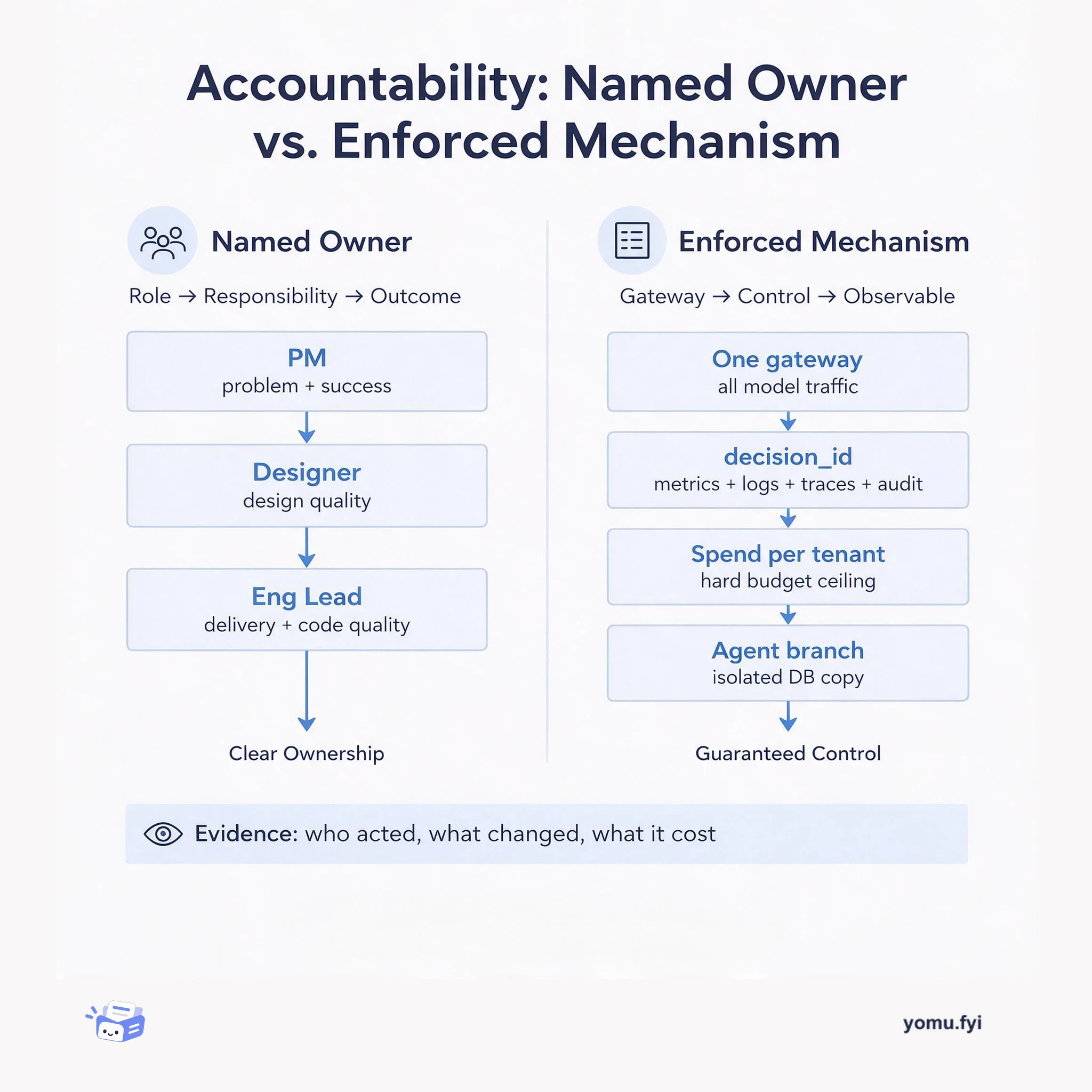
A side-by-side comparison of the two accountability models engineers actually rely on: a named human owner per outcome, and system-enforced traces, budgets, and isolation.
A side-by-side comparison of copy-and-replay recovery and branch-at-a-point restores, showing why restore time scales with data size in one model and not the other.
The Good Stuff
Paid picks we use ourselves. Links carry a referral code — a subscription through one earns us a commission at no extra cost to you.
One useful email. Unsubscribe anytime.