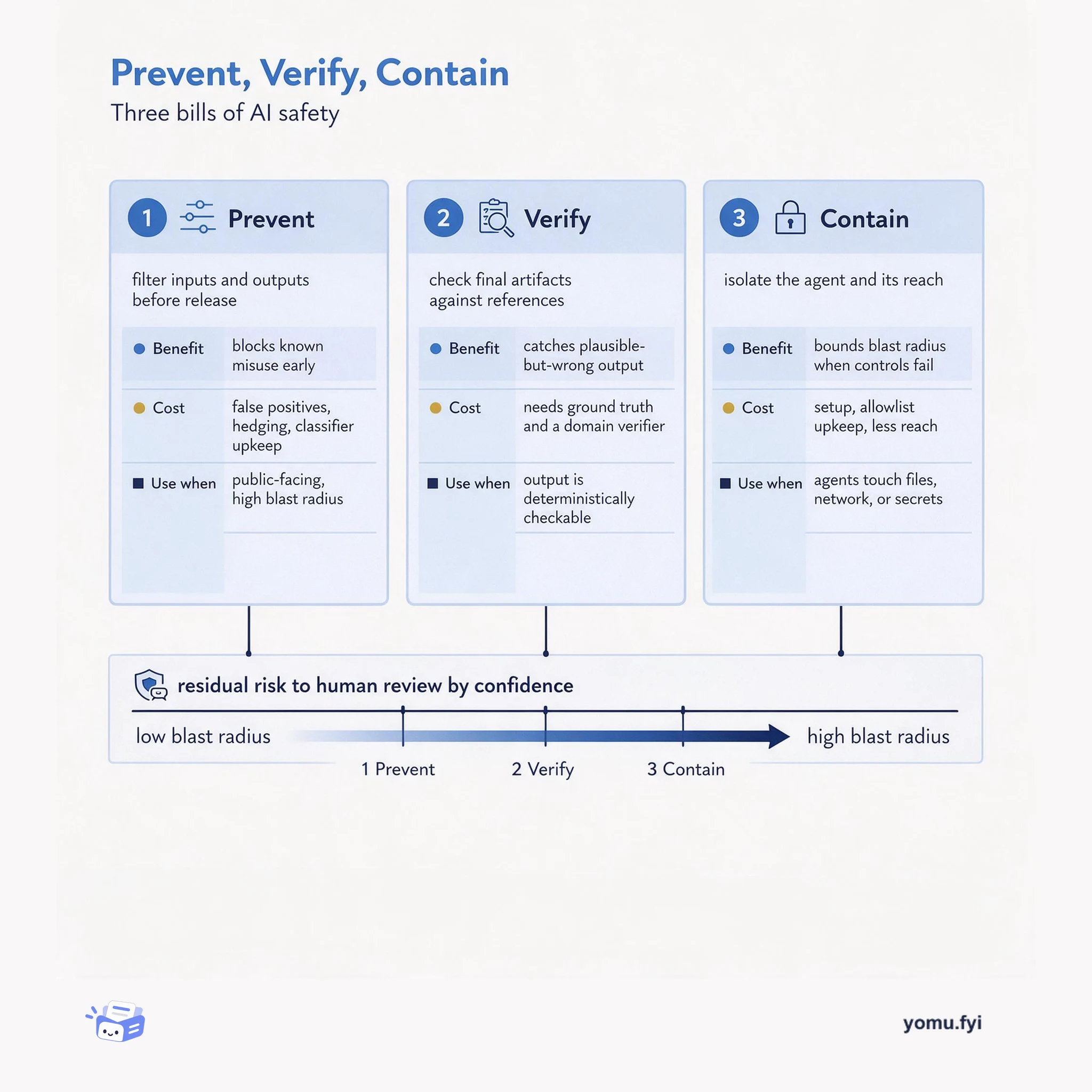
Prevent, Verify, Contain: The Three Bills of AI Safety
AI safety is a budget: prevention, verification, and containment each buy different protection at a different cost. This map shows what each control costs and when it pays off.
Bare metal gives engineers direct control over GPU, network, and virtualization layers, but it shifts elasticity and lifecycle work onto the team. This trade-off map shows when that bargain pays off.
Bare metal is not just a server without a hypervisor; it is a control-versus-elasticity trade-off. Teams use it to run hosted control planes, partition GPU execution with green contexts, drive networking from CUDA kernels, and pin validated GPU cluster recipes. Those choices can remove CPU bottlenecks, improve small-message bandwidth, and make capacity predictable, but they also add hardware lifecycle, compatibility, and capacity-planning work. The explainer separates the benefit, the cost, and the condition that should guide the decision.
It gives direct control over hardware paths: GPU-initiated networking can remove the CPU from the critical path, green contexts can partition SMs and workqueues, and hosted control planes can run on bare-metal management clusters. That control can improve performance and capacity predictability, but the team owns the hardware lifecycle and compatibility work.
NVIDIA AICR v1.0 uses version-locked, validated recipes that pin host kernels, GPU drivers, container runtimes, networking, storage, operators, and workload frameworks, then render artifacts for Helm, Argo CD, Flux, or Helmfile with signed validation evidence. This reduces silent version conflicts, but recipes must be maintained and upgrades may lag behind upstream releases.
Avoid it when demand is spiky and elasticity matters more than peak efficiency, because bare metal requires capacity planning and hardware lifecycle work. It makes more sense for sustained GPU inference, data sovereignty, or specialized networking where dedicated control and validated configurations justify the operations tax.
The posts behind it
 NVIDIA · · Explainer
NVIDIA DOCA GPUNetIO is a GPU-centric networking SDK that enables CUDA kernels to drive Ethernet, RDMA, Verbs, and DMA operations with the CPU removed from the application critical path. It unifies previously fragmented GDA-KI-style RDMA implementations from libraries such as NCCL, NVSHMEM, UCX, and the Aerial 5G SDK into a single shared foundation. The framework provides both a full DOCA SDK version and a lighter open-source Verbs-focused implementation; the open-source version can optionally dlopen the SDK at runtime. On the data path, CUDA kernels directly post Work Queue Entries, ring the NIC doorbell, and poll for completions without CPU intervention. Benchmarks using NVSHMEM show that the GPU-initiated path avoids the CPU proxy bottleneck, achieving higher bandwidth for small message sizes compared to CPU-mediated communication.
NVIDIA · · AnnouncementGPU-accelerated Kubernetes clusters depend on compatible versions across host kernels, GPU drivers, container runtimes, networking, storage, operators, and workload frameworks, each on its own release cycle. A configuration that works for one service, GPU generation, and Kubernetes release may silently fail for another, and tracing version conflicts after deployment is slow. NVIDIA AI Cluster Runtime (AICR) v1.0 addresses this with version-locked, validated recipes that pin component combinations, render deployment artifacts for Helm, Argo CD, Flux, or Helmfile, and carry signed validation evidence from tested hardware. The release establishes a stable compatibility contract across its CLI, REST API, Go SDK, bundle layout, and artifact schemas, with merge-blocking checks on public interfaces. AICR now has over 100 contributors, with almost half from outside NVIDIA, and integrations from Pulumi Labs and Mirantis demonstrate consuming the same configuration through different tools.
NVIDIA · · ExplainerGreen contexts, available in the CUDA Driver API since 12.4 and the Runtime API since 13.1, let applications explicitly partition GPU execution resources such as SMs and workqueues. They are lightweight to create and destroy, do not implicitly synchronize unrelated work, and allow provisioning workqueues to reduce false dependencies. Streams are created from a green context rather than relying on implicit device state, making targeting explicit. Benchmarks on a Blackwell GPU show a critical kernel completing in 0.007 ms with green context partitioning, compared to 0.140 ms with high-priority streams and 3.727 ms with equal priority. The tradeoff is fewer SMs for the bulk workload, but green contexts are opt-in and can be adopted incrementally alongside existing CUDA code.
 Red Hat · · Tutorial
Hosted control planes for Red Hat OpenShift, based on the HyperShift project, decouple the cluster control plane from worker nodes by running control-plane components as pods inside a central management cluster. On bare-metal infrastructure, OpenShift Virtualization provisions worker nodes as virtual machines, enabling live migration and reducing hardware requirements. The article presents a declarative GitOps workflow using Helm templates and an Argo CD ApplicationSet that dynamically generates deployments from tenant-specific YAML configuration files in Git. Prerequisites include a bare-metal management cluster with OpenShift Virtualization, Red Hat Advanced Cluster Management, and OpenShift GitOps, plus networking configured with NMState, Multus CNI, and MetalLB. The approach achieves a “Cluster-as-a-Service” model where provisioning a production-grade cluster requires only a Git push.
 Together AI · · Announcement
Together AI is collaborating with IBM and NVIDIA to scale enterprise-grade AI inference using a dedicated cluster of NVIDIA B300 GPUs on IBM Cloud with NVIDIA Spectrum-X Ethernet networking. This is the first large-scale inference cluster of its kind on IBM Cloud, and Together AI is the first customer running on it. Together AI operates the inference layer, IBM provides the cloud, and NVIDIA delivers the silicon and networking. The company serves hundreds of trillions of tokens per month to over a million developers, and demand continues to climb. Enterprises choose open models to keep their data sovereign and achieve frontier-level performance at a fraction of closed-model cost.
More like this
AI safety is a budget: prevention, verification, and containment each buy different protection at a different cost. This map shows what each control costs and when it pays off.
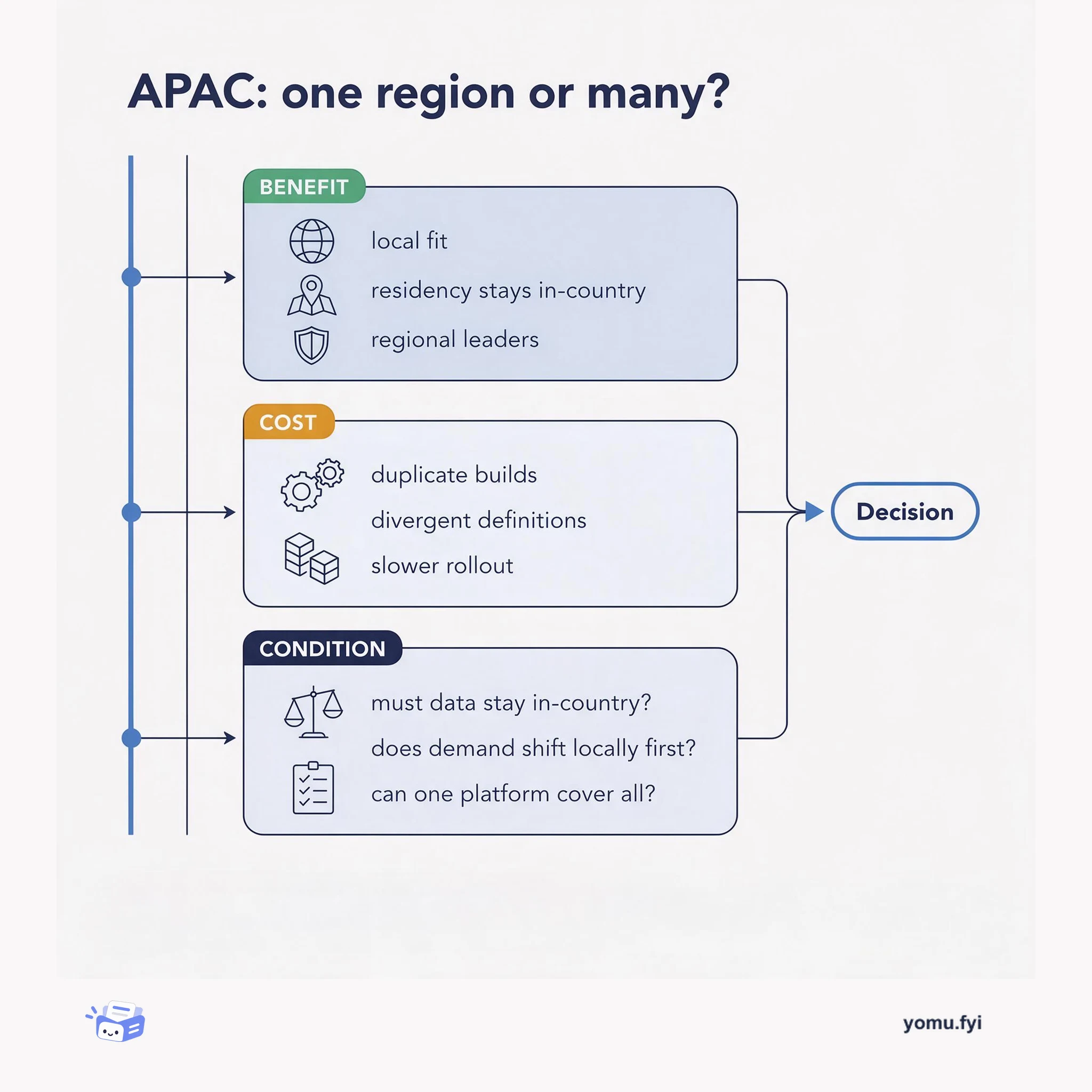
APAC is a federation of markets, not a single deployment region. This diagram maps the tradeoff between local autonomy and one shared platform, and the conditions that decide it.
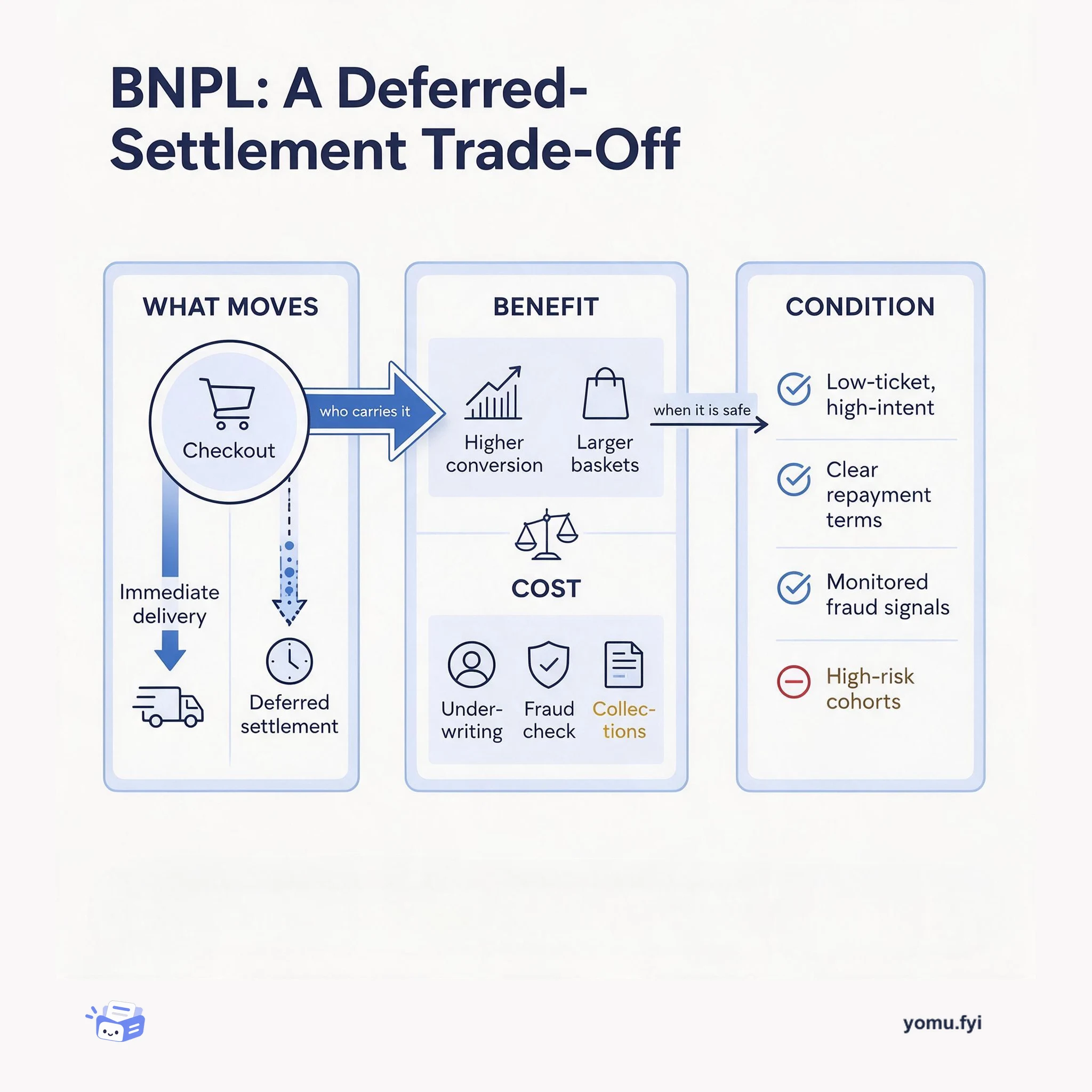
Buy Now, Pay Later is a deferred-settlement trade-off: merchants gain conversion while underwriting, fraud, and collections risk move elsewhere. This diagram maps the benefit, the cost, and the condition that decides.
The Good Stuff
Paid picks we use ourselves. Links carry a referral code — a subscription through one earns us a commission at no extra cost to you.
One useful email. Unsubscribe anytime.