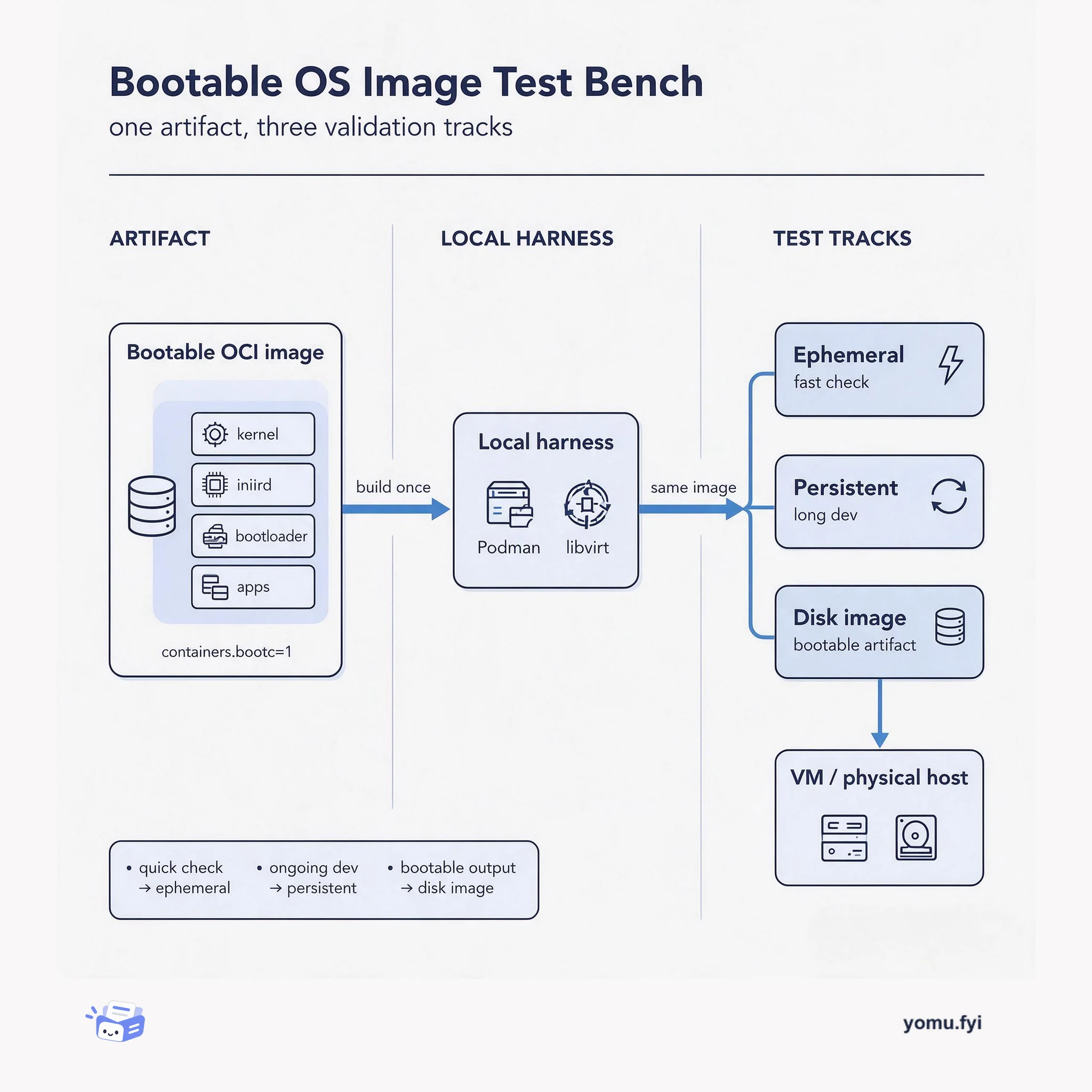
BCVK: A Local Test Bench for Bootable OS Images
BCVK is a local test bench for bootable container OS images. See how one OCI artifact moves through ephemeral, persistent, and disk-image modes before it reaches real hosts.
 Auth0Riccardo CocettaProblem & solution
The post argues that the ability to go from idea to pull request using AI agents is now a commoditized problem, with two main approaches: vibe coding for rapid prototyping and human-supervised agentic development for mature products. The real challenges lie in deciding what to build—using criteria such as customer value, clear objectives, product fit, and financial strategy—and validating that the generated code is safe to ship. Validation must cover functional correctness, performance, security, resilience, compliance, and internal code quality using tools like unit tests, contract tests, AI-generated runtime tests, DAST, SAST, dependency scanning, code quality analysis, LLM-based code review, progressive rollout, and formal methods. A risk-based approach applies deeper validation to high-risk components—such as security-critical or data-damaging code—while allowing automated merges for low-risk areas like documentation or demo apps. The focus should shift from code generation to crisp product definition and robust verification pipelines.
The post discusses the commoditization of AI-based code generation and argues that the real challenges in software development are now deciding what to build and validating the safety of generated code.
The ability to go from idea to pull request using AI agents is now a commoditized problem, with vibe coding for prototypes and human-supervised agentic development for mature products.
Deciding what to build should be based on customer value, clear objectives, product fit, and financial strategy, not just speed of generation.
Validation of AI-generated code must cover functional, performance, security, resilience, compliance, and internal quality dimensions, using a risk-based approach to apply deeper checks to high-risk components.
The post describes vibe coding for rapid prototyping and human-supervised agentic development for mature products. The latter involves planning, spec-driven development, and reference tests for more predictable results.
The post suggests evaluating customer value, clarity of objective, product fit, and financial strategy. Building everything possible creates churn and noise; prioritization should focus on what adds value for customers and business.
The post lists functional correctness, performance, security, resilience, compliance, and internal code quality. Tools include unit tests, contract tests, AI-generated tests, SAST, DAST, dependency scanning, code quality analysis, LLM-based review, progressive rollout, and formal methods.
Summaries are generated from the original by a language model. Check the original before relying on it.
See the idea
BCVK is a local test bench for bootable container OS images. See how one OCI artifact moves through ephemeral, persistent, and disk-image modes before it reaches real hosts.
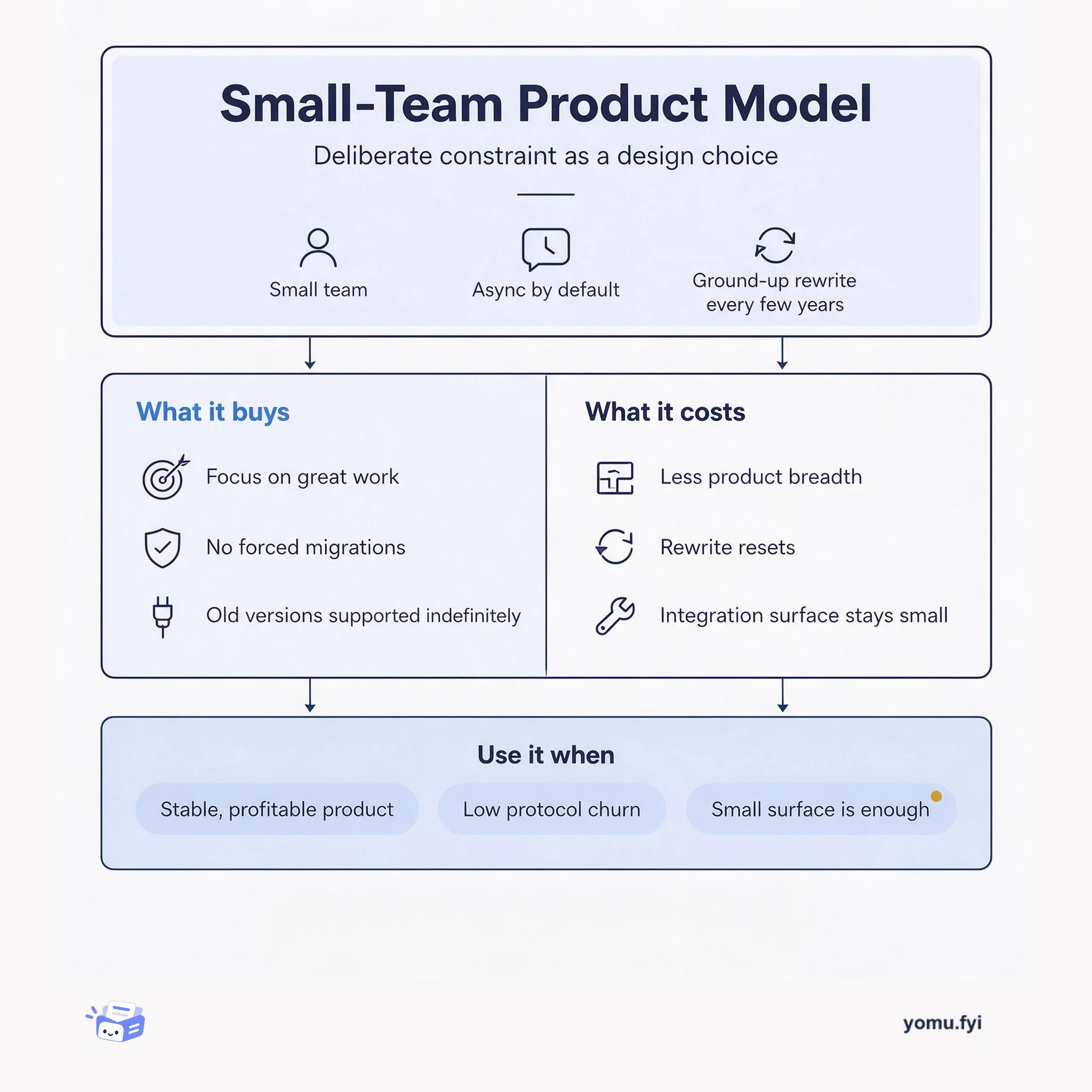
Basecamp keeps a small team, rewrites the product every few years, and supports old versions indefinitely. This diagram maps what that constraint buys, what it costs, and when it fits.
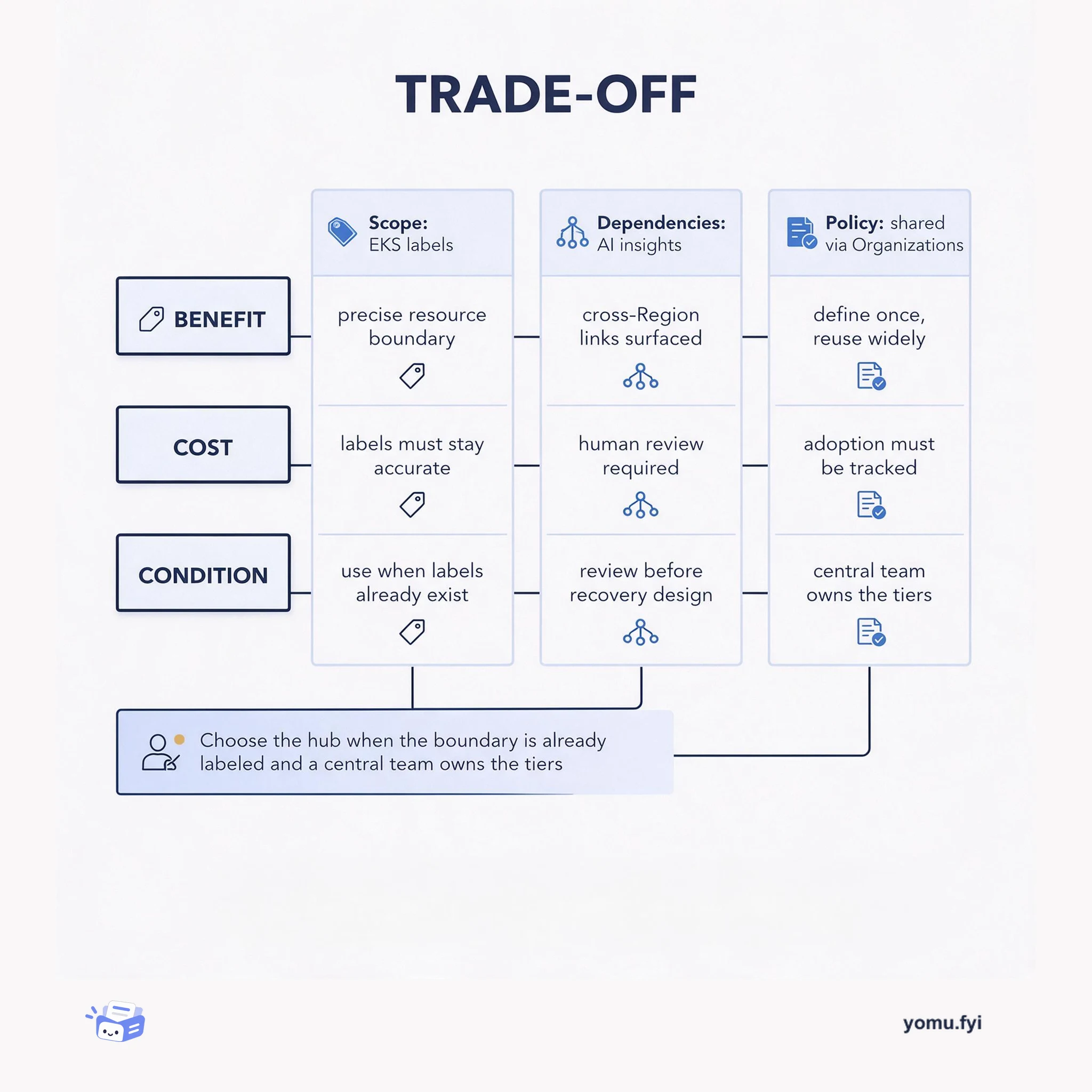
AWS Resilience Hub turns resilience goals into scoped, shareable policies. This explainer maps three trade-offs: label precision versus upkeep, central policy versus local adoption, and assessment versus drift.
Keep reading
The Good Stuff
Paid picks we use ourselves. Links carry a referral code — a subscription through one earns us a commission at no extra cost to you.
One useful email. Unsubscribe anytime.