From Ringing Line to Resolved Contact: How a Call Center Works
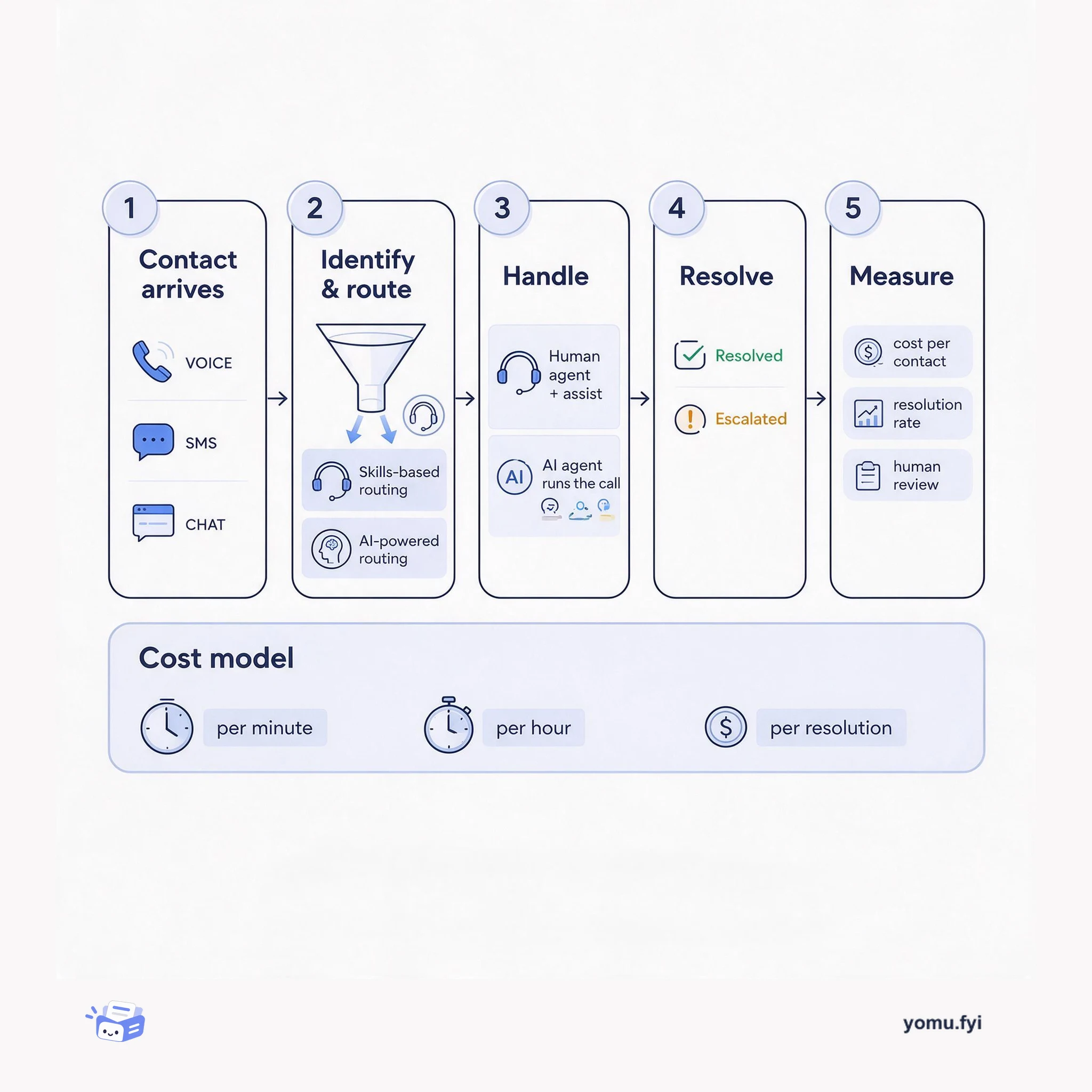
Follow one contact through a call center: arrival, routing, handling by a human or AI agent, resolution, and the cost-per-contact math that decides which path to use.
Biometric login is a local match against a stored template, not a secret kept on a server. Follow capture, template, threshold, and fallback to see where each decision happens.
Biometrics turns a physical trait into a probabilistic decision: a sensor captures a sample, extracts a template, and matches it against a reference template stored on the device, accepting or rejecting against a threshold. Because the result is a score rather than an exact secret, the flow needs a fallback path and a recovery story. A biometric also cannot be rotated like a password, so it works best as a device-bound unlock for a key or token, with sessions revoked separately. This explainer follows that flow stage by stage so you can place biometrics correctly in an authentication stack.
Matching produces a score, not an exact secret, so sensor variance, injury, or lighting can push a legitimate user below the threshold. A fallback keeps that person from being locked out and gives support a recovery path. The supplied material notes passwordless options such as SMS OTP and magic links can fill that role, each with its own cost and phishing trade-offs.
You revoke the credentials the biometric unlocks, not the trait itself. A biometric typically unlocks a device-bound key or token, so rotating keys, expiring refresh tokens, and instant token revocation across the platform are the real controls. One post describes Universal Logout doing exactly that to cut off a hijacked session immediately.
It is one factor, usually inherence bound to a device, so pair it with a possession factor instead of treating it as a complete login. SSO then federates the already-verified identity to other services. Authentication alone is not enough: gateway policy still has to authorize each tool or action per role, which one post frames as the boundary beyond authentication.
The posts behind it
 Red Hat · · Tutorial
Model Context Protocol (MCP) allows an agent to use tools across enterprise systems, but a shared MCP gateway requires a policy boundary beyond authentication. The article describes using Red Hat Connectivity Link (RHCL) AuthPolicy to validate OIDC or JWT credentials and then authorize per-tool access based on roles in the identity provider claims. NetworkPolicy controls which workloads can communicate with the gateway and MCP servers, while RateLimitPolicy limits request volume. Gateway isolation can be achieved with separate gateway instances or a shared gateway with isolated listeners, each with its own MCPGatewayExtension. These controls map to OWASP risks for LLM and agentic applications, including excessive agency, unbounded consumption, tool misuse, and identity abuse.
 Twilio · · Explainer
Passwords remain the most common authentication method but are responsible for over 80% of data breaches due to reuse and predictability. Passwordless alternatives such as token-based authentication, certificate-based authentication, SMS OTP, email magic links, and biometrics each offer improved security but come with their own trade-offs in cost, deployment complexity, or vulnerability to phishing. Passkeys, built on the WebAuthn standard and FIDO, use public key cryptography to verify identities, with a private key stored on the user’s device and a public key on the service’s server. They eliminate password reuse, reduce phishing and credential stuffing risks, and improve login speed and user experience. However, passkeys face challenges in syncing across operating systems, and service providers can manage fallback options like SMS OTP through APIs such as Twilio Verify.
 Auth0 · · Announcement
Enterprise SaaS providers must differentiate core offerings while meeting enterprise identity security and interoperability requirements for winning RFPs. The Okta Integration Network, a catalog of over 8,000 integrations used by 20,000 Okta customers, allows Auth0-powered SaaS providers to signal enterprise-readiness. By publishing Express Configuration and Universal Logout integrations, companies like Jamf and Augment Code automate onboarding and enhance security without pausing their product roadmap. Express Configuration reduces SSO setup from days of manual OIDC application creation to a few clicks, as Jamf demonstrated for its 78,000 customers. Universal Logout enables instant token revocation across the platform, allowing providers to respond to session hijack immediately, eliminating support ticket workflows.
 Databricks · · Problem & solution
Telecom fraud losses reached $41.82 billion in 2025, and each dollar of fraud costs carriers 3.4 times more when factoring chargebacks and overhead. Traditional detection systems rely on batch processing, leaving a gap attackers exploit within minutes through SIM swaps and account takeovers that surged 240% in Australia. Databricks addresses this by replacing the OLTP/OLAP split with Lakebase, a managed Postgres engine that syncs gold tables continuously for sub-millisecond feature retrieval, enabling real-time risk scoring against rules like impossible travel and roaming anomalies. An AI agent and Genie platform analyze historical incidents and automate investigations via tool-calling agents and a Knowledge Assistant trained on playbooks, shrinking the model adaptation cycle from days to near real time. The Solution Accelerator provides a complete pipeline from raw data to role-based workbenches for executives, managers, and analysts on a single governed platform.
Twilio · · ExplainerThe post examines business authentication methods, including passwordless, password-based, multi-factor authentication (MFA), single sign-on (SSO), and biometrics, each with distinct security and usability trade-offs. It notes that U.S. cyber attack victims lost over $16 billion in 2024 and 46% of small businesses experienced attacks in 2025, highlighting the need for robust verification. Passwordless authentication eliminates passwords by using biometrics, tokens, or email links, while password-based systems, though common, are vulnerable to phishing and brute-force attacks. MFA requires two or more factors like OTPs and push notifications, and SSO allows login via identity providers such as Google or Facebook. The post concludes by advising businesses to evaluate security requirements, user experience, compliance, scalability, cost, and integration when selecting an authentication solution.
More like this
Follow one contact through a call center: arrival, routing, handling by a human or AI agent, resolution, and the cost-per-contact math that decides which path to use.
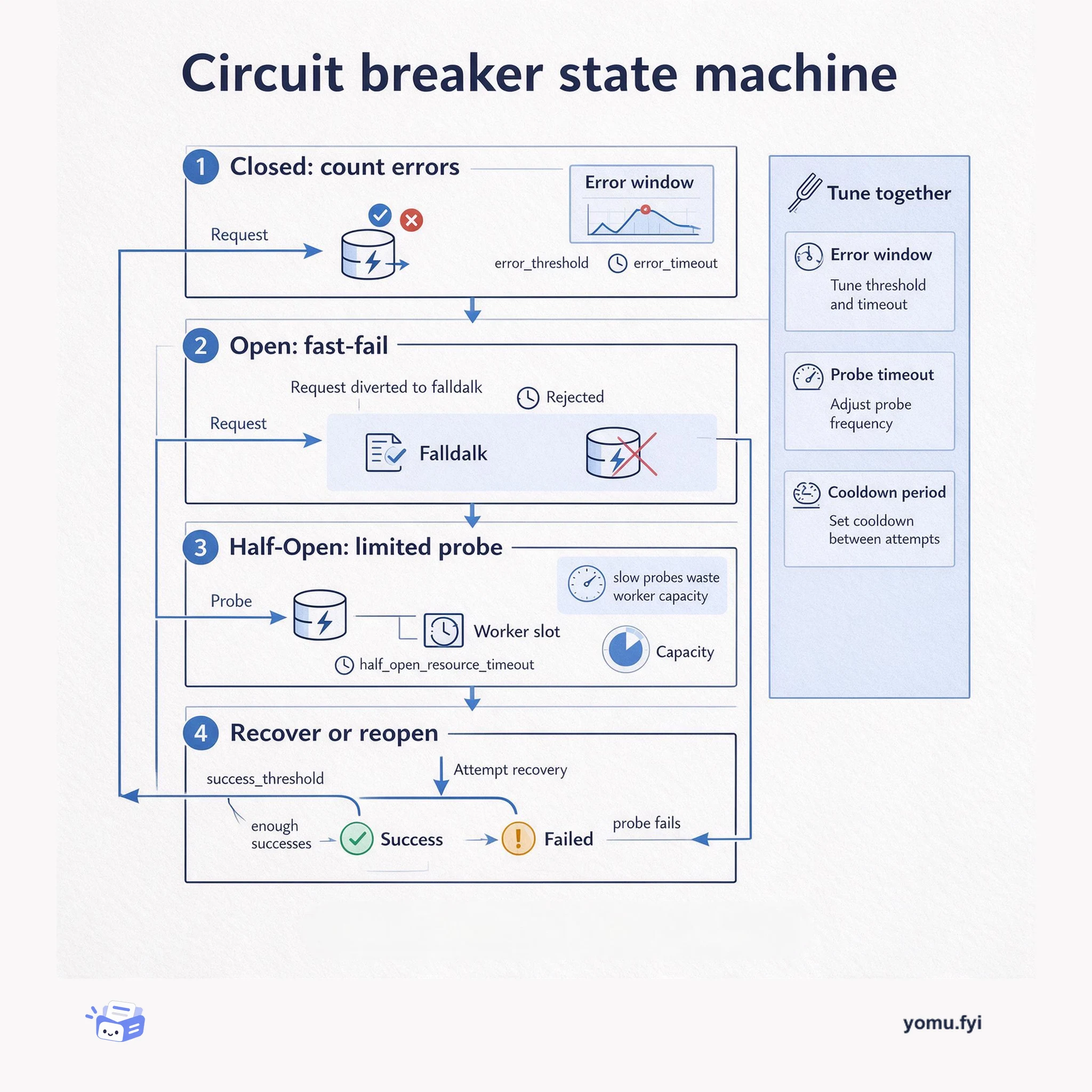
A circuit breaker turns dependency failures into fast failures, then probes for recovery. See the state loop and how half-open probes can quietly consume worker capacity.
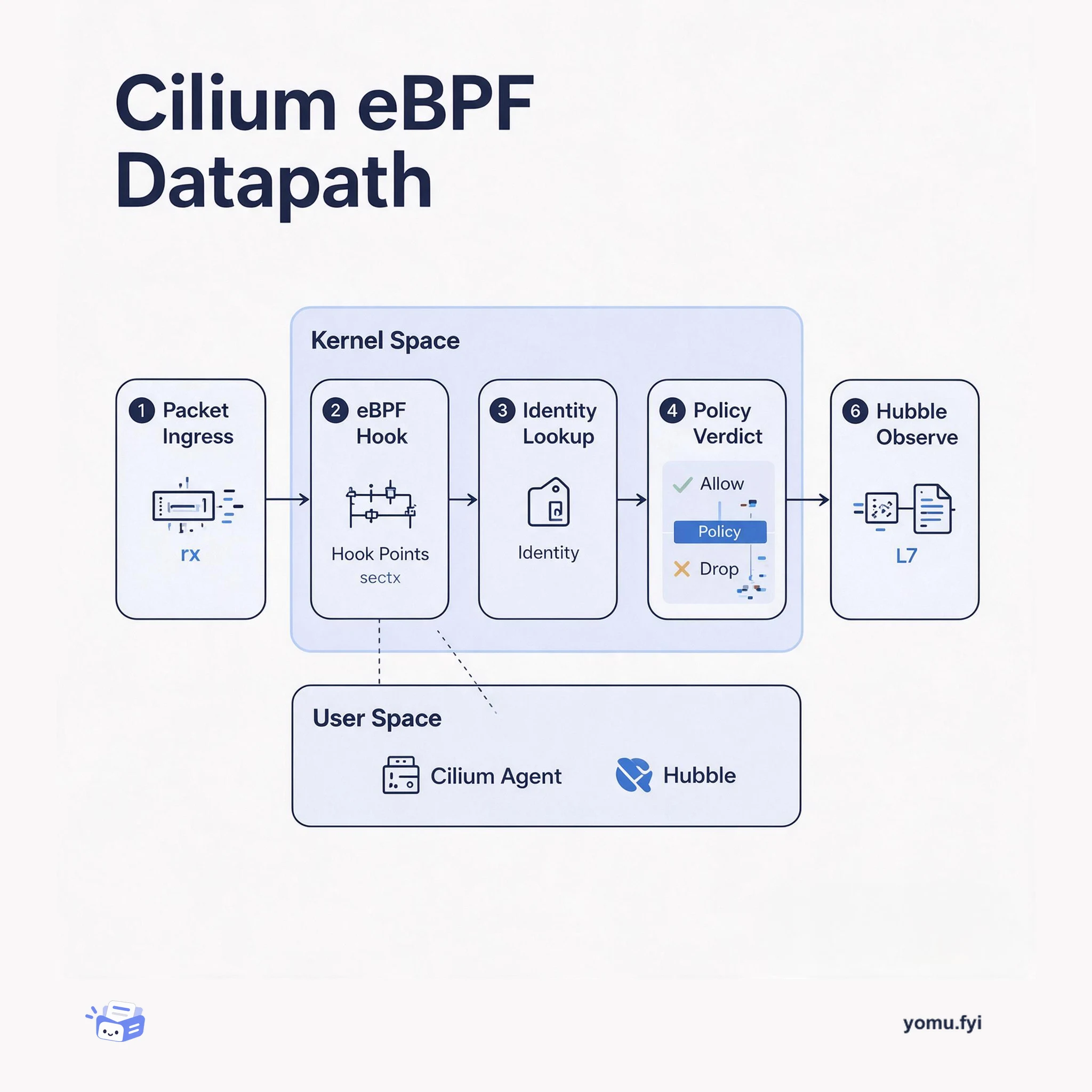
Cilium uses eBPF programs in the Linux kernel to enforce identity-based network policies and capture L7 observability for Kubernetes workloads. This diagram traces the path from packet arrival to policy verdict and Hubble flow.
The Good Stuff
Paid picks we use ourselves. Links carry a referral code — a subscription through one earns us a commission at no extra cost to you.
One useful email. Unsubscribe anytime.