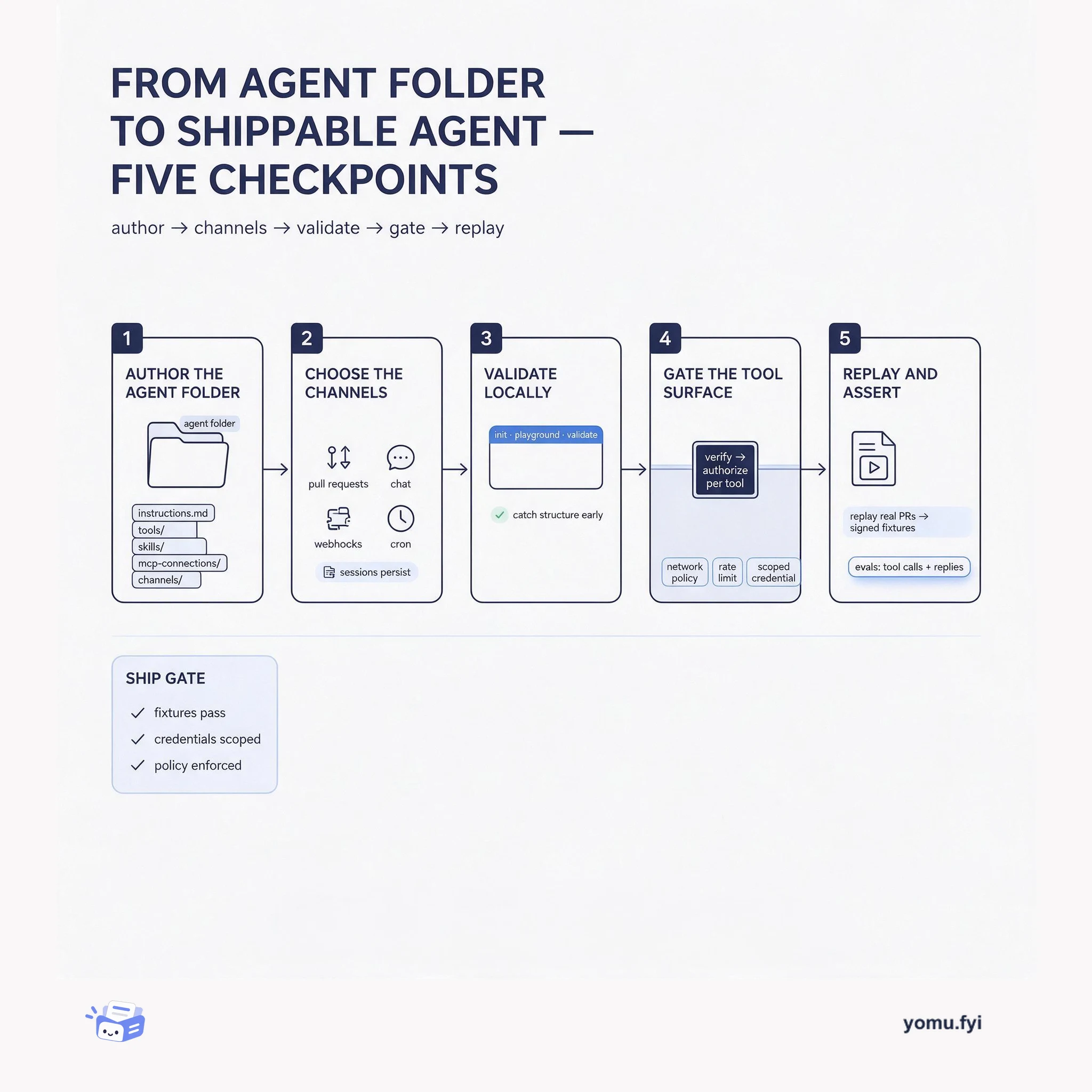
From Agent Folder to Shippable Agent: Five Checkpoints
An Agent SDK agent is a folder of instructions, tools, skills, and channels. This walkthrough follows five checkpoints from local validation to gateway-gated tool calls and replayable evals.
 Red HatDavid Martin, Jason MadiganTutorial
Model Context Protocol (MCP) allows an agent to use tools across enterprise systems, but a shared MCP gateway requires a policy boundary beyond authentication. The article describes using Red Hat Connectivity Link (RHCL) AuthPolicy to validate OIDC or JWT credentials and then authorize per-tool access based on roles in the identity provider claims. NetworkPolicy controls which workloads can communicate with the gateway and MCP servers, while RateLimitPolicy limits request volume. Gateway isolation can be achieved with separate gateway instances or a shared gateway with isolated listeners, each with its own MCPGatewayExtension. These controls map to OWASP risks for LLM and agentic applications, including excessive agency, unbounded consumption, tool misuse, and identity abuse.
Model Context Protocol (MCP) lets an agent use tools across an enterprise platform, such as a telco’s network inventory, service assurance, ticketing, and customer systems. A shared MCP gateway makes those tools available through one endpoint, but a caller authenticated to the gateway should not automatically be able to read every system or invoke every operation. The article discusses gateway isolation, network access, tool permissions, and request limits.
Use Red Hat Connectivity Link (RHCL) AuthPolicy, NetworkPolicy, and RateLimitPolicy on an MCP gateway to enforce authentication, per-tool authorization, network isolation, and request rate limits for MCP tool calls.
Gateway isolation can be achieved with separate gateway instances or a shared gateway with isolated listeners, each with its own MCPGatewayExtension and registered MCP servers.
The MCP router parses the JSON-RPC body and sets x-mcp-servername and x-mcp-toolname headers before AuthPolicy evaluates the request; the client cannot set those values.
Per-tool authorization checks the requested tool against roles in the identity provider’s resource_access claim, using the namespaced MCPServerRegistration as the key.
The MCP router parses the JSON-RPC body and sets the x-mcp-servername and x-mcp-toolname headers before AuthPolicy evaluates the request. The client cannot set those values to choose a more permissive policy path.
In the identity provider, issue a claim like resource_access with a key of the namespaced MCPServerRegistration (e.g., mcp-system/inventory) and a roles array containing the tool permission (e.g., tool:read). The authorization policy then checks if the requested tool name is in the roles for the requested server.
NetworkPolicy controls which workloads can communicate at the network level, but it does not know the MCP user or tool name. It restricts traffic to the MCP router, broker internals, and metrics endpoint, and can be used to lock down traffic to specific MCP servers.
Summaries are generated from the original by a language model. Check the original before relying on it.
See the idea
An Agent SDK agent is a folder of instructions, tools, skills, and channels. This walkthrough follows five checkpoints from local validation to gateway-gated tool calls and replayable evals.
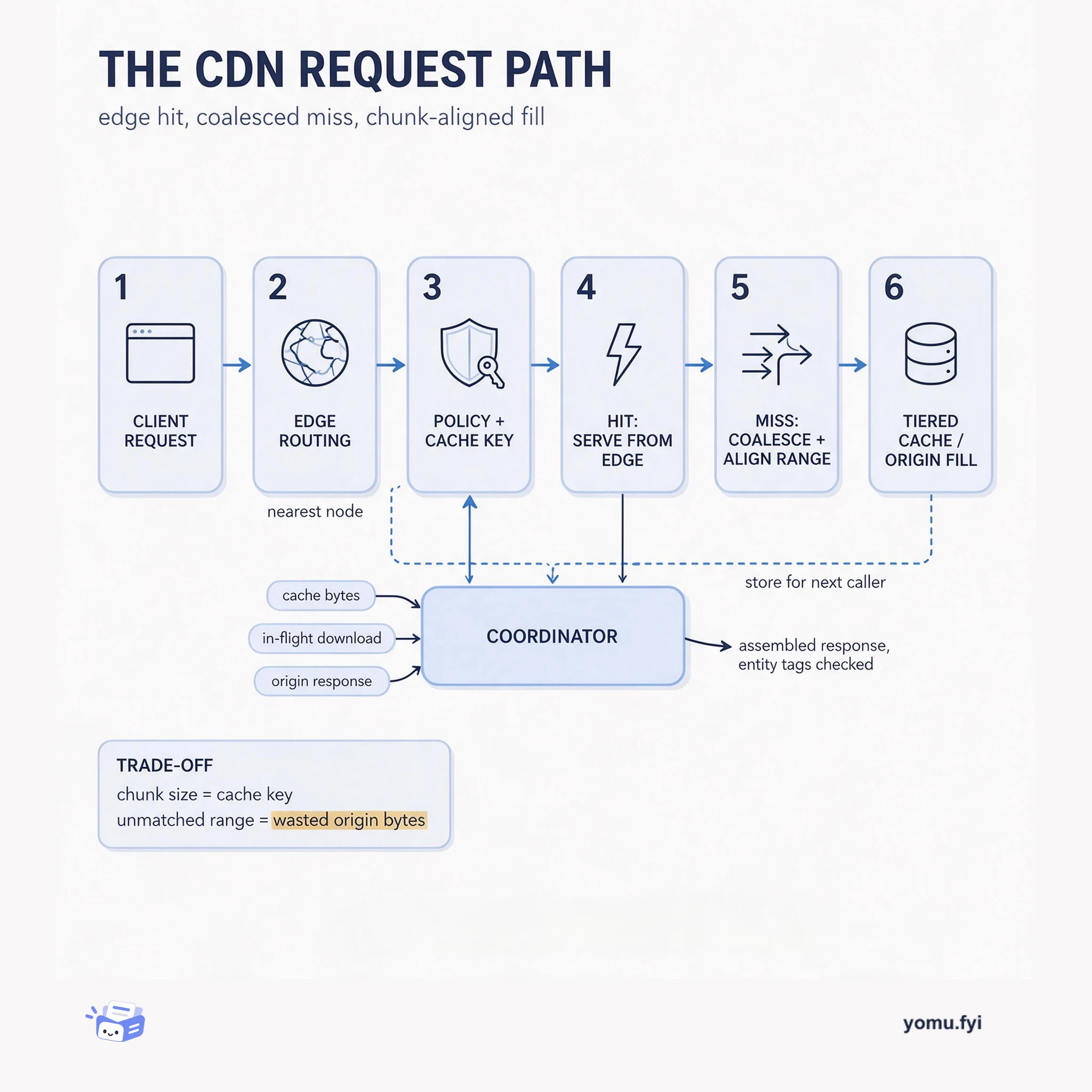
A CDN turns one client request into a short ordered pipeline: edge routing, cache-key lookup, request coalescing, chunk-aligned origin fetch, and a cached response for the next caller.
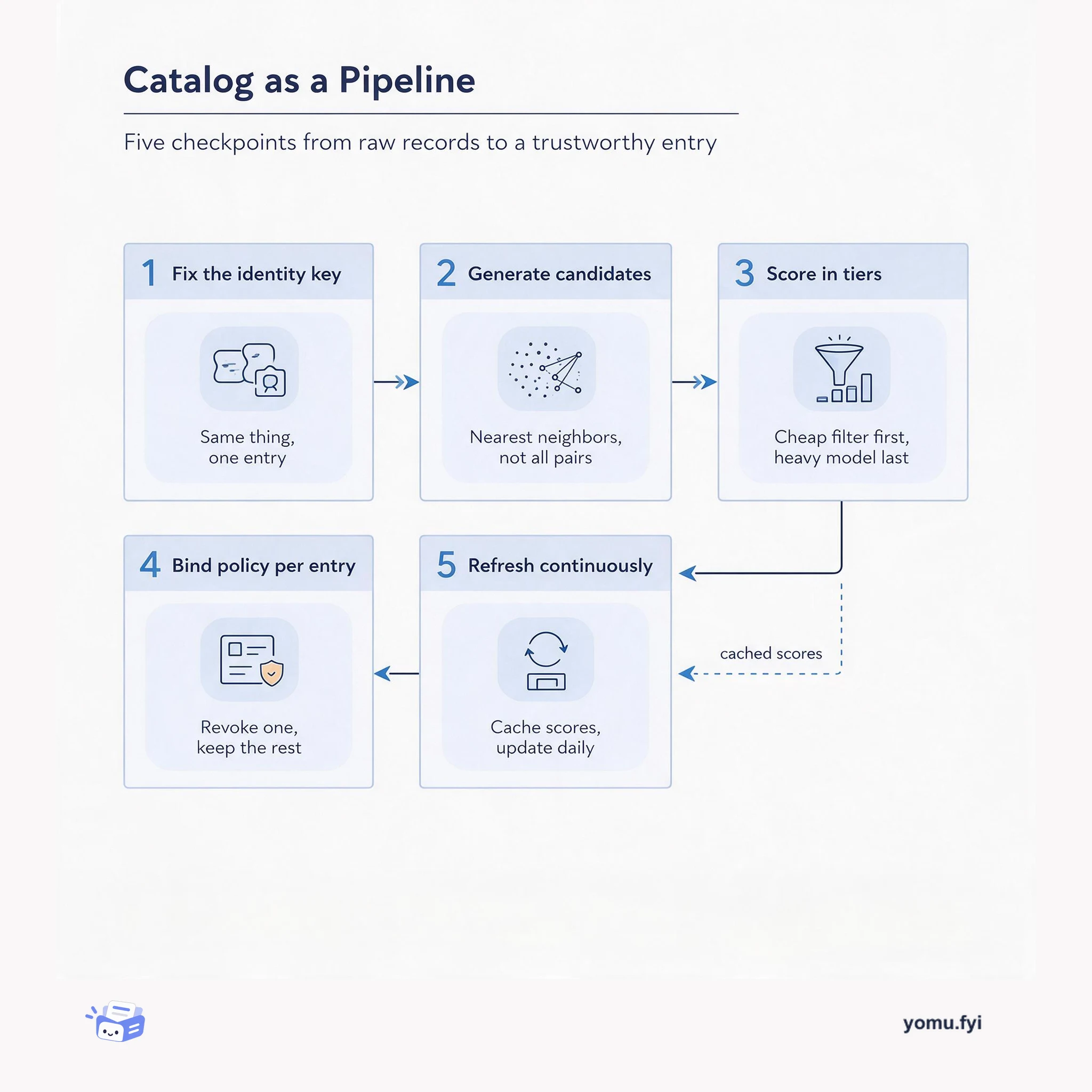
A catalog is a pipeline, not a list. This five-step guide shows how to fix entry identity, score candidates in tiers, bind policy per entry, and refresh without rescoring everything.
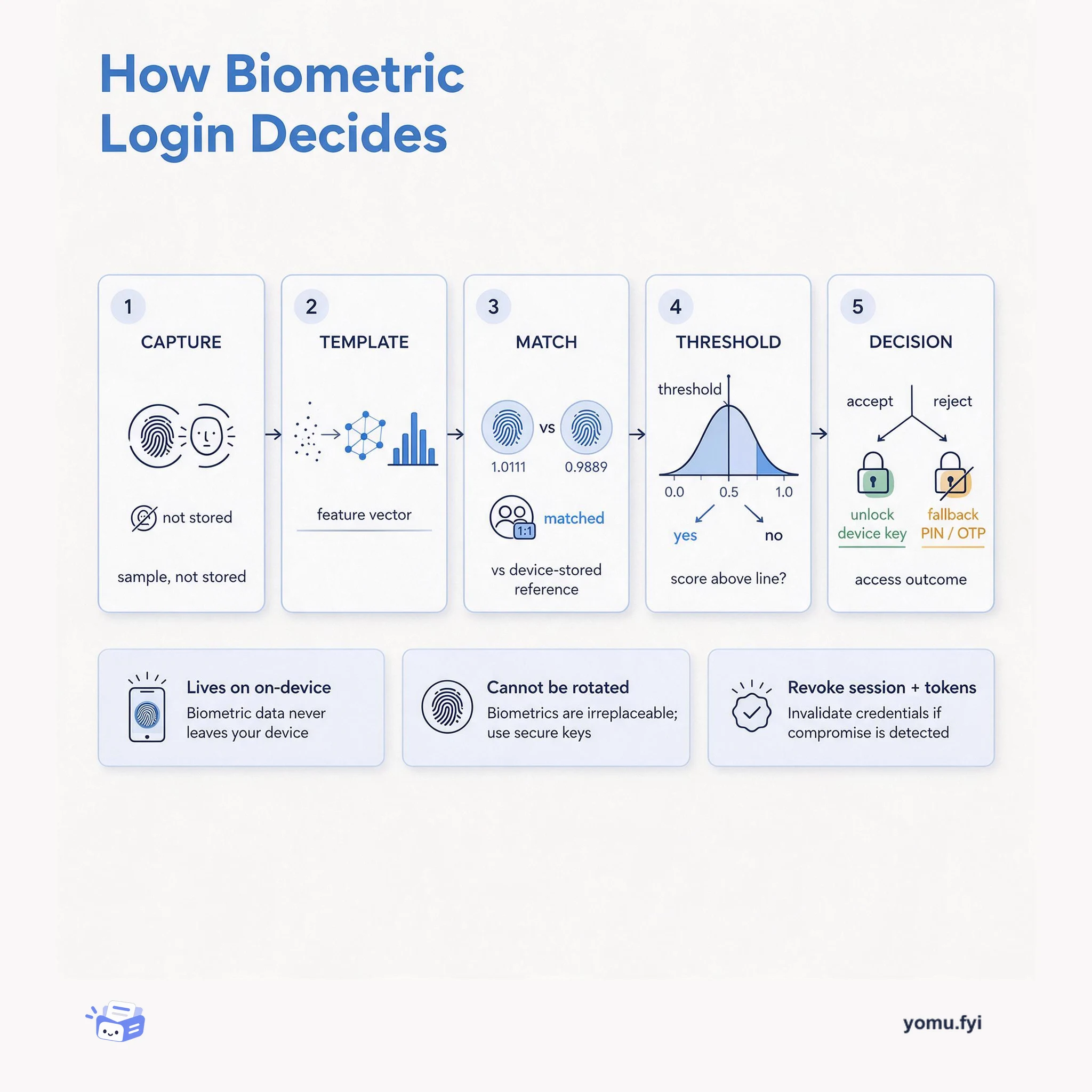
Biometric login is a local match against a stored template, not a secret kept on a server. Follow capture, template, threshold, and fallback to see where each decision happens.
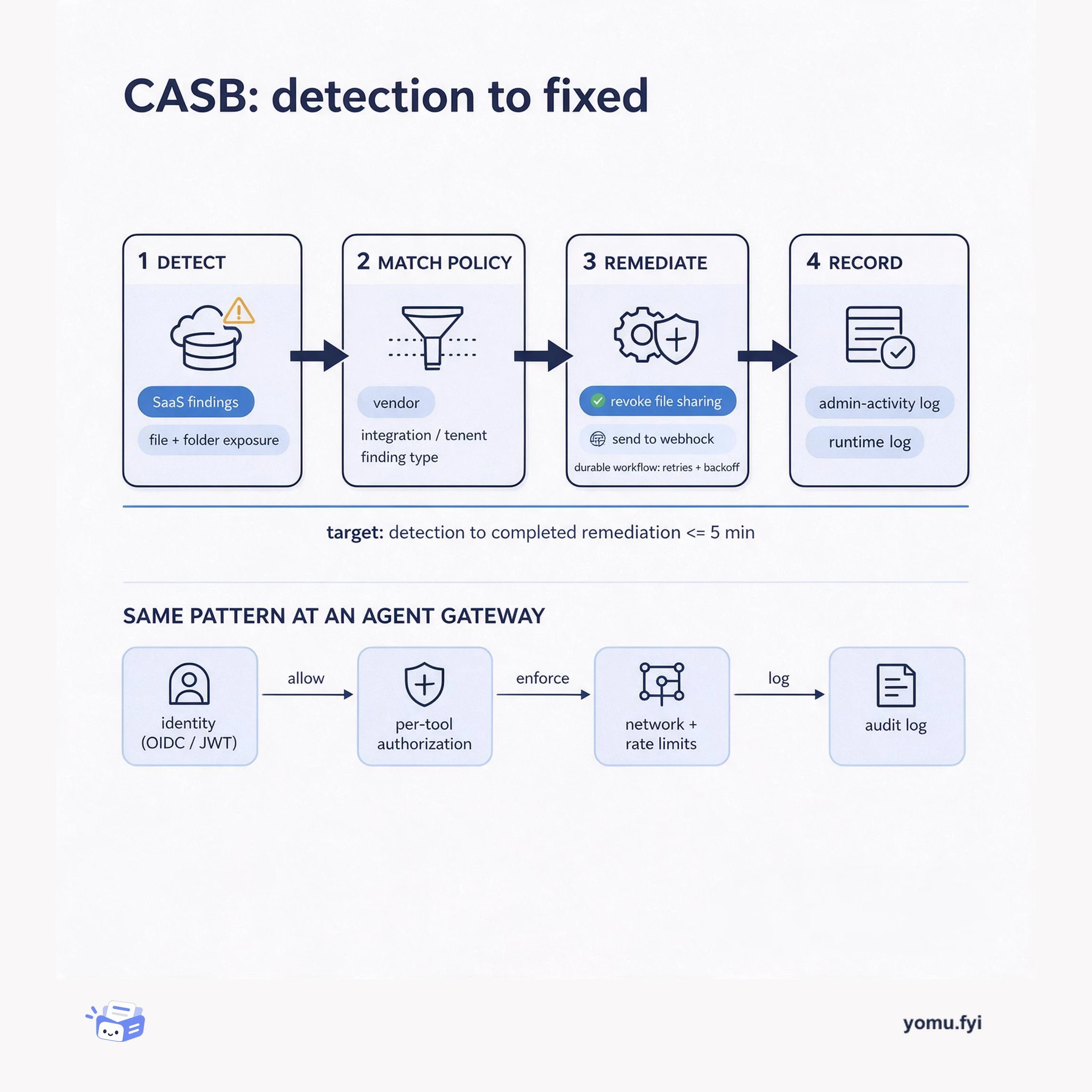
A walk through a CASB control loop: how a SaaS security finding becomes a queued job, a matched policy, and a bounded remediation action with an audit trail.
Keep reading
The Good Stuff
Paid picks we use ourselves. Links carry a referral code — a subscription through one earns us a commission at no extra cost to you.
One useful email. Unsubscribe anytime.