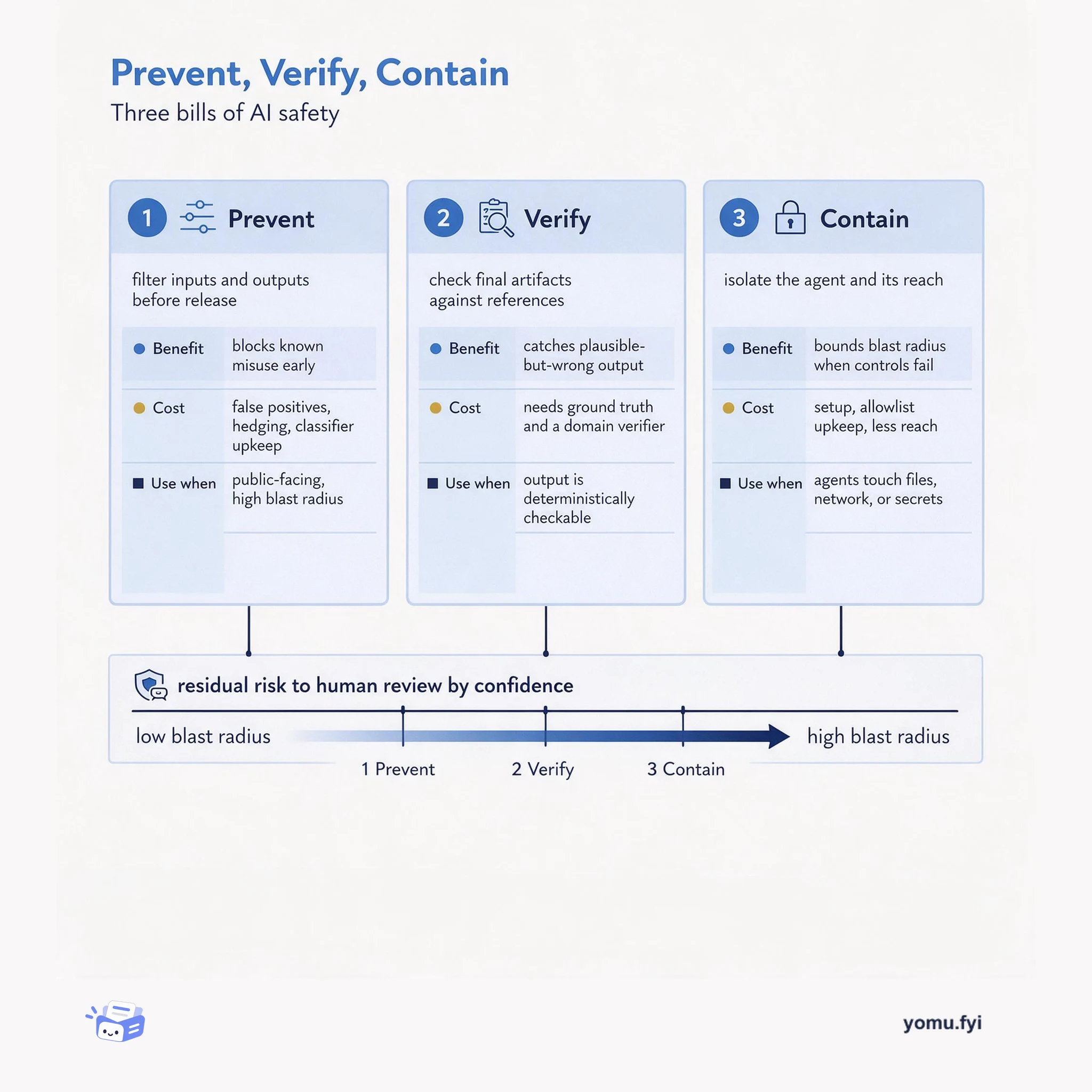
Prevent, Verify, Contain: The Three Bills of AI Safety
AI safety is a budget: prevention, verification, and containment each buy different protection at a different cost. This map shows what each control costs and when it pays off.
Android Studio keeps cross-platform Kotlin run and debug in one workspace but hands Swift editing to Xcode. This explainer maps the benefit, cost, and condition behind that boundary.
Android Studio's value comes from keeping a whole mobile project in one workspace: shared project model, one run configuration, one debugger. That advantage has a cost, because every feature that mirrors another vendor's platform, such as Swift editing alongside Xcode, must be kept compatible as both that platform and the IDE platform keep changing. JetBrains retired Swift language support in the Kotlin Multiplatform plugin while keeping iOS run and debug, which shows where the boundary landed. The explainer lays out the benefit, the cost, and the condition that should guide similar tooling decisions.
JetBrains kept iOS run and debug because that work is Kotlin/Native and Swift Export, which the KMP plugin itself owns. Swift editing, syntax highlighting, and navigation depended on tracking changes in Swift, Xcode, and the IntelliJ Platform, and usage was limited and declining, with most KMP iOS developers already editing Swift in Xcode.
When most of the team genuinely uses the shared project model, run configuration, and debugger, and the mirrored feature has real usage. Intercom's enablement work found that selecting core technologies is not enough on its own; a clear strategy, guidance, and investment in the owning team are what keep friction and incidents down.
Read usage and maintenance cost together. JetBrains cited limited and declining Swift usage alongside substantial compatibility effort. Release discipline helps too: TeamCity's bug-fix trains share a common data format, so teams can move within a major version without restoring backups.
The posts behind it
 Jetbrains · · Announcement
The dotInsights newsletter from JetBrains collects recent .NET and software development articles for developers. Topics include C# 15 collection expression arguments, union serialization with System.Text.Json, and control flow obfuscation for .NET and Java teams. Several posts focus on ASP.NET Core, covering middleware, RAG integration, and using passkeys for second factor authentication. The newsletter also features discussions on event-driven architecture versus CRUD over pub/sub and the impact of AI on database schema design. JetBrains announces the Rider 2026.2.3 release and explains how Microsoft helped fix slow startup times for Rider and ReSharper.
 Intercom · · Problem & solution
Intercom’s engineering enablement team transformed the company from a patchwork of legacy systems and recurring incidents into a stable infrastructure that empowers fast-moving product teams. The company learned that selecting core technologies is not enough without a clearly defined strategy for understanding, guiding their use, and investing in the teams behind them, as lacking this leads to persistent friction. They defined a dedicated core technology team, learned and standardized their tooling, and implemented approaches to hire and grow engineers who own the infrastructure. These efforts reduced operational friction and incident frequency, allowing the business to move more confidently. As a result, product teams run faster and the infrastructure is now a reliable foundation for growth.
Jetbrains · · AnnouncementJetBrains has released TeamCity 2026.2.1 and 2026.1.5, two bug-fix updates for the On-Premises versions of TeamCity that address more than 40 security vulnerabilities combined. These updates also resolve specific regressions including TFS projects failing to display diffs, YAML configuration import issues from a main repository branch, and MSBuild tools not being detected after the Visual Studio Build Tools 2026 September update. In addition to the numerous security fixes, these releases deliver performance improvements, better compatibility with integrations, and faster, more stable builds for users. A key compatibility feature allows upgrades or downgrades within the same major version without requiring backup restoration because bug-fix releases share a common data format. Users can upgrade via automatic update within TeamCity, direct download from the JetBrains website, or by pulling the updated Docker image from Docker Hub.
Jetbrains · · AnnouncementJetBrains is discontinuing Swift language IDE features in the Kotlin Multiplatform plugin starting with IntelliJ IDEA 2026.3 and Android Studio Rabbit 2 | 2026.2.2, including editing, syntax highlighting, and navigation within Swift files and between Swift and Kotlin. Running iOS applications and debugging Kotlin code on iOS will remain fully supported, and Kotlin/Native functionality such as Swift Export is unaffected. The existing Swift functionality will remain available in earlier versions of IntelliJ IDEA, Android Studio, and the KMP plugin, though these older versions will not receive further updates. The decision follows analysis showing limited and declining usage, with most iOS developers on KMP projects preferring Xcode for Swift development. The Swift support, originally developed for AppCode, required substantial effort to stay compatible with changes in Swift, Xcode, and the IntelliJ Platform.
More like this
AI safety is a budget: prevention, verification, and containment each buy different protection at a different cost. This map shows what each control costs and when it pays off.
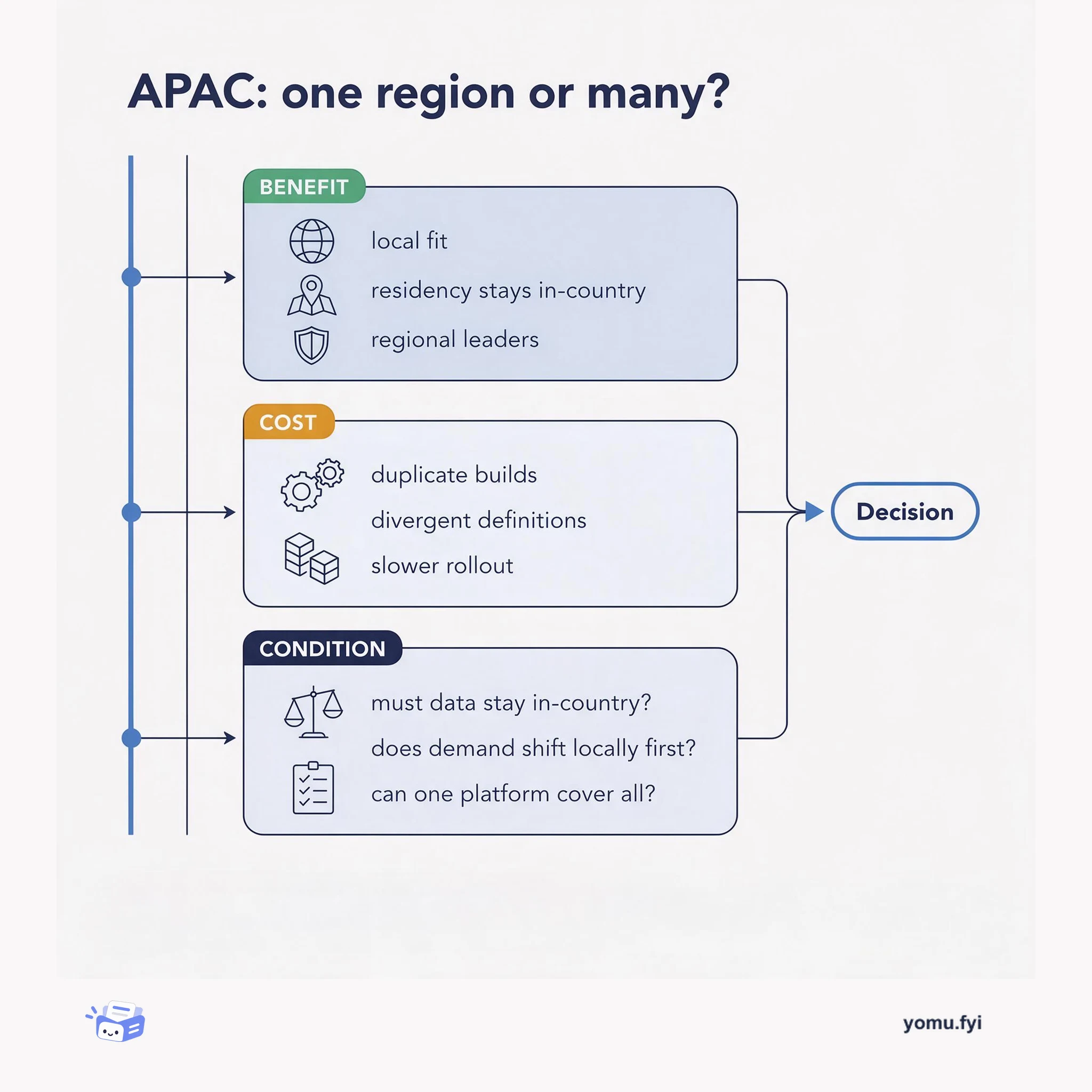
APAC is a federation of markets, not a single deployment region. This diagram maps the tradeoff between local autonomy and one shared platform, and the conditions that decide it.
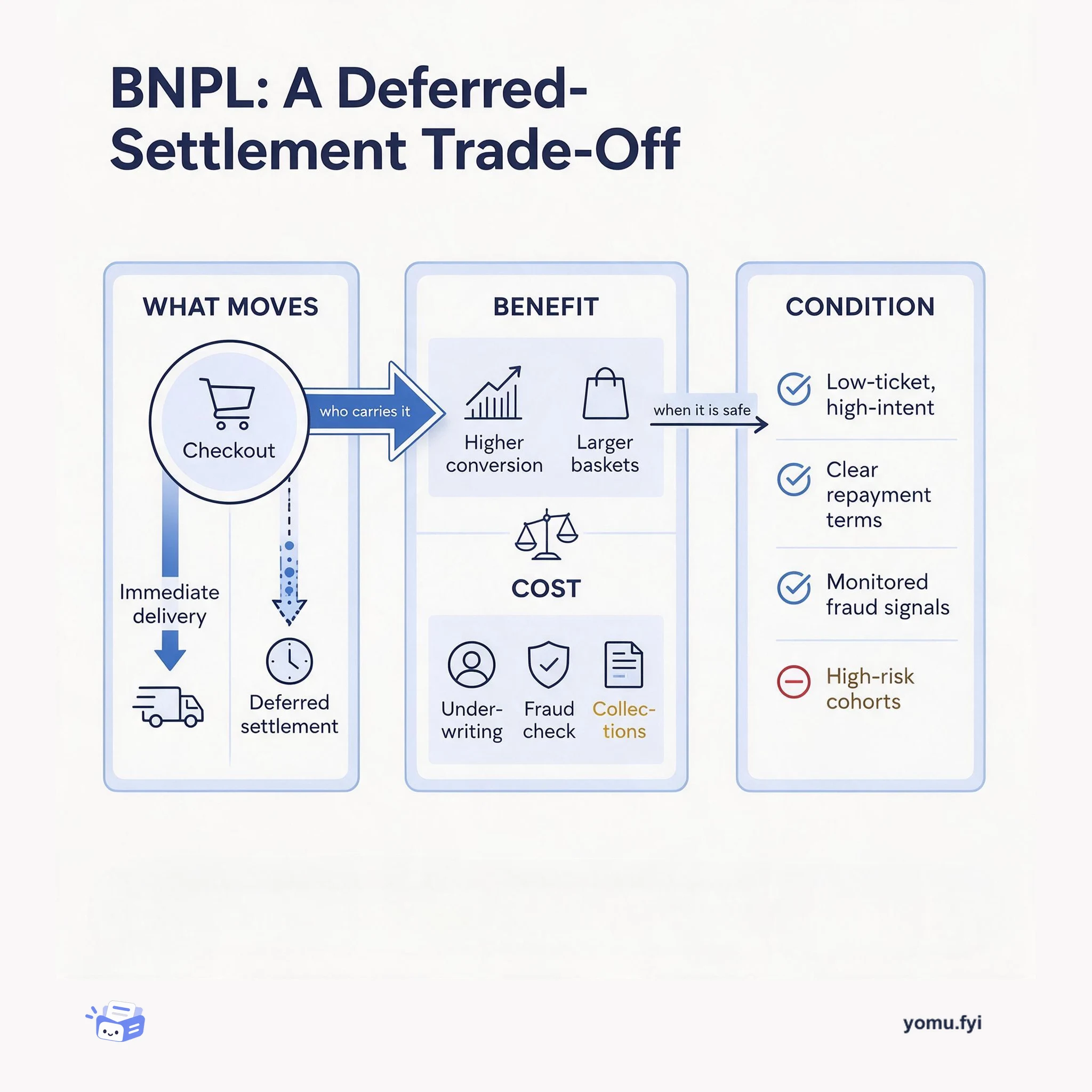
Buy Now, Pay Later is a deferred-settlement trade-off: merchants gain conversion while underwriting, fraud, and collections risk move elsewhere. This diagram maps the benefit, the cost, and the condition that decides.
The Good Stuff
Paid picks we use ourselves. Links carry a referral code — a subscription through one earns us a commission at no extra cost to you.
One useful email. Unsubscribe anytime.