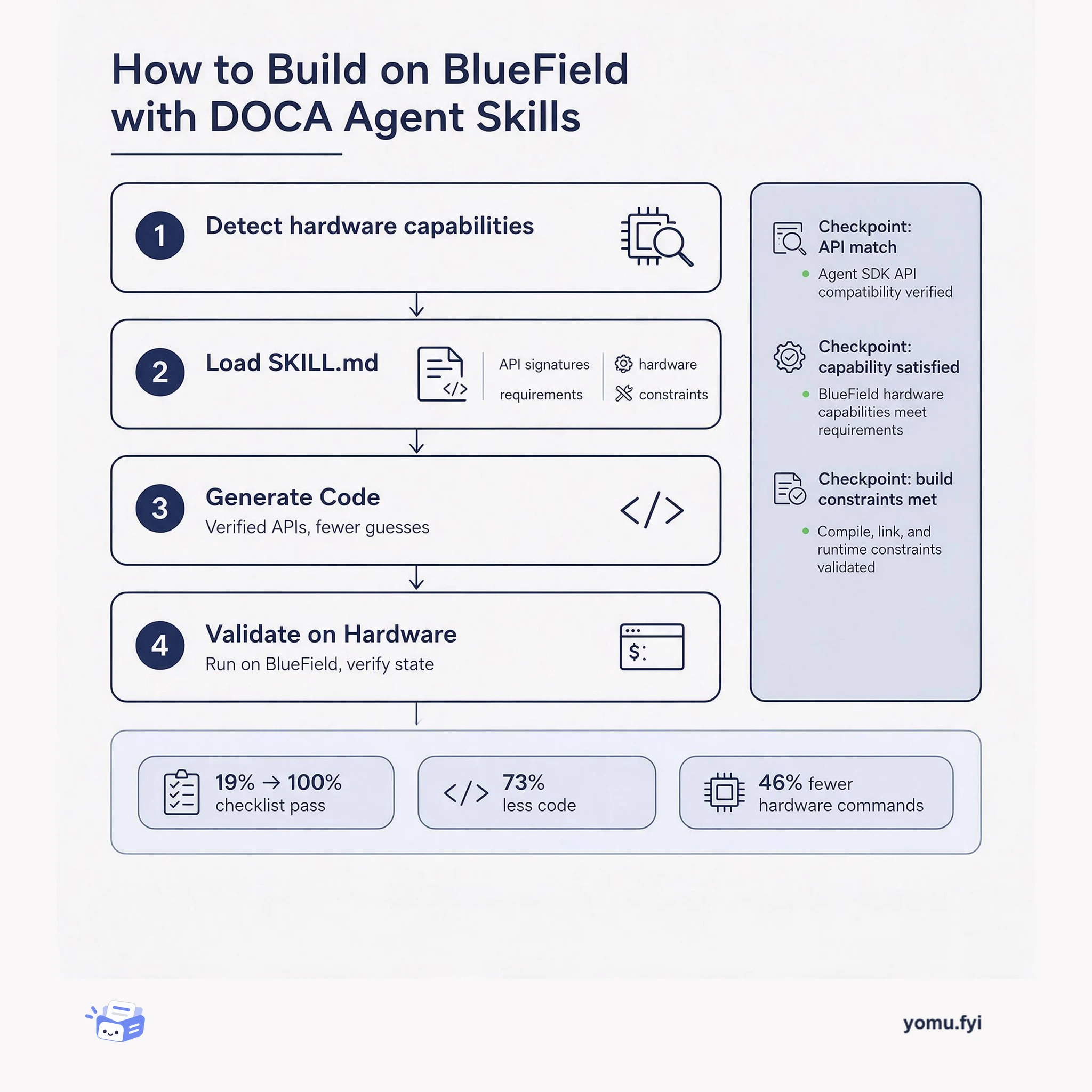
How to Build on BlueField with DOCA Agent Skills
A practical how-to for using NVIDIA DOCA Agent Skills to generate BlueField code with verified APIs and hardware checks, reducing correction cycles and failed builds.
 Supabasewenbo, laktek, jgoux, avallete, rand_arete, katerina_skroumpelouAnnouncement
Supabase announced tools at Supabase Select that let coding agents manage backend configuration and deployment from code, eliminating the need for dashboard-only changes. Declarative Schemas 2.0 allows agents to edit SQL files as the source of truth, with pg-delta generating migrations, while config.toml holds settings like auth providers that can be pulled back from the dashboard. Local development now runs as native processes without Docker, supporting multiple instances per directory and working in environments like Claude Code’s sandbox, currently in alpha off by default. Supabase Compute provides long-running services in any language alongside the database, with configurable memory and CPU, public or private HTTP endpoints, and deployment via CLI or Management API. The new MCP server lets user agents interact with an app as the signed-in user, respecting existing RLS policies, built on @supabase/server and Supabase Middleware, with a headless app template available.
Coding agents could write application code but not manage backend configuration, which required dashboard operations and CLI migrations. Additionally, user agents in platforms like Claude or ChatGPT lacked a standardized way to interact with apps as authenticated users.
Supabase introduced Declarative Schemas 2.0 with pg-delta for migration generation, config.toml for settings, native local development without Docker, Supabase Compute for long-running services, and an MCP server for user agents to interact with apps as signed-in users.
Declarative Schemas 2.0 uses SQL files as source of truth; agents edit them and pg-delta generates migrations, replacing manual migration writing.
Local Supabase can run as native processes without Docker, allowing multiple instances per directory and working in CI runners and agent sandboxes.
Supabase Compute runs long-lived services in any language next to the database, with public or private HTTP endpoints, configurable resources, and deployment via CLI.
Agents edit SQL files in supabase/schemas/*.sql as the source of truth. The pg-delta diff engine generates migrations from those files. New projects use it by default; existing projects enable it in config.toml.
Supabase Compute runs long-running web services and agents in any language with a full Linux environment, no time limit, and configurable memory and CPU. Edge Functions have execution limits and no full Linux environment.
The MCP server is an authenticated Edge Function deployed via a shadcn command. It uses @supabase/server and Supabase Middleware to know who is signed in, and RLS policies control data access per user.
Summaries are generated from the original by a language model. Check the original before relying on it.
See the idea
A practical how-to for using NVIDIA DOCA Agent Skills to generate BlueField code with verified APIs and hardware checks, reducing correction cycles and failed builds.
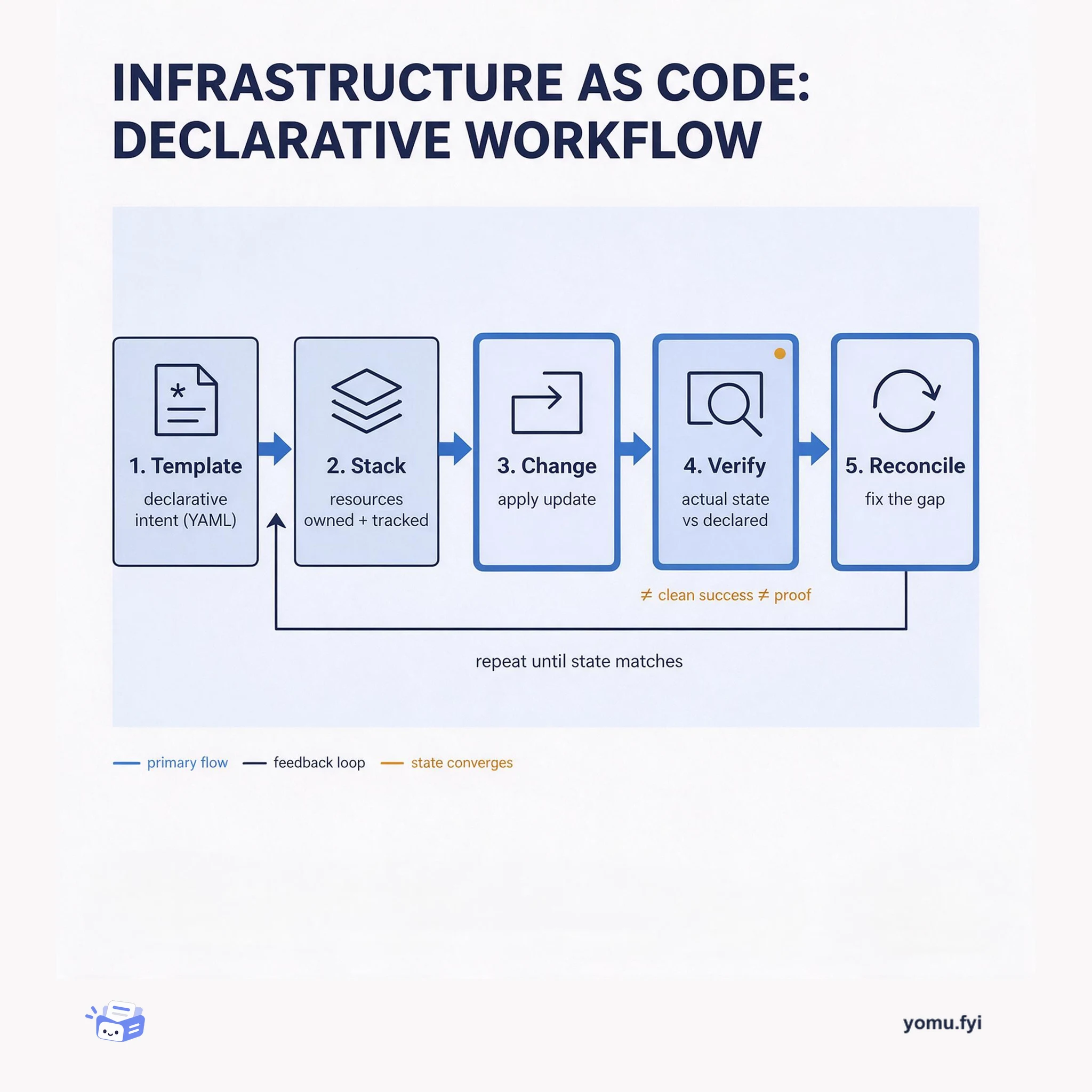
CloudFormation is a declarative reconciler: you describe the target state in a template, and it provisions, updates, and reports on the stack that results. Here is the loop.
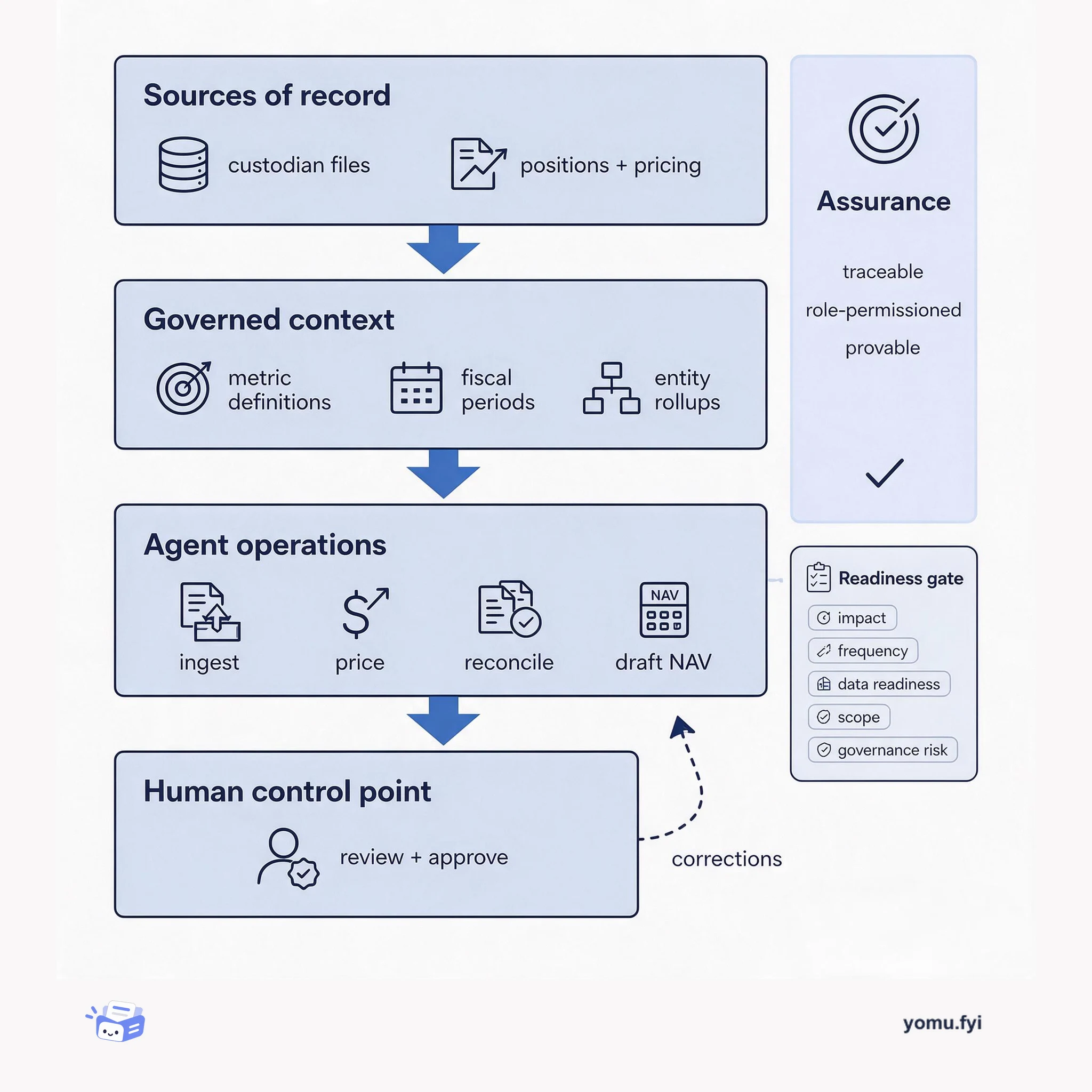
Asset management runs as a layered control plane: custodian and pricing data feed a governed context layer, agents run the overnight fund work, and a human signs off before anything is published.
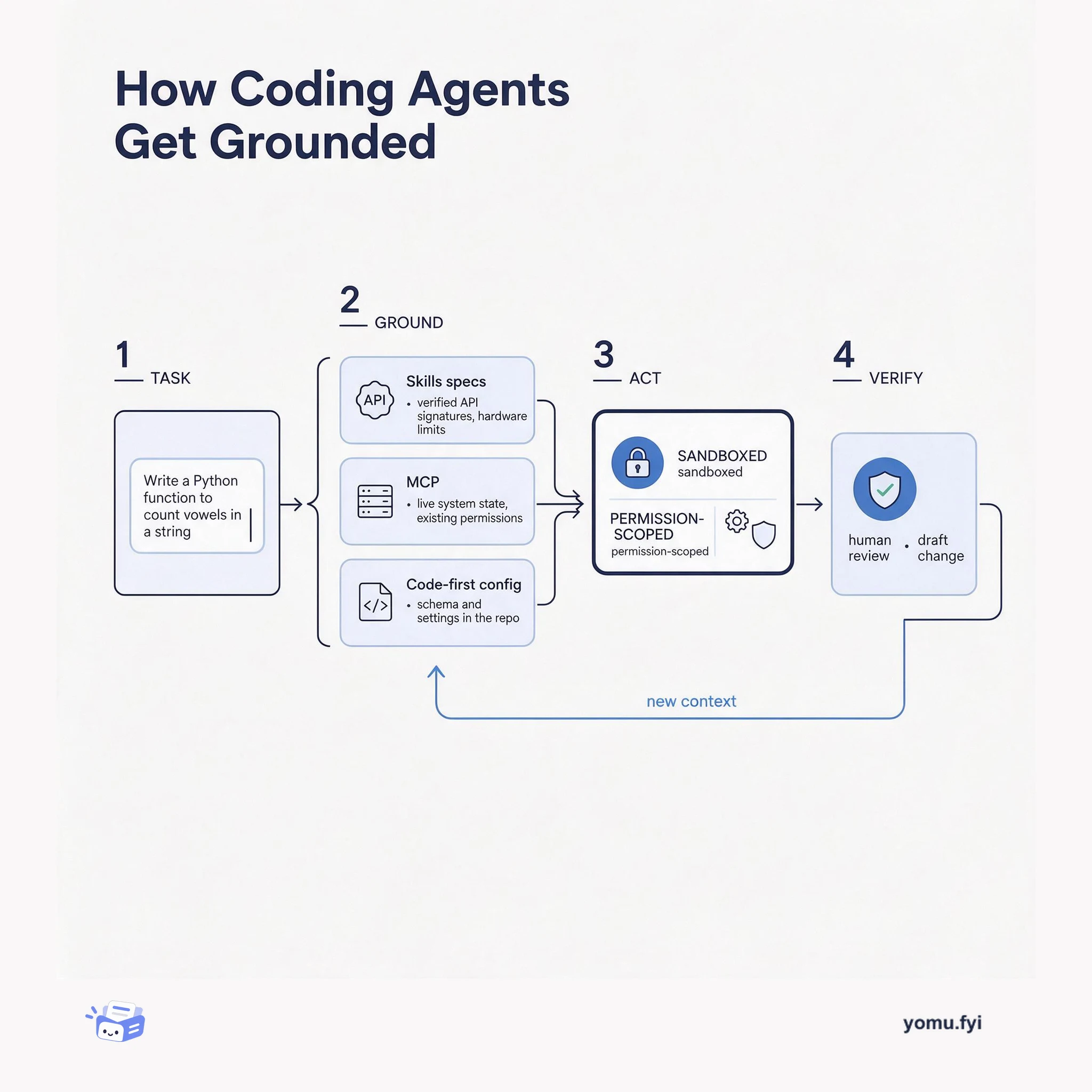
A four-stage flow showing how a coding agent moves from a task to a reviewed change by grounding on verified skills, live system state, and code-first config before it acts.
Keep reading
The Good Stuff
Paid picks we use ourselves. Links carry a referral code — a subscription through one earns us a commission at no extra cost to you.
One useful email. Unsubscribe anytime.