How Caddy Serves a Static Site: The Request Flow
See how Caddy handles a request for a static site, from DNS resolution through container routing to file_server, and how TLS and redirects fit into the flow.
A four-stage flow showing how a coding agent moves from a task to a reviewed change by grounding on verified skills, live system state, and code-first config before it acts.
An agent that only has a prompt guesses at APIs, schemas, and production state. This explainer maps the context surface that stops the guessing: verified skill specs that carry real API signatures and hardware constraints, MCP connections that expose live system state under existing permissions, and code-first configuration that makes the repo the source of truth. Those three inputs feed a sandboxed action step, and the flow ends at a human review checkpoint rather than an automatic merge. The mental model is simple: the quality of an agent's output tracks the quality of the context you expose to it, so invest in the grounding layer before tuning the prompt.
General-purpose agents lack domain-specific knowledge, so they guess signatures and skip hardware checks. In a 65-prompt evaluation of NVIDIA DOCA development, agents without skill specs satisfied only 19% of graded checklist items, while agents with a machine-readable SKILL.md of verified signatures and constraints satisfied 100%. The fix is supplying context, not a bigger model.
Keep the human at the verification checkpoint rather than in the middle of the work. Sentry's pattern has the debugger diagnose, an agent fix, and a draft PR wait for review, while Anthropic's Frontier Deployed Engineer residency ends with an engineer leading a real use case and a graded practical before credentials. Grounding and sandboxing reduce risk; review is what closes it.
The posts behind it
 Supabase · · Announcement
Supabase announced a code-first approach at its Select 2026 event, enabling developers to store schema and configuration in code so coding agents can set up and modify projects end to end. Local Supabase now runs as native processes without Docker, allowing multiple instances per directory and compatibility with sandboxes like Claude Code. A new MCP server lets application users connect their own agents, authenticating through existing Auth flows and enforcing row-level security on every tool call. Operational tools include Health Check Advisors for error rates, Database Connections for session management, Explorer notebooks for unified SQL and log queries, and query_logs for agent monitoring. Scaling features encompass Multigres for multi-node Postgres high availability, OrioleDB to avoid table bloat and VACUUM, Supabase Pipelines for near real-time data streaming to analytics platforms, and dbarena for transparent benchmarks.
Supabase · · AnnouncementAt Supabase Select, Supabase announced tools that let coding agents find production problems, test fixes, and report back, with controls for access and permission. A new MCP tool gives agents raw SQL access to project logs, advisor checks now include health signals for error rates across Data API, Auth, Storage, and Edge Functions, and the database connections view shows sessions, long queries, idle-in-transaction, blocked, and lock holders. Notebooks combine saved database or log queries with markdown notes, can be created in the dashboard via the Assistant, pulled locally with supabase notebooks pull, and pushed with supabase notebooks push, and are found in the new Explorer rolling out through October 12. Updated Skills provide a living document of common health, security, performance, and resource signals for agents to watch for and how to monitor them. Supabase Pipelines, available on paid plans, allow replicating data to BigQuery, ClickHouse, DuckLake, or Snowflake.
Supabase · · AnnouncementSupabase announced tools at Supabase Select that let coding agents manage backend configuration and deployment from code, eliminating the need for dashboard-only changes. Declarative Schemas 2.0 allows agents to edit SQL files as the source of truth, with pg-delta generating migrations, while config.toml holds settings like auth providers that can be pulled back from the dashboard. Local development now runs as native processes without Docker, supporting multiple instances per directory and working in environments like Claude Code’s sandbox, currently in alpha off by default. Supabase Compute provides long-running services in any language alongside the database, with configurable memory and CPU, public or private HTTP endpoints, and deployment via CLI or Management API. The new MCP server lets user agents interact with an app as the signed-in user, respecting existing RLS policies, built on @supabase/server and Supabase Middleware, with a headless app template available.
 Anthropic · · Announcement
Anthropic launched Claude Frontier Academy with a $100 million commitment to train 10,000 Frontier Deployed Engineers by the end of 2027. The program addresses the talent gap in enterprise AI implementation, where skilled engineers are scarce. The Frontier Deployed Engineer Residency follows a medical model: engineers learn from practitioners, work on simulated enterprise deployments covering use case selection, security review, and handover, and are assessed on a graded practical before earning credentials. First cohorts include engineers from Accenture, Bain, Capgemini, Commonwealth Bank of Australia, Deloitte, McKinsey, Morgan Stanley, and Novo Nordisk, with cohorts running in San Francisco, New York, and London. The program starts with a multi-day in-person session with Anthropic engineers and licensed instructors and continues with a 12-week residency where engineers lead a real Claude use case at their organization, supported by Anthropic engineers, with the first FDE badges expected in early 2027.
 Sentry · · Explainer
Seer is Sentry’s agent debugger that reasons across errors, traces, logs, profiles, and linked repositories to identify root causes, not just surface-level stack traces. The Sentry MCP, set up via the agent plugin with a single command, bridges Sentry’s data into coding agents like Claude Code and Cursor, enabling them to invoke Seer’s full analysis. The new Sentry CLI provides natural-language access to Seer’s diagnosis and issue management directly from the terminal, using selectors like @latest and @most_frequent. These tools are complementary: Seer provides deep diagnosis, while the MCP and CLI deliver that context into the environments developers already use. Teams can automate the entire workflow so Seer diagnoses, an agent fixes, and a draft PR awaits review without human involvement until approval, with Seer triggering on issues meeting event count and fixability thresholds.
 NVIDIA · · Problem & solution
General-purpose AI agents lack domain-specific knowledge for NVIDIA DOCA development, often inventing APIs or skipping hardware checks, leading to correction cycles. DOCA AI agent skills provide a structured, machine-readable specification in a SKILL.md file containing verified API signatures, hardware capability requirements, and build constraints for components like Flow, GPUNetIO, and PCC. In a 65-prompt evaluation, agents without skills satisfied only 19% of graded checklist items, while agents with skills satisfied 100% across all prompts. The skills reduce correction cycles; in a side-by-side demo, the with-skills agent used 73% less handwritten code and 46% fewer hardware commands. The skills are available on GitHub and enable developers to build faster, ship more stable code, and deploy with fewer unknowns on BlueField infrastructure.
More like this
See how Caddy handles a request for a static site, from DNS resolution through container routing to file_server, and how TLS and redirects fit into the flow.
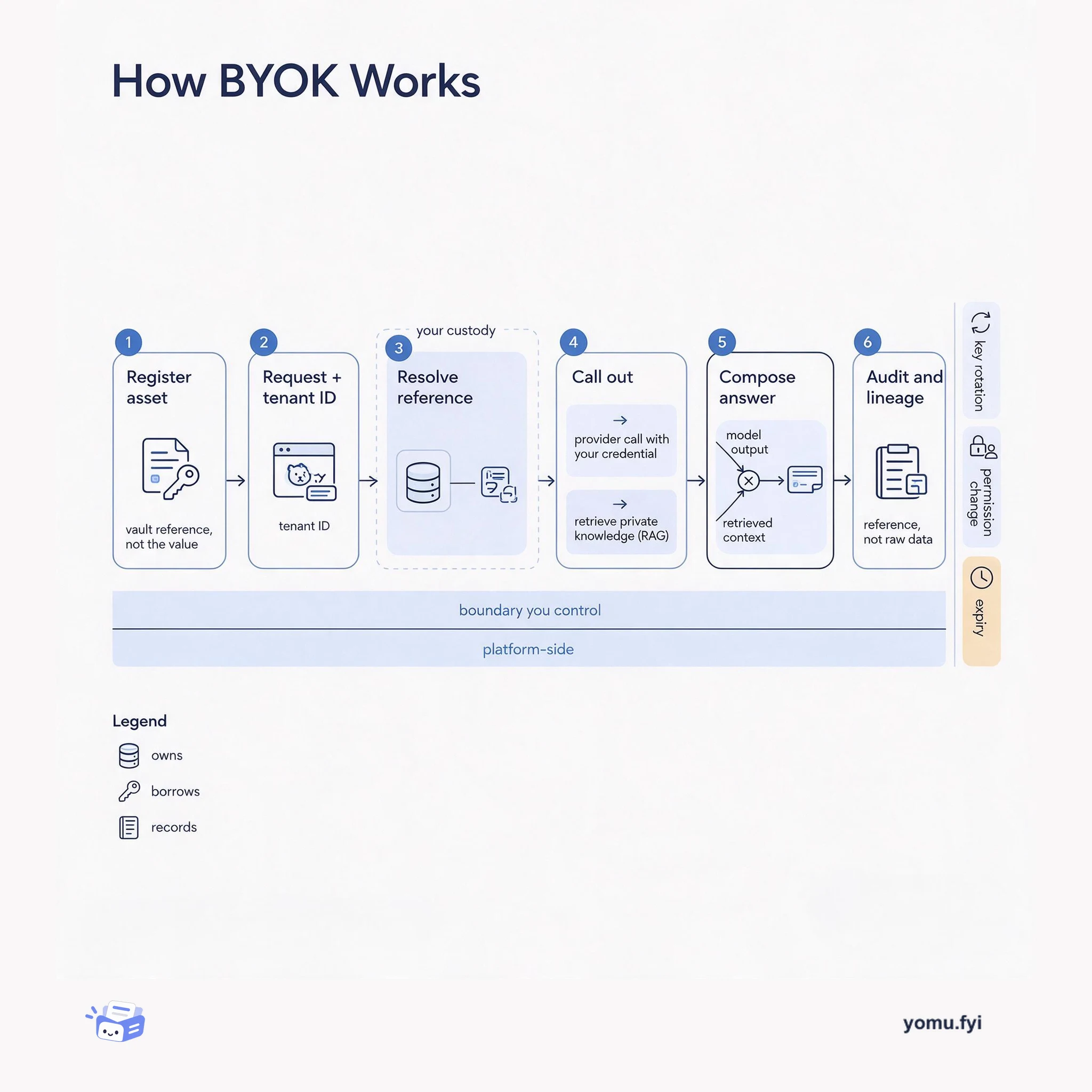
BYOK lets a system run on assets you supply — your model credential or your private knowledge — instead of the vendor's defaults. This walkthrough traces six steps from registration to an audited response.
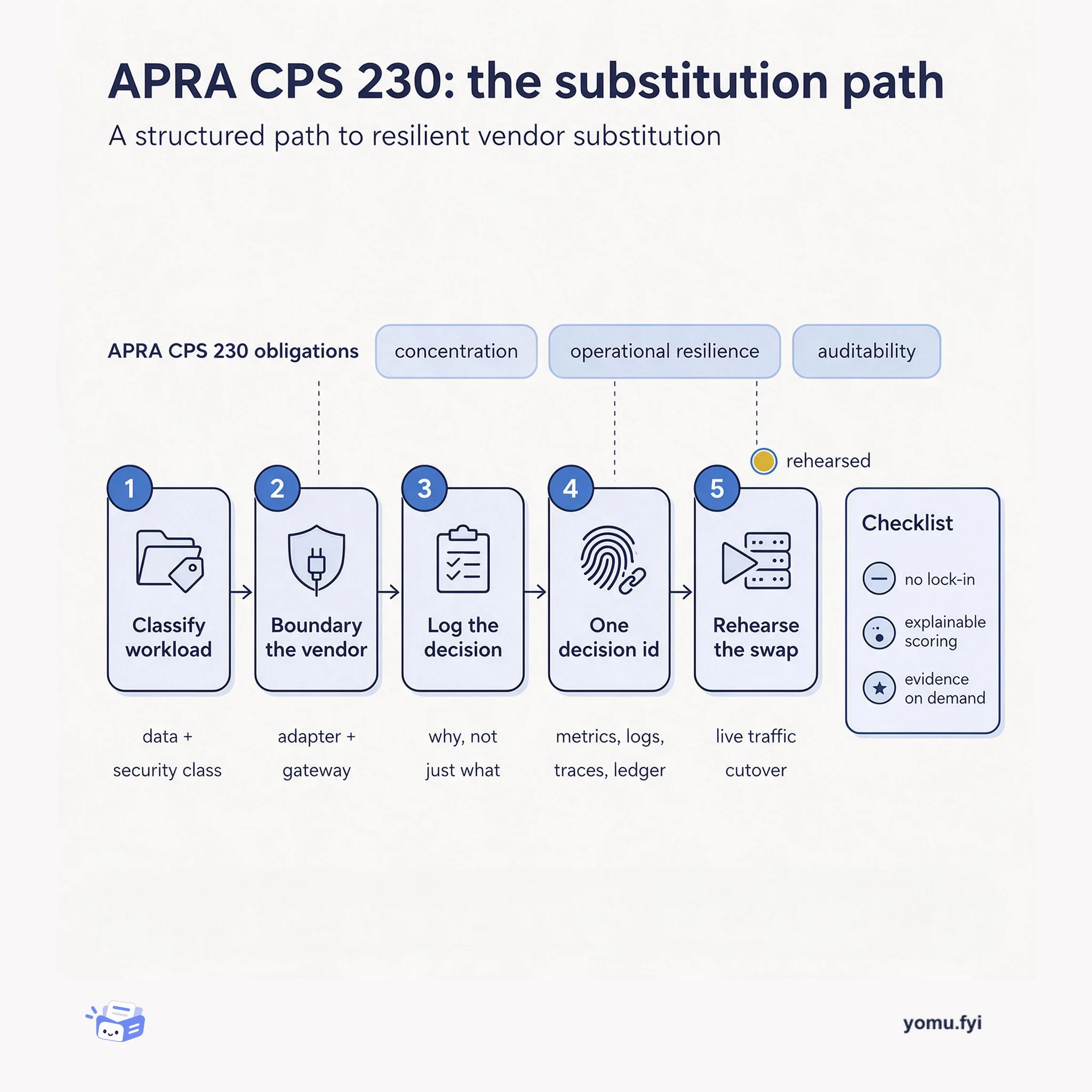
APRA's April 2026 letter flags single-provider concentration as a CPS 230 risk, so AI stacks need a rehearsed substitution path. This flow maps five stages, from workload classification to provider swap.
The Good Stuff
Paid picks we use ourselves. Links carry a referral code — a subscription through one earns us a commission at no extra cost to you.
One useful email. Unsubscribe anytime.