ABAC: When Data Context Becomes the Access Rule
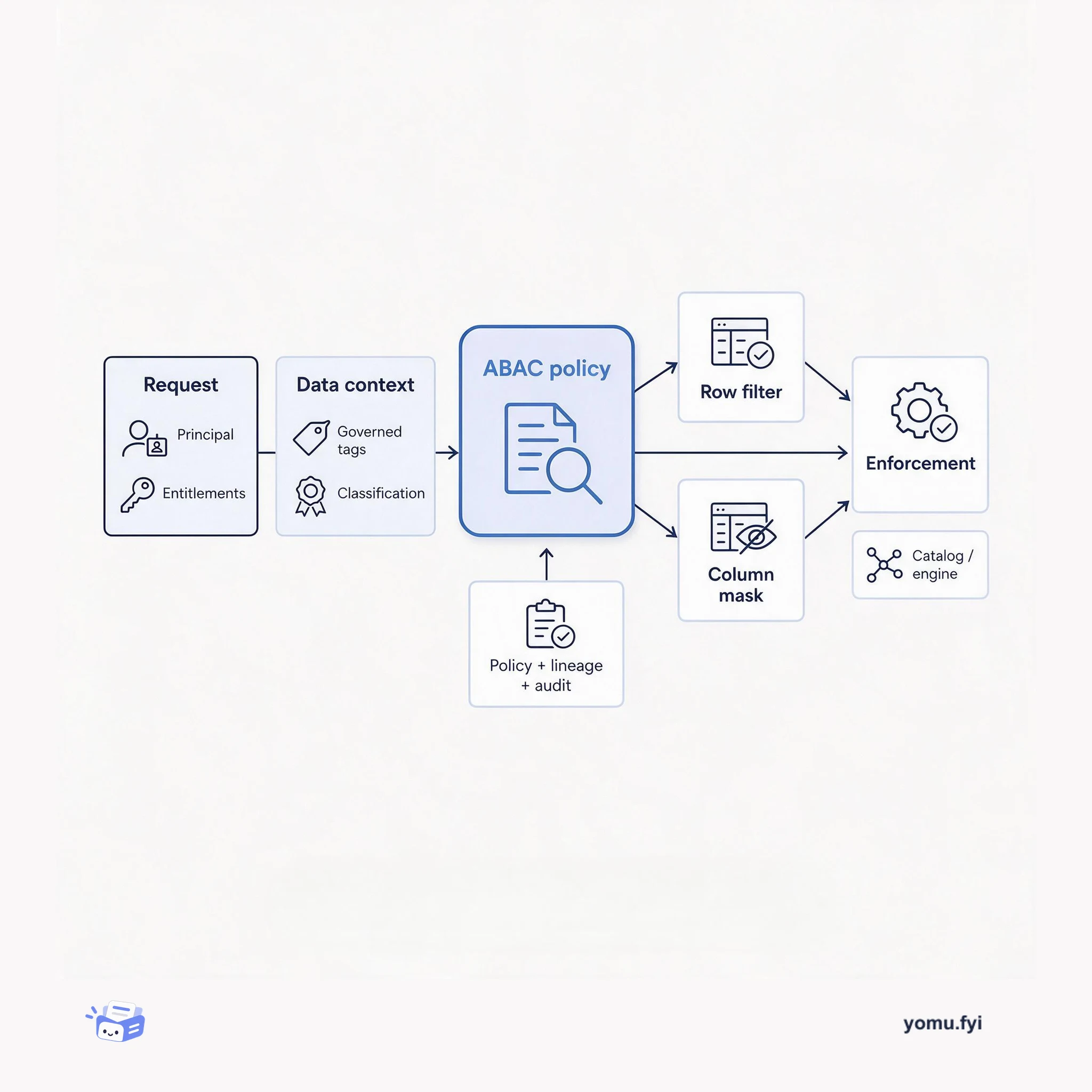
Attribute-Based Access Control uses identity and data attributes to decide access. This explainer shows how governed tags become row filters or column masks across data engines.
 DatabricksSrikanth Mandalapu, Travis Paulson, Bernie KuanExplainer
The post argues that healthcare AI governance must extend beyond security controls to include knowledge, context, and ontology: security governs access, while semantics determine what data means and whether models can trust it. DEP frames classification tags, model cards, data contracts, and lineage as machine-readable governance artifacts, with Unity Catalog serving as the metadata runtime for agents. Build agents can generate ETL, testing, de-identification, and deployment, while analytic agents answer questions over individual data products; human stewards approve proposals and own accountability. A shared lifecycle certifies the data product and AI track through gates using scores for governance, quality, semantics, and ownership, with certification expiring after relevant changes or failures. The approach applies data-layer ABAC to SQL and vector retrieval, logs agent prompts with lineage, and connects readiness metrics to model economics by enabling smaller models when cataloged data supplies sufficient context.
The post identifies a gap in security-focused AI governance: access controls do not establish what data means, whether it is trustworthy, or whether an AI model should learn from it. It presents healthcare governance as needing broader semantics, context, ontology, accountability, and operational proof.
The Data Empowerment Program organizes governance into five pillars—Data Governance, Knowledge Governance, Data Literacy, Data Management, and Ontology—and operationalizes their metadata through build and analytic agents. Unity Catalog stores the governed metadata, agents execute lifecycle tasks and write evidence back, and shared gates use AI Certification, human approvals, continuous checks, and data-layer ABAC to control release and retrieval.
Classification tags, model cards, data contracts, and lineage are treated as semantic building blocks: concepts, context, shared definitions, and relationships that agents can consume.
AI Certification records governance, quality, semantics, and ownership scores in Unity Catalog; schema changes, contract updates, or failed evaluation suites can revoke certification until checks pass again.
Attribute-Based Access Control applies at the data layer so SQL and vector retrieval inherit the querying user’s grants, while agent prompts are logged with the lineage used to answer them.
Summaries are generated from the original by a language model. Check the original before relying on it.
See the idea
Attribute-Based Access Control uses identity and data attributes to decide access. This explainer shows how governed tags become row filters or column masks across data engines.
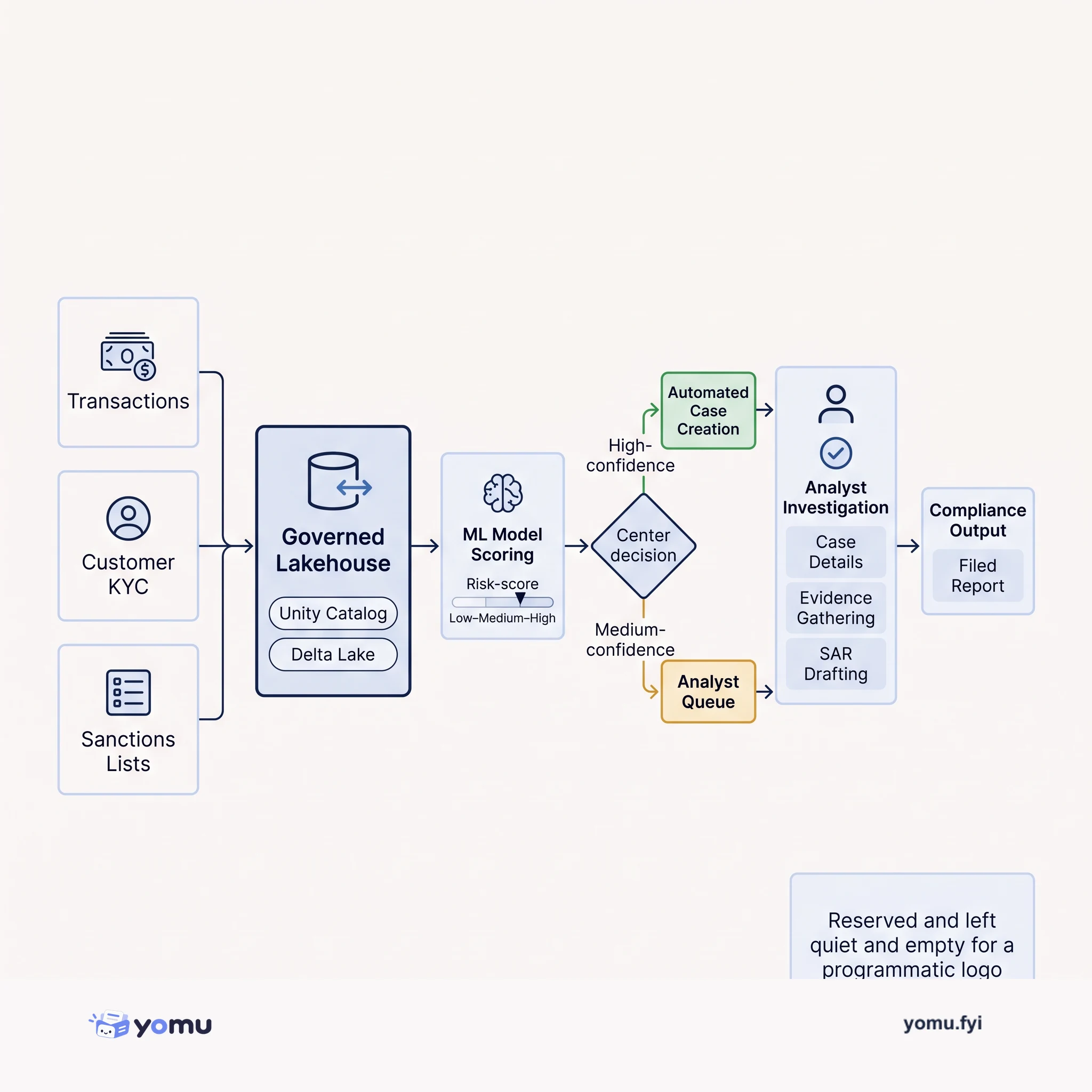
AML systems detect financial crime by unifying fragmented data sources, applying machine-learning models, and routing suspicious activity through analyst review—turning raw transactions into actionable cases.
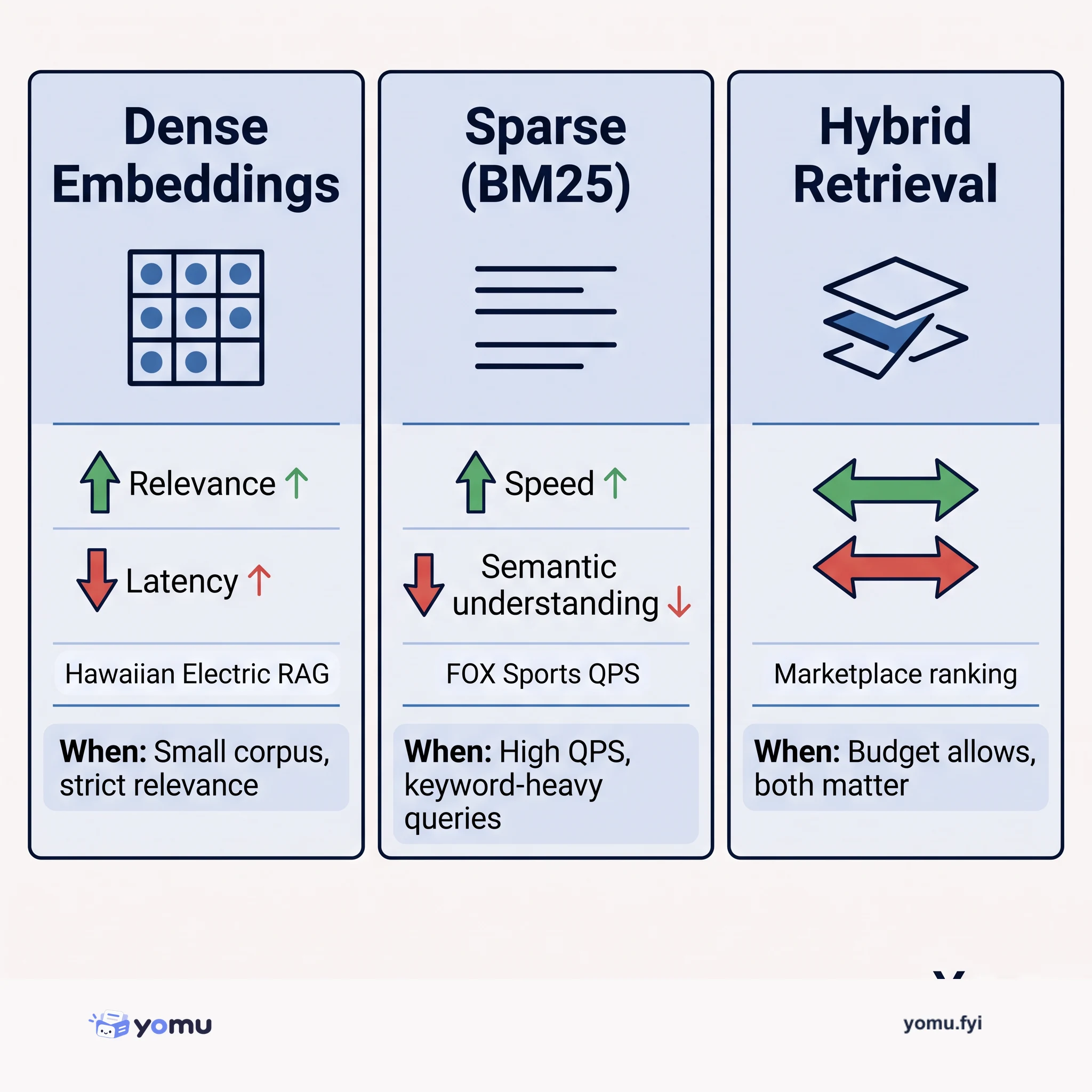
AI Search balances retrieval speed and result quality by choosing between dense embeddings, sparse lexical search, and hybrid approaches. Understand which trade-off fits your workload.
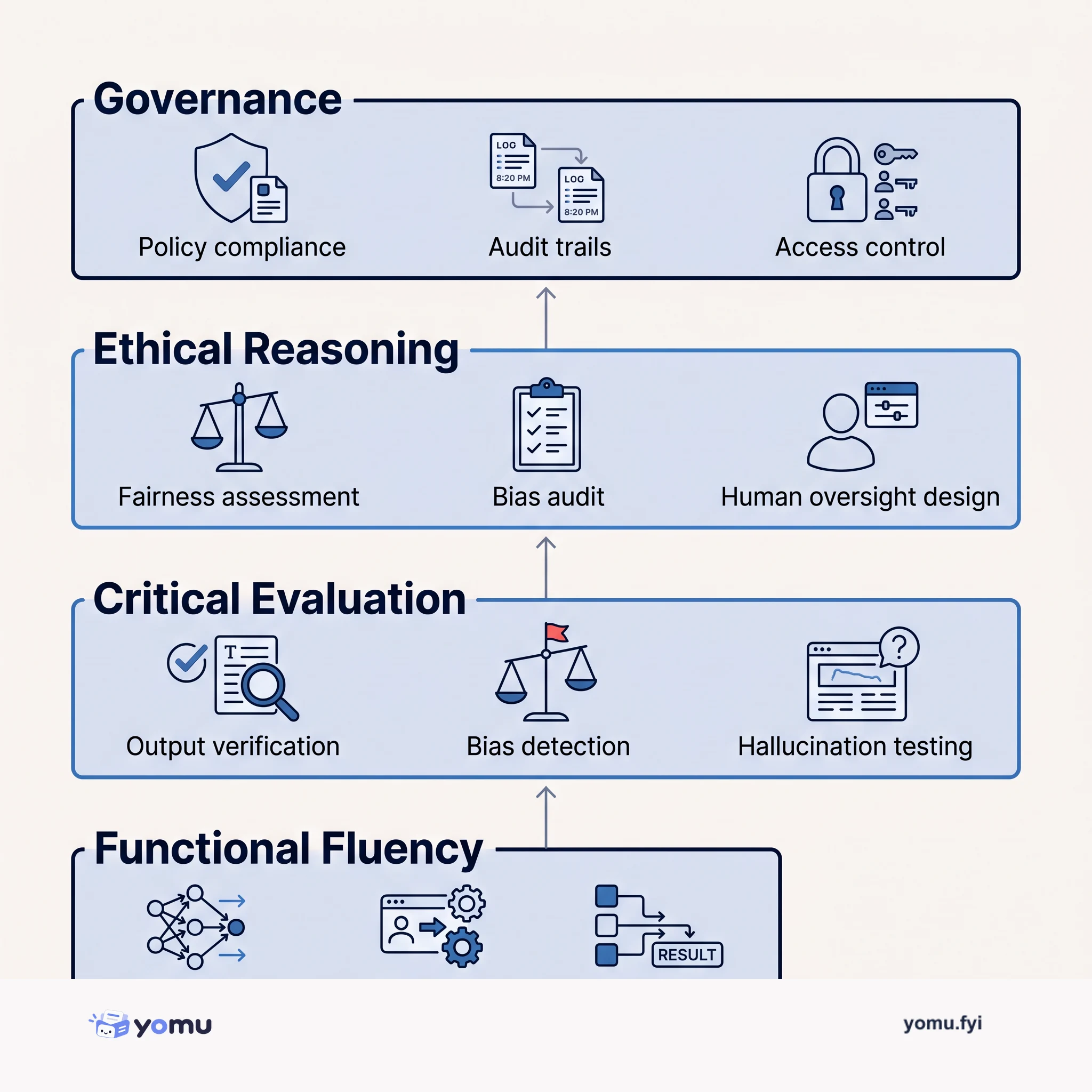
AI literacy spans functional fluency, critical evaluation, ethical reasoning, and governance. Engineers need all four to deploy AI responsibly and make sound technical decisions.
Keep reading
The Good Stuff
Paid picks we use ourselves. Links carry a referral code — a subscription through one earns us a commission at no extra cost to you.
One useful email. Unsubscribe anytime.