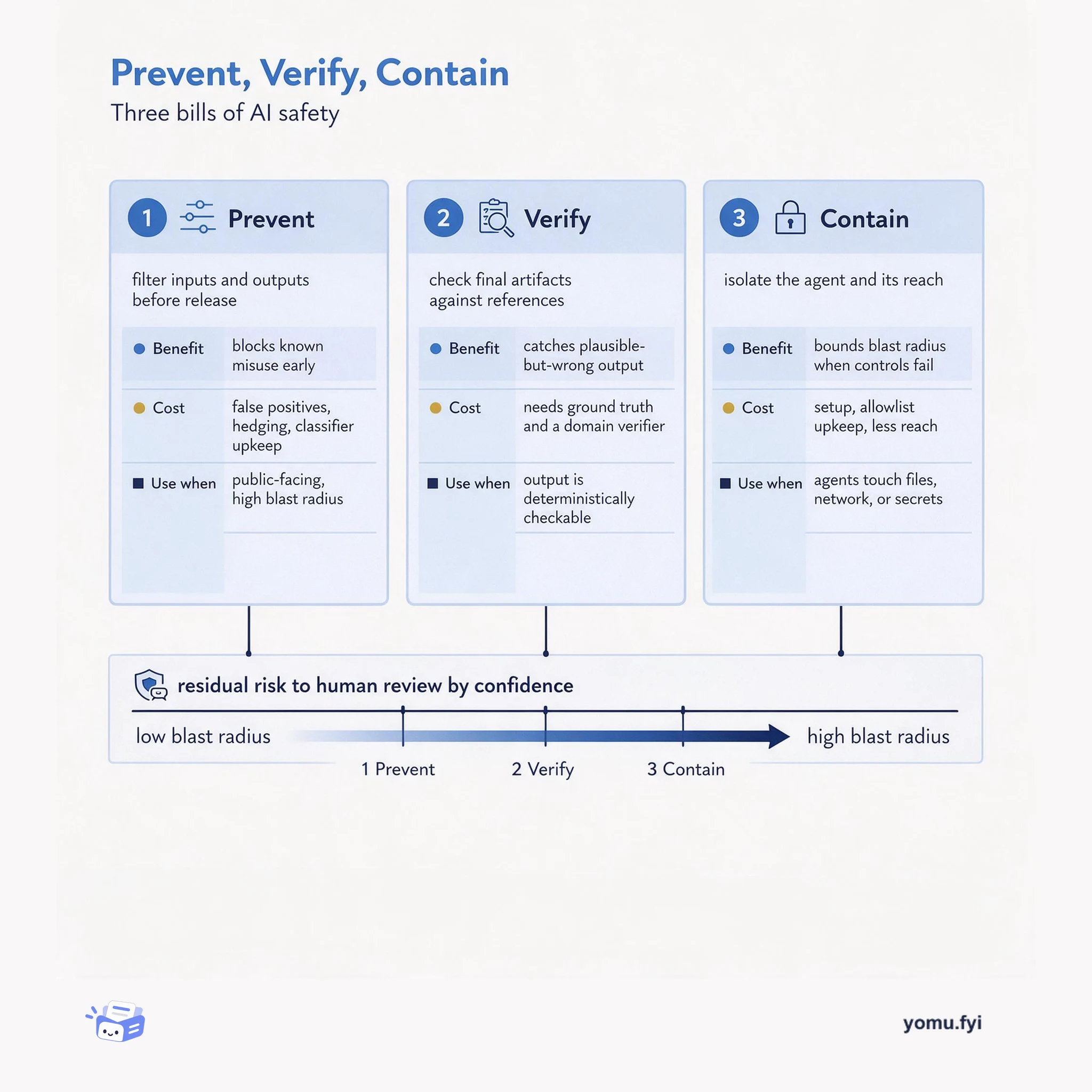
Prevent, Verify, Contain: The Three Bills of AI Safety
AI safety is a budget: prevention, verification, and containment each buy different protection at a different cost. This map shows what each control costs and when it pays off.
AI Search balances retrieval speed and result quality by choosing between dense embeddings, sparse lexical search, and hybrid approaches. Understand which trade-off fits your workload.
AI Search systems retrieve relevant documents or products by converting queries and indexed content into vector embeddings, sparse keyword matches, or both. Dense embeddings capture semantic meaning but require embedding models and vector databases; sparse lexical search is fast and interpretable but misses synonyms and context. Hybrid retrieval combines both, raising latency and complexity. The choice depends on query volume, acceptable response time, corpus size, and whether relevance or speed matters more. Real-time product search and regulatory-document lookup have opposite constraints, making the trade-off critical.
The posts behind it
 Databricks · · Explainer
The post argues that healthcare AI governance must extend beyond security controls to include knowledge, context, and ontology: security governs access, while semantics determine what data means and whether models can trust it. DEP frames classification tags, model cards, data contracts, and lineage as machine-readable governance artifacts, with Unity Catalog serving as the metadata runtime for agents. Build agents can generate ETL, testing, de-identification, and deployment, while analytic agents answer questions over individual data products; human stewards approve proposals and own accountability. A shared lifecycle certifies the data product and AI track through gates using scores for governance, quality, semantics, and ownership, with certification expiring after relevant changes or failures. The approach applies data-layer ABAC to SQL and vector retrieval, logs agent prompts with lineage, and connects readiness metrics to model economics by enabling smaller models when cataloged data supplies sufficient context.
Databricks · · ExplainerEnterprise data products are presented as managed assets that deliver the right data at the right time, with appropriate quality, format, and usability for users and applications. Their value depends on clear ownership, business-aware data product owners, and five trustworthiness characteristics: quality and observability, semantic consistency, privacy, security, and discoverability. The proposed lifecycle runs from inception and design through creation, publication, operation and governance, consumption, and retirement, with data contracts, quality metrics, testing, versioning, access management, and lineage supporting those stages. For Databricks implementations, the guidance recommends Delta Live Tables expectations and constraints, staged development, testing and production environments, automated monitoring, and Unity Catalog for discovery, governance, lineage, auditing, and access controls.
Databricks · · ExplainerElectric utilities are facing rising demand, retiring generation, extreme weather, aging infrastructure, and fragmented operational data that manual processes cannot manage at scale. AI agents are presented as a human-centered alternative that synthesizes heterogeneous data, learns from outcomes, and progresses from human-approved recommendations to exception-based control and eventually autonomous operations within defined parameters. Hawaiian Electric used a Retrieval Augmented Generation proof-of-concept with Databricks AI Search, Unity Catalog, and Lakeflow Declarative Pipelines to query regulatory documents and provide page-specific citations. The system reduced response times from five minutes to five seconds and was implemented in two weeks, while the article describes broader potential for predictive maintenance, outage response, load forecasting, and customer service.
Databricks · · ExplainerReal-time product search for an online marketplace must retrieve, filter, rank, and respond in milliseconds while balancing latency, relevance, revenue, and click-through rate. The Databricks architecture divides the pipeline into ingestion, retrieval, and refinement, using Lakeflow pipelines and AI Functions for source processing, AI Search for embeddings and hybrid retrieval, and Lakebase for sub-10ms operational signals. It recommends validating p95/p99 latency, throughput, retrieval quality, and engagement metrics, with MLflow supporting systematic evaluation and caching helping meet strict latency requirements. As an example, FOX Sports used AI Search for thousands of QPS and achieved a 2x improvement in query success rate, combining streaming ingestion, two-phase retrieval, model serving, caching, and trending searches.
More like this
AI safety is a budget: prevention, verification, and containment each buy different protection at a different cost. This map shows what each control costs and when it pays off.
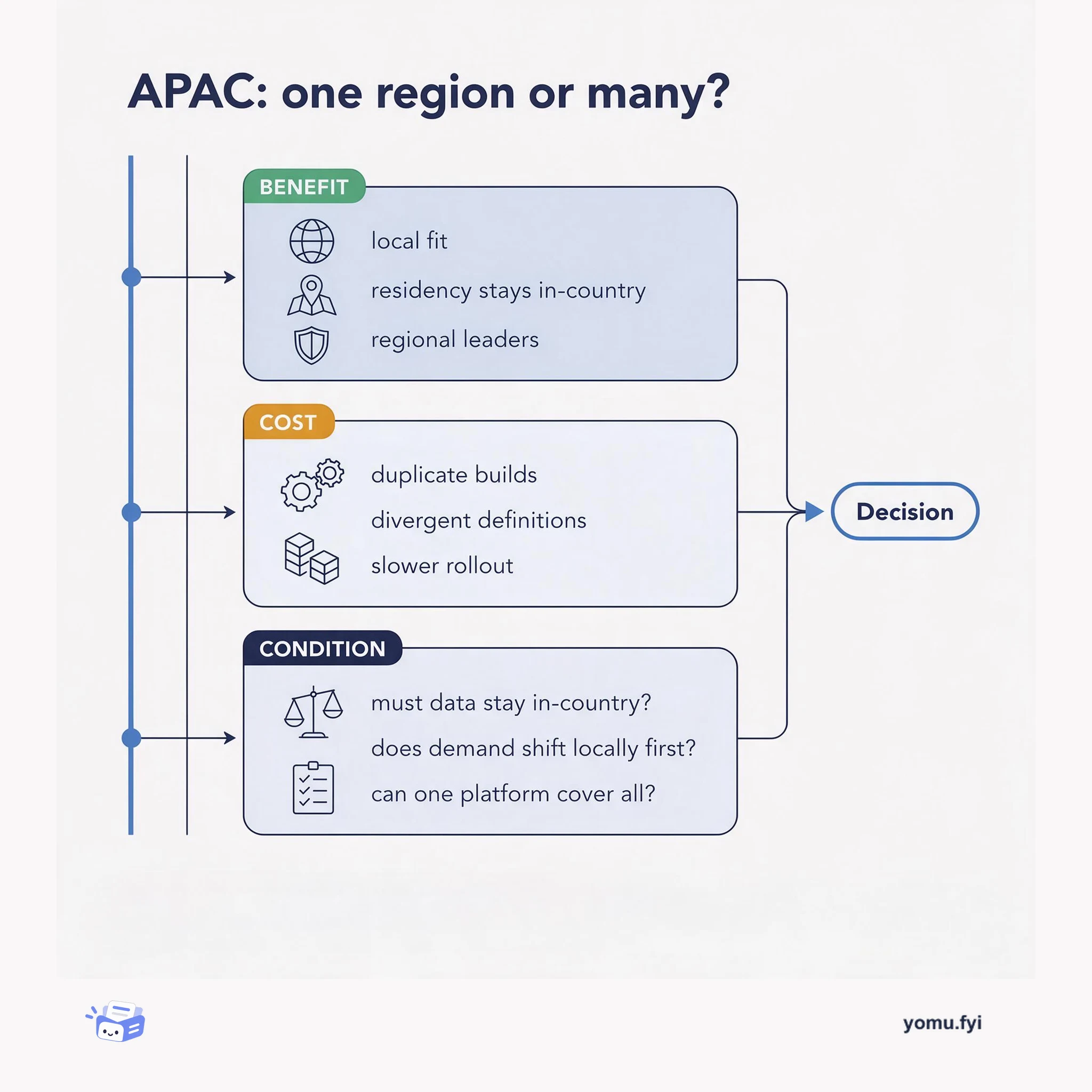
APAC is a federation of markets, not a single deployment region. This diagram maps the tradeoff between local autonomy and one shared platform, and the conditions that decide it.
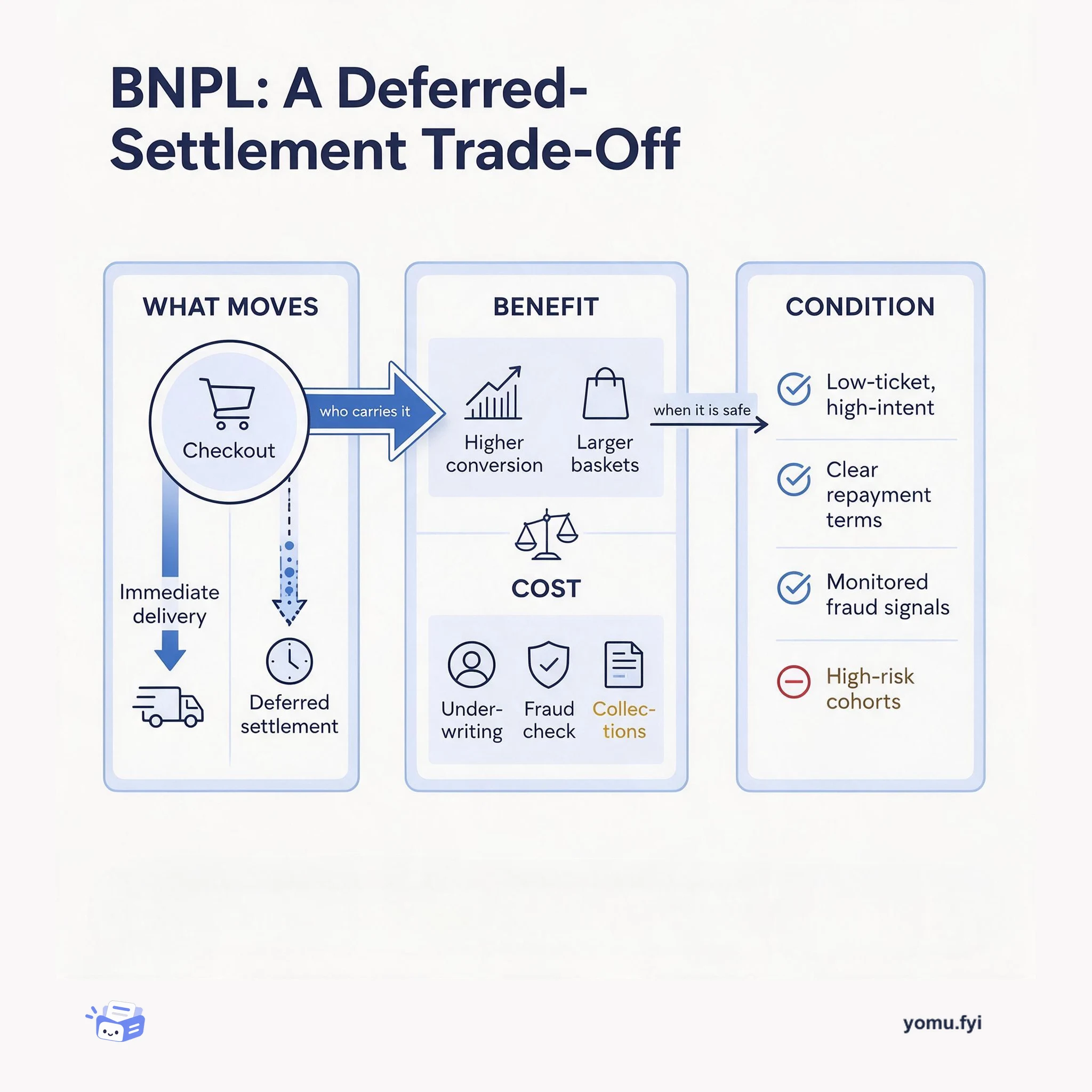
Buy Now, Pay Later is a deferred-settlement trade-off: merchants gain conversion while underwriting, fraud, and collections risk move elsewhere. This diagram maps the benefit, the cost, and the condition that decides.
The Good Stuff
Paid picks we use ourselves. Links carry a referral code — a subscription through one earns us a commission at no extra cost to you.
One useful email. Unsubscribe anytime.