Brandwatch AI: Speed Layer vs Trust Layer
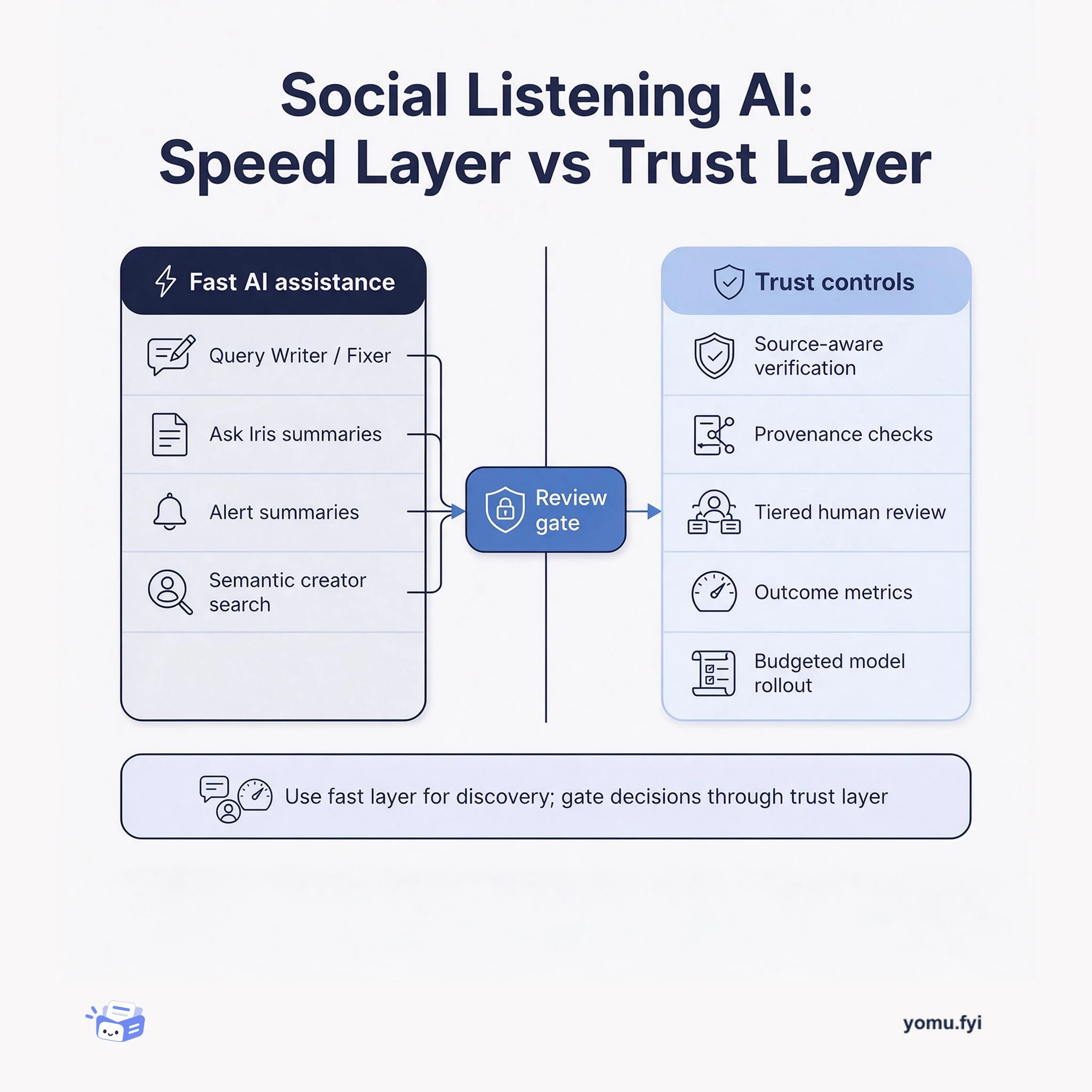
Compare Brandwatch's AI speed features—Ask Iris, Query Writer, and AI summaries—with the governed checks that make social insights trustworthy before teams act.
 Stack OverflowKavin XavierProblem & solution
Human-in-the-loop (HITL) frameworks integrate human judgment into automated AI workflows to improve reliability and safety, but without careful design they can create bottlenecks. The post reveals key trade-offs: more automation increases speed and reduces cost but raises risk, while more human oversight boosts accuracy and safety but adds latency and cost. Common failure modes include over-reviewing trivial cases, lacking clear trigger logic, and expecting human reviewers to scale linearly. The proposed solution is a tiered HITL system applying the Pareto principle: automation handles 85% of high-confidence decisions using confidence calibration, with three tiers addressing the remaining cases under 3 ms latency, asynchronous review within hours, and real-time oversight with 30-60 second windows. Success requires careful routing, reviewer tooling, and closing feedback loops across seconds, days, weeks, and quarterly cycles to continuously improve model performance and reduce human involvement over time.
AI teams implementing human-in-the-loop often face trade-offs between speed and accuracy, leading to bottlenecks if not designed carefully.
A tiered human-in-the-loop system applying the Pareto principle: Tier 1 automated validation for high-confidence decisions using confidence calibration; Tier 2 asynchronous expert review for lower confidence cases; Tier 3 real-time oversight for novel or high-risk scenarios with time-limited human input.
A tiered HITL system can handle 85% of traffic automatically, reserving human review for low-confidence, high-risk cases, enabling both speed and accuracy.
Common failure modes include over-reviewing trivial cases, lacking clear trigger logic, and expecting human reviewers to scale linearly.
Success involves closing feedback loops across different timescales (seconds, days, weeks, quarters) to continuously improve models and reduce human involvement.
More automation increases speed and reduces cost but raises risk, while more human oversight boosts accuracy and safety but adds latency and cost.
It has three tiers: automated validation for high-confidence predictions with under 3 ms latency, asynchronous expert review completed within hours, and real-time human oversight for novel scenarios with a 30-60 second window.
By implementing clear trigger logic based on confidence thresholds, automating low-value reviews, and using active learning to prioritize informative samples for human review.
Summaries are generated from the original by a language model. Check the original before relying on it.
See the idea
Compare Brandwatch's AI speed features—Ask Iris, Query Writer, and AI summaries—with the governed checks that make social insights trustworthy before teams act.
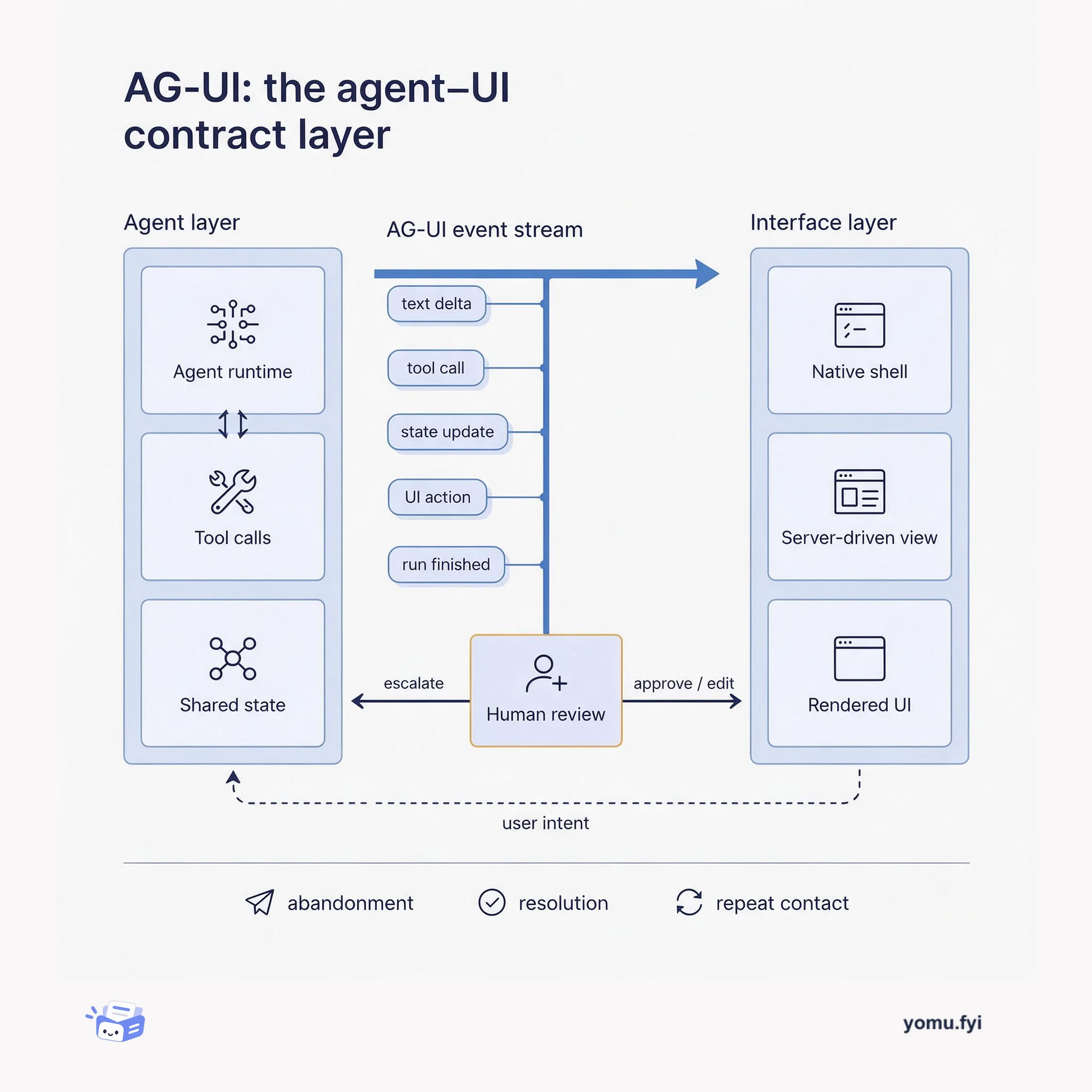
AG-UI is a typed event contract between an agent backend and a frontend, turning streamed agent state into UI. This diagram maps the layers and shows where human review plugs in.
Keep reading
The Good Stuff
Paid picks we use ourselves. Links carry a referral code — a subscription through one earns us a commission at no extra cost to you.
One useful email. Unsubscribe anytime.