How to Build an ASL Gloss Workflow That Keeps Context
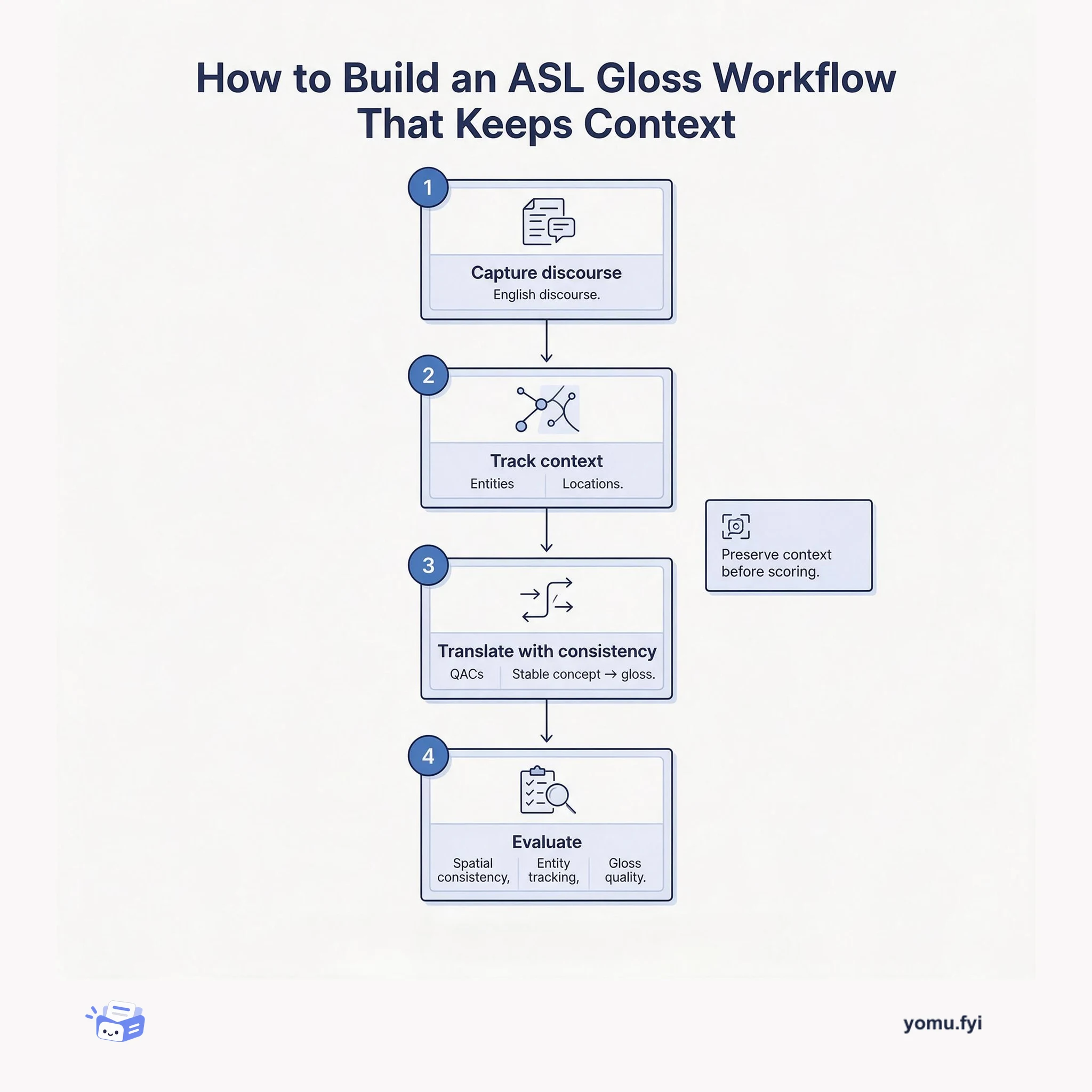
Learn a practical workflow for translating English discourse into ASL gloss while preserving spatial references, question-answer structure, and consistent concept-to-gloss mappings.
Loading…
Topic
454 posts about AI. Every summary links to the original.
See the idea
Learn a practical workflow for translating English discourse into ASL gloss while preserving spatial references, question-answer structure, and consistent concept-to-gloss mappings.
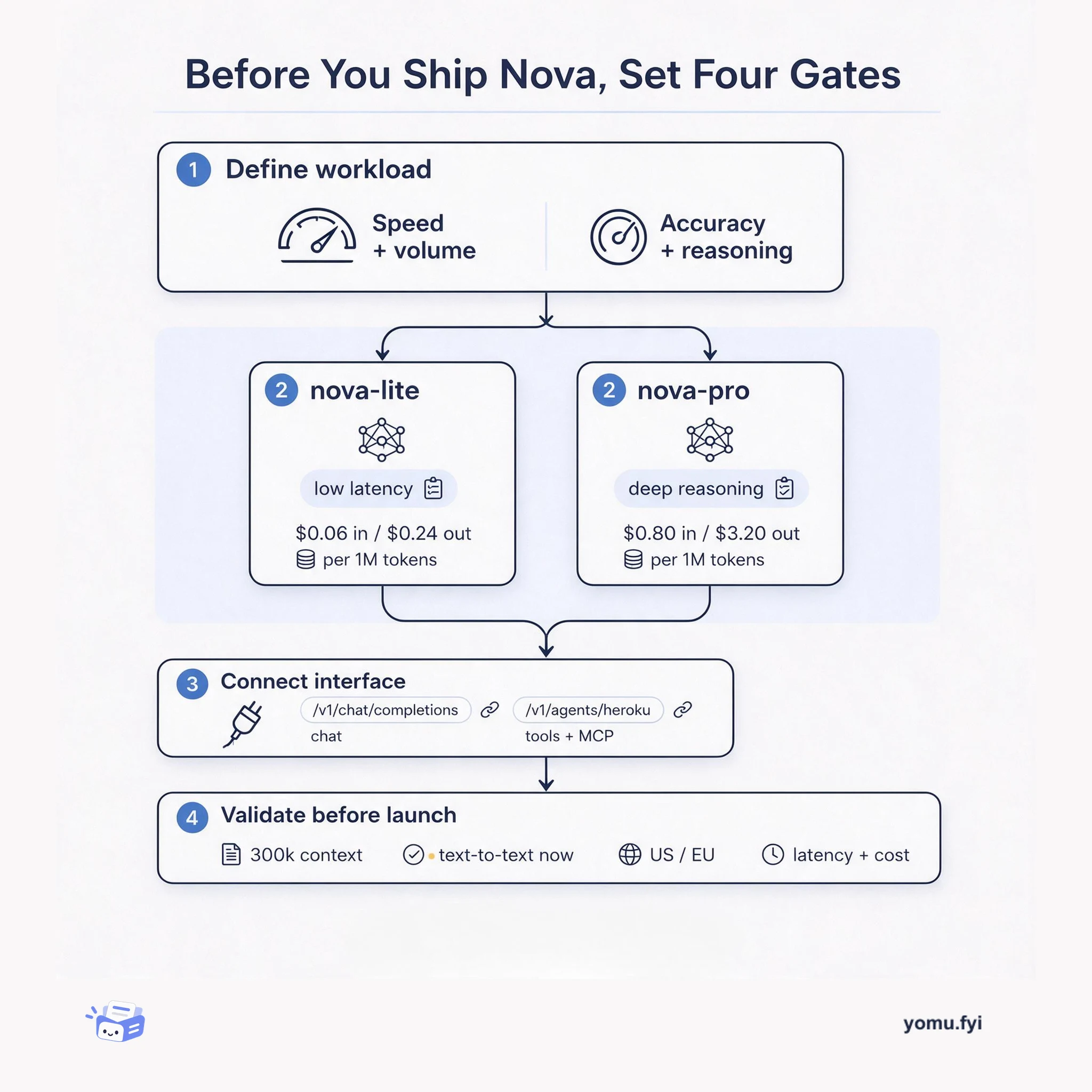
A practical checklist for putting Amazon Nova into an application: choose nova-lite or nova-pro by workload, expose tools, and verify context, modality, region, and cost constraints.
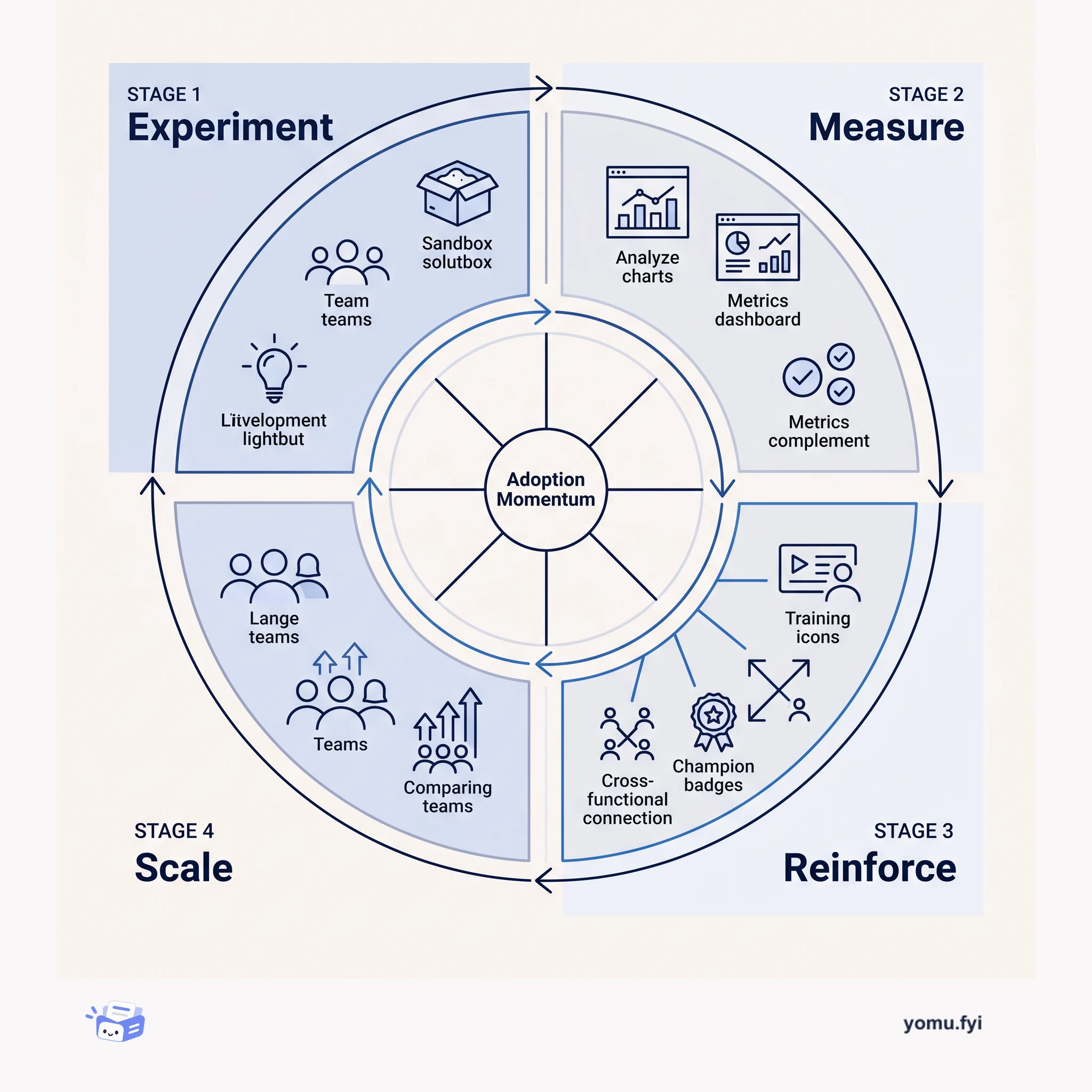
Adoption moves through experimentation, measurement, and reinforcement loops. Learn how leading companies build momentum from pilot programs into enterprise-wide habits and measurable business impact.
The Good Stuff
Paid picks we use ourselves. Links carry a referral code — a subscription through one earns us a commission at no extra cost to you.
Newest first
Anthropic is partnering with Rwanda’s government and African technology-training provider ALX to bring Chidi, a learning companion built on Claude, to hundreds of thousands of learners across Africa. Rwanda’s ICT & Innovation and Education ministries are deploying Chidi in the national education system, with training for up to 2,000 teachers and civil servants; ALX will provide it to students through its programs, where it acts as a “Socratic mentor” rather than giving direct answers. The initiative supports skills development in areas including data analytics and cloud computing, while teachers can use Claude to plan lessons and support students. Since its November 4 rollout, Chidi has logged more than 1,100 conversations and nearly 4,000 learning sessions, with nine in ten users reporting positive experiences.
Anthropic and the Government of Rwanda have signed a three-year Memorandum of Understanding to expand AI use across education, health, and public-sector systems. The agreement formalizes the partners’ earlier education collaboration and creates programs supporting Rwanda’s health goals, including efforts to eliminate cervical cancer and reduce malaria and maternal mortality. Government developer teams will receive access to Claude and Claude Code, alongside hands-on training, capacity building, and API credits, while the education work includes 2,000 Claude Pro licenses for educators, AI literacy training for public servants, and a Claude-powered learning companion deployed across eight African countries. The partnership is presented as a long-term commitment to responsible deployment, local autonomy, skills, infrastructure, and institutions, with Anthropic’s Beneficial Deployments team working with Rwanda’s Ministry of ICT and Innovation.
Anthropic and the Gates Foundation are committing $200 million in grants, Claude usage credits, and technical support over four years for global health, life sciences, education, and economic mobility programs in the US and around the world. The Beneficial Deployments team will provide engineering support and develop public goods, including datasets, knowledge graphs, connectors, benchmarks, and evaluation frameworks, while offering discounted Claude access to nonprofits and educational institutions. Health initiatives target low- and middle-income countries through vaccine and therapy research, health-data decision support, frontline-worker tools, and improved disease-transmission forecasts; initial disease work includes polio, HPV, and eclampsia/preeclampsia. Education work includes K-12 tutoring, career guidance, literacy and numeracy apps, while economic-mobility projects cover agricultural datasets and benchmarks, portable skills records, and links between training and employment outcomes. Anthropic says it will publish its thinking, decisions, and lessons as the partnership and broader beneficial-deployments work scale.
Anthropic is launching Claude Corps, a national fellowship program for early-career people who will help nonprofits across America apply AI to their missions. The program will train 1,000 fellows, place them with at least 400 nonprofits over the next 12 months, and commit an initial $150 million to widening AI’s benefits during economic change. Anthropic funds and leads strategy, CodePath employs and trains fellows, and Social Finance handles measurement and a longer-term financing vehicle. Each 12-month fellowship includes intensive initial training, five hours of weekly training, an $85,000 salary and benefits, mentoring, technical office hours, and a Claude token budget. Applications are open for cohorts beginning October 2026, January 2027, and August 2027, while the program plans rigorous evaluation, some open-sourced infrastructure, and possible expansion beyond the United States.
Claude Science is a beta AI workbench for scientists that brings databases, research tools, computing resources, and domain-specific workflows into one environment. Researchers can analyze literature, run multi-step studies, create figures and manuscripts, and revise them through conversation. Every generated artifact includes its code, environment, plain-language creation description, and message history, while a reviewer agent checks citations, calculations, and consistency between figures and code. A coordinating agent uses more than 60 curated skills and connectors across fields including genomics, single-cell, proteomics, structural biology, and cheminformatics; it can manage jobs on local systems, HPC clusters over SSH, or Modal, scaling from one GPU to hundreds. Beta access is available on macOS and Linux for Pro, Max, Team, and Enterprise users, with reported examples including faster glioma analyses and large literature reviews.
Anthropic announced three commitments at the White House’s AI Education Taskforce event, following its August signing of the Pledge to America’s Youth: Investing in AI Education. It will invest $1 million over three years in Carnegie Mellon University’s PicoCTF, support the Presidential AI Challenge, and develop a Creative Commons-licensed AI Fluency curriculum for K–12 and higher-education instructors that can work with any AI system. The announcement also reports adoption of Claude across education, including MagicSchool’s reach to 3 million educators, Claude for Education serving more than 100,000 students and faculty, and Claude Builder Clubs launching at over 60 U.S. universities. Anthropic says analysis of more than one million university-student conversations and 74,000 educator conversations informed features such as Learning Mode and the curriculum, with the stated aim of enhancing rather than compromising learning.
Lawrence Livermore National Laboratory (LLNL) is expanding Claude for Enterprise access to its entire laboratory, reaching about 10,000 scientists, researchers, and staff. The deployment is intended to support work in nuclear deterrence, energy, materials science, and energy security, with applications spanning emergency response, fusion research, advanced manufacturing, computational biology, and high-performance computing. Claude’s government-oriented security features include single sign-on, audit logging, role-based access controls, end-to-end encryption, and an expanded context window that can process hundreds of documents, codebases exceeding 100,000 lines, or complex datasets in one query. The expansion follows a pilot, an AI Jam with U.S. National Labs, and a March aiEDGE for Innovation Day attended by approximately 3,200 LLNL scientists and operational staff.
An evolving framework addresses AI harms beyond catastrophic risks, covering concerns such as biological threats, child safety, disinformation, and fraud. It complements the Responsible Scaling Policy by examining physical, psychological, economic, societal, and individual-autonomy impacts, then assessing likelihood, scale, affected populations, duration, causality, technology contribution, and mitigation feasibility. Policies and practices include a Usage Policy, pre- and post-launch evaluations, red teaming, adversarial testing, misuse detection, and enforcement ranging from prompt modifications to account blocking. Examples include computer-use safeguards for banking platforms and communications tools, plus hierarchical summarization intended to detect harms while maintaining privacy standards, alongside model-response evaluations balancing helpfulness with harmlessness. For Claude 3.7 Sonnet, encouraging safe, helpful responses to ambiguous prompts produced a reported 45% reduction in unnecessary refusals while maintaining safeguards against truly harmful content; the broader approach remains under development.
AI red teaming is presented as adversarial testing intended to identify vulnerabilities and risks in AI systems, but inconsistent practices make safety comparisons difficult. The post surveys domain-specific expert testing, policy vulnerability testing, frontier-threat assessments, multilingual and multicultural work, language-model-assisted attacks, automated red teaming, multimodal testing, and crowdsourced or community-based approaches. It describes an iterative process in which experts articulate threat models and probe systems qualitatively, then standardize inputs and use language models to generate many variations for more quantitative automated evaluation. In automated red teaming, a red team model generates attacks and a blue team model is fine-tuned on those outputs to improve robustness. The conclusion calls for technical standards, independent testing capacity, professional services, third-party access, and links between red teaming and model release conditions.
SK Telecom (SKT), Korea’s largest mobile operator, has become a commercial partner and strategic investor in Anthropic. The companies will develop a multilingual large language model customized for telecommunications applications such as customer service, marketing, sales, and interactive consumer experiences, with support planned for Korean, English, Japanese, Spanish, and more. Anthropic will fine-tune Claude using SKT’s telecommunications expertise: SKT experts will provide feedback on responses, and that feedback will help train industry-specific solutions. SKT has invested an additional $100 million in Anthropic, following an earlier investment by SK Telecom Venture Capital, while the companies describe the partnership as a way to promote AI innovation and develop safer, more reliable technology for telcos worldwide.
Anthropic announces a partnership with Zoom under which Zoom will use Claude, Anthropic’s AI assistant built with Constitutional AI, to develop customer-facing products centered on reliability, productivity, and safety. Zoom’s federated approach will combine its own technology with models including Claude to address diverse customer needs, with the first Claude integration planned for the Zoom Contact Center portfolio. There, Claude is intended to improve the end-user experience and support contact-center agent performance. Zoom Ventures has also invested in Anthropic, aligning the companies around customer-centric AI products grounded in trust and security and designed for real-world use. The announcement presents the collaboration as a way to bring robust, steerable AI into workplace applications.
Published in August 2026, this guide compares eight conversational AI platforms amid rapid market consolidation and acquisitions including NiCE’s roughly $955 million purchase of Cognigy. It defines the category as software for building, deploying, and operating agents across voice and messaging, then distinguishes vendor-managed services that own reasoning from infrastructure providers that carry conversations while teams own the reasoning. The evaluation criteria include model flexibility, voice and messaging parity, deployment control, cross-channel context, human handoff, pricing, and integration depth. Twilio is presented as an infrastructure layer for teams choosing their own models, with ConversationRelay, Agent Connect, Conversation Orchestrator, Conversation Memory, and Flex supporting channels, continuity, and escalation; other entries include Google Conversational Agents, Kore.ai, and NiCE Cognigy. The guide argues that portable models and conversation data will matter as the conversation layer separates from agent reasoning.
A $5 million grant program will fund independent research into how AI affects user wellbeing, offering direct funding, model access, and technical support for open-source evaluations. The initiative addresses the difficulty of judging wellbeing-related behavior, where risks may emerge only across long, shifting conversations and where otherwise reasonable advice can become harmful in a different context, such as disordered eating. Grantees will work independently and publish reusable evaluations or benchmarks, with guidance asking projects to define pass/fail criteria, involve clinical and subject-matter experts, test overcompliance and overrefusal, model realistic multi-turn scenarios, and validate graders against experts. Applications are due September 21, with selected full-proposal applicants notified by October 5.
Anthropic introduced the Anthropic Economic Index to track how AI is used in work and to study its effects on labor markets over time. Its first report analyzes approximately one million anonymized Free and Pro Claude.ai conversations, using Clio to match them with occupational tasks from the U.S. Department of Labor’s O*NET database. Usage concentrated in computer and mathematical work, which represented 37.2% of queries, while 36% of occupations showed AI use in at least a quarter of associated tasks and about 4% reached three-quarters. The report found 57% augmentation versus 43% automation, lower use in both low- and very-high-wage occupations, and plans for open data and repeated analyses, while noting possible classification errors and coding overrepresentation.
Anthropic is expanding its Economic Futures Programme to the UK and Europe to support research and policy discussions about AI’s effects on labor, productivity, and growth. The expansion begins with an Economic Futures Symposium at the London School of Economics and Political Science, where more than 100 experts and selected researchers will discuss policy proposals. Planned support includes research grants, API credits for UK and EU researchers, forums for evidence-based policy, and more granular data on European AI use. The Anthropic Economic Index reports that coding is Claude’s most common use across Europe, while UK usage most often supports academic research, writing, and educational content; Germany shows high per-capita use for manufacturing equipment, and France records four times the global average for dining, shopping, and nightlife information. Regular public releases will track adoption across European industries and regions as the programme seeks to inform decisions about the workforce transition.
The Anthropic Economic Futures Research Fund commits $200 million to external research on interventions that could help society prepare for AI’s economic impacts. It prioritizes five areas: workplace integration, support for AI-driven transitions, income support for displacement, worker stakes in AI-driven growth, and evidence on public investments. The fund will favor large-scale randomized controlled trials, ambitious pilots, and program evaluations, with particular interest in projects that share findings at key milestones and can scale rapidly if promising; typical awards will be $5 million to $30 million, with nothing below $1 million funded directly. Eligible applicants include accredited degree-granting institutions, independent research and policy organizations, and nonprofits with experience running field experiments at scale, while the fund remains global despite US-centric examples.
Anthropic’s second Economic Index report examines how Claude.ai usage changed after Claude 3.7 Sonnet launched, using 1 million anonymized Free and Pro conversations from the following 11 days. Clio maps conversations to 17,000 tasks in the U.S. Department of Labor’s O*NET database, enabling comparisons across occupations and interaction modes, while the report also introduces a 630-category bottom-up taxonomy. Coding, education, and science usage increased modestly, and extended thinking appeared most often in technical and creative work, including computer science research, software development, multimedia art, and video game design. Augmentation remained 57% of usage, learning interactions rose from about 23% to 28%, and the report releases task- and occupation-level datasets covering thinking mode and augmentation-versus-automation patterns.
The Anthropic Economic Index connector for Claude makes the Index’s data available for direct question-and-answer exploration. The Index measures how AI is used in the economy, including occupations, geographic usage, and the tasks people perform or automate with Claude. Users enable the connector from the claude.ai connectors directory, without installing anything, then can ask broad or specific questions and request the underlying data behind an answer. Responses are grounded in Index data, but the source cautions that it reflects Claude usage patterns rather than the labor market as a whole; the full datasets remain freely available on the website for further exploration.
Meta has designed MetaRoCE, a clean-sheet RDMA transport for AI workloads running on commodity Ethernet, targeting clusters that can reach million-GPU scale. Unlike standard RoCE, it treats packet loss and out-of-order delivery as normal: packets are sprayed across NIC-managed paths, written directly to their destinations, and retransmitted selectively without PFC or reorder buffers. It combines per-path telemetry and congestion windows with ECN-based sender control and receiver-driven fair-share hints, while a single connection supports multiple ordered streams and paths. On a 64-node AMD GPU cluster using RCCL collectives, Meta reports higher throughput and lower flow-completion times than RoCEv2, about 86% throughput at 1% packet loss, linear scaling across four- and eight-plane topologies, and autonomous recovery from plane failures. Meta is contributing the specification, reference implementation, and compliance suite to OCP, with a broader release planned for October at the 2026 OCP Global Summit.
MTIA 300 is Meta’s first in-house training and inference accelerator optimized for ranking and recommendation models. These workloads require frequent AllReduce, AllToAll, and AllGather operations because embedding tables can contain over 99% of model parameters, making communication a bottleneck that competes with computation on GPUs. Its package-integrated network uses two chiplets with twelve custom 800 Gbps RDMA NICs, while 16 message engines and near-memory compute handle collectives independently of the 12×6 processing-element grid. Co-designed HCCL compiles collectives into dependency-aware subgraphs for autonomous execution, with topology-aware algorithms spanning scale-up and scale-out links. In production, HCCL reaches up to 940 GB/s within a rack, and a 150-billion-parameter model across 40 accelerators completed communication 3.9 times faster than an equivalent GPU cluster; concurrent GEMMs degraded less than 0.5%.
The best engineering reads, once a week.