How to Build an ASL Gloss Workflow That Keeps Context
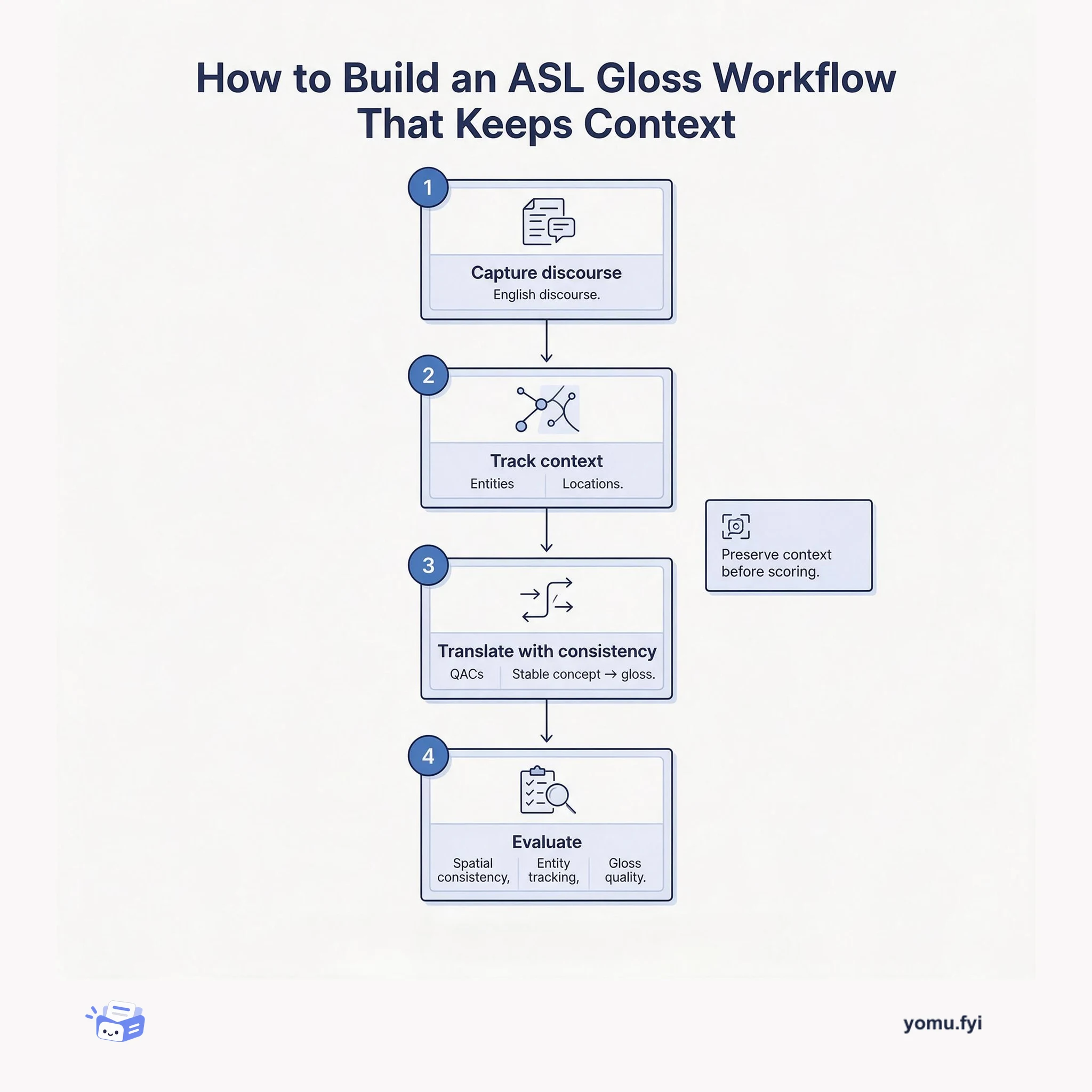
Learn a practical workflow for translating English discourse into ASL gloss while preserving spatial references, question-answer structure, and consistent concept-to-gloss mappings.
Loading…
Topic
480 posts about AI. Every summary links to the original.
See the idea
Learn a practical workflow for translating English discourse into ASL gloss while preserving spatial references, question-answer structure, and consistent concept-to-gloss mappings.
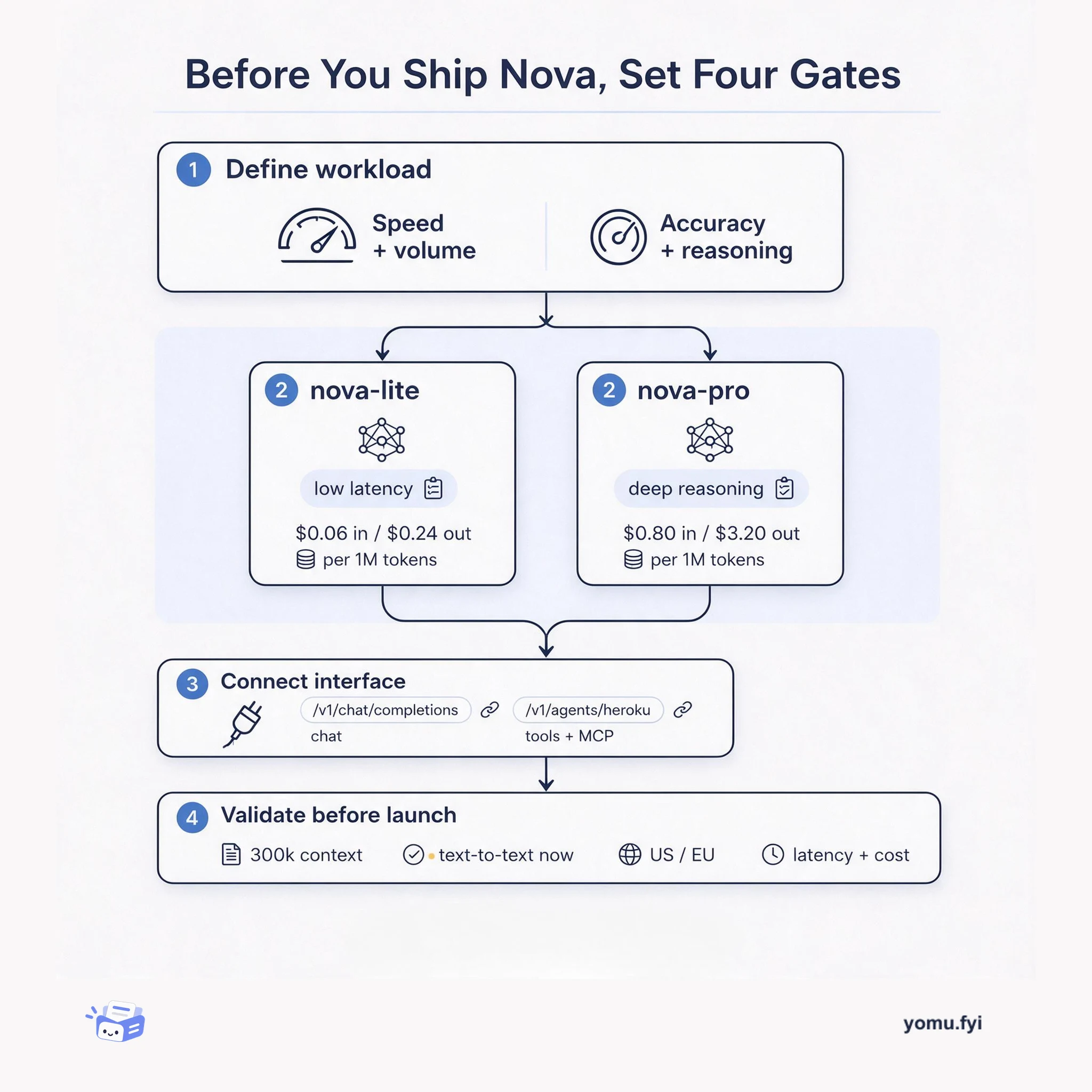
A practical checklist for putting Amazon Nova into an application: choose nova-lite or nova-pro by workload, expose tools, and verify context, modality, region, and cost constraints.
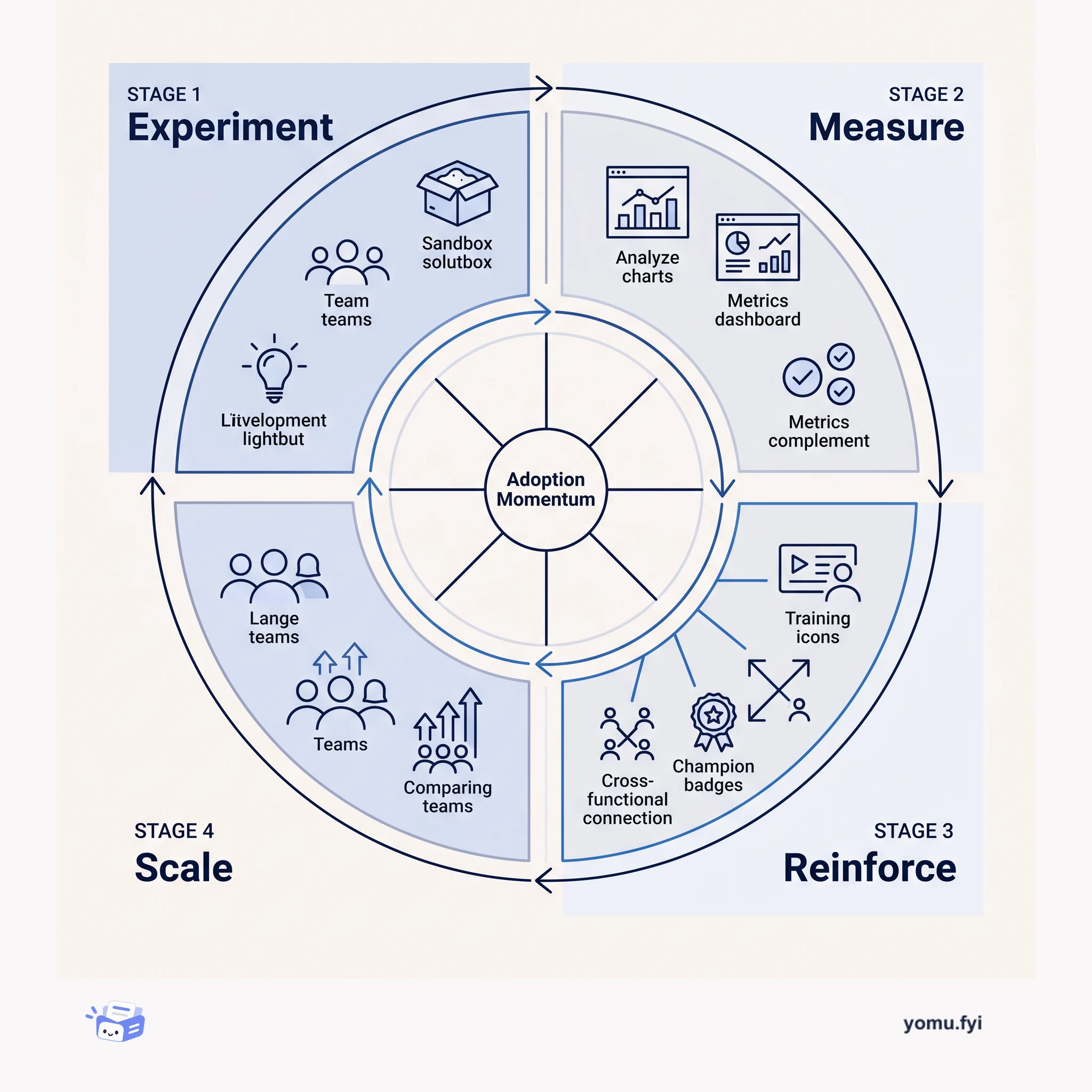
Adoption moves through experimentation, measurement, and reinforcement loops. Learn how leading companies build momentum from pilot programs into enterprise-wide habits and measurable business impact.
The Good Stuff
Paid picks we use ourselves. Links carry a referral code — a subscription through one earns us a commission at no extra cost to you.
Newest first
Gas turbines produce millions of daily readings—vibration, temperature, pressure, flow rates, and electrical output—but maintenance teams may learn about warning signals only when an unplanned outage occurs. The post argues that predictive maintenance has struggled less because of model capability than because decision-makers lack fluid access to model findings and operational context. Databricks Genie provides a conversational interface to sensor, maintenance, dispatch, cost, and regulatory data, allowing questions about elevated vibration against maintenance baselines and timing maintenance around outage cycles. It is presented as decision support, not automation, with time-series analysis, maintenance history, integrated costs, and compliance context helping asset managers investigate fleets and act with more confidence.
Trinity Industries’ experience is presented as a case for treating the data layer, rather than models or dashboards, as the foundation of enterprise AI. The railcar manufacturer migrated 95% of its enterprise data to a single Databricks lakehouse, adopted Medallion architecture, moved transformations upstream, and retired legacy dashboards containing nearly 600 measures. That consolidation supports streaming ETA predictions, procurement agents, and Genie conversational analytics: the ETA model is reported as 50% more accurate than industry ETAs, agents helped increase on-time material delivery by 15%, and Genie handles more than 1,000 questions monthly. The migration took close to a year, followed by six to eight months of additional work, but the account argues that trusted, standardized data enables experimentation, automation, and broader employee access to analysis.
The discussion defines AI-native cybersecurity applications as systems architected with intelligence at their core, rather than traditional products with AI added later. It links tool sprawl to slower threat detection and response and argues that proprietary, context-rich security telemetry is the foundation for adaptive defense. Barracuda uses Databricks to consolidate fragmented data, normalize schemas, support real-time streaming detection, run ML operations through MLflow, and power natural-language log search across billions of security events with strict data isolation. The work began by defining customer outcomes, then progressed through incremental delivery; normalized data enabled models and agents to use cross-domain context. This approach extended across WAF-as-a-service, automated configuration, API security, and bot protection while shared outcomes aligned product, data science, engineering, and business teams.
KPMG UK is evolving its Audit data platform with Databricks to support AI-enabled analytics while preserving governance, rigour, and professional standards. The program converges structured data, advanced analytics, and AI on a unified cloud-native Lakehouse, with Databricks SQL replacing core SQL Server workloads and Delta underpinning the platform. Lakebridge assessed migration complexity, while Databricks-hosted large language models including Claude Sonnet and Genie Code helped convert T-SQL, refactor stored procedures, modularize queries, and suggest Delta-based optimizations under engineer review. This reduced refactoring time by around 60% and enabled modernization of more than 400 scripts and stored procedures in roughly three months. Databricks SQL Serverless provides elastic compute for spiky workloads, while Genie offers traceable, version-controlled SQL and Delta Sharing supports governed data exchange.
The page presents a collection of Notion content about teams, tools, workplace practices, and the use of AI in organizational work. Its entries cover Custom Agents for automating repetitive busywork, teamwork skills, launch orchestration, and the changing role of team size. Several pieces focus on disconnected company knowledge, describing Notion AI as a way to bring information together and turn knowledge into action, while other entries examine AI operating systems and workflows. The page also includes survey-based perspectives from Notion, including research involving more than 3,000 global knowledge workers, 85-plus interviews, and 650 European business leaders, alongside customer stories from companies such as Merge, Ramp, Chronicle, Toyota, Affirm, and Mercury.
Databricks announces native support for OpenAI’s GPT-5.5, making it available for coding workflows with Codex, enterprise agents, document pipelines, and data-driven employee workflows. Access is governed through Unity AI Gateway, which provides permissions and rate limits, configurable guardrails for PII, prompt injection, and content safety, MCP tool-call auditing, failover, and request-level observability for model and Codex interactions. The announcement describes GPT-5.5 use with Genie for natural-language analytics, Agent Bricks Custom Agents for multi-step workflows, and Lakeflow Spark Declarative Pipelines for document-focused GenAI ETL involving summarization, extraction, and classification. GPT-5.5 is available on Databricks across AWS, Azure, and GCP, with entry points including AI Playground, governed Codex endpoints, Agent Bricks, and the Foundation Model API.
Business intelligence (BI) reporting turns data from operational systems and analytical repositories into structured reports, dashboards, and visualizations for organizational decision-making. The guide explains managed and ad hoc reporting, then traces a typical workflow through data sources, ETL, deduplication, normalization, validation, data modeling, visualization, and automated distribution. It compares established platforms such as Microsoft Power BI, Tableau, SAP BusinessObjects, Qlik, and Looker with newer AI-native tools, while noting evaluation criteria including connectivity, scale, governance, usability, and cost. It also addresses dashboard overload, stale semantic models, and specialist bottlenecks, and cites reports of 10x faster query creation from AI-assisted natural-language querying alongside recommendations to start with one decision, one primary source, and three to five KPIs.
Databricks announces the Public Preview of Lakeflow Designer, a visual, no-code, AI-native experience for data preparation and analytics built directly into the Databricks platform. It targets analysts, domain experts, and other less technical users with drag-and-drop workflows and natural-language authoring, while representing each transformation as an operator with previews. Genie Code can use Unity Catalog metadata, descriptions, lineage, popularity, and example queries to generate or modify workflows, inspect transformation results, and iterate when needed. Every visual transformation produces production-ready Python code that can be reviewed, versioned in Git, and scheduled through Lakeflow Jobs, while users pay for compute rather than per-user licenses. The preview is available in all workspaces, although an administrator may need to enable Visual data prep in the preview portal.
The interview presents conversational analytics as a way to move beyond fixed dashboards and turn governed data into decisions and workflows. Databricks’ Genie lets nontechnical users ask open-ended questions in plain language across Lakebase, Lakehouse, and federated sources, while Unity Catalog applies shared definitions and access controls. Lakebase provides transactional storage, instant provisioning, environment forking without copying underlying data, and scale described as billions or trillions of records; examples include real-time matchmaking, routing, and purchase decisions. The discussion stresses that human oversight, refreshed data, business context, and controls against hallucination remain necessary, citing Fox Sports’ chatbot deployment as an example. It concludes that organizations combining trusted semantics with operational data systems can make faster decisions and automate work, while the competitive gap may compound for slower adopters.
Financial-services CFOs are being asked to act as Strategists and Catalysts, but fragmented legacy systems, T+1 batch processing, opaque reporting logic, and mismatched business semantics keep them focused on stewardship and retrospective operations. The proposed answer is Databricks as a unified, governed platform combining real-time streaming, centralized lineage, data and AI, with Unity Catalog, Lakeflow, Genie, and Agent Bricks addressing trust, latency, access, and model reproducibility. Unity Catalog can connect semantic definitions and end-to-end lineage from transactions through regulatory reports and models, while Lakeflow supports continuous ledger and liquidity processing. The post cites a global bank reducing liquidity-reporting processing from 10 hours to 8 minutes and Nationwide Insurance reporting a 5-point combined-ratio improvement and 3-point expense-ratio improvement. It presents a Lakehouse-based CFO stack as a shift from reporting historical results toward real-time capital management and previews AI-driven deposit and PPNR modeling.
Production-grade AI app development combines model orchestration, transactional state, governance, security, and live-data integration rather than only interface construction. The guide recommends defining users, outcomes, success metrics, timelines, and AI-relevant journeys, then shipping must-have features before enhancements. It evaluates builders by end-to-end support, technical audience, platform integration, code export, CI/CD, data connections, pricing, and deployment limits. For Databricks teams, it describes Databricks Apps, Declarative Automation Bundles, and Lakebase: serverless app compute, version-controlled deployment, and managed PostgreSQL with synced Unity Catalog Delta tables. It also recommends monitoring outputs, collecting correction feedback, refining prompts with automated evaluations, and governing models through MLflow, concluding that integrated infrastructure can leave teams focused on production AI workflows.
AI systems introduce probabilistic behavior, model drift, adversarial manipulation, bias, and auditability challenges that traditional IT risk practices may not address. The framework described combines NIST AI RMF, EU AI Act, and ISO/IEC 23894:2023, using Govern, Map, Measure, and Manage as its operational structure while recognizing regulatory and societal context. It recommends cross-functional governance, clear risk ownership, an AI-BOM covering systems, data flows, dependencies, and accountability, plus continuous measurement of fairness, explainability, data quality, security vulnerabilities, and harm likelihood and severity. Across the AI lifecycle, the text identifies risks including data poisoning, model drift, malicious library injection, prompt injection, hallucinations, and platform vulnerabilities, and points to the AI RMF Playbook for checklists, timelines, and governance artifacts.
Insurance products often rely on annual pricing, periodic risk assessment, and coverage changes tied to major life events, even though driving behavior, digital fraud exposure, and travel risk can change in seconds. The post presents embedded insurance and usage-based insurance as a shift toward contextual, just-in-time coverage delivered through apps, checkout flows, vehicle purchases, and partner platforms. Its automotive example combines telematics, geospatial data, and real-time weather signals to update risk scores and premiums from trip behavior such as braking, following distance, mileage, location, and environmental conditions. A Databricks Lakehouse architecture registers devices, ingests telemetry through Zerobus, curates data in a governed Medallion architecture, and exposes features through Lakebase and Databricks One, with Unity Catalog supporting access controls, lineage, explainability, and audit trails. The proposed trajectory leads from embedded coverage toward autonomous insurance whose policies continuously adapt to risk.
Resend Forward is a newly announced conference for developers who treat software as a craft. It will take place in San Francisco on October 21st and run for a full day focused on the craft behind building software. The program will feature leaders working at the edge of software and AI, with special emphasis on practical tools and ideas that attendees can use. Food, conversations, and swag are planned between sessions, while the stated goal is to connect people who care about quality, share what’s working, and leave them more excited to build. More details are expected in the coming months; tickets will go on sale after the waitlist notification.
AI token spend is volatile, consumption-based, and distributed across teams, making usage and cost difficult to monitor. Ramp's pipeline ingests LiteLLM and OpenRouter events through authenticated, tenant-scoped webhooks, Kafka, and ClickHouse, then aggregates them for REST dashboards and AI-generated forecasts. LiteLLM uses callbacks with token counts and metadata, while OpenRouter sends OTLP traces; ReplacingMergeTree deduplicates replayed events using business_id, source, and event_id. Customers can connect gateways with an API key, configure LiteLLM callbacks or OpenRouter Broadcast, and pass attribution metadata. The resulting visibility supports breakdowns by provider, model, department, user, project, and use case, and exposed phantom Gemini reasoning tokens after a LiteLLM upgrade, geo pricing premiums, runaway loops, and prompt bloat.
Databricks and Google Cloud are presenting their partnership at Google Cloud Next ’26 as a route from governed enterprise data to production AI, including autonomous agents and modernized workloads. In 2025, Databricks became a first-party provider of Gemini models, giving users direct API access to build, customize, and deploy agentic AI on governed data across all three Databricks clouds without moving data or managing infrastructure. The post reports more than 55% quarter-over-quarter growth in Gemini adoption, 85% year-over-year growth in Google Cloud consumption, and 4,000-plus Marketplace sign-ups, alongside support for Google Axion processors. Customer examples include Databricks SQL Serverless savings for Digital Turbine, faster Marketplace procurement for Dun & Bradstreet, regional compliance in Saudi Arabia and Brazil, and 30% faster analytics delivery through Lakeflow-powered pipelines. At the event, Databricks is offering demos, talks, expert sessions, and a free $400 trial through Google Cloud Marketplace.
Generative AI in marketing creates content, insights and recommendations that can personalize experiences, optimize campaigns and improve performance. Unlike traditional analytics, which mainly reports on past results, it produces net-new outputs such as ad copy, audience segments, product recommendations, visual assets and strategic summaries. A typical workflow prepares campaign, customer and brand data, grounds or fine-tunes models, generates outputs, applies targeting and optimization, and uses human review and refinement. It distinguishes pretrained tools such as ChatGPT, Claude and Perplexity from customized models and broader AI transformation, noting trade-offs between speed, investment, relevance and strategic alignment. Successful adoption depends on high-quality, consented data, governance, privacy controls, human oversight, monitoring and cross-functional ownership; the conclusion presents AI as a force multiplier rather than a replacement for human creativity and judgment.
Uber describes how AI-assisted prototyping is changing product development by making interactive flows available within hours instead of weeks of coordination. In one example, a Merchant team customized a prototype to a specific catalog, producing immediate actionable feedback and rapid internal alignment. Across experiments, teams used Lovable, Figma Make, Claude Code, and Cursor to explore multiple concepts before PRDs and architecture decisions hardened; one PM explored six concepts in about 20 minutes. The pattern was earlier exploration, faster alignment, and clearer MVP boundaries, while PRDs and design reviews remained necessary for intent, tradeoffs, constraints, and durable decisions. Uber also opened prototyping to engineering and operational teams, while examining how prototypes should inform production without being mistaken for shippable solutions.
An eight-month study of developers at 500 companies using Cursor examined whether improved AI mainly increases existing work or enables tasks previously out of reach. The research, conducted with Professor Suproteem Sarkar of the University of Chicago Booth School of Business, covered releases of Opus 4.5 and GPT-5.2, finding average weekly messages per user rose 44%. Developers initially used better models for more work of similar complexity, then after a 4–6-week lag shifted toward harder tasks: low-complexity messages grew 22%, while high-complexity messages grew 68%, mostly in the final six weeks. Growth varied by sector, led by media and advertising at 54%, software and developer tools at 47%, and finance and fintech at 45%. Documentation, architecture, code review, and learning grew more than UI and styling, suggesting expanding AI-generated codebases increase demand for management, understanding, and review while opening broader productive opportunities.
The post argues that financial-services AI adoption is widespread, but execution—not model capability or strategy—is determining who captures value in 2026. It attributes stalled pilots to fragmented legacy infrastructure, inconsistent data, weak lineage, and insufficient control for governed, real-time workflows such as fraud detection, pricing, and personalization. Firms advancing further treat data as a managed asset, embed governance in data and model pipelines, and align data, analytics, and AI teams around shared definitions, workflows, and metrics. The proposed remedy is a unified lakehouse environment combining storage, compute, governance, lifecycle management, orchestration, streaming, and AI workflows, with Unity Catalog providing centralized access control, lineage, and auditing. The conclusion is that by the end of 2026, firms that embed AI into operational decisioning at scale will pull ahead of organizations still running pilots.
The best engineering reads, once a week.