How to Build an ASL Gloss Workflow That Keeps Context
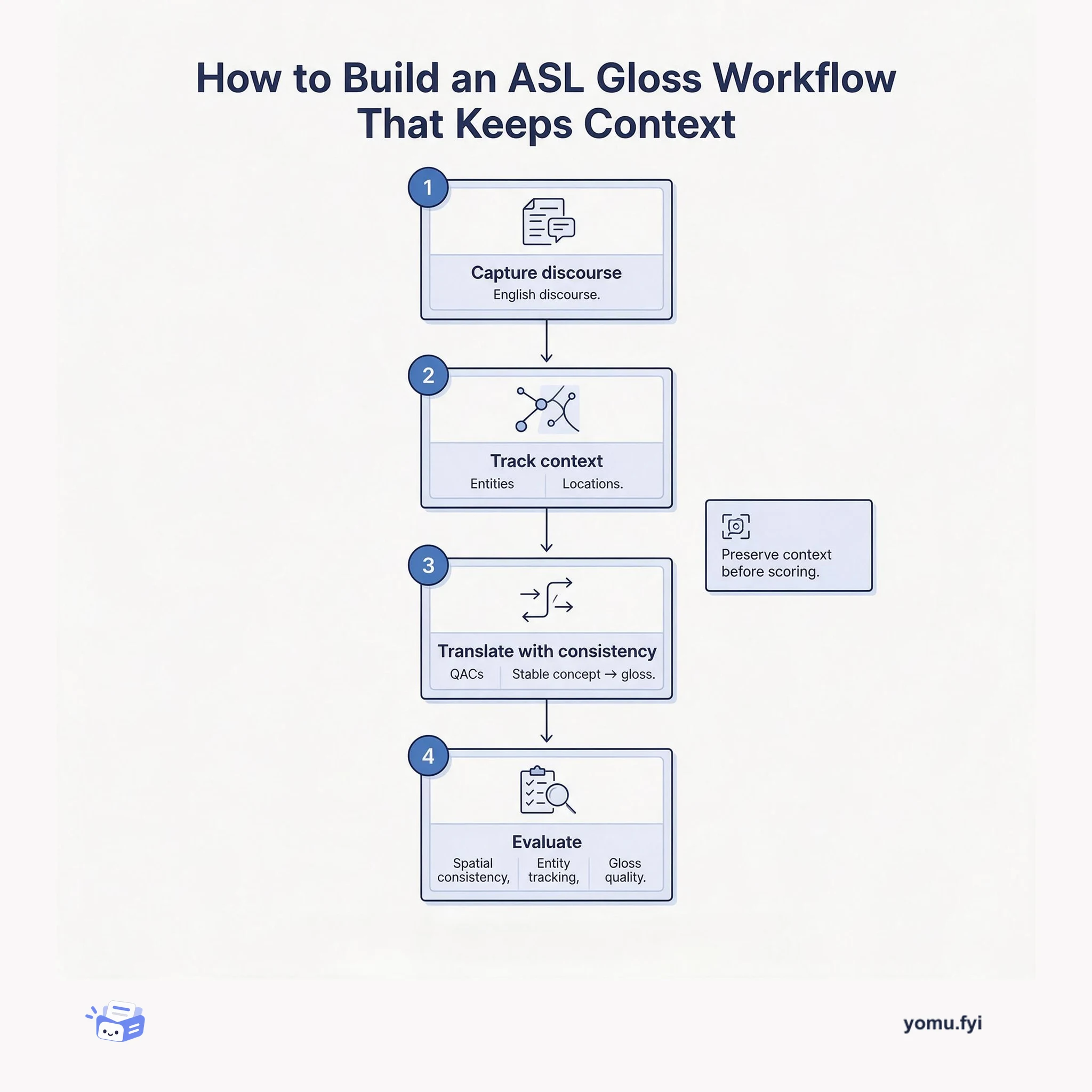
Learn a practical workflow for translating English discourse into ASL gloss while preserving spatial references, question-answer structure, and consistent concept-to-gloss mappings.
Loading…
Topic
483 posts about AI. Every summary links to the original.
See the idea
Learn a practical workflow for translating English discourse into ASL gloss while preserving spatial references, question-answer structure, and consistent concept-to-gloss mappings.
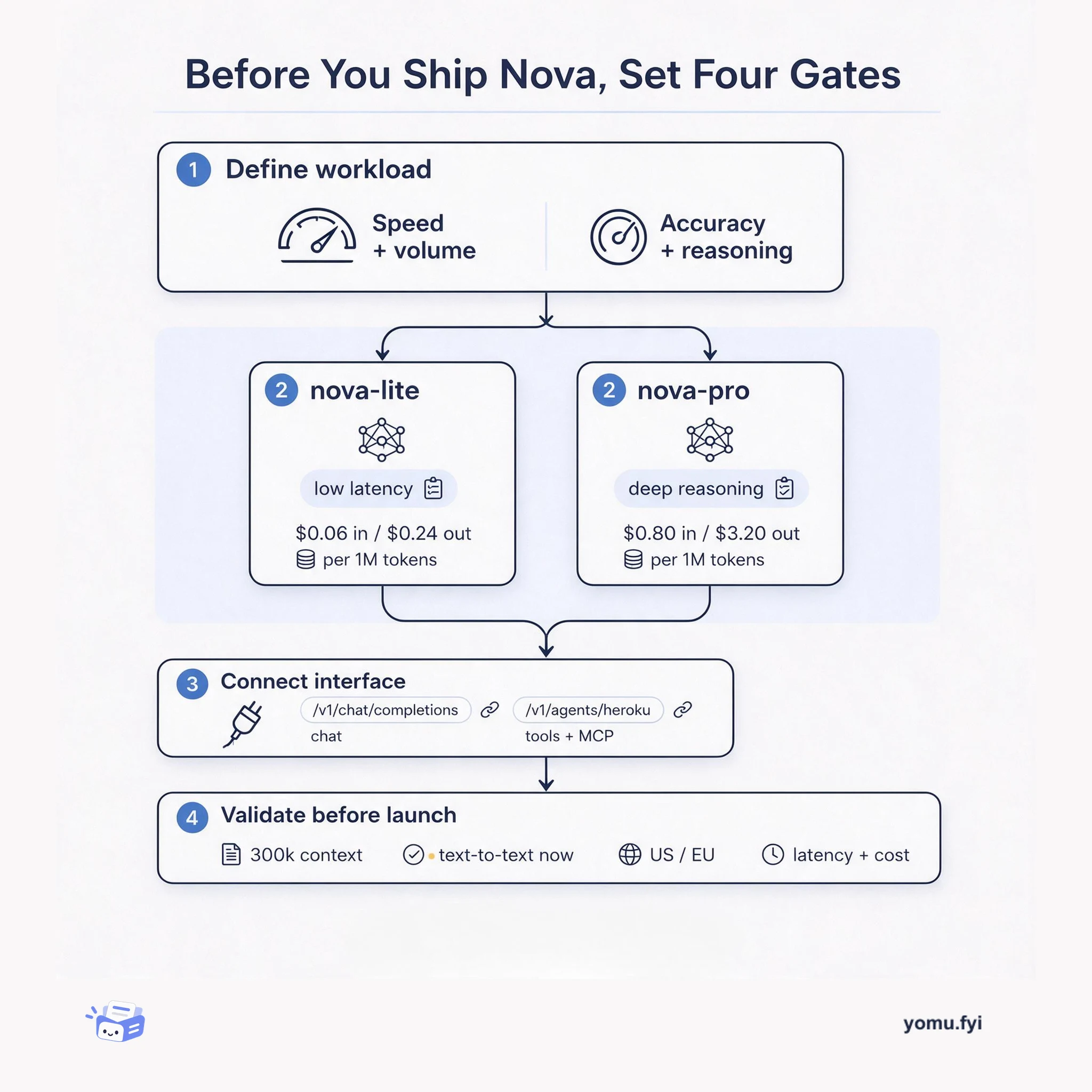
A practical checklist for putting Amazon Nova into an application: choose nova-lite or nova-pro by workload, expose tools, and verify context, modality, region, and cost constraints.
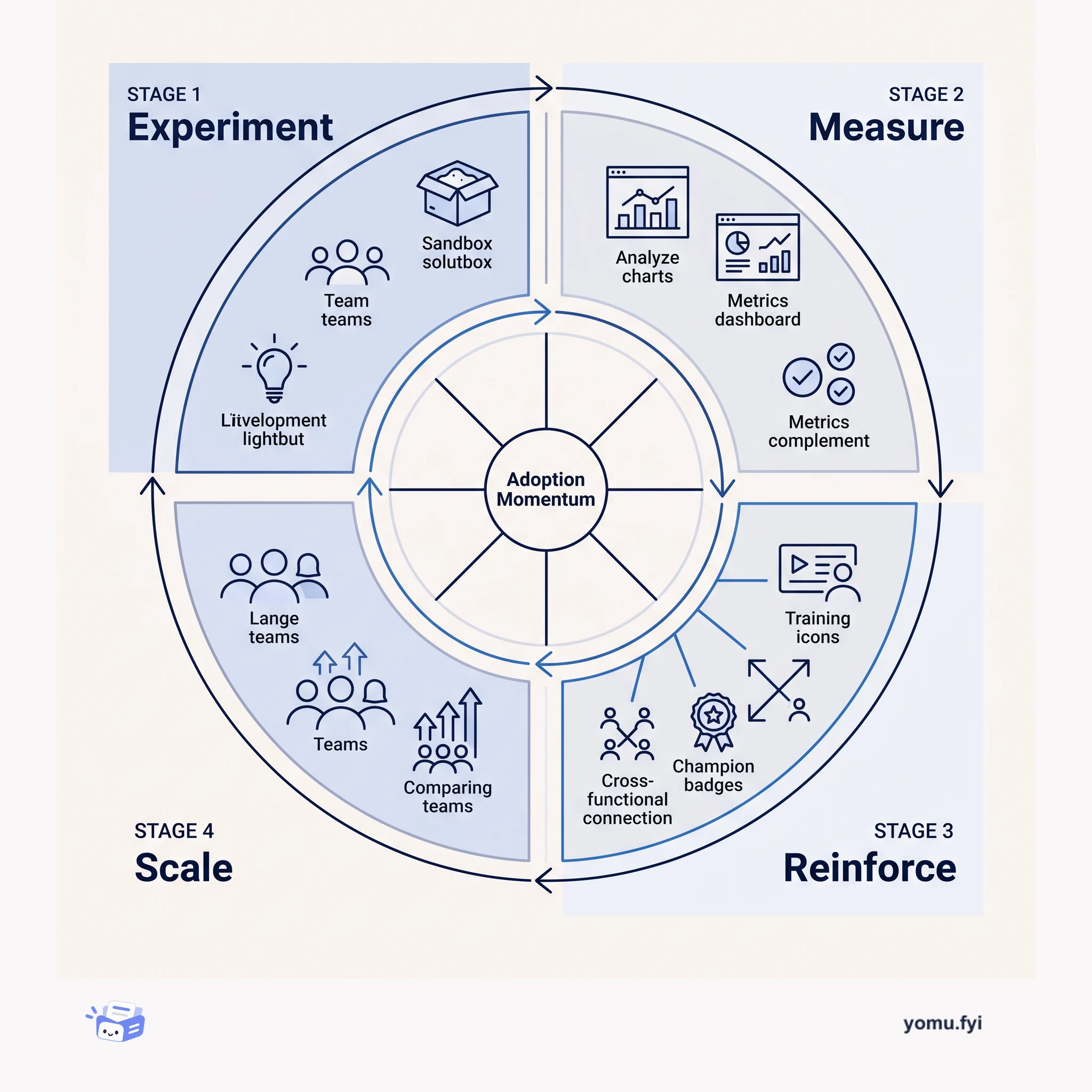
Adoption moves through experimentation, measurement, and reinforcement loops. Learn how leading companies build momentum from pilot programs into enterprise-wide habits and measurable business impact.
The Good Stuff
Paid picks we use ourselves. Links carry a referral code — a subscription through one earns us a commission at no extra cost to you.
Newest first
Uber describes how AI-assisted prototyping is changing product development by making interactive flows available within hours instead of weeks of coordination. In one example, a Merchant team customized a prototype to a specific catalog, producing immediate actionable feedback and rapid internal alignment. Across experiments, teams used Lovable, Figma Make, Claude Code, and Cursor to explore multiple concepts before PRDs and architecture decisions hardened; one PM explored six concepts in about 20 minutes. The pattern was earlier exploration, faster alignment, and clearer MVP boundaries, while PRDs and design reviews remained necessary for intent, tradeoffs, constraints, and durable decisions. Uber also opened prototyping to engineering and operational teams, while examining how prototypes should inform production without being mistaken for shippable solutions.
An eight-month study of developers at 500 companies using Cursor examined whether improved AI mainly increases existing work or enables tasks previously out of reach. The research, conducted with Professor Suproteem Sarkar of the University of Chicago Booth School of Business, covered releases of Opus 4.5 and GPT-5.2, finding average weekly messages per user rose 44%. Developers initially used better models for more work of similar complexity, then after a 4–6-week lag shifted toward harder tasks: low-complexity messages grew 22%, while high-complexity messages grew 68%, mostly in the final six weeks. Growth varied by sector, led by media and advertising at 54%, software and developer tools at 47%, and finance and fintech at 45%. Documentation, architecture, code review, and learning grew more than UI and styling, suggesting expanding AI-generated codebases increase demand for management, understanding, and review while opening broader productive opportunities.
The post argues that financial-services AI adoption is widespread, but execution—not model capability or strategy—is determining who captures value in 2026. It attributes stalled pilots to fragmented legacy infrastructure, inconsistent data, weak lineage, and insufficient control for governed, real-time workflows such as fraud detection, pricing, and personalization. Firms advancing further treat data as a managed asset, embed governance in data and model pipelines, and align data, analytics, and AI teams around shared definitions, workflows, and metrics. The proposed remedy is a unified lakehouse environment combining storage, compute, governance, lifecycle management, orchestration, streaming, and AI workflows, with Unity Catalog providing centralized access control, lineage, and auditing. The conclusion is that by the end of 2026, firms that embed AI into operational decisioning at scale will pull ahead of organizations still running pilots.
Resend announces an AI-extended email editor designed to help users create emails that retain their brand voice while catching mistakes and reducing workflow friction. Users can provide a URL, and the AI extracts the brand, voice, and tone to generate a ready-to-send draft from existing content such as a blog post, changelog, or product page. During composition, selected blocks can be rewritten, rephrased, or improved, while pre-send checks cover deliverability, content compatibility, subject and preview, broken links, and typos. The editor also supports agents through the Resend MCP server, with access to the visual editor, real-time collaboration, cursor support, and presence indicators; the announcement says all features are live in the Broadcast and Template editors.
Databricks users outside data teams often depend on requests to access business data because they may not write SQL or have a Databricks license. The official Lovable connector lets teams connect Lovable to a Databricks environment and build custom internal applications with plain English. Lovable's AI-powered agent examines accessible data and builds and deploys an application, while Databricks remains the source of truth and data stays within its security perimeter. Data is queried from Databricks at runtime, avoiding ETL, data replication, and sync jobs. Examples include live revenue and pipeline dashboards, spreadsheet-replacing operational tools, internal Slack chatbots, and other business applications that teams can build without engineering or data-team support.
Ramp built automatic receipt detection for its iOS app to reduce the effort of finding receipt photos while keeping private images on device. An initial design used PhotoKit, Vision OCR, background processing, local storage, and exact checks for merchant, amount, and date, but formatting differences, aliases, and OCR errors produced many false negatives. FoundationModels enabled a local structured-output LLM, yet a single prompt performed poorly in evals because the small 4096-token model hallucinated and took shortcuts. Splitting the merchant, date, and amount questions and requesting rationale improved evaluation results, but the alpha release reached 66% precision and about 18% recall. Version 3.0 combined one LLM merchant-name check with deterministic iOS 26 data detectors for dates and monetary values; it cut processing time, more than doubled recall, and raised precision to 87%.
At its July 2025 beta exit, Bugbot resolved 52% of identified bugs by the relevant PR merge; that rate is now nearing 80%. In the public-repository comparison, Cursor Bugbot reached 78.13% across 50,310 analyzed PRs, versus Greptile’s 63.49%; an LLM judge checked whether comments were addressed by merge. It now turns reactions and replies to Bugbot comments, along with human-reviewer comments, into live feedback rather than relying exclusively on offline experiments. Bugbot converts those signals into candidate rules, evaluates them on incoming PRs, promotes candidates to active status as signal accumulates, and can disable rules receiving consistent negative feedback. More than 110,000 repositories have enabled learning, generating over 44,000 rules, which users can edit or delete in the Cursor Dashboard.
Fin announces Apex 1.0, a custom model trained by its AI Group for customer-service conversations, replacing frontier-lab models as the core answering model for nearly all English-language chat and email traffic. The post says Apex improves resolution, speed, hallucination rates, and cost, citing one gaming customer’s resolution rate rising from 68% to 75% overnight and describing a 22% reduction in unresolved conversations. Its development relies on proprietary evaluations and billions of human and agent interaction data points generated by Fin’s resolution engine, creating a training flywheel for further domain-specific improvement. The launch is presented as evidence that customer-service applications may need to become full-stack AI companies rather than relying on shared general-purpose models. It also argues that frontier labs face pressure to offer cheaper specialized models as post-training and task-specific data become more important.
AI is shifting support from reactive backlog management toward proactive experience design, as teams gain capacity through faster, more efficient service across languages and time zones. The report says 58% rank experience and satisfaction as their top 2026 priority, up from 28%, while mature deployment triples the share able to always meet expectations from 9%. Intercom’s support team expanded access, improved first-response rates, and added onboarding sessions while absorbing a 300% demand increase without expanding headcount, enabled by deep integration of Fin. Clay uses Fin across Slack, email, and in-app chat, where it handles half of roughly 7,000 monthly queries and participates in 90% of all queries. The recommended model treats support as a product, combines AI with human handoffs, anticipates needs, builds trust, and personalizes interactions.
Customer service teams often see early AI gains in response speed and efficiency, but deeper operational integration produces larger returns and makes value easier to measure. Research cited in the 2026 Customer Service Transformation Report says 62% of support teams have improved metrics after implementing AI, rising to 87% among teams at mature deployment; the share able to measure ROI rises from 35% to 70%. As deployment matures, teams shift from measuring time and cost savings to tracking how freed capacity supports higher-value customer work and revenue-generating activity. The proposed AI-first economic model treats AI as a workforce capability that improves human productivity, system improvement, revenue influence, and organizational agility. Intercom’s Fin illustrates the model: it is involved in 97% of customer conversations, resolves 83.5% end-to-end, and helped absorb more than 300% demand growth without scaling headcount.
AI adoption is widespread in customer service, but the report identifies a deployment gap between organizations experimenting with the technology and those integrating it deeply into operations. Based on a survey of 2,470 global support professionals, it finds that 82% of senior leaders invested in AI in the past year and 87% plan to invest in 2026, while only 10% report mature deployment. Mature teams put AI at the core of workflows, give it meaningful responsibility, and use continuous improvement to achieve higher-quality, more consistent support; 43% report that outcome, nearly double the rate for teams at initial deployment. Lightspeed illustrates the approach by combining tailored training, executive alignment, content investment, and AI operations discipline, reaching 72% Fin resolution without human intervention across 43,000-plus monthly requests and 12-plus languages.
Intercom describes how its Customer Support team adopted an AI-first strategy after a 2022 review exposed rising demand, weak service-level commitments, and plans to broaden support access. The team began with high-volume informational queries, then expanded Fin through deeper documentation, internal procedures, customer-action capabilities, knowledge management, conversation design, skills-based routing, and organizational changes including a dedicated AI Support team. Fin now resolves over 81% of support volume and helped absorb a 300%+ demand increase without proportional headcount growth, while over 90% of customers receive improved first response performance, 24/7 coverage, and outbound phone support. The remaining human work has shifted toward consultative engagements, while Insights, Guidance, Tasks, and Procedures support ongoing optimization. Next, the team plans to use a four-stage Fin Flywheel—Train, Test, Deploy, and Analyze—and continue developing its Agent Blueprint.
Grab enabled R8 optimization for its Android app after repeated attempts were blocked by debugging difficulty, organization-wide testing demands, and slow build feedback. The effort targeted a roughly 10-year-old codebase exceeding 9 million lines and combined AI-assisted debugging, a pragmatic testing strategy, and infrastructure investment. Its QA build was configured to match production R8 processing. Beyond existing shrinking, optimization added techniques such as method inlining, class merging, constant folding, dead-code elimination, and devirtualization. After about 10 weeks with one engineer coordinating across teams, the project reported around 25% lower ANR rates, a 16% reduction in reference-device download size, and nearly 27% faster startup; the startup result combined R8 with corrected Baseline and Startup Profiles.
Cursor describes a hybrid online-offline process for comparing coding-agent quality as developer tasks become longer, more complex, and multi-file. Its offline CursorBench suite uses tasks derived from real Cursor sessions, paired with ground-truth solutions through Cursor Blame, and evaluates correctness alongside code quality, efficiency, and interaction behavior; the post focuses on correctness. Tasks are intentionally short and underspecified, span larger codebases and multi-workspace environments, and are scored with agentic graders, while correctness is plotted against median completion tokens to show the compute/latency trade-off. Controlled live-traffic experiments supplement the suite, catching regressions that offline grading misses, and the post reports that CursorBench separates frontier models more clearly and its rankings track developer experience more closely than public benchmarks.
Anthropic plans to open an office in Sydney in the coming weeks, making it the company’s fourth Asia-Pacific office alongside Tokyo, Bengaluru, and Seoul. The expansion responds to strong demand in Australia and New Zealand and is intended to support their distinct AI ecosystems, with initial attention on enterprise, startup, and research customers. Anthropic says it will hire locally, deepen engagement with Australian institutions, pursue partnerships in national-interest and priority sectors, and explore additional compute capacity through third-party infrastructure already in place, partly to address data-residency requirements. Australia and New Zealand rank fourth and eighth globally in Claude.ai usage relative to population, while reported usage is especially strong for computer and coding tasks, educational instruction, and research.
Ramp describes how it benchmarks large language models (LLMs) used in financial products against day-to-day tasks such as invoice extraction, financial-statement OCR, policy review, accounting autocoding, compliance detection, and fund routing. These benchmarks combine task-specific metrics with cost, latency, reasoning effort, human decisions, historical context, and ground-truth datasets where available. For contextual invoice OCR, perfect extraction requires every field to match the user's final bill, while financial-statement OCR uses a 1% relative-error threshold against transcriptions from over 500 real P&L documents. Results show application-specific trade-offs: Gemini 3 Flash is described as a cost-efficient leader for several visual and financial tasks, while Claude models lead some high-accuracy or low-miss-rate settings, and behavior can differ within one provider. The framework emphasizes Pareto trade-offs and continuous testing, with plans to expand from benchmarking current performance to hill climbing on capabilities.
The post describes how businesses are extending AI beyond customer support across the customer lifecycle, with support teams increasingly positioned to lead that work. Research cited in the 2026 Customer Service Transformation Report says 52% of respondents plan to scale AI to other departments in 2026, while 32% say customer service teams lead their AI transformation strategy. WHOOP deployed Fin on its Join page after prospective buyers faced waits of more than 10 hours; Fin resolved 84% of inbound questions and helped drive a 130% increase in attributable sales. The post warns that isolated departmental agents can fragment experiences, and presents a unified Customer Agent with shared memory and business knowledge as the intended direction. It argues support can provide shared standards, guardrails, operating practices, and implementation expertise as AI expands into sales and other functions.
AI is changing customer service operations by shifting human agents away from queue-level work such as triage and FAQs toward training systems, complex escalations, and strategic improvement. In research from The 2026 Customer Service Transformation Report, 45% of teams updated job descriptions with AI-related responsibilities, 40% said agents focus more on training AI systems, and 27% primarily handle complex escalations and edge cases. Interviews with 166 customers found nearly 95% reporting meaningful workflow changes, while 83% saw roles become more strategic and supervisory; mature teams also reported less time handling support volume. New positions including AI knowledge managers and conversation designers are emerging, while existing staff can move into AI-focused work such as optimizing knowledge, monitoring outputs, and improving customer journeys. The source recommends transparent communication, agent participation, dedicated time outside inbox, and metrics such as resolution rate as teams build operating models with AI at their core.
Dario Amodei says Anthropic considers AI deployment for US and allied democratic defense existentially important and has deployed Claude across the Department of War and other national security agencies, including classified networks and National Laboratories. The company says it supports intelligence analysis, modeling and simulation, operational planning, and cyber operations, while restricting Claude’s use by firms linked to the Chinese Communist Party and advocating chip export controls. Anthropic maintains two safeguards: mass domestic surveillance is incompatible with democratic values, and current frontier systems are not reliable enough for fully autonomous weapons without proper oversight. The Department has stated it demands “any lawful use” and threatens offboarding, a “supply chain risk” designation, and Defense Production Act action; Anthropic says it will not remove the safeguards, while offering continued service or transition support.
The episode presents Harvey’s founding and growth through Gabe Pereyra’s account of building an AI platform for large law firms and their clients. Two roommates—Winston, a securities litigator, and Gabe, an AI researcher—identified an opportunity in legal. Harvey chose a general-purpose platform over a narrow workflow such as NDA review, aiming for a comprehensive AI associate capable of handling varied work. The discussion also covers enterprise accuracy, infrastructure over models, and the difficulty of turning early seven-figure deals into a repeatable sales machine, with investors helping on that learning curve. Harvey’s trajectory includes a seed check from OpenAI and a valuation reported at $8 billion, while the episode frames domain expertise and scalable go-to-market execution as central founder lessons.
The best engineering reads, once a week.