How to Give an Agent a Query Language Instead of a Code Interpreter
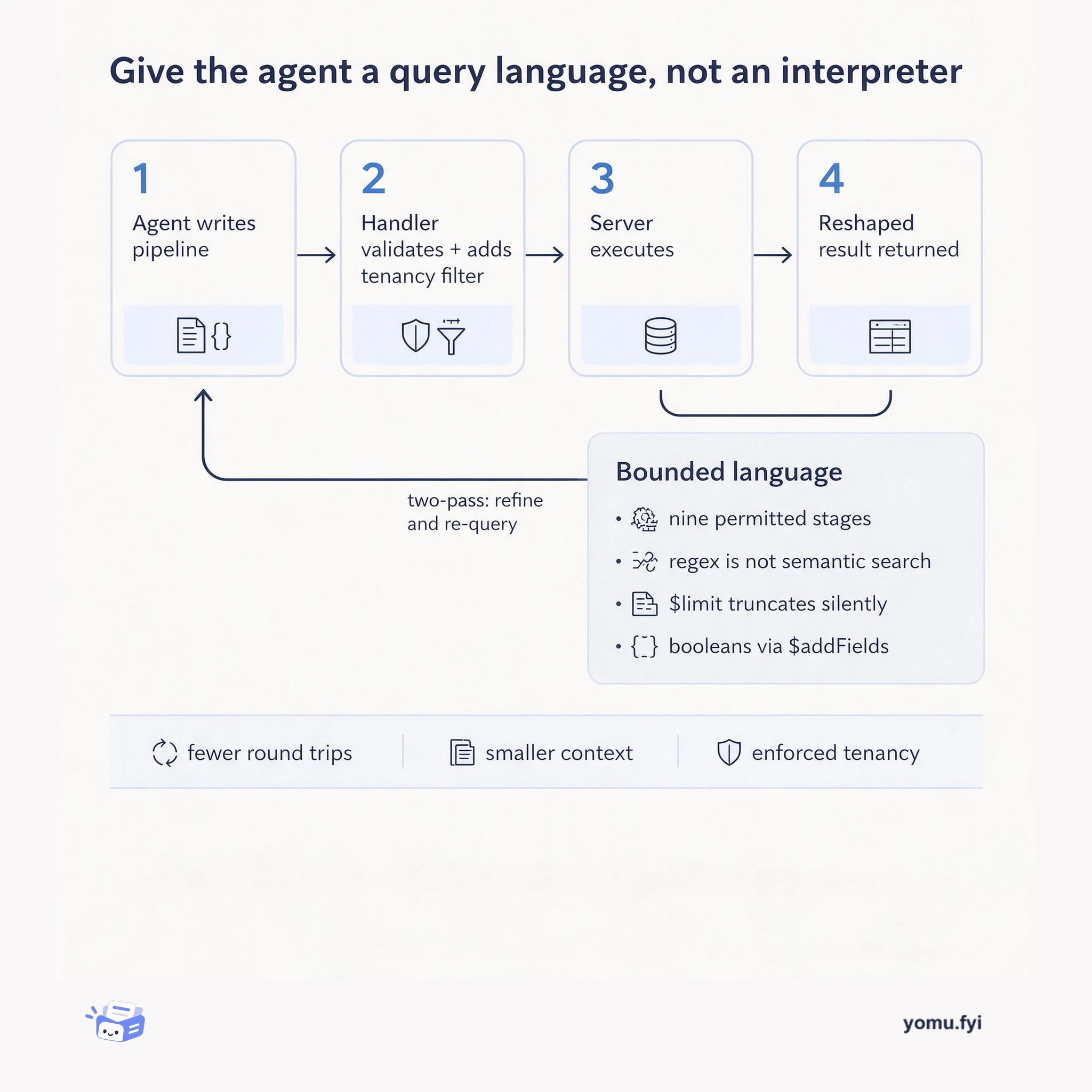
A four-step pattern for letting a document agent write validated aggregation pipelines instead of arbitrary code, so results come back shaped and tenancy stays enforced.
Loading…
Topic
169 posts about Security. Every summary links to the original.
See the idea
A four-step pattern for letting a document agent write validated aggregation pipelines instead of arbitrary code, so results come back shaped and tenancy stays enforced.
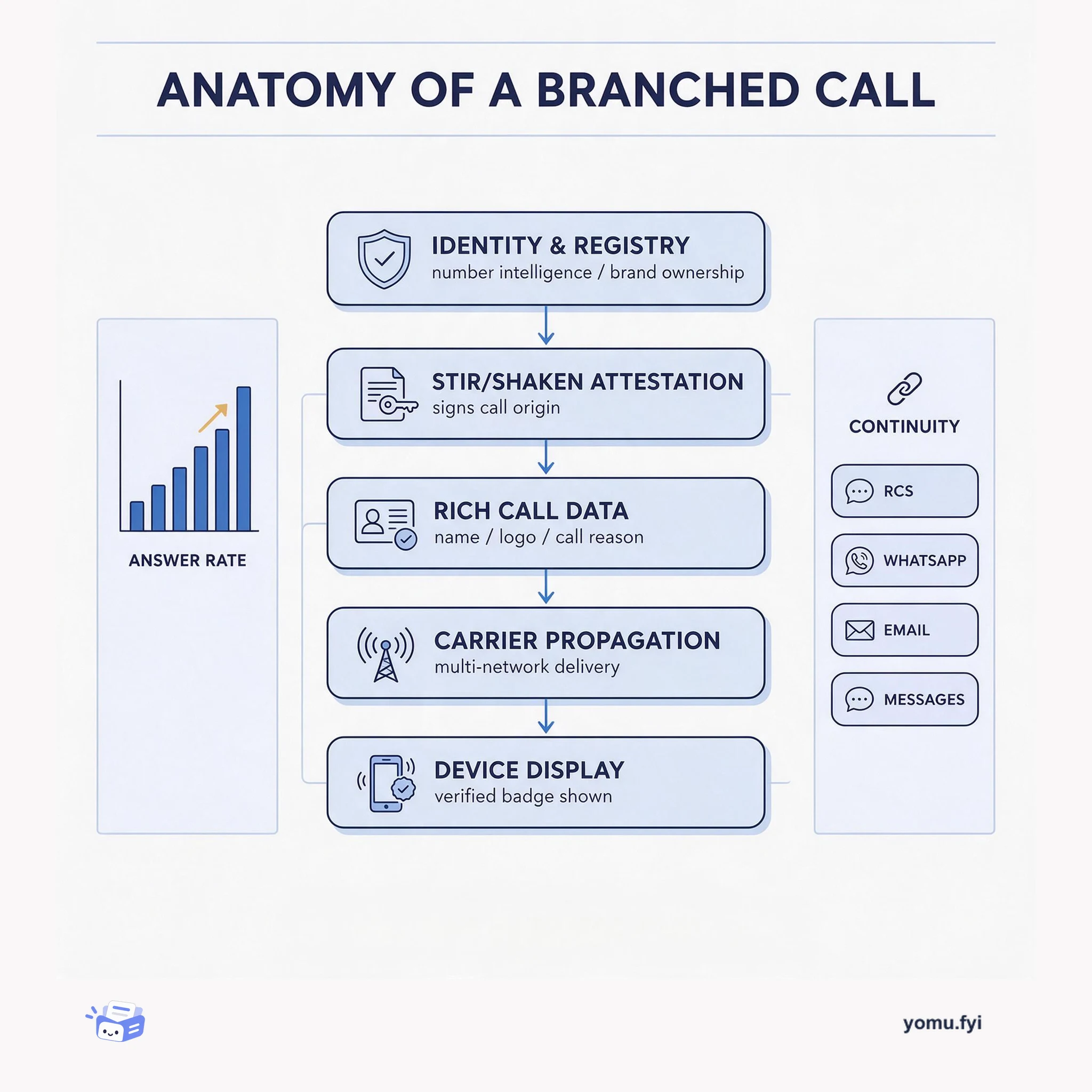
The Branded Calling trust chain, layer by layer: how identity, STIR/SHAKEN attestation, Rich Call Data, and carrier delivery combine so a verified brand name reaches the recipient's screen.
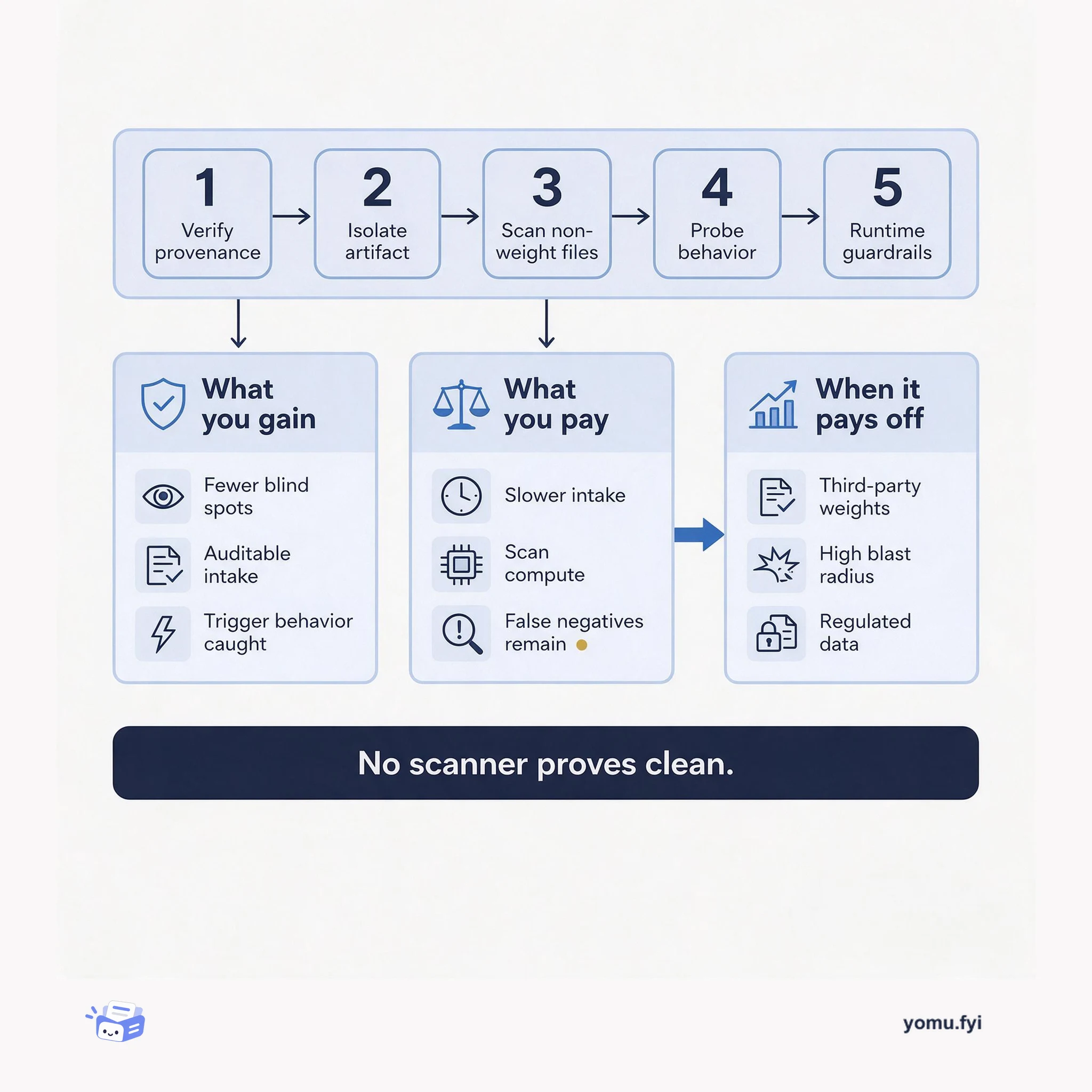
A model that passes benchmarks can still defect only on a trigger. This explainer maps the trade-off between deeper backdoor verification and the friction, latency, and cost it adds.
The Good Stuff
Paid picks we use ourselves. Links carry a referral code — a subscription through one earns us a commission at no extra cost to you.
Newest first
Cursor is introducing enterprise features intended to make its coding agents more capable, transparent, and secure for organizations already using the product. Hooks expose the agent loop to custom scripts that can log actions and tool calls, enforce compliance or command allowlists, scrub sensitive material, connect external systems, and trigger automations; they can be distributed through MDM or Cursor’s cloud option. Team Rules provide shared context and can recommend or require standards such as API schemas, conventions, and workflows, while upgraded analytics report activity, adoption, AI lines of code, directory-group filters, and exportable data with updates every two minutes. The release also adds an Audit Log covering 19 event types and Sandbox Mode, which restricts network and file access by default, with administrators controlling availability and team-wide Git and network access.
Fly.io recounts the takeover of its X/Twitter account after CEO Kurt Mackey entered credentials on members-x.com in response to a phishing email from alerts-x.com. The attackers revoked existing tokens, configured new 2FA, changed the account email, and used it for a crypto scam; the company says no customer systems or accounts were at risk, though the incident caused more than 15 hours of brand damage. Fly.io attributes the exposure to treating the shared social account as a legacy exception rather than protecting it through its normal Google IdP and phishing-resistant MFA. The post explains how FIDO2, U2F, and Passkeys prevent fake sites from receiving real credentials, while noting that the 1Password browser plugin could also have flagged the mismatched domain. The account is now protected with Passkeys.
Salesforce integrations commonly use Connected Apps or External Services, but long-lived OAuth tokens and public vendor endpoints can expose org data to replay and misuse. Heroku AppLink provides a managed bridge in which a service mesh admits requests only from explicitly connected Salesforce orgs, validates context, and exposes services as native Salesforce actions. For calls back to Salesforce, its SDK obtains short-lived, scoped credentials at runtime through user, user-plus, or authorized-user modes, avoiding refresh-token storage in vendor systems. The mesh uses the x-client-context header to convey org and user information, while the SDK keeps bearer credentials out of application code. The post describes setup commands for the AppLink add-on, service-mesh buildpack, External Service publication, and authorizations, concluding that AppLink improves governance, least privilege, and replay resistance.
Anthropic is updating its Terms of Service to address access by companies from regions where its products are not permitted, including entities operating through foreign subsidiaries. The company says ownership or control from jurisdictions such as China can create legal obligations to share data, cooperate with intelligence services, or support military and intelligence objectives. Under the change, companies or organizations more than 50% owned directly or indirectly by companies headquartered in unsupported regions are prohibited from using the services, regardless of where they operate. Anthropic frames the update as aligning its restrictions with real-world national-security risks and reiterates support for export controls, US energy projects, and rigorous evaluation of AI models for capabilities relevant to national security.
Identity-based attacks and compromised credentials are driving a need for stronger authentication, while security requirements must be balanced against user friction and application sensitivity. The guidance recommends phishing-resistant factors, including smart cards, biometric-capable hardware, FIDO2 with WebAuthn, and Passkeys, while warning against security questions, SMS codes, email TOTP, and password antipatterns. It also advises using strong MFA as a backup, dynamic authentication policies and threat detection, and OAuth 2.1/OIDC through an identity provider, with step-up authentication to maintain assurances during a session. For application integration, the recommended approach is to redirect users to an Okta-hosted Sign-In Widget through vetted OIDC client libraries or Okta SDKs, reducing implementation errors in PKCE and token verification while supporting evolving standards.
CIBA addresses identity verification when an application cannot use an interactive login on the consumption device, including bank customer-service changes, retail POS payments, browser-constrained devices, and shared kiosks. Client-Initiated Backchannel Authentication decouples authentication from the application: a client sends a back-channel request to an OAuth 2.0 authorization provider, while the user approves it on a separately enrolled phone or smartwatch. CIBA extends OpenID Connect with a grant type, discovery metadata, and poll, ping, and push token-delivery modes; in the described banking flow, the application receives a user-scoped token to update the email address. The approach improves least-privilege access and avoids exposing credentials on shared devices, but can enable MFA-fatigue-style attacks, should not be used same-device, and may warrant device code flow in some cases.
Sam Ruby describes publishing an online guide to using Kamal 2.0 for production after finding existing material insufficient for deploying a real project. The guide grew from research for the Deployment and Production chapter of Agile Web Development with Rails 8, then was converted from Pragmatic Programming’s XML grammar to Markdown with GitHub Copilot and proofread with it. It presents an opinionated starter list with defaults and alternatives, covering seven initial requirements alongside Docker builders, container repositories, secret management, hosting choices, load balancing, and managed databases. It also treats production as including database backups, searchable logs, monitoring, and application security, and invites community corrections or additions under a CC0 license.
Risk Operations teams investigating Account Takeover (ATO) cases must gather data across systems, run SQL queries, and make decisions under pressure, creating delays and error risk. The SOP-driven LLM agent framework represents the workflow as a natural-language, indentation-based tree whose steps specify queries, external functions, and decision criteria. During execution, the SOP planner navigates the tree and produces JSON-formatted instructions, while a Worker Agent invokes APIs or SQL queries and stores results in a feedback loop. The process ends by synthesising investigation data into a report and final decision. In reported results, handling time fell from 22 to 3 minutes per ticket, 87% of ATO cases were automated since launch, and the error rate was zero.
Akanksha Bhasin joins Okta as an “Oktanaut” in Developer Relations after more than six years building developer communities and four years focused on Developer Relations. Her path began with experiments in Arduino, programming, and AI applications, then shifted toward Voice AI after Google Assistant launched in 2018; she built applications for Google Assistant and Alexa and was later featured at Google I/O. She taught these technologies at meetups and colleges across India, founded Women in Voice, India, led Google Developer Groups, and helped organize events including DevFests that gathered more than 3,000 developers. At Okta, she wants to help independent software vendors and developers secure user identities, treating identity security and access management as foundational to enterprise applications rather than a checklist item.
Fly.io’s GPU bet was intended to give internet-facing apps fast AI/ML inference through Fly GPU Machines, which pair a hardware-mapped Nvidia GPU with a Fly Machine. Building them required dedicated GPU servers, Intel Cloud Hypervisor with PCI passthrough, driver work, orchestrator changes, security assessments, and handling large model-weight files. The product has not found product-market fit because most software developers want LLM APIs and services such as OpenAI, Anthropic, Claude, GPT, Replicate, or RunPod rather than raw GPUs, while serious GPU users seek much larger clusters and lightweight users may be too uncertain a market. L40S demand exists, but those GPUs are not driving the core business. Fly.io will keep existing GPU Machines but does not plan a near-term v2, concluding that the bet was worth making without compromising its isolation or developer experience.
VSCode’s remote-editing flow over SSH is examined as a concern for running LLM-driven agent workflows on remote machines. The motivation is to keep iterative code generation and execution away from a development laptop, ideally on a clean-slate Linux instance that starts instantly and cannot damage the host. Unlike Emacs Tramp, which operates through commands on the remote connection, VSCode uses a Bash snippet stager to download an agent, including a binary Node installation. That agent communicates over port-forwarded SSH through a WebSockets connection to the VSCode front end and can browse the filesystem, edit arbitrary files, launch shell PTYs, and persist itself. The author says this raises concerns for development servers and especially production incident work, while noting a custom Fly Machine connection avoids needing this mechanism.
Enterprise applications with SSO still need scalable identity management for customer organizations, including user provisioning, updates, and deprovisioning. This guide presents SCIM (System for Cross-domain Identity Management) as the standards-based connection to Okta for automating those lifecycle operations and controlling access. SCIM can synchronize users in real time as employees join, leave, or change roles, while reducing manual work and inconsistent deprovisioning risks. To submit the integration to the Okta Integration Network, partners need an Okta Integrator Free Plan, two Runscope test links for CRUD and SPEC tests, manual Okta SCIM integration tests, a provisioning-enabled instance, confirmation, and a publicly accessible SCIM server. The submission can expose an integration to Okta’s customer base of 18,000+ organizations and provide verified enterprise-ready status.
Grab’s Passkey adds passwordless authentication to its app to address phishing, keystroke-logging, brute-force, and other security threats associated with passwords plus the friction of OTP-based login. Built on the FIDO standard and implemented through WebAuthn, the flow uses a backend, frontend, and authenticator: the authenticator creates and stores a passkey, while Grab stores the public key and metadata. Registration uses a server-generated challenge and parameters including rp.id, user information, resident-key requirements, and supported public-key algorithms; sign-in returns a credential whose signature is verified against the stored public key. Google Password Manager and iCloud Keychain can sync passkeys across supported devices, and users authenticate with their screen lock rather than entering a password or waiting for an OTP. The implementation is described as faster, smoother, phishing-resistant login with potential savings on third-party authentication and messaging costs, while Grab plans to evaluate web login expansion through adoption, feedback, and usage data.
MongoDB 8.0, the latest version of the document database, is now generally available, delivering significant performance and security improvements. The release features 36% better read throughput, 56% faster bulk writes, 20% faster concurrent writes during data replication, and 200% faster complex aggregations of time series data. MongoDB’s internal build system, which runs on MongoDB, saw query latencies drop by approximately 75% after upgrading. The company also reports that customer OCELL experienced queries running twice as fast. MongoDB 8.0 includes sharding enhancements for up to 50 times faster data distribution, quantized vectors that reduce memory usage by up to 96%, and expanded Queryable Encryption to support range queries. The release is available via MongoDB Atlas, MongoDB Enterprise Advanced, and MongoDB Community Edition.
Bearer access tokens let anyone holding a valid token call a resource server, creating risk when tokens are stolen. Existing protections include secure coding, short expiration, and origin restrictions, but the post presents OAuth 2.0 Demonstrating Proof of Possession (DPoP) as a way to bind tokens to client-generated cryptographic proof. The client creates a JWT containing request details, issue time, unique identifier, and public key; the authorization server uses it to bind a key hash and request information to the returned token. For sensitive requests, authorization or resource servers can require a nonce, prompting a new proof and limiting lifetime and replay risk. Resource servers must validate both proof and access token properties, with a vetted OAuth library recommended.
SMS and voice OTPs remain broadly applicable for identity verification, but the post argues they should eventually be replaced because SIM swapping, phishing, uncontrolled secret-delivery channels, device-linking gaps, and slower logins weaken them. Until then, Okta will require organizations to bring their own telephony provider, using a telephony inline hook to send codes and report outcomes. The implementation can be built in-house, outsourced, or delegated to a managed service, with regional regulations, traffic peaks, reliability, branding, security, and available resources shaping the choice. A hook has three seconds to return success or failure before Okta’s heavily rate-limited failover sends the message; teams must also secure endpoints and API keys, monitor logs, and handle vendor or delivery failures.
MuleSoft Anypoint Flex Gateway provides a pattern for exposing APIs and microservices running in Heroku Private Spaces while adding API management and security controls. The tutorial deploys an internal Heroku application, creates or imports an OpenAPI 3.0 specification in Anypoint Design Center, publishes it to Exchange, registers the gateway through Runtime Manager, and deploys it in the same Private Space. That placement lets internal-routing applications receive public traffic through the gateway while routing access through a centrally configured layer managed with MuleSoft and Heroku. It then applies a Client ID Enforcement policy in API Manager, showing that requests with incorrect credentials fail and requests using the issued Client ID and Client Secret can authenticate. The pattern is presented as a foundation for Heroku and Salesforce multi-cloud integrations.
Okta’s RSA Conference 2024 presence includes a May 7th session on identity as a defense against breaches and a booth featuring the Shared Signals Framework (SSF) and Universal Logout. Attackers can exploit weak passwords, phishing credentials, and privileged access, while applications may lack the cross-service context needed to identify suspicious account behavior. SSF, developed by the OpenID Foundation, enables software to send and receive signals about user behavior so services can respond according to their threat models. Universal Logout lets administrators and automation end a user’s existing sessions with an identity provider, complementing SSF and intrusion detection tools; Okta’s feature was not yet released. The post points to a build-your-own endpoint, SSF resources, and a pilot program for integrators.
eBay sets out principles for developing and using AI-powered customer tools and services while addressing safety and community needs. Its framework covers reliability, safety, security, inclusivity, equity, fairness, accountability, lawfulness, privacy by design, and transparency. The company says it rigorously tests AI technologies, protects confidential data used to train or operate systems, includes measures to avoid excluding groups, and applies quality and safety checks to datasets. It also calls for human oversight throughout development, launch, and monitoring, risk-based decisions, regulatory compliance, and privacy-focused design using state-of-the-art methods. For users, eBay says transparency may involve disclosures within an experience or broader communication, depending on lifecycle stage and the audience.
The post explains how browser phaseouts of third-party cookies can affect Okta authentication patterns and session features. Third-party cookies are issued by other domains and can support cross-site session introspection, federated login-related behavior, and convenience features, but browsers increasingly restrict them because of security and privacy concerns. Most Okta core authentication flows do not require them; however, applications using an Okta session across different top-level domains, customer-hosted sign-in experiences, ADSSO, and certain “remember me” functions may lose session introspection or extension while basic authentication and token return remain possible. The post recommends testing with Chrome’s third-party cookies disabled, using feature flags, and migrating away from these cookies before Google’s stated exemption ends in 2024.
The best engineering reads, once a week.