BitNet’s CPU Trade: Small Footprint, Sharper Constraints
BitNet trades floating-point precision for a tiny, CPU-friendly footprint. This diagram maps the payoff—small memory and local serving—against the constraints that decide when the trade is worth it.
BitNet is a quantized model approach that uses 1.58-bit ternary weights to run inference on CPUs with a small memory footprint. In the supplied example, a 2.4-billion-parameter model fits in 1.1 GB of RAM and reaches about 50 tokens per second on a Sprite, where it can sleep when idle and reload in roughly 1.2 seconds. The trade-off is concrete: you give up a conventional precision format and accept measured CPU throughput in exchange for simpler hosting, no GPU dependency, and checkpoint rollback for experiments. Engineers should use this page to decide whether a CPU-first BitNet deployment fits a local or low-volume workload before committing to the operational model.
FAQ
What does BitNet trade away to run on a CPU?
It uses 1.58-bit ternary weights instead of a conventional floating-point format. In the supplied example, that lets a 2.4-billion-parameter model fit in 1.1 GB of RAM and run at about 50 tokens per second on a CPU. The material does not establish a general quality penalty, so evaluate the quantized model on your task.
When is a CPU-only BitNet deployment the right call?
It fits when a small memory footprint and simpler local serving matter more than peak throughput. The example runs a 2.4-billion-parameter model at roughly 50 tokens per second, so the workload must tolerate that rate. If you need more throughput or broader model support, that is the signal to evaluate a GPU-backed path.
What operational details matter when serving BitNet on a Sprite?
The model loads in about 1.2 seconds when the Sprite wakes, and the Python server exposes an OpenAI-compatible endpoint on port 8080. Checkpoints capture the whole environment, which makes rollback practical when testing models, kernel parameters, or prompt formats. Plan for idle hibernation and service registration so the endpoint comes back cleanly.
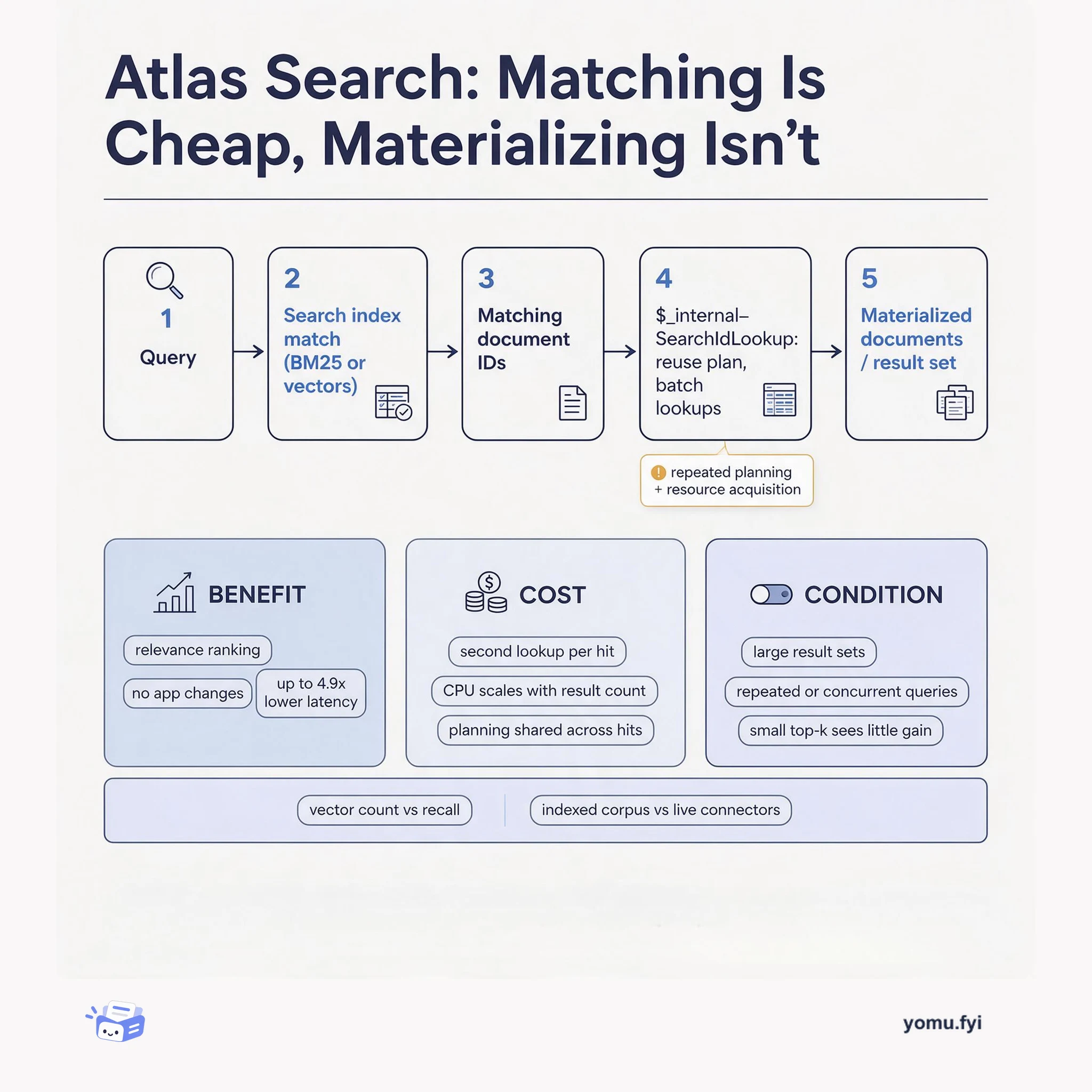
Atlas Search finds matching document IDs fast, but materializing each hit from the collection is where the latency and CPU go. This trade-off map shows the benefit, the cost, and the condition for accepting that second phase.
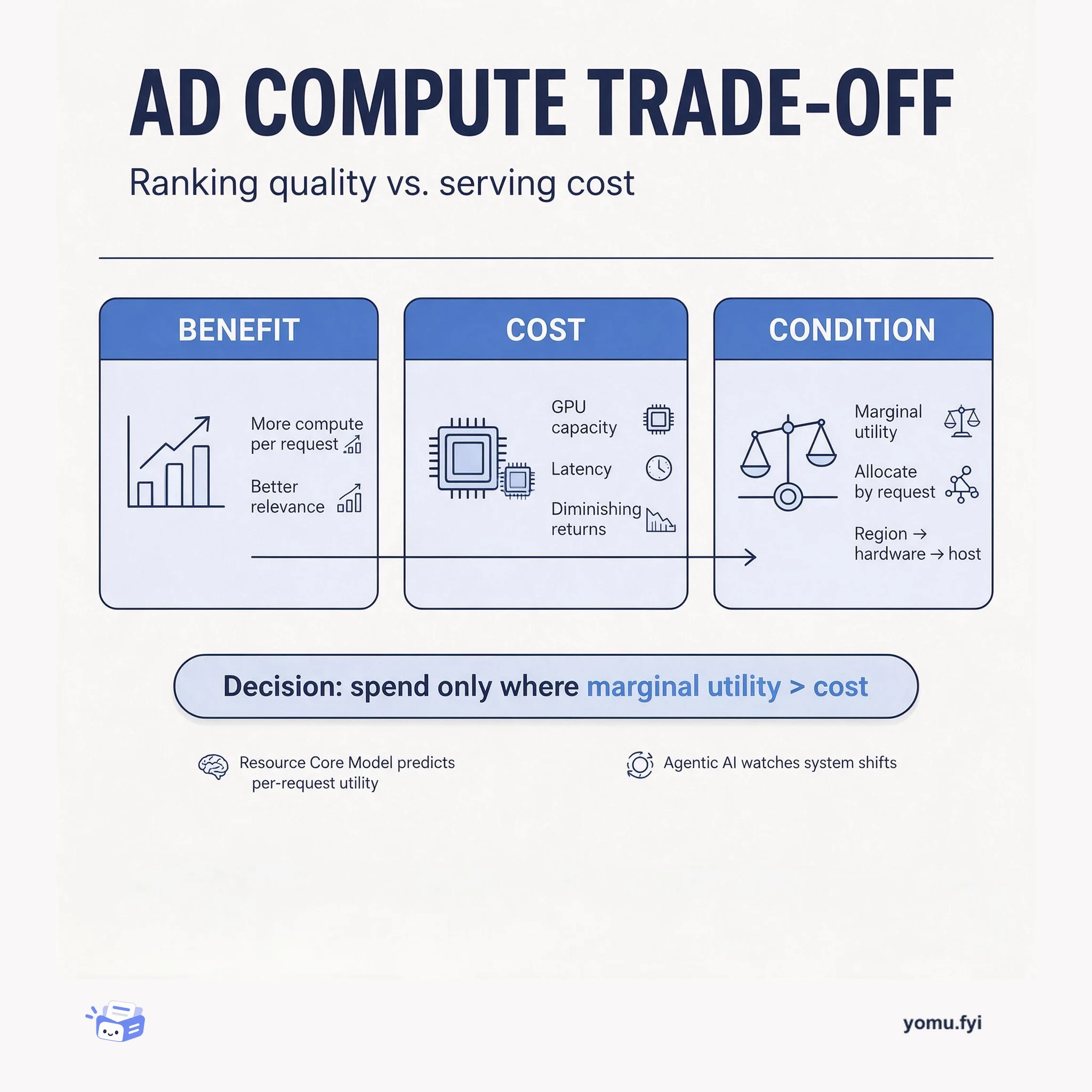
Ad ranking is a compute trade-off: more resources per request can improve relevance, but GPU capacity and latency are finite. Learn how to allocate by marginal utility instead of uniformly.
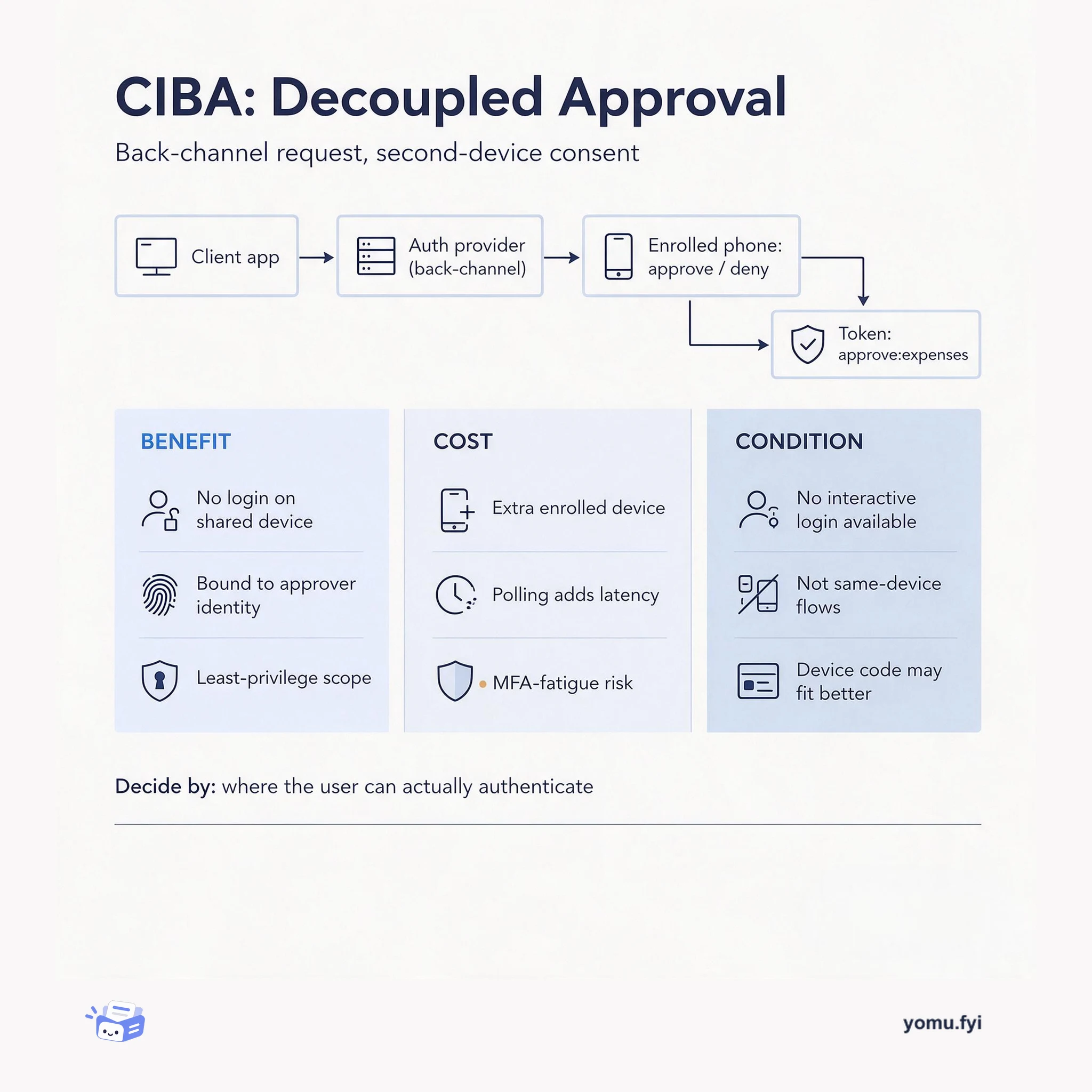
CIBA moves authentication off the device in use: the client sends a back-channel request and the user approves on an enrolled phone. See what that buys and what it costs.
The Good Stuff
Paid picks we use ourselves. Links carry a referral code — a subscription through one earns us a commission at no extra cost to you.