Clairic in Practice: Five Steps from Unstructured Input to a Typed Record
Clairic is a System One extraction model that turns unstructured input into typed values in a single forward pass. This five-step flow shows how to declare fields, call it, and use the results.
Clairic is a preview extraction model on Workers AI that reads unstructured input in one forward pass and returns typed values such as numbers, dates, durations, and spans, each with character offsets and a confidence score. Because it generates no output tokens, responses come back in under a second and every answer is either a valid typed value or null. The five steps below cover declaring the fields you want, sending the input, reading values and offsets, validating confidence, and writing the typed result into a store that downstream systems can query instead of re-parsing raw text.
FAQ
Why does Clairic produce no output tokens, and what does that change for cost?
Clairic processes only the input tokens in a single forward pass and never generates tokens, so responses come back in under one second. There are no output token charges, which means cost tracks the input you send rather than the length of the answer you get back.
When should I pick an extraction model over a decision model?
Decision models such as Jev or Clef output probabilities, which suit scoring and classification. Clairic returns a typed value, estimate, or forecast with a confidence score, so choose it when you need a number, date, duration, or span rather than a likelihood.
What should my pipeline do when Clairic returns null or low confidence?
Null is a valid answer, not a failure, so treat it as 'not present in this input' and route that record accordingly. Confidence scores and character offsets let you gate on a threshold and keep the source span for review instead of re-parsing the raw text.
A five-step how-to for scaling AI adoption across engineering teams: federate ownership, ship one shared paved path, let builders own their tools, measure throughput, and feed bottlenecks back into the path.
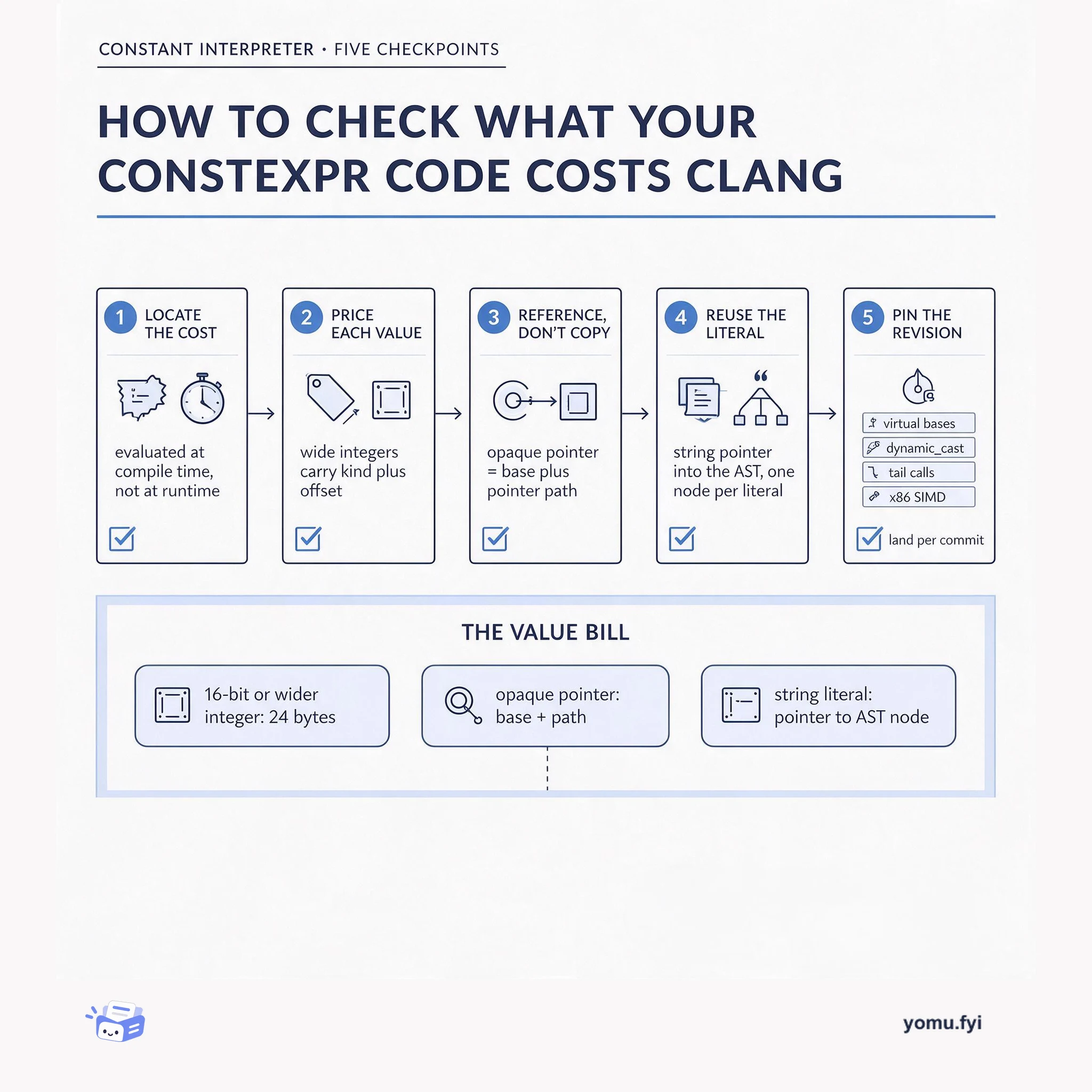
Clang's constant interpreter evaluates constant expressions at compile time, so the bill lands on your build, not your binary. This five-checkpoint guide shows where that memory goes and how to keep it small.
A five-checkpoint loop for chip-design teams: pin reference artifacts, trace multistage agent runs, refine tool descriptions, and re-run a composite benchmark so outputs are verified, not merely plausible.
The Good Stuff
Paid picks we use ourselves. Links carry a referral code — a subscription through one earns us a commission at no extra cost to you.