BigQuery in the Right Lane: Five Checkpoints for AI Data Pipelines
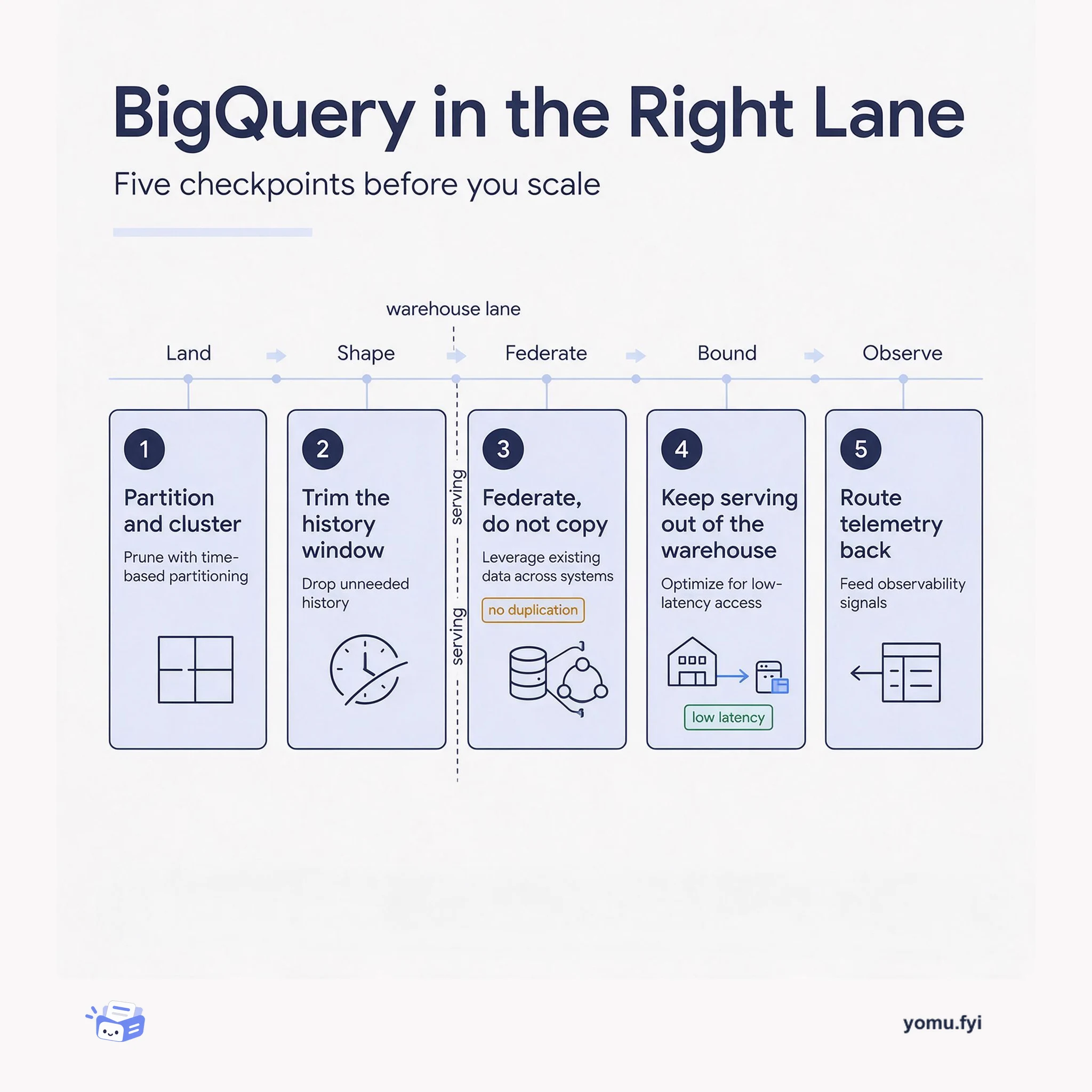
A five-checkpoint workflow for keeping BigQuery in the right lane: land and shape data once, tune partitions and history windows, and federate instead of copying.
Loading…
Topic
23 posts about Cost Optimization. Every summary links to the original.
See the idea
A five-checkpoint workflow for keeping BigQuery in the right lane: land and shape data once, tune partitions and history windows, and federate instead of copying.
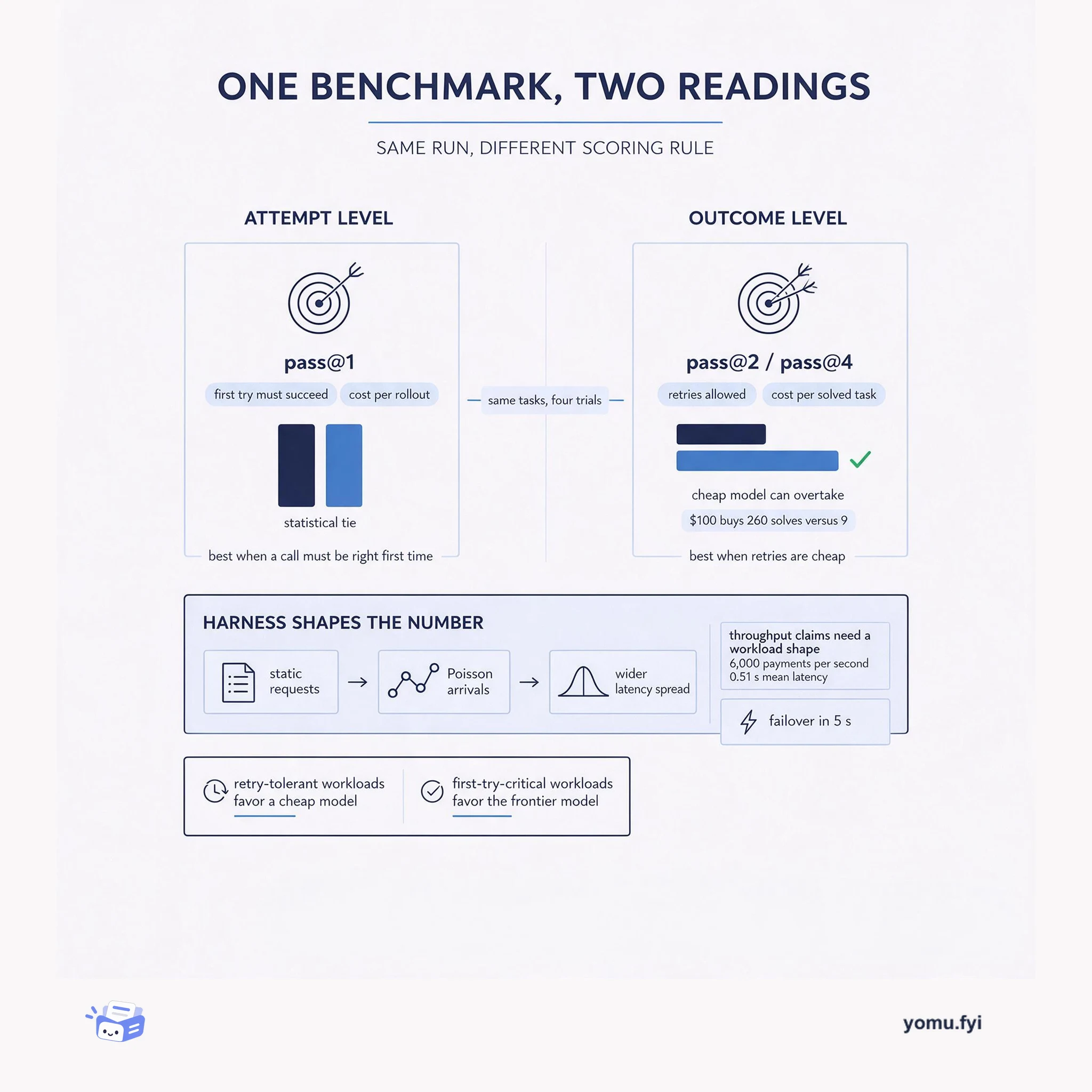
A benchmark can support two different verdicts: pass@1 on the first attempt, or pass@k with retries measured as cost per solved task. This comparison shows which reading matches your workload.
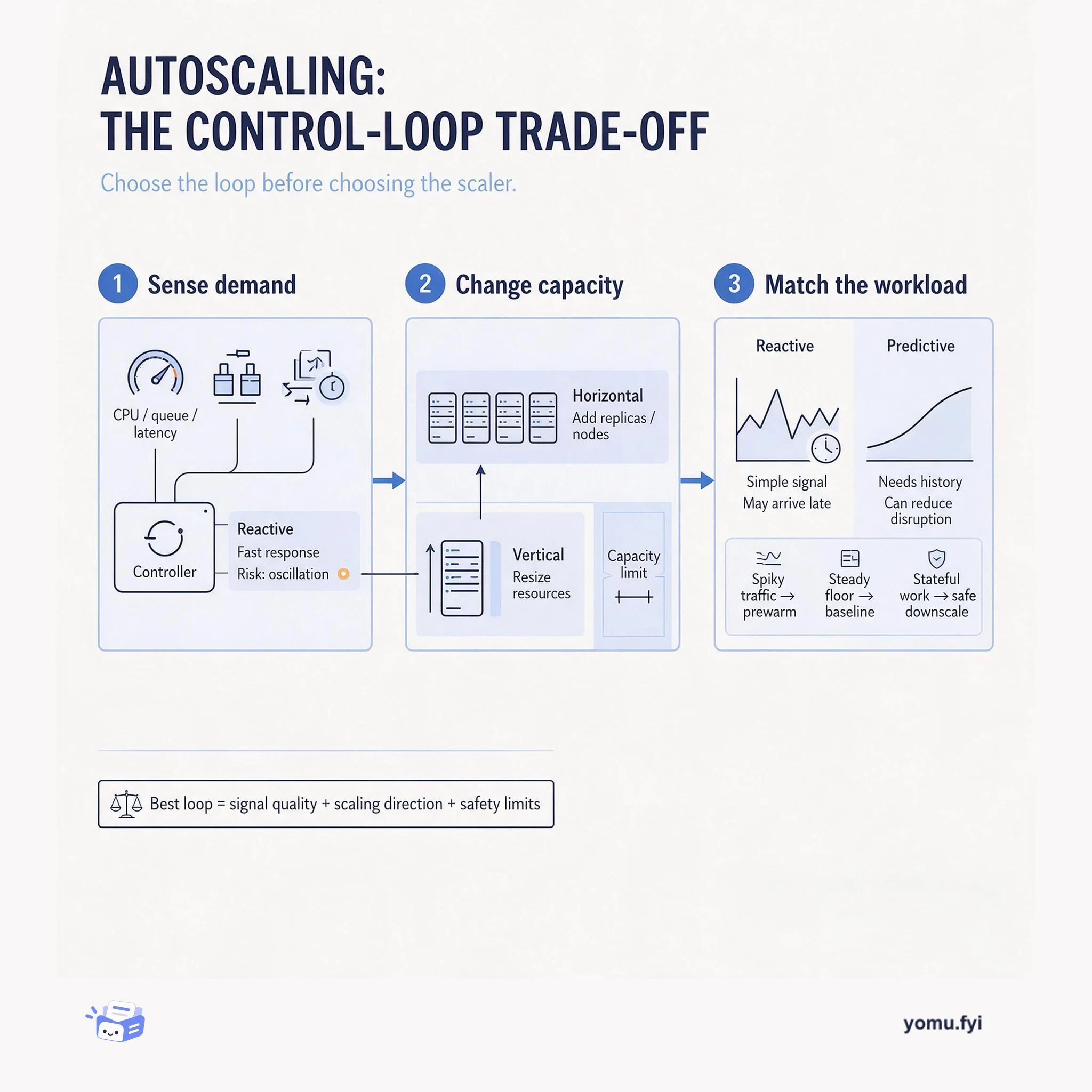
Autoscaling trades responsiveness, stability, and cost: this explainer shows how signal choice, scaling direction, and capacity limits shape the right control loop for a workload.
The Good Stuff
Paid picks we use ourselves. Links carry a referral code — a subscription through one earns us a commission at no extra cost to you.
Newest first
Modal’s engineering blog presents a cost model comparing serverless and reserved GPU pricing for AI workloads, centered on the peak-to-average demand ratio. Serverless GPUs charge only for usage, while reserved GPUs require long-term contracts for fixed capacity, often achieving under 30% utilization. The model shows that when the peak-to-average ratio exceeds the reservation discount rate (typically 2-5x), serverless GPUs become cheaper despite higher base rates, with real workloads like inference and training having ratios of 5-10x, making serverless an obvious cost win. An interactive tool allows teams to estimate costs using preset workloads or custom traffic patterns, defaulting to current B200 GPU rates on Modal and hyperscaler reservations. The post discusses model limitations, including assumptions of perfect prediction and instant allocation, and notes that serverless also reduces engineering costs through faster development and reduced dev/prod skew, while mixed strategies can combine baseline reservations with serverless bursting for high peak-to-average bursts.
Long-term hyperscale cloud commitments are presented as distributed-systems problems with expensive consequences when physical assumptions are wrong. The post proposes a dependency sequence across regional and availability-zone topology, power architecture, fit-for-purpose compute, SKU qualification, and network design. It compares application-observable latency with bare-metal RTT, uses power consumption as a migration check, and argues that workload characteristics should drive memory-to-core ratios, silicon generations, instance families, and routing choices rather than provider defaults. It also explains why zone placement, inter-zone and inter-region transfer, and egress pricing affect quorum latency, reliability, and economics, while noting that cross-region traffic may require explicit justification. The conclusion is that these constraints compound over the commitment unless teams manage architectural drift, with software and contracting layers addressed separately.
After Etsy completed its 2020 migration from an on-premise data center to Google Cloud Platform (GCP), the resulting FinOps team developed a global approach to forecasting, monitoring, and optimizing cloud spend. Costs are grouped into core infrastructure, machine learning and product enablement, data enablement, and Dev, with trailing Cost Per Visit (CPV) serving as the primary forecasting metric after regression tests found visits most correlated with costs. BigQuery and Looker dashboards, alerts, weekly Finance comparisons, and recurring cost-owner and leadership readouts support variance detection, while costs are tracked centrally without chargebacks to preserve flexibility. Optimization work combines FinOps, engineering, and Architecture collaboration, producing GCS storage reductions through monitoring, automation, TTLs, and Intelligent tiering, plus compute, model-deployment, and network compression improvements. The next priority is better visibility into shared machine learning platform spend to improve experiment ROI analysis and identify optimization opportunities.
The best engineering reads, once a week.