A benchmark can support two different verdicts: pass@1 on the first attempt, or pass@k with retries measured as cost per solved task. This comparison shows which reading matches your workload.
Benchmark results rarely settle a decision on their own, because the same run can be scored two ways. At the attempt level, pass@1 asks whether one try succeeds and reports cost per rollout; at the outcome level, pass@2 and pass@4 allow retries and shift the unit of value to cost per solved task. The two readings can even disagree, since a model that trails on first-attempt accuracy can lead once retries are permitted, and cheaper models can solve far more tasks per dollar. The explainer also shows why the harness matters: static request patterns and Poisson arrivals produce different latency distributions, and throughput claims only mean something against a stated workload shape.
FAQ
Why can two models tie at pass@1 and still differ at pass@4?
pass@1 scores a single attempt, so a gap inside the error bars is not decisive. On DeepSWE, GLM-5.3 and Claude Fable 5 tied near 69% at pass@1, yet GLM-5.3 led at pass@4, 87.6% versus 84.1%. Retries recover failures that a single attempt records as a loss, so the scoring rule can change the verdict.
When is cost per solved task more useful than cost per rollout?
When your pipeline may retry. DeepSeek V4 Pro 0813 costs $0.24 per rollout and $100 buys 260 solved tasks versus 9 for GPT-5.6 Sol, which the per-rollout price hides. A cascade of cheap model first, escalate on test failure, solved 83.0% of tasks at $3.35 each, beating either model alone.
Why does the benchmark harness change the latency numbers?
AIPerf shows static synthetic requests producing one latency distribution, while Poisson arrivals averaging 10 requests per second with variable lengths produce a wider spread. The load client must also be kept from becoming the bottleneck. Percentiles such as TTFT and inter-token latency describe the workload shape, not the model alone.
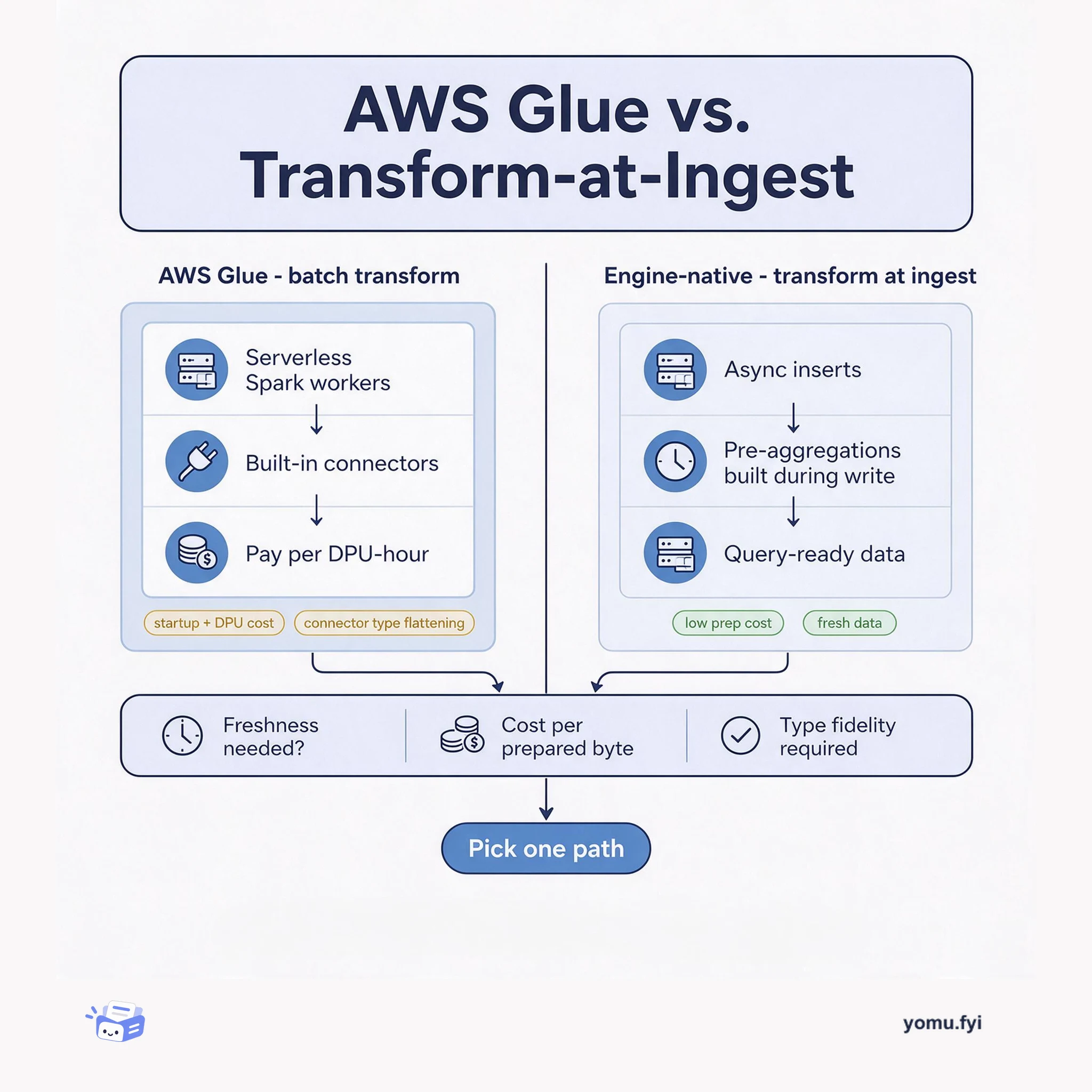
AWS Glue runs serverless Spark jobs that transform data in batches; engine-native pipelines transform during ingestion. This comparison shows how to pick between them by freshness, cost, and data fidelity.
Compare two mental models for brand: a static artifact (logos, guidelines, centralized control) and a living operating system (values, APIs, support, trust). See which choices fit your engineering team.
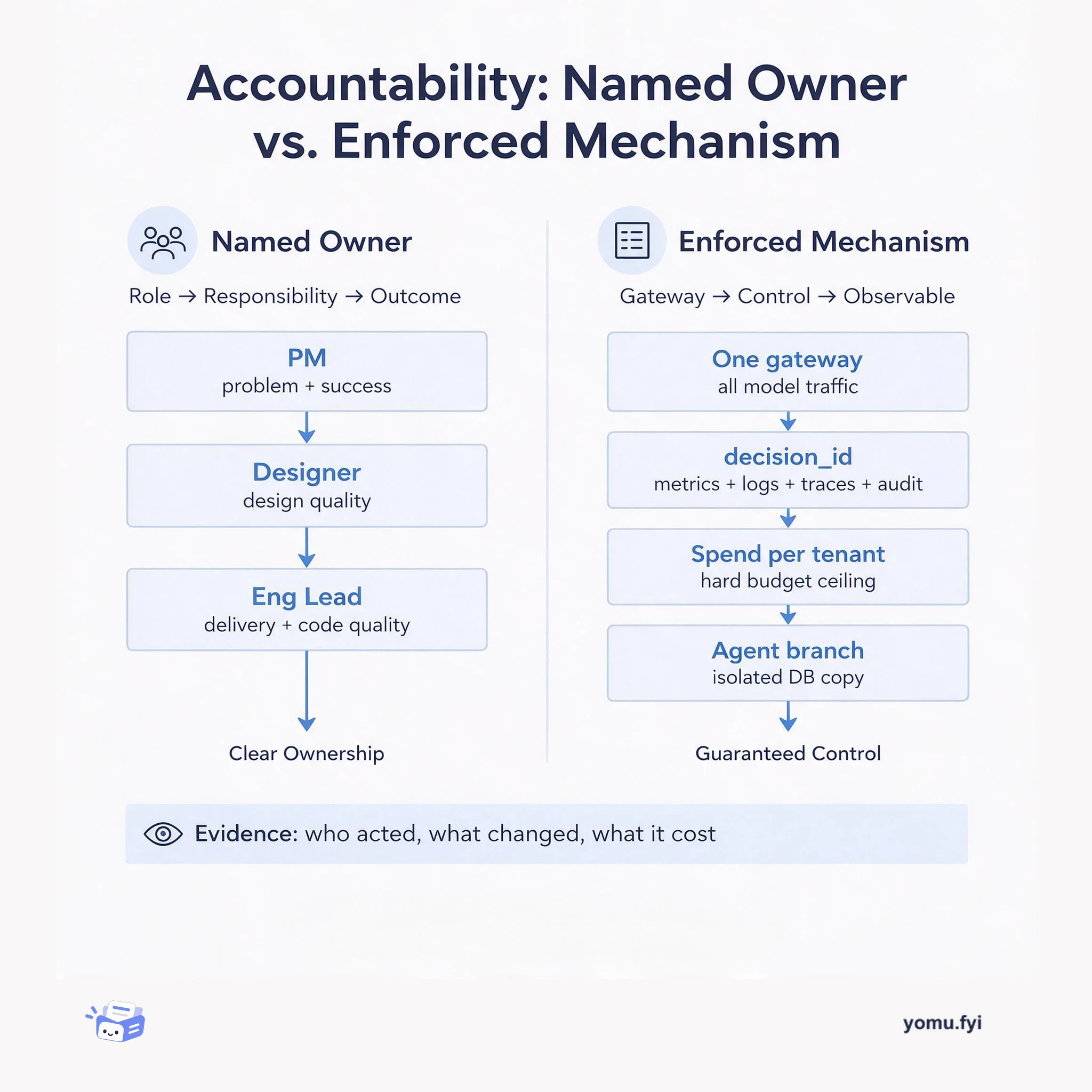
A side-by-side comparison of the two accountability models engineers actually rely on: a named human owner per outcome, and system-enforced traces, budgets, and isolation.
The Good Stuff
Paid picks we use ourselves. Links carry a referral code — a subscription through one earns us a commission at no extra cost to you.