Databricks
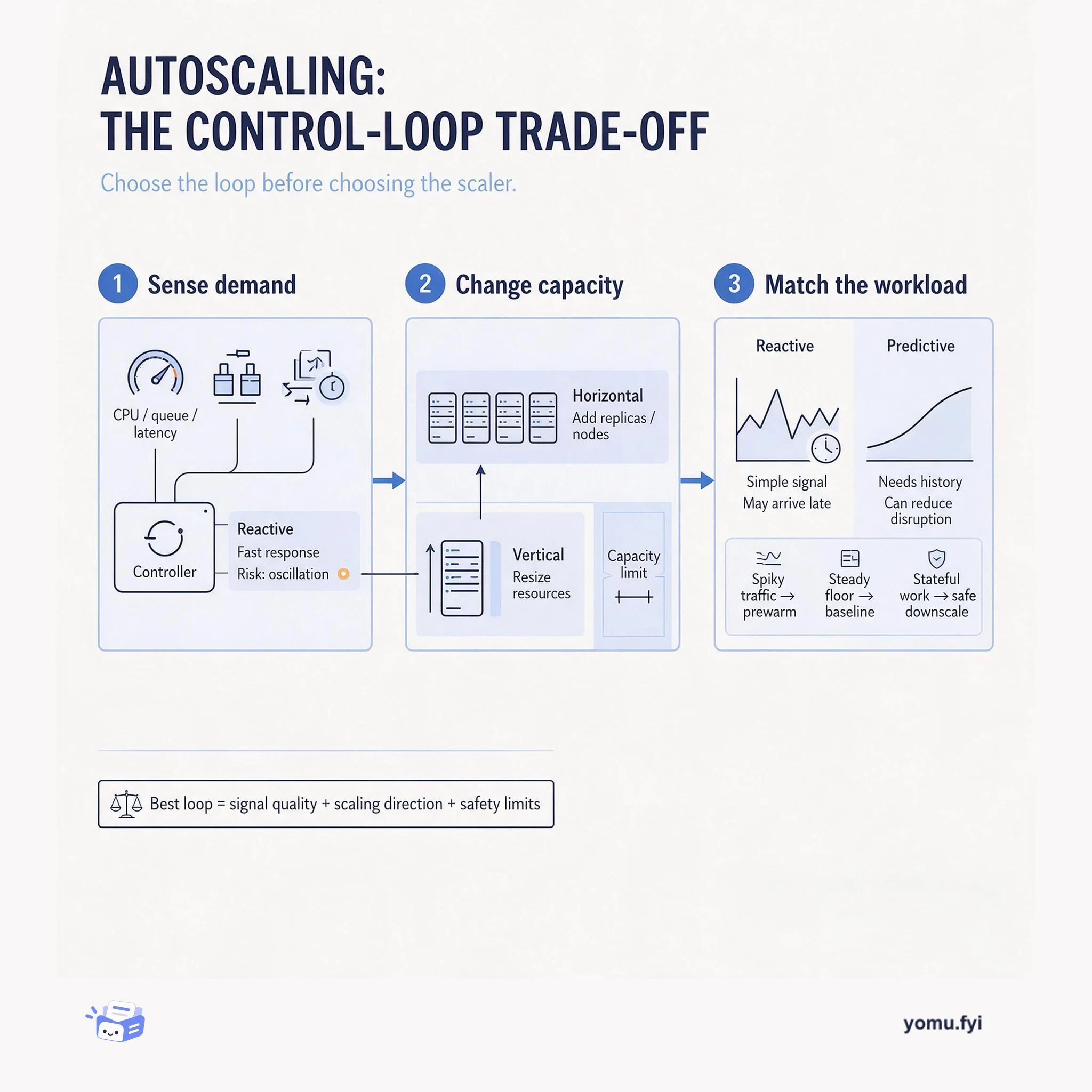
Selecting between relational and non-relational databases requires matching the data store to requirements for structure, consistency, scale, and query complexity. Relational systems organize data in predefined tables, enforce schemas and keys, and provide ACID transactions, making them suited to structured, transactional workloads and complex joins. Non-relational systems support documents, key-value pairs, graphs, or wide-column structures, often using flexible schemas and schema-on-read while scaling horizontally and accepting eventual consistency for throughput and availability. The trade-offs include vertical versus horizontal scaling, SQL versus database-specific query languages, and database-enforced versus application-level integrity. The guidance recommends documenting workload needs, prototyping with realistic volumes and failure scenarios, and considering polyglot persistence when different workloads require specialized systems.
 NVIDIA
Generative AI training across hundreds of thousands of GPUs makes the scale-out network a first-order performance bottleneck, because synchronized collectives expose weaknesses in conventional Ethernet. Static ECMP, packet loss controls such as PFC, and slowly tuned congestion control can create stragglers, head-of-line blocking, latency spikes, and multi-tenant interference. Spectrum-X Ethernet addresses these conditions with hardware-accelerated adaptive per-packet routing, targeted ECN- and RTT-based congestion control, and a SuperNIC Plane Load Balancer that distributes traffic across independent network planes. Spectrum-X Multiplane uses shallow two-tier fat trees and host-edge optical devices to provide path diversity while scaling a two-tier design to over 128,000 endpoints. In the cited tests, Spectrum-X sustained 98% of theoretical line rate across GPU pairs, held P99 tail latency to 8–9 microseconds under 75% load, recovered from a link flap in 2.68 milliseconds, and limited bandwidth loss under 10% fabric failure to 11%.
NVIDIA
Agentic AI inference has shifted from single-turn requests to long, stateful workflows that reason, invoke tools, coordinate subagents, and reuse growing context, increasing token and power demands. The post presents SemiAnalysis AgentX, an InferenceX benchmark that replays prerecorded Claude Code sessions turn by turn, preserving context, input/output lengths, reasoning time, tool-call latency, and KV-cache pressure while varying concurrency. It evaluates tokens per megawatt alongside E2E normalized interactivity, standard interactivity, E2E latency, and TTFT; NVIDIA-measured Vera Rubin NVL72 results, pending SemiAnalysis review, show up to 30x higher throughput per megawatt than GB300 NVL72 at 160 tokens per second per user. GB300 also delivers up to 15x H200 throughput per megawatt, up to 10x lower cost per million tokens, and roughly 80x higher throughput on Kimi K3 2.8T, supported by MoE runtimes, communication overlap, Dynamo, and NVLink.
NVIDIA
Power-constrained AI factories measure efficiency by AI output per watt, because facility overhead, rack losses, and operational inefficiency reduce the power available to compute. In an illustrative 100 MW budget, 60% reaches AI load, while static rack provisioning can strand headroom that another rack could use. NVIDIA DSX MaxLPS addresses this with dynamic power allocation, workload-profile power optimization, and 45° C thermal and site design, including warm-water liquid cooling. Its Dynamic Power Software, currently in Developer Preview, models topology from utility to GPUs and reallocates unused capacity within policy-defined budgets, with optional DSX Exchange integration. For Vera Rubin NVL72, NVIDIA projects up to 40% more Rubin GPU capacity within the same power budget, while validation compares unmanaged and managed runs using throughput, latency, errors, power, utilization, and compliance.
NVIDIA
Agentic AI factories connect diverse users, agents, applications, data sources, and storage systems to massively accelerated compute, making dedicated DPU processing essential for line-rate networking, storage, and security. Scale-In evolves north-south access into a coordinated infrastructure domain built with BlueField-4, NVIDIA DOCA, and Spectrum-X Ethernet. BlueField-4 combines programmable control-plane processing with inline data-path engines, a 64-core Grace CPU, LPDDR5X memory, PCIe Gen6 host connectivity, and an 800 Gb/s network interface. The architecture offloads security, tenant isolation, storage protocols, provisioning, and telemetry from host CPUs; the source states that Spectrum-X storage paths can provide up to 1.45x the throughput of off-the-shelf Ethernet, while independent control and observability support more consistent operations as AI infrastructure scales.
NVIDIA
Agentic AI fleets must handle unpredictable trajectories in which long sequential reasoning chains are interrupted by short bursts of parallel tool calls, retrieval, sandbox, or sub-agent work. Telemetry from 163,594 sessions found over 97% had unique trajectory profiles, making fleet sizing around several specialized CPU designs impractical; the sequential path is latency-bound while fan-out requires concurrency. It presents NVIDIA Vera CPU as a single balanced design point, combining strong loaded per-core performance, concurrency, memory bandwidth, and a low-latency monolithic architecture, with Olympus cores using a wide front end, branch prediction, and deep out-of-order execution. Using estimated SPEC CPU® 2026 results across four agentic workloads, it reports up to 1.5x the agentic performance of AMD Venice, while noting that Venice figures were estimated from SPECrate® 2026 data and that results may vary.
NVIDIA
Serving agentic AI at more than 3,000 output tokens per second while retaining a 100K-token KV cache creates a small-batch tensor-parallelism challenge: fixed communication and coordination costs can offset distributed-compute gains. NVIDIA Groq 3 LPX addresses this with compiler-scheduled execution across 256 LP30 local processing units, 128 GB of collective SRAM, and 96 112-Gbps C2C links per chip, planning transfers before execution and overlapping communication with computation at 320-byte-vector granularity. Artificial Analysis measured 3,431 output tokens per second at 100K context on Gemma 4 31B, and 3,382 tokens per second at 10K context. On SPEED-Bench coding tasks, the same system reached a median 4,767 tokens per second and a P80 of 5,520. The post describes pairing LPX with Vera Rubin NVL72 through prefill-decode, attention-FFN, or external-drafter speculative-decoding configurations for projected large-model agentic workloads.
 MongoDB
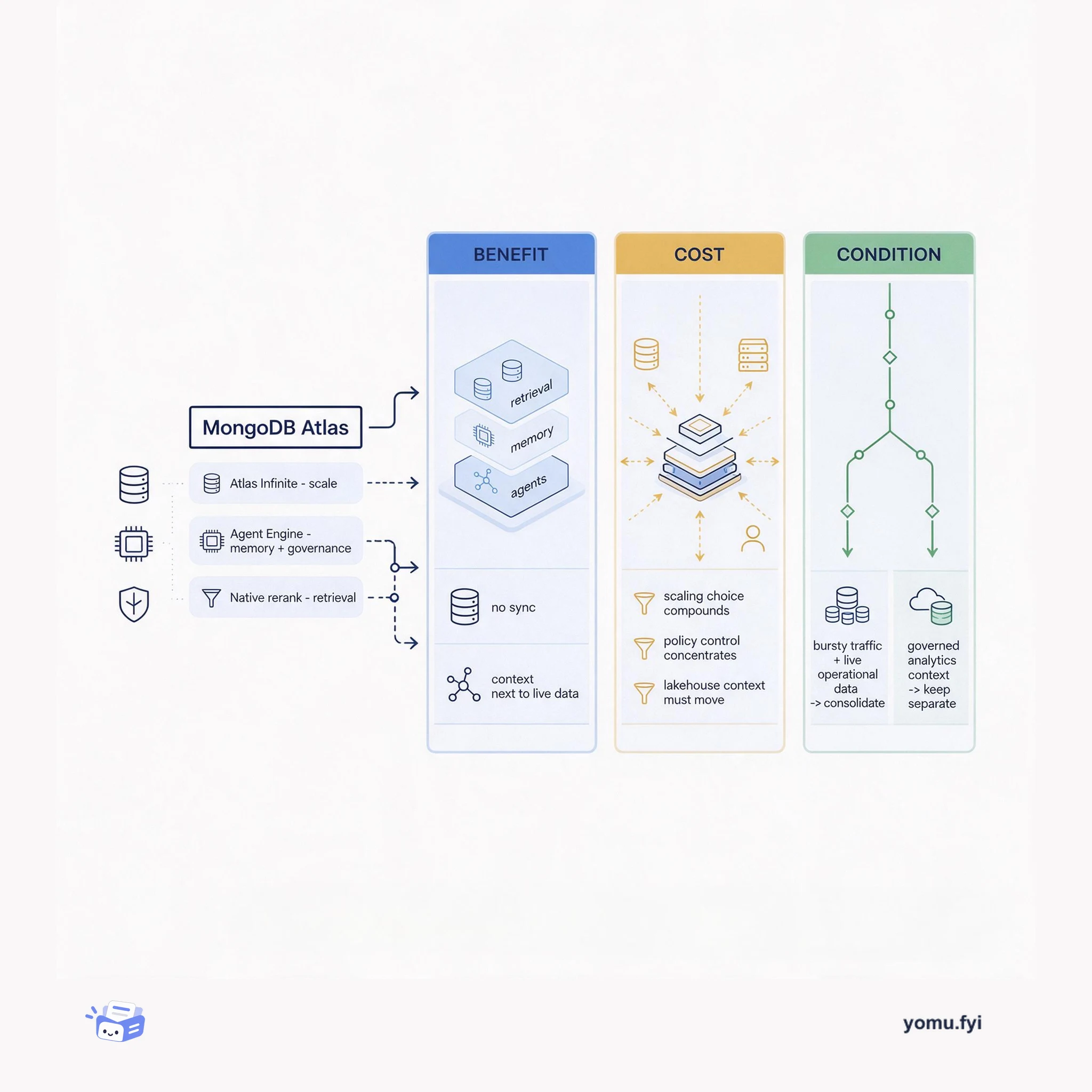
Indian organizations in regulated industries are modernizing legacy data infrastructures with MongoDB to achieve scale and compliance. Physics Wallah, serving over 7 million students, built a compliant multi-tenant payment platform on MongoDB Atlas using ACID transactions, Change Streams for audit trails, and native search. Flipkart uses MongoDB Atlas for high-throughput writes and real-time payment aggregation during mega sales like The Big Billion Days, with seamless horizontal sharding. IBS Software scaled three mission-critical platforms, processing billions of records and millions of searches daily with sub-100ms API responses and 99.99% uptime, while iTravel Cruise achieves 100,000 TPS at 5ms latency. Companies like Kore.ai and PineLabs use MongoDB Enterprise Advanced for on-premises deployments requiring high availability, strict security, and low-latency transaction processing.
 Clickhouse
LogHouse’s OpenTelemetry pipeline ingests 50 million events per second and stores 177 PiB of uncompressed data, but its initial agent-to-gateway design could not reliably absorb ClickHouse backpressure. In-memory queues caused instability during short-lived spikes or database outages, while local collector write-ahead logs made gateways stateful, slowed recovery, delayed fresh telemetry behind FIFO backlogs, and took about four hours to drain 1 TiB. The team rejected adding Kafka because operating a new tier-zero service across cloud regions was not justified for this use case, then designed a custom architecture using blob storage, the OTel failover connector, overflow notifications, and a catchup collector. In staging, failover redirected 120,000 events per second to S3 without changing gateway resource usage, and recovery resumed ClickHouse writes while the catchup collector drained the queue; the design scaled from 10 million to 50 million events per second, with added regional setup and less precise recovery visibility.