The post describes Intercom’s approach to maintaining app health in its App Store, inspired by a gardener tending individual plants in a Victorian garden. The main problem is that apps can become non-functional due to token expiration, third-party setting changes, or permission updates, all of which require customer action to fix. Intercom designed an app check system that requests the app’s status for each workspace, providing specific details about what is breaking and recommending two-click fixes to resolve the issue. Notifications to users with apps in unhealthy states are 2.5x more effective at generating active users than efforts to acquire entirely new app users. The key insight is that each app needs individual attention and tailored treatment, just as each plant in a garden requires unique care over time.
Approach / What changed
Intercom designed an app check system that requests the app’s health status for each workspace. The system provides specific details about what is breaking and directs users with two-click fixes. It sends email notifications to admins about unhealthy apps, bringing them to an app listing page with details and recommended steps.
Takeaways
1
Three main unhealthy states for apps are token expiration or revocation, third-party settings changes, and permission updates after a third-party launch.
2
The app check system improves customer engagement: notifications to users with unhealthy apps are 2.5x more effective at generating active users than acquiring new ones.
3
Treating each app individually, like a gardener tending each plant, was the best approach rather than applying uniform treatment.
FAQ
What are the unhealthy states for apps?
The three main unhealthy states are expired or revoked tokens preventing communication with the third party, changed third-party settings that the app cannot reliably handle, and permission updates required by a third-party launch. All three require customer action to fix.
How does the app check system work?
The system requests the app's status for each workspace where they are used. The app verifies functionality and responds with whether it is functioning and an informative message. Users are notified via email and can fix issues with two clicks.
How effective is the notification system?
Notifications to users with apps in unhealthy states are 2.5x more effective at generating active users than efforts to acquire entirely new app users.
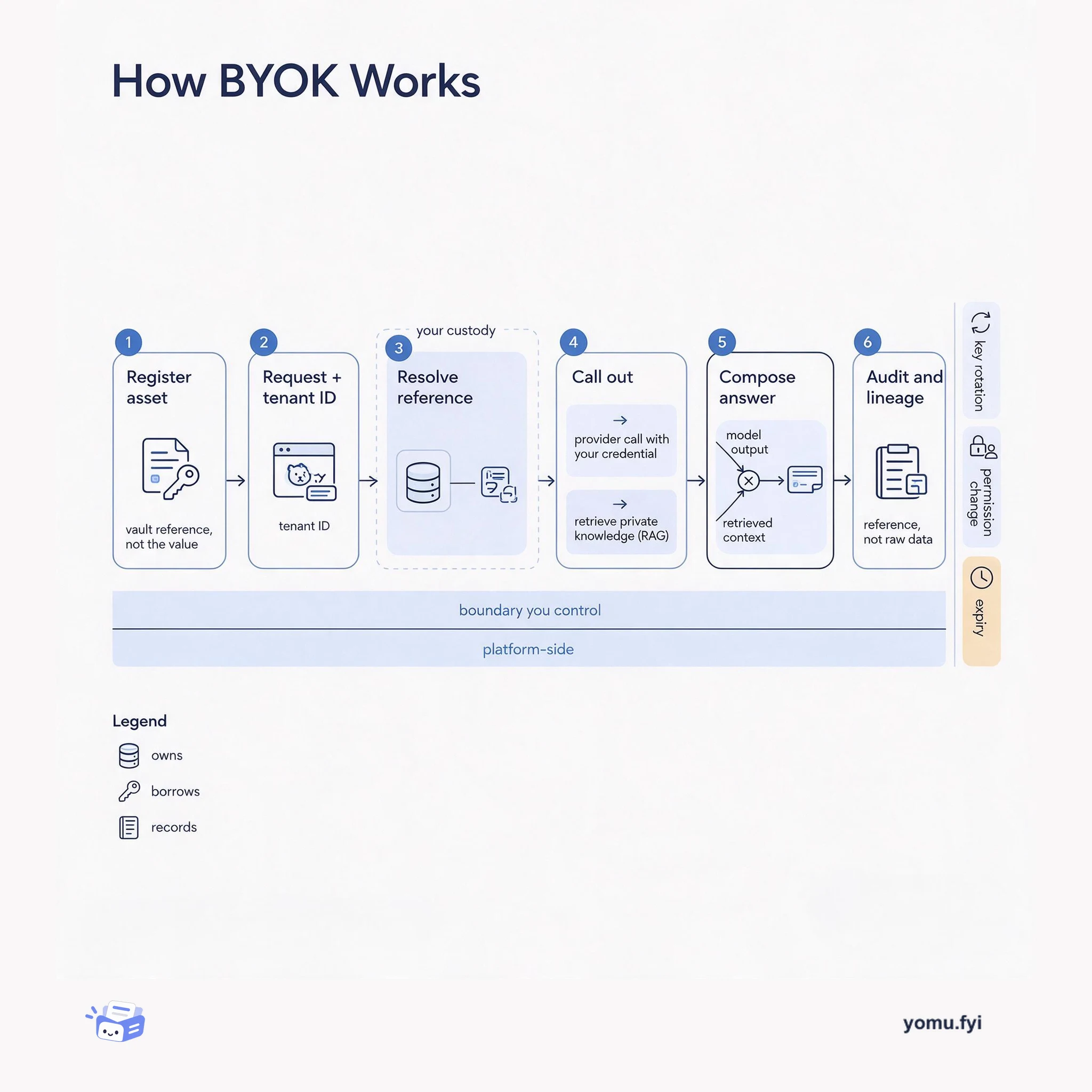
BYOK lets a system run on assets you supply — your model credential or your private knowledge — instead of the vendor's defaults. This walkthrough traces six steps from registration to an audited response.
Compare two mental models for brand: a static artifact (logos, guidelines, centralized control) and a living operating system (values, APIs, support, trust). See which choices fit your engineering team.
An app store is a distribution surface, a versioned contract, and a health loop between a platform and its developers. Here is how those parts fit together and why each one fails loudly if ignored.
API versioning as an architecture: requests enter through a version header, pass through a chain of reversible version changes, and reach controllers that only ever see the latest model.
Keep reading
Related reading
The Good Stuff
Paid picks we use ourselves. Links carry a referral code — a subscription through one earns us a commission at no extra cost to you.