Car Rental: A Search Layer, a Contract, and a Handover
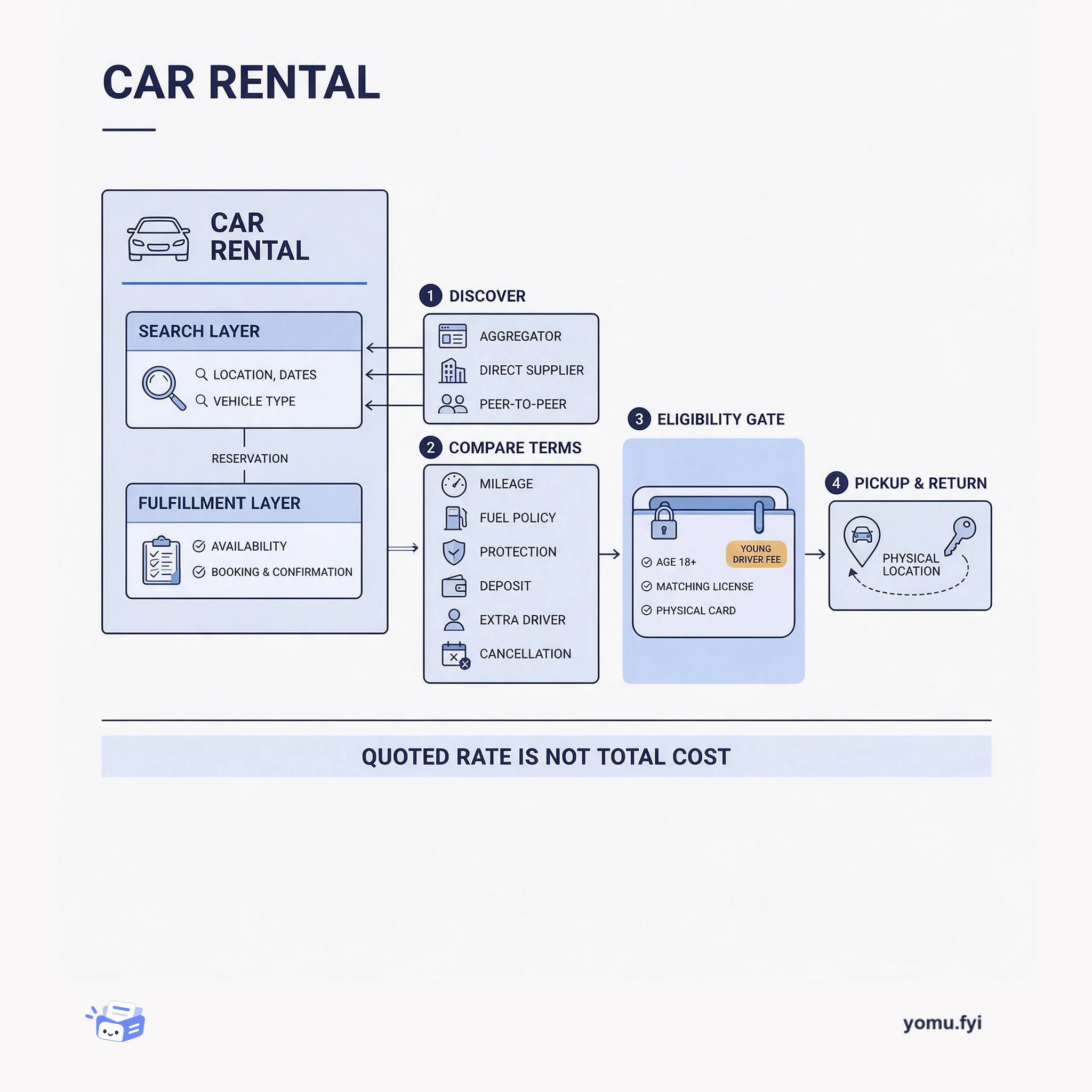
A car rental is a search layer over many fleets plus a contract enforced at the counter. This explainer maps its four parts and why the advertised daily rate never equals the total cost.
An app store is a distribution surface, a versioned contract, and a health loop between a platform and its developers. Here is how those parts fit together and why each one fails loudly if ignored.
An app store is more than a catalog page: it is where a platform exposes its extension points and where third-party developers accept a versioned contract. Four parts hang off that contract — a distribution surface inside the product, a catalog for discovery, a developer platform of APIs, webhooks, SDKs, and versioning, and a health loop that keeps installed apps working. Apps break for ordinary reasons such as expired tokens or changed third-party permissions that only the customer can fix, so targeted repair prompts often beat new-install campaigns. Reading the store as a lifecycle rather than a launch page makes versioning and app health the real product work.
Apps go unhealthy without any code change: tokens expire, third-party settings shift, or permissions get updated, and each of those usually requires the customer to take action. A well-run store performs an app check that requests each workspace's app status, names what is breaking, and recommends a two-click fix instead of surfacing a generic failure.
In Intercom's data, notifications to users whose apps were in unhealthy states were 2.5x more effective at generating active users than efforts to acquire brand-new app users. Each app also fails for its own reason, so tailored status detail and repair guidance beats a blanket upgrade campaign.
The posts behind it
 Jetbrains · · Announcement
JetBrains Marketplace now provides UI freeze reports for plugin authors, accessible from the Freezes tab after enabling Marketplace reporting via the JetBrainsMarketplaceErrorReportSubmitter handler in plugin.xml. Reports are grouped by error type, with each pile showing a representative report and a thread-dump excerpt that identifies threads involved, such as the event dispatch thread (EDT), helping spot recurring patterns. Full thread dumps captured every five seconds during the freeze are available, along with optional CPU snapshots and performance metrics, and comparing dumps across samples can reveal persistent operations. The analyze-freeze skill guides AI agents through investigating IntelliJ Platform thread dumps, focusing on the EDT, coroutine behavior, and common patterns like non-cancellable read actions blocking the UI, with suggestions for fixes. Before fixing, authors should check the plugin version, keep blocking I/O outside read actions, and test changes by repeating the operation and examining fresh diagnostic evidence.
 Intercom · · Announcement
The post compares building a developer ecosystem to creating a new country’s economy, requiring infrastructure, fair rules, and an efficient marketplace for trade. It cites a 2015 Deloitte report estimating Facebook’s 2014 platform effect at $29 billion and 660,000 jobs created by companies like King and BlaBlaCar, noting Facebook Platform launched in 2007. Intercom released its first developer APIs in June 2014 and has since added webhooks, OAuth, Bulk APIs, and SDKs for Ruby, PHP, Go, Java, Node, and Cordova. The company introduced new developer guidelines that emphasize innovation opportunities rather than restrictions, and built a new developer hub to simplify building integrations and apps. Intercom is exploring a marketplace to connect developers with customers who use Intercom, and over 50 integrations have been built; developers can join the Developer Program to get listed.
Intercom · · ExplainerThe post describes Intercom’s approach to maintaining app health in its App Store, inspired by a gardener tending individual plants in a Victorian garden. The main problem is that apps can become non-functional due to token expiration, third-party setting changes, or permission updates, all of which require customer action to fix. Intercom designed an app check system that requests the app’s status for each workspace, providing specific details about what is breaking and recommending two-click fixes to resolve the issue. Notifications to users with apps in unhealthy states are 2.5x more effective at generating active users than efforts to acquire entirely new app users. The key insight is that each app needs individual attention and tailored treatment, just as each plant in a garden requires unique care over time.
Intercom · · Problem & solutionIntercom introduced API versioning for their REST and Messenger Framework APIs, using their open-source Requisite library, enabling safe, frequent updates without breaking existing integrations. Previously, API changes required advance notice and coordinated migrations, which was unreliable and hindered iteration, so they conducted user research to identify friction points. The versioning system uses ‘version changes’ — single transformations that roll back a model change to a previous version, such as renaming user_id to customer_id, allowing controllers to always operate on the latest version and chain multiple changes. Developers can test isolated requests using a specific header and upgrade through the Developer Hub, with the ability to roll back immediately if something goes wrong. This design, inspired by Stripe’s approach, allows Intercom to ship changes more frequently and safely across REST API, Messenger Framework, and webhooks.
Intercom · · AnnouncementIntercom announced eight new features aimed at helping sales, support, and marketing teams manage volume and capacity more efficiently to increase conversions and grow their business. Custom Bots can qualify leads automatically, book meetings, and work 24/7 without code, connecting to the tech stack and accelerating sales cycles by delivering qualified leads when prospects are live. The new Intercom App Store offers over 100 apps for acquiring, engaging, and retaining customers, including Zoom Webinars, Content Showcase, Coda, and PieSync, along with a new Messenger framework and Developer Hub for building custom apps. Updated webhooks and APIs provide more flexibility to trigger actions based on conversation tags, check teammate availability with the Admins API, and run assignment rules at any point in a conversation. Other additions include downloadable conversation transcripts for both teammates and customers, and free developer workspaces for safe building and testing.
Intercom · · AnnouncementIntercom launched a Messenger apps framework in April 2018, opening its Messenger to third-party developers for the first time and enabling quick actions inside conversations. Over 600 companies are now in the early access program building apps, and nearly 100 apps are available in the Intercom App Store. The post highlights five new apps: Daily.co enables video calls with no downloads or account required, Pinpoint lets candidates apply for open roles from the Messenger homescreen, Sherlock uses engagement scores to send more targeted messages, JustCall Direct provides one-click phone calls logged in customer profiles, and Upscope offers one-click co-browsing with screen drawing. These apps integrate directly into the Messenger, reducing friction by bringing external tool actions into conversations, as 1 in 7 conversations already included links to other tools. Intercom encourages customers and partners to build their own apps using the Messenger framework, providing developer docs and early access.
Intercom · · AnnouncementIntercom launched a new Messenger home screen that replaces the previous utilitarian conversation list with a customizable app-based interface. The idea originated from observing customers building their own front-desk solutions and from internal experiments with knowledge base links that showed strong traction. The redesign was further motivated by data showing that 95% of conversation interaction occurs within 24 hours, making the old conversation list less valuable for returning users. The home screen hosts apps for self-service, sales, and support—such as article search, demo booking, Mailchimp subscriptions, Shopify order tracking, and Statuspage updates—and can show different apps for visitors versus signed-in users to avoid hard sells. This app framework was originally built for in-conversation use but was extended to the home screen, allowing businesses to tailor the Messenger as a versatile front desk that can be updated in under a minute.
More like this
A car rental is a search layer over many fleets plus a contract enforced at the counter. This explainer maps its four parts and why the advertised daily rate never equals the total cost.
A GPU-resident astronomy pipeline keeps every stage of image analysis — load, align, subtract, detect, review — inside GPU memory instead of round-tripping through the CPU.
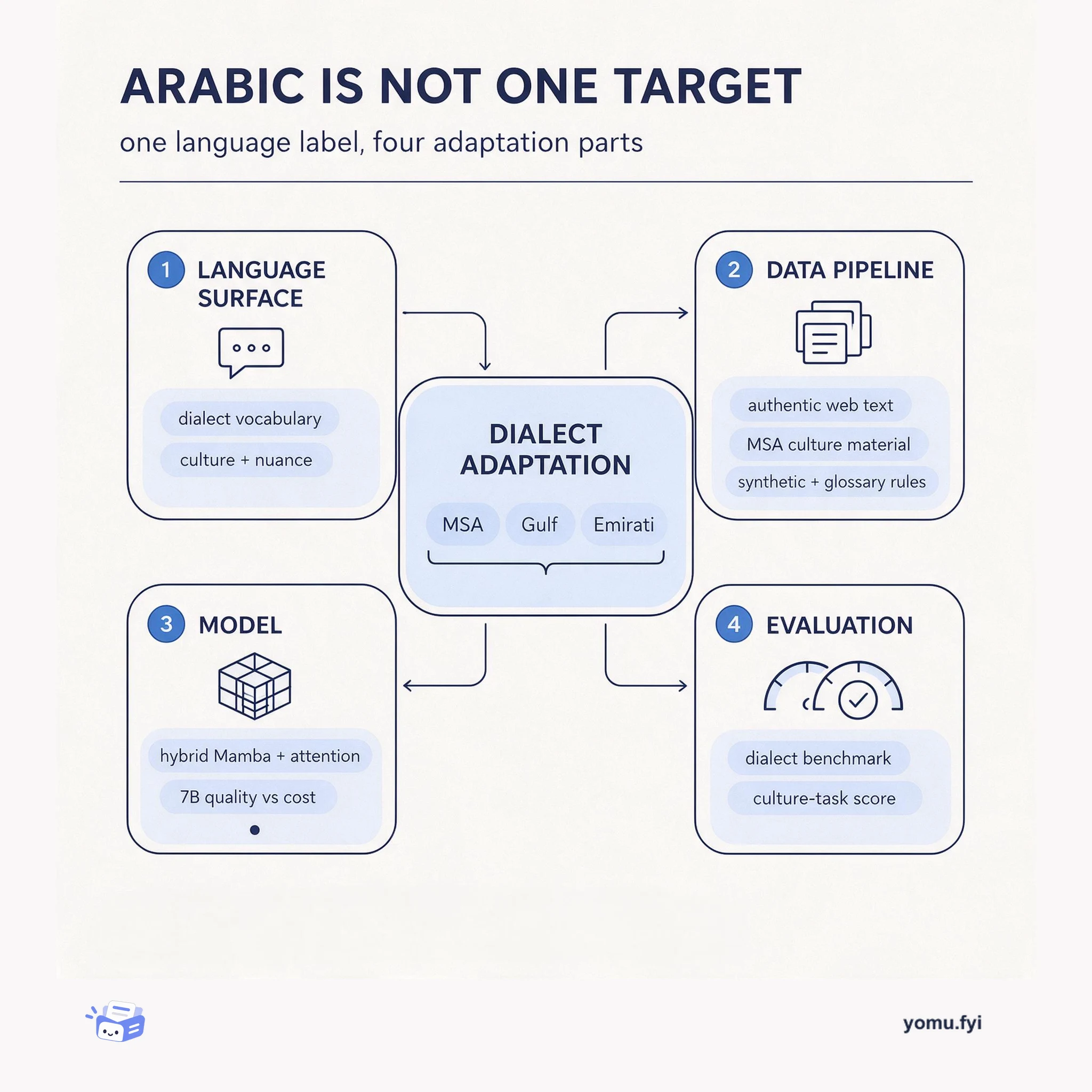
Arabic is not a single target for a language model. This explainer maps its four parts — dialect surface, data pipeline, model, and evaluation — so you can tell where an Arabic feature really succeeds or fails.
The Good Stuff
Paid picks we use ourselves. Links carry a referral code — a subscription through one earns us a commission at no extra cost to you.
One useful email. Unsubscribe anytime.