How to Build an ASL Gloss Workflow That Keeps Context
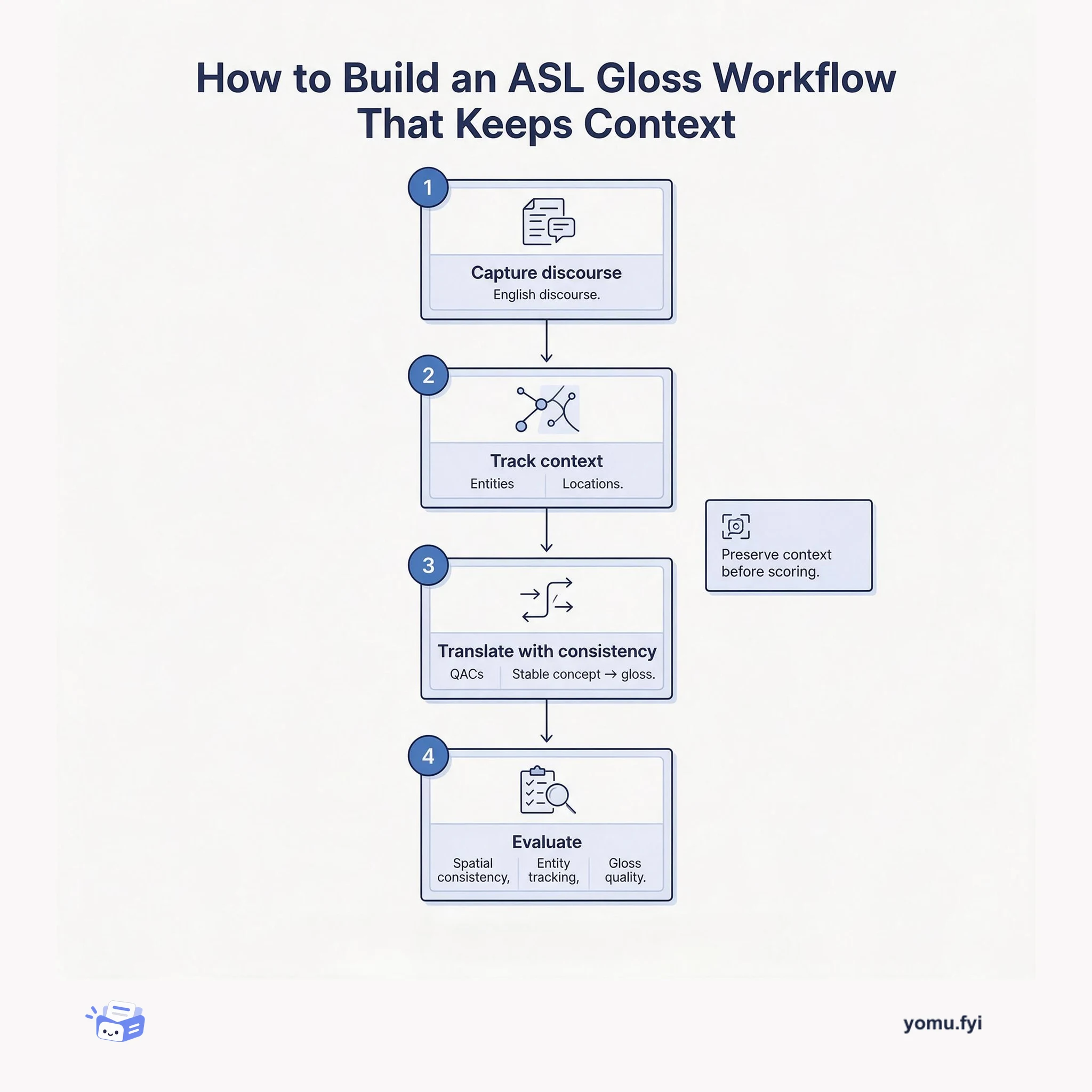
Learn a practical workflow for translating English discourse into ASL gloss while preserving spatial references, question-answer structure, and consistent concept-to-gloss mappings.
Loading…
Topic
483 posts about AI. Every summary links to the original.
See the idea
Learn a practical workflow for translating English discourse into ASL gloss while preserving spatial references, question-answer structure, and consistent concept-to-gloss mappings.
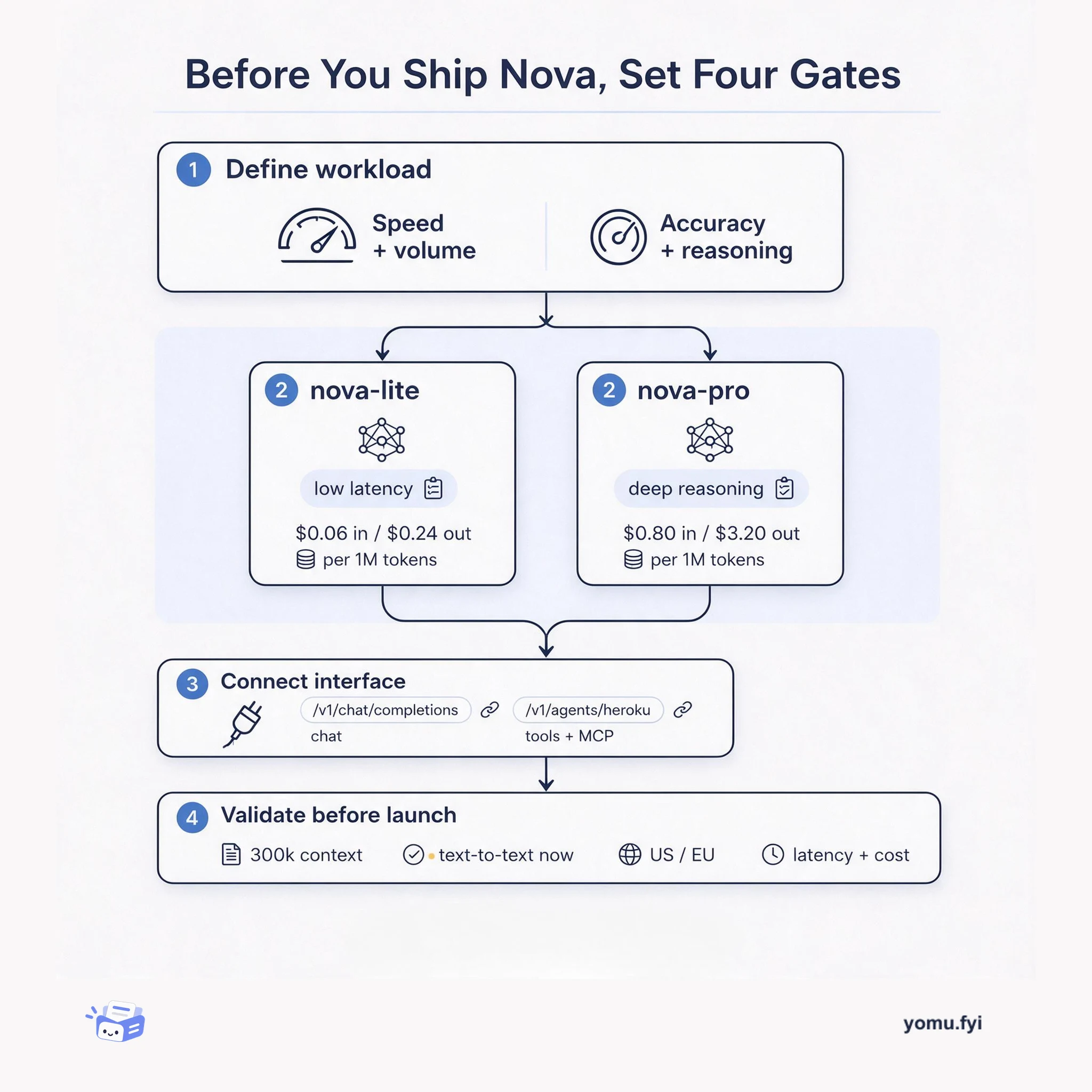
A practical checklist for putting Amazon Nova into an application: choose nova-lite or nova-pro by workload, expose tools, and verify context, modality, region, and cost constraints.
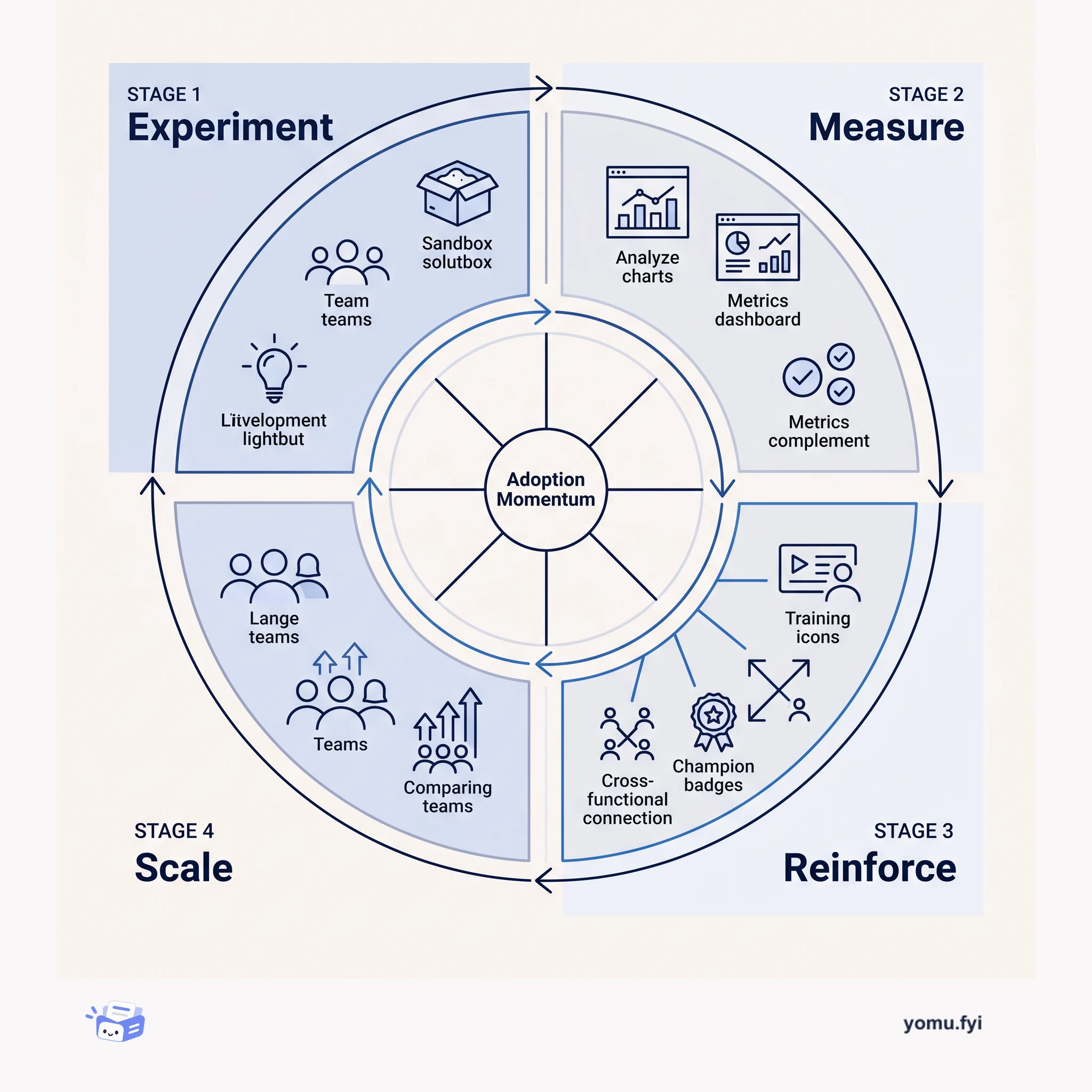
Adoption moves through experimentation, measurement, and reinforcement loops. Learn how leading companies build momentum from pilot programs into enterprise-wide habits and measurable business impact.
The Good Stuff
Paid picks we use ourselves. Links carry a referral code — a subscription through one earns us a commission at no extra cost to you.
Newest first
Business email compromise (BEC) uses social engineering and impersonation rather than malicious links, bypassing traditional secure email gateways that are blind to internal traffic and lateral movement. VIPRE developed Integrated Email Security (IES), a cloud-native solution on AWS that integrates directly with Microsoft 365 via APIs, eliminating the need for MX record changes. The solution uses multiple machine learning layers, including semantic similarity models, contextual language models, and dynamic behavioral analysis of links and attachments, running on AWS services such as Amazon ECS with NVIDIA GPUs. In production, VIPRE IES processes over half a million messages daily with P95 latency between 1.4 and 78 seconds depending on sandbox analysis, detecting approximately 1% of messages as BEC attempts. Deployment can be completed in minutes rather than days, providing immediate visibility into internal risks that traditional gateways miss.
The post describes design tradeoffs and workarounds encountered while building the open-source Bulk Executor tool for Amazon DynamoDB on AWS Glue. Core requirements included real-time local-script feel, scaling to hundreds of parallel workers without user infrastructure management, and easy command extensibility. AWS Glue was chosen for serverless parallelism and a built-in DynamoDB connector, but the connector simplified data types, losing distinctions like string set versus list of strings. Challenges included estimating costs for provisioned tables, handling job termination with ^C, and streaming output via CloudWatch Live Tail which samples events and delivers out-of-order. Solutions included a two-phase cost estimate for deletes, programmatic interrupt handling, writing large output to S3 with a preview, mandating point-in-time recovery for mutating commands, and using AI for testing and linting; the team also migrated from AWS Glue 4 to 5 and 6 for faster startup and 30 percent lower DPU costs.
JetBrains Academy is offering free Youth Clubs in mathematics, AI, and coding for school students in 2026-2027, with registration open until October 31 for the Math and AI clubs and the Coding Club starting October 22. In-person JetBrains Coding Cups will be held in Cyprus, Poland, and Serbia for students aged 13-19, and the Cyprus Programming Challenge returns for its fourth edition on November 8. The Youth Coding Challenge on November 29 features Junior and Senior leagues, with winners potentially invited to advanced programs like the Youth Coding Club or the ACTS camp. The ACTS 2027.1 camp in Cyprus from March 15-25 offers tracks in Competitive Programming, Software Engineering, and Artificial Intelligence, with the AI track by invitation only for national teams from five countries and 20 students from Cyprus. Participants develop skills through practical assignments and challenging problems alongside like-minded peers.
Gemini 4 Argon is a new model that achieves a step change in physical understanding, code generation, and visual-semantic reasoning for robotics. It scores 87% on the Embodied Reasoning (ERQA) benchmark using pure reasoning, outperforming other frontier models. The model can be applied across the entire robotics lifecycle, including robot control, Real2Sim reconstruction, physical understanding, and research self-improvement. Examples include controlling a Spot quadruped to practice foot-pedal trash bin disposal in MuJoCo before executing, zero-shot control of a robotic arm, steering a video world model to rearrange Scrabble tiles, reconstructing simulation twins from robot camera feeds or hand-drawn sketches, and reproducing robotics papers as self-contained MuJoCo WebAssembly browser labs with a single prompt. Argon also performs agentic multimodal hindsight labeling for dexterity understanding and dense value functions, and can self-improve by diagnosing failures and optimizing speed, bridging coding, visual perception, physics simulation, and embodied control toward physical AGI.
At OCP Summit 2026, Meta unveiled next-generation open networking infrastructure for AI, including IcePack, its first liquid-cooled network rack, and IceCube, a 102.4T switch blade delivering 128×800G non-blocking capacity. The Flattened Planar Fabric (FPF) introduces a multiplane scale-out design where each GPU connects via eight independent 100G links to different switches, reducing latency and enabling larger clusters. Meta also shared its BAG super-spine for multi-site aggregation and Tahan, an Ethernet-based 51.2T scale-up switch for MTIA 300 systems. The company launched the Open Switch Platform Architecture (OSPA) initiative with Microsoft and Alibaba to standardize switch platform hardware and software interfaces. Additionally, Meta announced open-source implementations of MetaRoCE, its RDMA transport protocol optimized for AI cluster networks over Ethernet.
Meta built a system that aggregates fragmented idle inference capacity from a globally constrained fleet into a shared opportunistic pool to enhance ads recommendations. Idle capacity arises from four mismatches: peak provisioning with demand variation, model development timing with capacity delivery, regional resource ratios, and accelerator types. Two elasticity levers exploit this preemptible, volatile capacity: Rank More Ads increases candidates evaluated by ranking stages, using both CPU and accelerator surplus, and Serve Better Models routes more requests to a more powerful model, using accelerator-only surplus. The system protects baseline serving through isolated routing, minute-scale feedback loops that adjust candidate volume and model coverage, and millisecond-scale value-aware load shedding that removes lower-value work during sudden preemption. This allows optional work to expand and contract with opportunistic capacity, driving better ad relevance and advertiser outcomes without requiring additional capacity orders.
The post explains that hiring has become exponentially harder due to a shift to an employer-led market, new roles in machine learning, and AI-generated resumes that erode trust on both sides. A recent Staff Data Scientist posting received over a thousand applications in 24 hours, many with identical formatting and links to nonexistent profiles. Traditional resumes no longer provide trusted information, and AI tools like ChatGPT produce generic answers that obscure genuine candidates, forcing recruiters to add more stages to hiring processes. Stack Overflow is resurrecting its Developer Story feature to let technologists showcase their work, expertise, and impact with verifiable details, including personal projects and career achievements. Developer Story aims to give recruiters objectively verifiable insight and help candidates stand out from the crowd, fixing a broken part of the hiring process.
JetBrains Academy announces the Build Your Game Challenge for October, where participants complete the Build a Game With an AI Coding Agent course, add custom features, and submit their projects for prizes. The challenge runs from October 12 to October 23, with community voting and a JetBrains jury evaluating submissions on creativity, originality, gameplay, and player experience. Prizes include $400 and $250 for Community Choice, $150 for a Jury Award, and four $50 Jury Awards for standout projects, all as digital gift cards. Participants can use Junie Lite in JetBrains Air for free to build their game, or switch to a more capable model for complex mechanics. Submissions and voting open on October 19 via Discord, and winners will be announced on October 28.
Cloudflare introduced Clef-omni, a decision model that natively handles audio, video, image, and text inputs in a single pipeline, built on a Qwen3-Omni mixture-of-experts backbone with text-to-speech components removed. Unlike cascading pipelines, it directly embeds media into a unified sequence and uses two-stage attention routing with lexical grammar to compute confidence scores, trained by freezing the backbone and applying LoRA adapters with label-smoothed cross-entropy and Brier score calibration. The company also cut Clef-flash’s price to $0.038 per million input tokens while reducing its context window from 64k to 24k for the hosted version, based on usage data showing only 0.24% of requests exceed that limit. Clef’s hosted version received speed optimizations at the infrastructure layer without new model weights, and Clef-omni is available open-weight on HuggingFace. Benchmarks show Clef-omni scoring 98.2 on BFCL case exact and 92.7 on API-Bank accuracy, with median text-only decision latency around 130 milliseconds.
Conversational support is a digital-first, messenger-based approach to resolving customer queries, enabling real-time or asynchronous communication and preserving context across interactions. By combining custom chatbots and automation, it streamlines support workflows and reduces repetitive tasks. A 2021 Forrester study commissioned by Intercom found messaging-based support became the second most used channel, with 60% of leaders reporting improved customer retention and 58% reporting increased efficiency. The approach benefits multiple teams: sales and marketing can capture qualifying customer data upfront, such as company size and plan tier, while product teams identify trends from support topics for better development decisions, and customer success teams deliver personalized experiences. For agents, automating low-value tasks like password resets reduces burnout, improves job satisfaction, and lowers turnover costs from hiring and training replacements.
State-sponsored adversaries have gained footholds in critical infrastructure such as power grids, water systems, and transportation networks, while open-source software faces increasing vulnerability exploits. To support defenders, Anthropic launches the Cyber Mission, a long-term commitment that includes the Critical Infrastructure Defense Program and OSS Scanner. The Critical Infrastructure Defense Program provides frontier Claude models, on-site engineers, and threat research to trusted providers like Accenture, CrowdStrike, and Rockwell Automation to secure operational technology. OSS Scanner offers open-source projects free regular security scans from Anthropic’s strongest models, and the expanded Cyber Verification Program gives more defenders access to advanced cyber capabilities. The mission aims to reduce cyber risk over years through collaboration, but challenges remain as verifying and fixing vulnerabilities is slow and depends on people.
The NVIDIA KGMON team placed second in the KDD Cup 2026 Data Agents competition by building a reliable agent system around a small, fixed LLM. The system constrained the agent’s action space through a harness that normalized data access by converting CSV and JSON files into SQLite tables, exposed a limited set of custom functions for schema inspection, SQL queries, and answer writing, and seeded the agent with schema context before analysis. Documents and videos were handled through targeted tools like prose_helper for extracting rules from documents and keyframe extraction with aligned transcripts for video evidence, keeping the main LLM context focused. The team emphasized inspectability by recording execution traces and running repeated attempts, using evaluation and trajectory review to identify failures and refine the harness. The key lesson is that reliability for data analytics agents often comes from the harness design, not the model’s capabilities.
Intercom launched Fin, an AI chatbot powered by GPT-4 and fine-tuned for customer support, combining existing Resolution Bot technology with the new model. Fin answers questions solely using content from a business’s existing help center, reducing hallucinations by constraining its knowledge base and refusing out-of-domain queries. It requires minimal setup, automatically ingesting articles from Intercom or Zendesk help centers, and updates responses when articles change. Fin links to source articles for verification, handles multi-turn conversations, and seamlessly passes unanswered queries to human support representatives. Limitations include potential inaccuracies, high cost of GPT-4, and latency of 10 or more seconds, but Intercom expects improvements, is exploring configuration settings for creativity tradeoffs, and is rolling out a limited beta with a waitlist.
The article provides a step-by-step framework for support leaders considering a switch to a modern, AI-powered customer service platform. It begins by guiding readers to identify push factors, such as an incomplete platform or low ROI, and pull factors, like speed and advanced AI capabilities. The guide then covers how to address team resistance by generating excitement and demonstrating how the new tool solves pain points. It details planning steps including securing executive sponsorship, planning data migration for user information and conversation history, and communicating the change internally. The final step focuses on monitoring the switch by evaluating which traditional KPIs remain relevant and how AI impacts metrics. The framework aims to equip teams to transition successfully to a platform that enables a seamless human-AI partnership.
Customer service metrics must evolve as AI chatbots become the first point of contact for support teams. Traditional metrics like first response time and average handle time now need separate reporting for bot and human interactions, since AI delivers near-instant responses and handles simpler queries. Cases handled loses relevance as support reps focus on more complex issues and tasks such as help center content creation; automated resolution rate becomes a key productivity measure. New emerging metrics include bot involvement rate, bot engagement rate, and AI-powered conversational insights that analyze customer interactions at scale. Leaders should reset SLAs and benchmarks while tracking both bot and human performance to get a true measure of success, as 69% of support leaders plan to increase AI investment.
Intercom has launched Fin, an AI chatbot powered by OpenAI’s GPT-4 and Intercom’s proprietary technology, now available to all customers. Fin ingests existing support content to resolve up to 50% of queries, providing answers constrained to approved materials to minimize hallucinations. The bot is designed to be trustworthy, controllable, and seamless, with features like custom actions, audience targeting, and the ability to hand off complex queries to human agents. Fin is priced per resolution, charging only when a query is successfully resolved without human escalation. Upcoming features include multilingual support in 43 languages, integration of conversation data, and email as a channel.
The post examines whether AI-generated code challenges traditional notions of code quality, especially in game development where performance, stability, and security are critical. It defines code quality across six dimensions: correctness, performance, stability, security, maintainability, and reusability. The author notes that while 95% of Unity developers use AI, AI code produces 1.7x more logic errors and more security issues than human code, though the overall issue rate is comparable. The proposed solution is to pair AI code generation with deterministic static analysis tools like Qodana, which can catch issues across all six quality dimensions. Studies cited show that combining static analysis with LLM calls reduces token usage by 72–92% and leads to 33% fewer vulnerabilities in master branches. The post demonstrates this workflow using Qodana integrated with GitHub Actions and IDE hooks that force AI agents to reformat and lint generated code.
JetBrains released a report on the state of CI/CD in 2026, drawing on four surveys including the Developer Ecosystem Survey 2026 and the State of CI/CD Tools Survey 2026. Among DevOps respondents, 83.4% run CI/CD pipelines. Self-hosting remains strong: 72.8% run their primary system on premises or self-managed cloud, and 30.5% use on-premises installations, a five-year high. AI is used by 48.8% of organizations for at least one CI/CD task, but only 8% integrate AI steps directly into builds; 28% interact via MCP or agent skills versus 10% via built-in assistants. The report covers popular tools, reasons for multi-platform use, switching factors, and barriers to AI adoption.
AI agents in production often pass health checks while silently failing at real tasks, such as confirming a seat without checking availability. Google and ADK released AQuA (Ambient Quality Agent), a sidecar system that continuously sweeps production agent trajectories from Cloud Trace, Cloud Logging, or BigQuery outside the request path. AQuA samples up to 1,000 recent sessions, grades each against a developer-defined goal and a nine-point breakdown checklist using a single-pass judge (or optional Gemini AutoRaters), clusters failures by mechanism, verifies clusters with a second model, and tracks them in BigQuery. Developers can trigger root-cause analysis that reads failing trajectories alongside the immutable deploy-time source snapshot, citing exact code lines without auto-applying edits. The system runs unattended, sweeps after each deploy or on demand, and produces verified failure clusters to feed back into the inner development loop, solving quality degradation that standard health checks miss.
When an LLM system makes decisions that matter, Level 4 safety and governance requires four disciplines: layered guardrails, PII handled at boundaries, an immutable audit trail, and scoped memory. Guardrails are independent layers arranged in a pipeline—input, grounding, output scrub, verification, judge, and confidence routing—each with a simple contract, and they fail closed so an error blocks the request. PII is handled at every boundary by classifying fields—unknown defaults to PII, secret never persisted—and redacting or hashing before crossing, storing only an HMAC hash in the audit ledger. The audit ledger is append-only, tamper-evident, and written as the final step of each decision, making past decisions traceable with a one-row query. Memory is split into seed (shipped config) and runtime (earned state); clear_state purges only runtime, returning behavior to baseline, and learning flows through a reviewed merge into seed.
The best engineering reads, once a week.