How to Build an ASL Gloss Workflow That Keeps Context
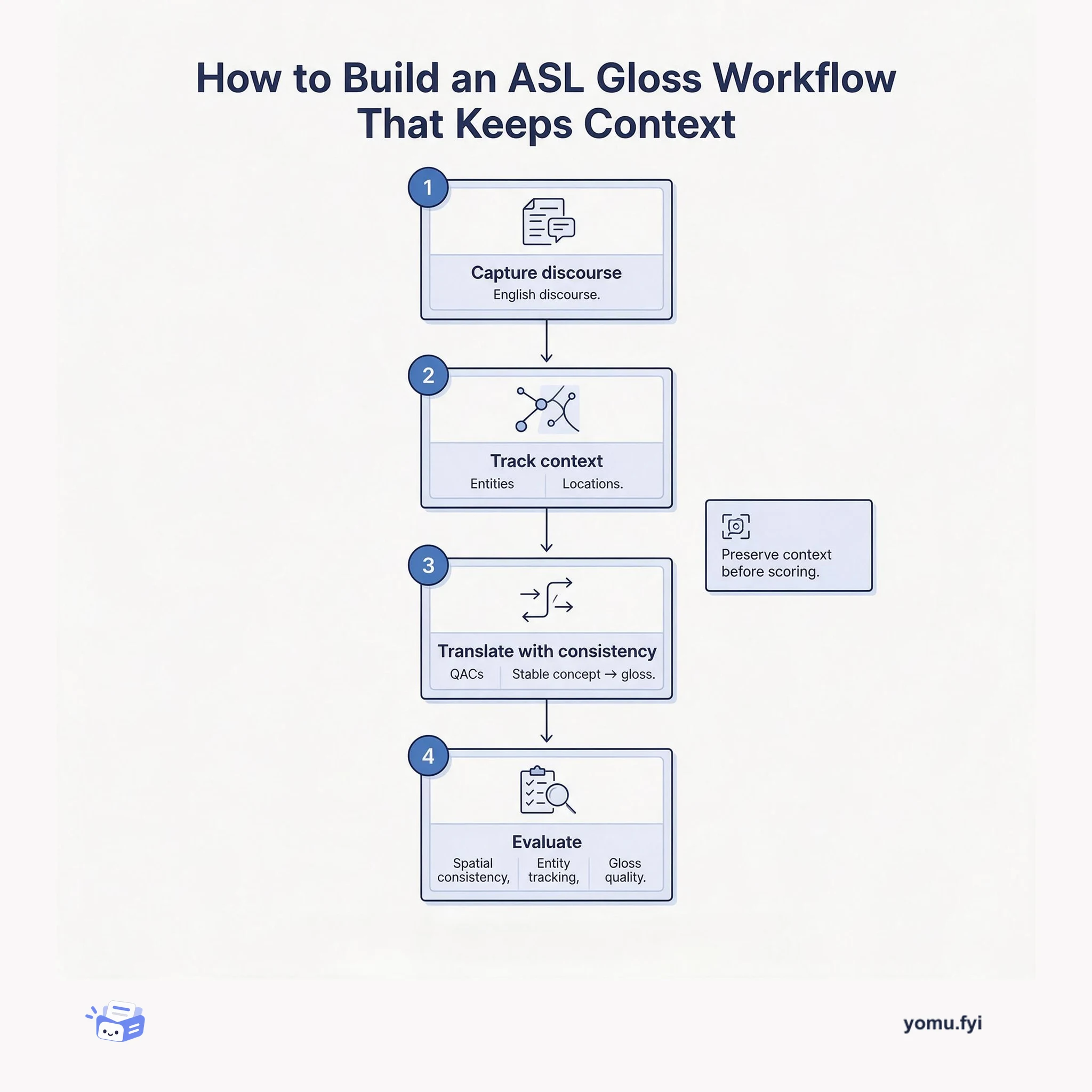
Learn a practical workflow for translating English discourse into ASL gloss while preserving spatial references, question-answer structure, and consistent concept-to-gloss mappings.
Loading…
Topic
483 posts about AI. Every summary links to the original.
See the idea
Learn a practical workflow for translating English discourse into ASL gloss while preserving spatial references, question-answer structure, and consistent concept-to-gloss mappings.
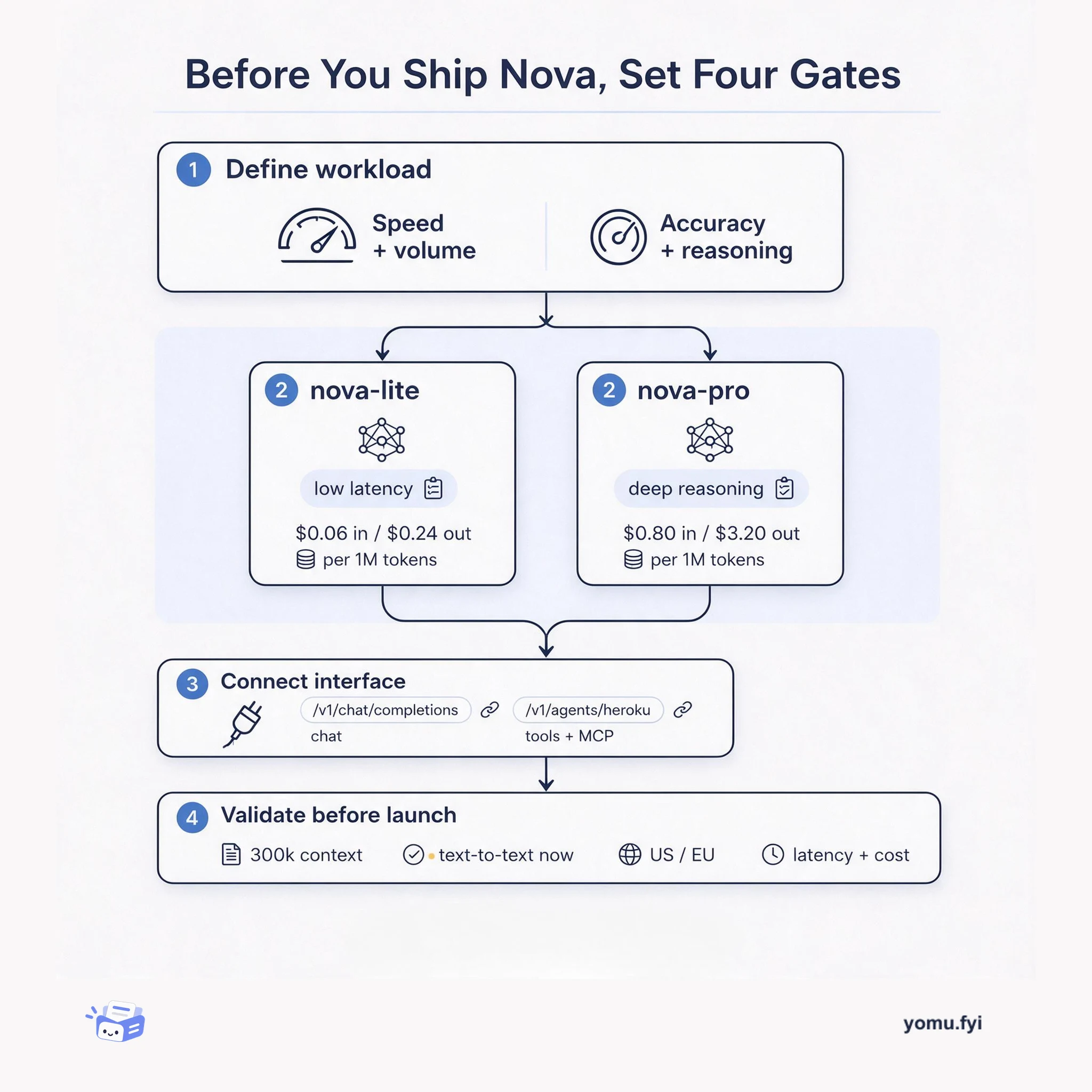
A practical checklist for putting Amazon Nova into an application: choose nova-lite or nova-pro by workload, expose tools, and verify context, modality, region, and cost constraints.
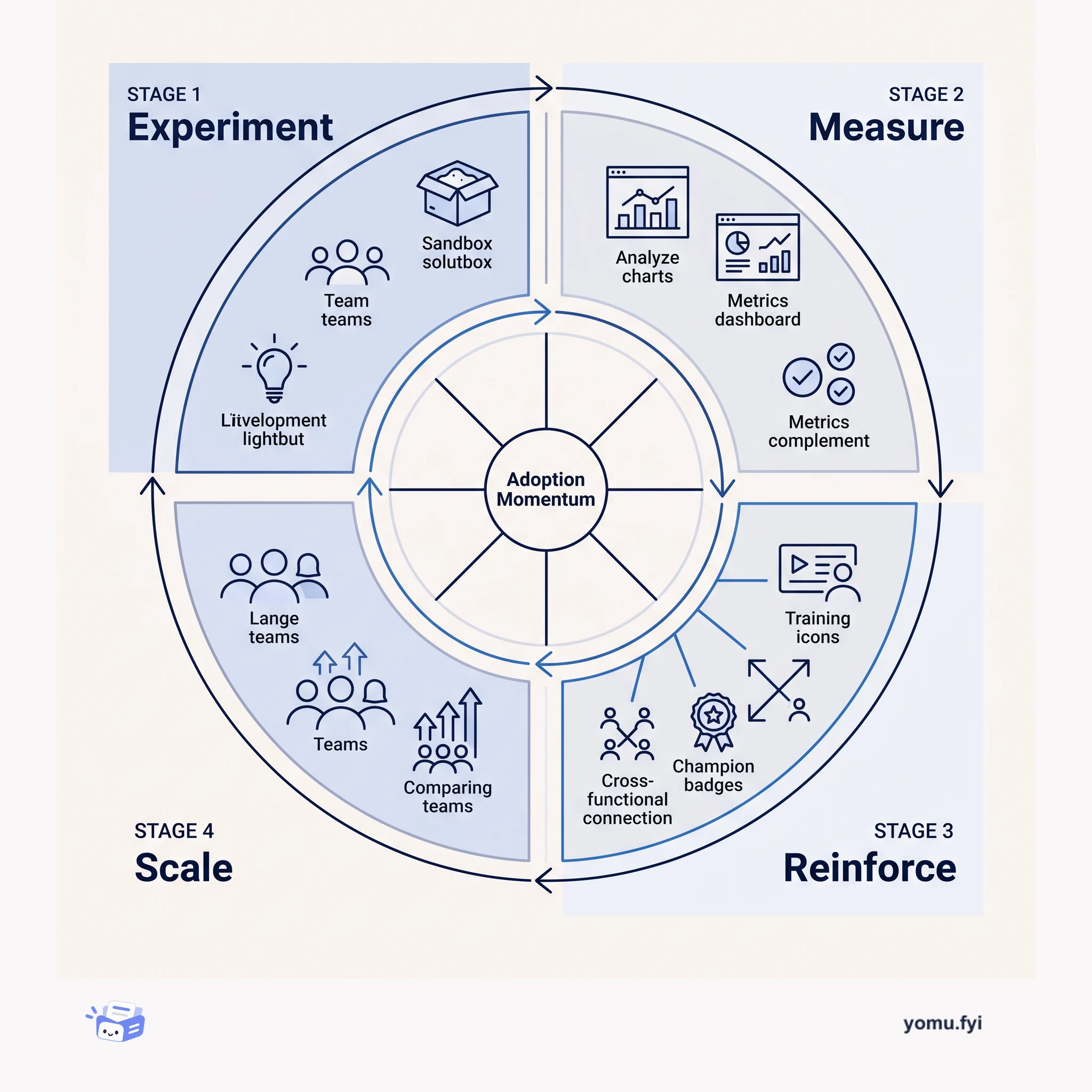
Adoption moves through experimentation, measurement, and reinforcement loops. Learn how leading companies build momentum from pilot programs into enterprise-wide habits and measurable business impact.
The Good Stuff
Paid picks we use ourselves. Links carry a referral code — a subscription through one earns us a commission at no extra cost to you.
Newest first
NVIDIA Nemotron 3 Diarization is an open-weight, 100M-parameter model that ranks #1 on VoiceArena’s Diarization-Bench leaderboard with a 14.72% Diarization Error Rate (DER). It classifies who spoke when in conversations, handling overlapping speech and supporting up to eight speakers across live and recorded audio. The model uses a Sortformer approach with arrival-order speaker labeling, a 31-layer Transformer encoder, and two memory mechanisms for streaming inference. It accepts 16 kHz single-channel audio and outputs a floating-point tensor of speaker-activity probabilities at a configurable time step. Developers can combine its timestamps with automatic speech recognition to produce speaker-attributed transcripts, with recommended input-buffer latencies ranging from 0.32 to 30.4 seconds.
Dropbox has learned that deploying AI at scale requires examining workflows end to end, addressing new bottlenecks like too many code reviews or infrastructure strain. The company uses a framework measuring speed, effectiveness, quality, and impact, with proxy metrics including pull request throughput and change failure percentage. Dropbox reports around 70% AI-generated code, comparable to top technology peers, and its pull request throughput ranks in the top 5% of a custom benchmark while change failure percentage is at the 75th percentile. The company connects AI token usage to engineering value through its internal agent service Nova, and it uses ground-up initiatives like boot camps and aligned incentives to drive adoption. Human skills like problem solving, judgment, and leadership become more critical as AI lowers the cost of producing software, and Dropbox aims to extend AI workflows beyond engineering to product, design, and customer experience teams.
Probe guidance, a novel method for guiding flow matching models, is introduced. It uses the frozen internal states of an existing diffusion model to construct a guidance signal, operating on a similar principle as autoguidance but removing the need for an additional forward pass at inference time. The method provides a reliable path ensuring the weak and strong models share similar dynamics. Probe guidance sets a new state-of-the-art performance on unconditional generation when benchmarked on continuous diffusion language models. Applied to a 1.7B diffusion language model, it consistently improves multiple choice question answering benchmarks.
Cursor launched two bots for the last mile of shipping code: Rollouts and Security Review. Rollouts watches every change as it deploys and reports health per environment, with verdicts of verified healthy, regression detected, or inconclusive. It reads the diff and systems a pull request touches, writes a monitoring plan as a PR comment, and tracks deploy events per environment. Security Review reads every pull request in the context of the codebase and posts one review comment reporting exploitable bugs, including injection, authentication bypasses, and secrets. Both bots are available today on Teams and Enterprise plans, with usage credits for the next 10 days.
Twilio and Ciptex hosted the Conversations in the AI Era meetup in Manchester on September 3rd, 2026, drawing developers, tech leads, and founders from the local scene. Darragh O’Connor demonstrated using a SIP trunk to connect callers directly into a livestream, emphasizing solving the problem with the simplest tool. Matthew Duggan of Ciptex presented an architecture where AI and human agents share conversation state and tools, treating handoff as a change of ownership rather than a recovery path. Paul D’Ambra of PostHog discussed how cheap code generation made reviewing code the bottleneck, leading them to build AI review agents that substantially dropped their revert rate. The next meetup is scheduled for November 4th, 2026.
AI analytics applies AI and machine learning to data analysis, enabling natural-language queries and automated insights without manual query-building, shifting from retrospective dashboards toward agentic investigations. Unlike traditional BI, which requires users to navigate predefined dashboards and filters, AI analytics systems understand intent, determine relevant data and business context, and can conduct multi-step investigations on behalf of the user. A key challenge is that AI analytics only works when grounded in governed data: without shared metric definitions, authoritative sources, and permission-aware execution, the system produces untrustworthy results. Trust in AI analytics is a system property, not a model property; it requires governed data, shared business context, permission enforcement, and verifiability of queries and calculations. Better AI models do not eliminate the need for business context; as AI becomes more autonomous, semantic definitions and governance become more critical.
Connected vehicles face intermittent connectivity in tunnels, rural roads, and underground garages, yet drivers expect reliable AI assistance during those moments. The post argues that offline capability is a requirement, not a fallback, for trustworthy in-vehicle AI. It proposes three principles: design for the moment of need, treat vehicle knowledge as an evolving product asset, and separate availability from connectivity. A reference architecture uses ObjectBox for local persistence and synchronization with MongoDB Atlas, which provides the cloud foundation for shared knowledge and updates. The enduring pattern is to keep critical interactions available at the edge while using the cloud for scale, coordination, and continuity when connectivity returns.
BIRD is a research framework that converts five 2D perspective drawings into a proportionate, dimensioned 3D building envelope. It uses a dual-branch CNN to separate architectural line segments from noise, a text recognition model to scale them to real-world inches, and a wrapping algorithm to fold the elevation views around the floor plan. The framework achieved a median accuracy of roughly 93% across complete building plan sets from small residences to a multi-story apartment complex. The proposed deployment on MongoDB Atlas stores each project as a single JSON document containing all drawings’ segments, corrections, and final geometry, with S3 for image storage and Atlas Stream Processing for event-driven workflow coordination. MongoDB Search and Vector Search with Voyage AI embeddings enable full-text and semantic search over past projects, allowing drafters to start from corrected models of similar builds.
The UK AI Security Institute (AISI) has begun using EvalEval’s Every Eval Ever (EEE) schema and Evaluation Cards platform to openly share LLM evaluation results. This collaboration, stemming from a joint workshop at NeurIPS 2025, aims to make benchmark results more reproducible by providing standardized configuration and context alongside verified scores. AISI released results for five benchmarks—HealthBench, FrontierMath, Humanity’s Last Exam, SWE-Bench Pro, and Terminal-Bench 2.0—across six frontier models, plus two cyber evaluations using a partially overlapping model set. The release accompanies a paper studying how inference-time compute and evaluation protocol affect performance, revealing that models continued solving tasks when given correctness feedback. By adopting a shared reporting schema, evaluators can compare findings across studies and understand how setup choices influence reported performance, while EvalEval invites model developers, evaluation creators, and researchers to contribute to the shared infrastructure.
Amazon and Stanford University have launched the Stanford and Amazon Research Initiative, a formalized framework to advance research in AI, energy, and healthcare. The initiative builds on a deep relationship where currently more than 10 teams across Amazon fund active research and PhD fellowships at Stanford, spanning humanoid robotics, post-quantum cryptography, causal measurement science, and AI-driven radiology. It aims to accelerate the path from breakthrough research to real-world solutions that benefit society at large and broaden participation from diverse scholars. Focus areas will leverage strengths in artificial intelligence, machine learning, automated reasoning, and health, supported by Amazon’s cloud computing and AI services. The collaboration includes joint research projects, PhD fellowships, and interdisciplinary symposia, and was announced at a Stanford event with AWS CEO Matt Garman and Vice Provost David Studdert discussing the impact of university-industry collaborations.
Monoclonal antibodies are a mainstay of biopharmaceutical development, with over 100 FDA-approved drugs and established manufacturing and regulatory pathways, yet conventional discovery is costly and slow, typically taking six to twelve months from target to lead candidate. AI promises to make antibody development cheaper, faster, and more flexible by designing and characterizing therapeutic antibodies computationally, but scientific questions remain. Development hinges on three factors: the best binding site on the target, which candidates bind most tightly, and whether candidates can survive manufacturing and the clinic. Predictive models for each factor do well on familiar targets and assays but considerably worse on unfamiliar ones, a gap that in-distribution benchmarks have made difficult to measure. Three papers from Amazon Bio Discovery’s science team address research questions about each factor, with methods integrated into the AI-powered application that connects biological AI models with lab services.
Dropbox has launched a modernized API documentation site at https://docs.dropboxapi.com, rebuilt to make integration faster and more intuitive. The new documentation features interactive API testing that lets developers set parameters, issue API calls, and view real responses from the Dropbox API directly in their browser without switching tools. An embedded AI assistant offers instant help with endpoint questions, troubleshooting, and code examples, while the documentation integrates with MCP (Model Context Protocol) so AI tools like Claude Code and Cursor can access up-to-date API information. Through the MCP server at https://docs.dropboxapi.com/_mcp/server, developers can connect their AI assistants to answer questions, explore the API, and assist with integrations using information directly from the docs. The update delivers a clean, responsive, searchable interface that brings endpoints, types, schemas, and related documentation together, with improved navigation, and provides comprehensive information including detailed error responses, type definitions, and full request/response schemas.
Anthropic is partnering with Accenture’s specialist AI business, Faculty, on independent evaluation of frontier AI, advancing a commitment to embed evaluators within Anthropic. The work will cover model evaluation and red-teaming, alignment assessments, and testing safeguards, informed by Accenture’s experience deploying AI across industries. Anthropic and Accenture each expect to invest at least $1 billion in building capacity over five years, although operating details, access standards, reporting practices, and funding models remain unsettled. Embedded evaluators would work inside AI companies with employee-comparable access to observe training, follow development and deployment decisions, speak with staff, verify safety commitments, identify blind spots, and report incidents; Anthropic says its partnership is non-exclusive and that model safety remains its responsibility.
JetBrains presents the AIDEs Framework as a model for understanding how AI development tools evolve, rather than trying to track every market change. The post describes a progression from single-line completion through multiline completion, IDE chat, AI code editors, agentic development environments, and cloud-based agents. It defines an Artificial Intelligent System as a system that demonstrates intelligence in helping users achieve goals, and an Artificial Intelligent Development Environment (AIDE) as an AIS for creating software; intelligence may come from deterministic heuristics as well as LLMs. The framework treats principals and agents as potentially human or AI actors and views software creation as a broader delegation process than coding alone. It proposes examining assumptions, building a model, and validating it against ongoing change, while suggesting a possible future of vertically integrated Agentic Software Production Platforms that use AI as an “intelligence” resource.
Capital-markets firms are revisiting the trade lifecycle as data volumes grow, AI moves toward production, settlement cycles shorten, and scrutiny increases. Fragmented data across research, trading, risk, operations, and surveillance can slow decision-making, complicate execution analysis, limit risk visibility, and hinder reconstruction of events. The proposed response starts with decisions such as execution-cost divergence, shock impacts, and exception or settlement-fail rates, then identifies the data domains needed for a few high-value workflows rather than migrating everything at once. It emphasizes a governed, reusable foundation connecting real-time and historical data, analytics, and AI, with access controls, lineage, traceability, and evaluation. Databricks components named include Unity Catalog for governance, discovery, and lineage, Agent Bricks for domain-specific agents, and AI/BI for governed exploration; the stated conclusion is that this operating-model approach can support faster decisions, resilience, and scalable use cases.
Databricks says it was recognized as a Customers’ Choice in Gartner Peer Insights’ Voice of the Customer for Analytics and Business Intelligence Platforms, based on verified reviews from customers using platforms in production. The post reports a 4.8 out of 5 overall rating and 94% willingness to recommend, while noting that the designation reflects customer adoption and overall experience meeting or exceeding market averages. It presents Databricks AI/BI, AI/BI Dashboards, Genie Spaces, and Genie as a unified architecture combining governed live data, AI, business intelligence, and Unity Catalog controls without moving or duplicating datasets. The described use cases include conversational exploration, dashboard and visualization development, consolidating fragmented reporting, and expanding governed analytics access, with the company positioning these capabilities as a foundation for agentic analytics.
HARDlight needed a more consistent way to analyse mobile game A/B tests as experimentation expanded, because manual workflows and differing statistical approaches slowed decisions and weakened trust. It built a Databricks-native framework that standardises experiment definitions, telemetry, modelling, and governed outputs, with notebooks materialising effect estimates, uncertainties, and segment-level impacts into a unified analytics model. Databricks AI/BI then presents daily refreshed, progressively detailed dashboards, beginning with an LLM-generated summary and extending through KPIs, diagnostics, revenue, engagement, monetisation, and segment analysis. At experiment completion, a frozen snapshot preserves outcomes, decisions, and recommended actions. The framework reduced manual effort by more than eight hours weekly, saves roughly one day per experiment, and enabled a targeted two-times increase in monthly testing capacity without added headcount.
Fizz.hu, an ecommerce marketplace backed by OTP Group, outgrew a Microsoft SQL Server and Power BI setup that relied on daily batch loads and separate virtual-machine Python workloads. The company migrated about 50 tables and several stored procedures to Databricks SQL, recreated core views, and moved to a lakehouse architecture using an MVP-first approach rather than redesigning everything. Completed in three months, the migration switched off SQL Server while keeping Power BI reports running on the new engine. Nightly processing fell from three to four hours to roughly 90 minutes, reports became consistently available by 4:30 a.m., Power BI refreshes dropped about 50%, and gigabyte-scale exports finish in minutes. Databricks now unifies SQL, Python, machine learning, governance work, and Hungarian-language Genie self-service, with about 20 users reclaiming roughly 20% of an analyst’s time.
Business analytics tools have evolved beyond static reporting as organizations seek explanations, forecasts, and immediate actions. This guide categorizes visualization and dashboard platforms, self-service analytics, statistical tools, spreadsheets, and SQL-based query tools, then examines how AI adds natural-language querying, anomaly detection, summaries, and forecasting. It argues that inconsistent, duplicated, or differently governed data can undermine even sophisticated dashboards. Lakehouse architecture combines data-lake scalability with warehouse governance, performance, and SQL compatibility, enabling tools such as Tableau, Power BI, and Looker to use broader, fresher datasets alongside analytics and AI workloads. Reported examples include 94% faster BI queries at Anker Innovations, 98% faster query performance at AnyClip, and consolidation across 120+ global analysts at JLL.
National Australia Bank (NAB) is working with Databricks as one of five design partners for Lakewatch, an Open Security Lakehouse intended for modern security operations. NAB, part of Australia’s critical infrastructure, ingests more than 30TB of security data daily while confronting AI-enabled threats, expanding digital services, and growing third-party integrations. The partnership brings NAB’s threat-informed cyber-defense experience to a platform designed to unify signals across environments, apply advanced analytics and AI-driven workflows, generate higher-confidence insights, and automate response actions. Lakewatch is presented as an open, composable, AI-native foundation built natively on the Lakehouse for organizations facing constantly evolving threats, supporting enterprise-wide correlation, proactive threat hunting, detection, monitoring, and response at scale.
The best engineering reads, once a week.