Brand: Artifact vs Operating System
Compare two mental models for brand: a static artifact (logos, guidelines, centralized control) and a living operating system (values, APIs, support, trust). See which choices fit your engineering team.
Loading…
Topic
123 posts about Privacy. Every summary links to the original.
See the idea
Compare two mental models for brand: a static artifact (logos, guidelines, centralized control) and a living operating system (values, APIs, support, trust). See which choices fit your engineering team.
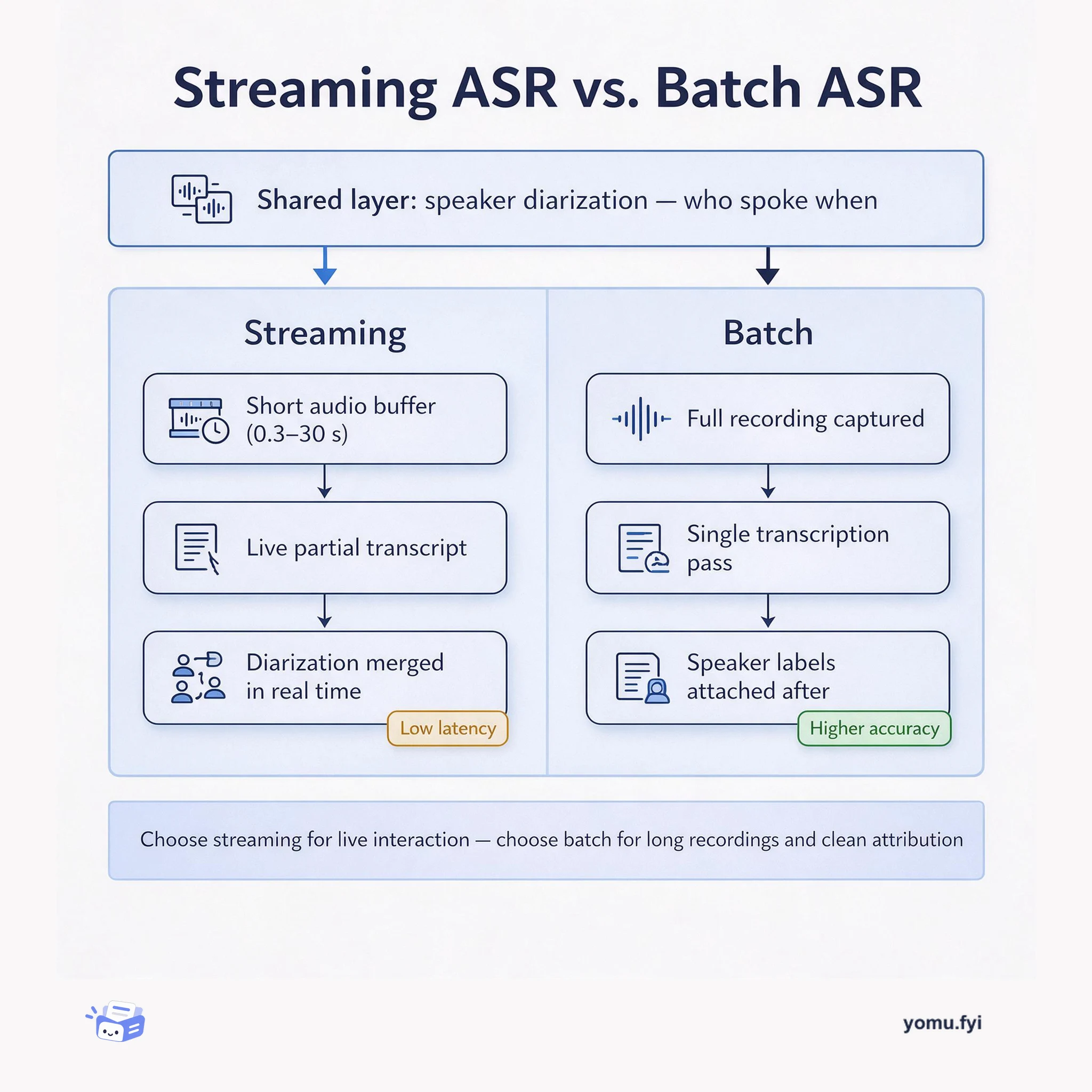
Streaming and batch ASR pipelines compared: how input buffer length, speaker diarization, and where audio is processed trade latency against transcript quality and privacy.
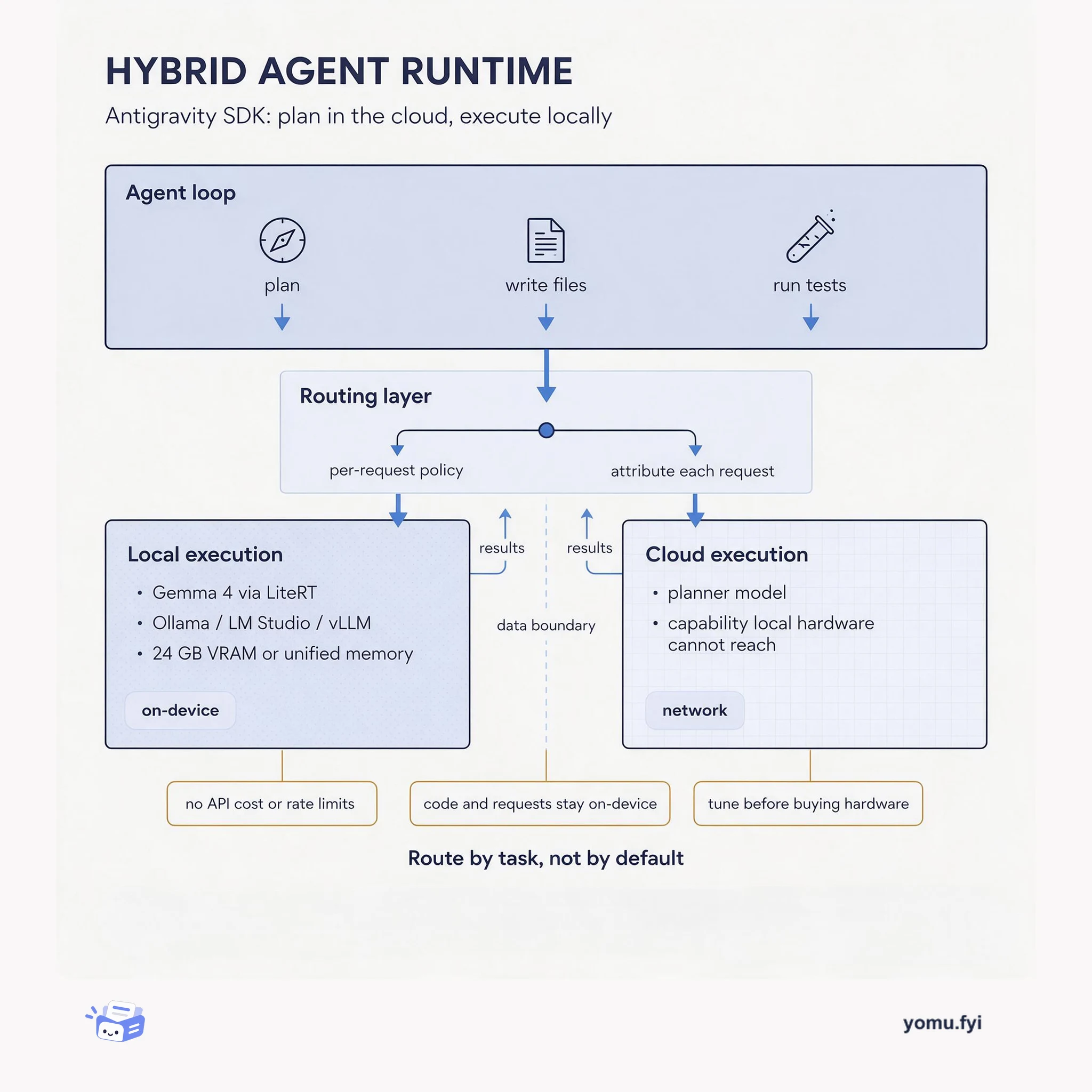
Antigravity SDK's hybrid architecture separates planning from execution: a cloud model plans, local models run most tokens on-device. See how routing, execution, and the data boundary fit together.
The Good Stuff
Paid picks we use ourselves. Links carry a referral code — a subscription through one earns us a commission at no extra cost to you.
Newest first
MongoDB centers its engineering architecture around resilience, intelligence, and simplicity to minimize developer cognitive and operational burdens when building distributed applications. Security is enforced through dedicated clusters in isolated virtual private networks alongside Queryable Encryption, which allows equality and range queries on ciphertext without decryption keys ever leaving the client. High availability is built on replica sets across independent availability zones and multi-cloud topologies, utilizing consensus mechanisms that commit writes only after majority acknowledgment in the active term. Operational friction in artificial intelligence workloads is addressed by integrating vector search directly into the core query engine, eliminating brittle extract-transform-load pipelines and separate vector databases.
Cloud Security Alliance and Noma Security introduced RiskRubric.ai to provide standardized, transparent risk assessments across the open AI model ecosystem. The framework evaluates AI models across six pillars—transparency, reliability, security, privacy, safety, and reputation—using over 1,000 reliability tests, 200 adversarial security probes, automated code scanning, and harmful content evaluations. Each model receives 0–100 scores and A–F letter grades, supplemented by specific vulnerability findings and recommended mitigation strategies to assist deployment filtering. Initial benchmark results across models showed composite scores ranging from 47 to 94 with a median of 81, revealing polarized safety distributions and indicating that security hardening directly correlates with reduced safety risks.
Anthropic is updating its Consumer Terms and Privacy Policy for Claude Free, Pro, and Max users, including Claude Code sessions tied to those accounts. Users can choose whether their data is used to improve Claude and strengthen safeguards against scams, abuse, and harmful content; the change excludes Commercial Terms services and API use. New users choose during signup, while existing users must decide by October 8, 2025; accepting immediately applies the updates to new or resumed chats and coding sessions, and the setting remains changeable in Privacy Settings. For users who opt in, retention will extend to five years, compared with 30 days otherwise, while deleted conversations are excluded from future training; Anthropic says it filters or obfuscates sensitive data and does not sell user data.
Medium’s Daily Digest recommendations were less relevant than the homepage despite identical story sourcing, ranking model, and features, because digest filtering operated with less email-reporting information and was too aggressive. The “Sent in Opened Digest” filter excluded all 15 stories after an email-open signal, even when a reader saw only the first five; Apple Mail Privacy Protection also caused servers to preload messages, making many open events unreliable. Medium removed that filter and reduced the backoff from seven to four days, accepting more repetition while relying on other filtering rules and organic recommendation changes to diversify digests. An A/B test found that experiment users were 10% more likely to convert to paying members and read 7% more on Medium. The post says these results led to more filter investigations, including Bloom Filters, “Hard vs Soft Filtering,” and cross-digest diversification, while recommending audits of products that depend on email-open tracking.
Tinder developed an on-device AI Photo Selector to recommend compelling profile photos directly from a user's camera roll without exposing private assets. To establish a reference face, the system extracts facial landmarks via Apple's Vision framework and normalizes the crop using affine transformations. To prevent funnel drop-offs from mandatory selfies, the architecture includes a fallback mechanism that detects a single recognizable face in existing profile photos. Processing workflows execute concurrently across thousands of local assets while downloading and initializing TensorFlow Lite models in parallel using Combine. A dedicated analytics queue synchronizes operation counts with DispatchGroup to ensure accurate metric capture before the global rollout.
Canva launched DesignDNA in December 2024 as a personalized year-in-review campaign to highlight user achievements and showcase generative AI capabilities. Because internal privacy rules strictly prohibited inspecting personal designs, the engineering and creative teams inferred user preferences from the style and theme metadata tags on public templates. An initial keyword-matching algorithm paired 95% of users with one of seven emerging design trends, while generative AI keyword expansion increased coverage to 99%. The team also synthesized over one million localized poems and distinct design personalities using tools like Magic Write and Dream Lab. Finally, dynamic Canva template elements populated through URL parameters assembled 95 million distinct multi-page stories across nine locales.
Merchants operating across websites, mobile apps, physical stores, and multiple payment processors struggle to connect spending because customers use physical cards, digital wallets, and tokenized methods. Payment Account Reference (PAR), a 29-character alphanumeric identifier introduced by EMVCo, provides a non-financial, non-reversible reference that maps one PAN to multiple tokens without exposing sensitive payment data. Because the PAR is independent of payment method and processor, merchants can link transactions across channels and preserve continuity when a card is replaced with a new PAN. The post presents an omnichannel retail example and describes potential benefits including unified customer profiles, personalization, cross-channel reconciliation, reduced PAN-related PCI burden, and processor flexibility.
Stripe plugins commonly authenticate merchants’ accounts with unrestricted secret API keys, but those keys grant full access and can expose payment, customer, and subscription operations if mishandled or compromised. The post presents restricted API keys (RAK) and OAuth 2.0 as zero-trust alternatives that apply identity verification and least-privilege permissions to third-party integrations. RAKs let developers define narrowly scoped permissions, while OAuth 2.0 uses Stripe’s interface for tokenized, one-click authorization and lets merchants revoke access without sharing a secret key. For existing plugins, it outlines migration through Stripe Apps, Stripe Connect, or manual RAK setup, and states that Stripe will require RAK or OAuth 2.0 authentication from October 29, 2024, with possible fees for merchants still using full-access keys after June 2025.
Global applications can move customer data across borders, making data residency a compliance concern for organizations serving multinational users. The post defines data residency as legal requirements governing where data may be stored and processed, then distinguishes it from data sovereignty’s jurisdictional reach and data localization’s requirement that storage and processing remain within a jurisdiction. It notes that GDPR and CCPA focus on compliant handling and individual rights rather than necessarily mandating storage locations, while China’s Personal Information Protection Law requires certain Chinese citizens’ PII to be stored within China. The proposed approach uses cloud regions to align storage with local requirements, citing Heroku Enterprise Private Dynos across ten regions and Heroku Shield Private Spaces’ PCI, HIPAA, ISO, and SOC certifications; the post concludes that these features can make compliance more achievable while improving control and potentially application performance.
Grab needed to classify sensitive data at the table and column level across petabytes of database tables and streaming schemas. Manual schema-tiering campaigns had resulted in half of all schemas receiving overly strict Tier 1 access controls, while an initial automated service using regex patterns and third-party machine learning produced high false-positive rates and lacked customizability. To address this, the Caspian data engineering and governance teams enhanced their internal orchestration service, Gemini, by integrating GPT-3.5 via Azure OpenAI. Gemini aggregates classification requests into mini-batches, handles API rate limits, and uses prompt engineering—including few-shot examples, curated tag libraries, and explicit JSON DTO schemas—to reliably tag columns for data owner verification.
eBay sets out principles for developing and using AI-powered customer tools and services while addressing safety and community needs. Its framework covers reliability, safety, security, inclusivity, equity, fairness, accountability, lawfulness, privacy by design, and transparency. The company says it rigorously tests AI technologies, protects confidential data used to train or operate systems, includes measures to avoid excluding groups, and applies quality and safety checks to datasets. It also calls for human oversight throughout development, launch, and monitoring, risk-based decisions, regulatory compliance, and privacy-focused design using state-of-the-art methods. For users, eBay says transparency may involve disclosures within an experience or broader communication, depending on lifecycle stage and the audience.
The post explains how browser phaseouts of third-party cookies can affect Okta authentication patterns and session features. Third-party cookies are issued by other domains and can support cross-site session introspection, federated login-related behavior, and convenience features, but browsers increasingly restrict them because of security and privacy concerns. Most Okta core authentication flows do not require them; however, applications using an Okta session across different top-level domains, customer-hosted sign-in experiences, ADSSO, and certain “remember me” functions may lose session introspection or extension while basic authentication and token return remain possible. The post recommends testing with Chrome’s third-party cookies disabled, using feature flags, and migrating away from these cookies before Google’s stated exemption ends in 2024.
This tutorial shows how to build a React Native image-sharing or file-sharing app with Expo SDK49, Supabase Authentication, Expo Router v2, and Supabase Storage. It configures a Supabase project, turns off email confirmation for the tutorial, creates a private files bucket, and adds policies that constrain access to an authenticated user’s own folder. The React Native client stores sessions in AsyncStorage, uses the Image Picker and Expo File System, and initializes Supabase with environment-based URL and public key values. The resulting app supports account creation, sign-in, image selection, listing, download-based display, and deletion; resumable uploads are omitted because the attempted implementation produced files with zero bytes.
Ramp describes principles for building customer-focused AI, contrasting embedded outcomes with superficial chatbot experiences it calls “AI washing.” The approach emphasizes integrating models into workflows, separating general models trained on aggregated and masked data from sensitive models that use private customer data temporarily through in-context learning, and requiring explicit opt-in for sharing contract data. It prioritizes user control and feedback over lengthy explanations, while using guardrails that constrain outputs through predefined interactive data blocks rather than relying only on censorship filters. Ramp cites contract term extraction, spend intelligence, pricing benchmarks, Copilot, and Jsonformer as examples of these practices. The stated goal is AI that saves customers time and money while protecting privacy and producing safer, more useful results.
Data engineers at Grab require real-world streaming data to tune machine learning models, but user personal data cannot be exposed in non-production environments. To solve this, the data streaming team implemented an automated masking pipeline between production and staging Kafka clusters. Developers explicitly tag Personally Identifiable Information (PII) types in Protocol Buffers schemas, which a CI script validates against a keyword list before packaging the schemas into Scala JARs. An in-house Apache Flink application running in production consumes the unmasked streams, applies dynamic and consistent transformations like keyed HMACs or seeded random values, and produces sanitised records to staging. Untagged new fields in schema updates are automatically dropped by the deserialiser until the masking application is redeployed, preventing accidental data leaks.
Supabase's December 2022 beta update recaps Launch Week 6, Community Day, Postgres ecosystem work, and other recent releases. The announcements include redesigned documentation rebuilt with Next.js; Storage v2 features for image resizing, webhooks, and a Smart CDN; and multi-factor authentication with optional enforcement through Row Level Security. Supabase Wrappers extend PostgreSQL Foreign Data Wrappers to query external databases, systems, and third-party APIs using SQL, while The Vault enters beta for encrypted secrets and stored data. The update also announces custom domains, point-in-time recovery, SSO on the dashboard in preparation for SAML, and ecosystem projects including pg_graphql v1.0, a PostgREST 11 pre-release, and an experimental pg_crdt extension.
Ruby’s VCR library records HTTP interactions and replays them in test suites, verifying requests and returning predictable responses; the post presents it as a way to manage complex WebMock stubs and multi-step or unreliable API behavior. It contrasts recordings from a live API with manually authored stubs: cassettes preserve observed behavior at recording time but are harder to change and do not update when the API changes. The guidance covers VCR.use_cassette, configurable request matching, YAML cassettes, before_filter logging, filter_sensitive_data, and safer recording modes such as :once and :none instead of :new_episodes. It recommends VCR for integration-focused tests involving unpredictable sequences, multiple calls, or troublesome APIs, while favoring WebMock or decomposition for simple calls and specific states; cassette isolation and inspection add debugging value but can hide interactions.
Supabase Vault is a Postgres extension and accompanying dashboard UI for storing encrypted secrets and encrypting data in database tables, released progressively across the platform and later made available on all Supabase projects. It stores secrets and encryption keys using authenticated encryption on disk, exposes decrypted secrets through a Postgres view, and lets applications use them from SQL in functions, triggers, and webhooks. Its foundation is pgsodium Transparent Column Encryption (TCE), which can encrypt text or bytea values, authenticate associated row columns, and create row-by-row decryption views for encrypted columns. Encryption keys are kept outside the database while only key IDs are stored with encrypted data; Supabase manages root keys in internal backend systems and offers an alternate dashboard endpoint for external decryption, while the post also outlines possible future end-to-end, group, and public-key encryption features.
Grab's Geo team required an efficient, low-cost way to collect fresh street-level imagery across Southeast Asia, where professional mapping equipment is prohibitively expensive and smartphone crowdsourcing yields inconsistent quality. To address this, Grab built KartaCam, a custom mapping device equipped with a 12MP sensor, dual-band GNSS, 4G LTE, and onboard edge AI. Edge machine learning models evaluate scene suitability, check image quality, filter for map-relevant objects, and blur personal data directly on the device prior to upload. Deploying a four-camera KartaCam 360 array delivers panoramic coverage and point-of-interest data comparable to commercial mapping rigs at roughly one-twentieth the hardware cost.
Security integrations with URLScan can accidentally index sensitive links when API calls are executed with public visibility. Tinder Security Labs constructed targeted queries to uncover exposed links across file-sharing services, enterprise ticketing platforms, and single sign-on portals. Investigations revealed that exposed links included document magic links containing contracts and bank details, as well as active new-hire registration links that allowed attackers to complete registration workflows and configure two-factor authentication. In one SSO query alone, researchers discovered 1,300 indexed invitation links, with 20 to 50 new links appearing daily. The researchers collaborated with URLScan to purge the exposed indexes from public searches and advised organizations to configure security scanning tools to use private or unlisted visibility settings.
The best engineering reads, once a week.