Databricks
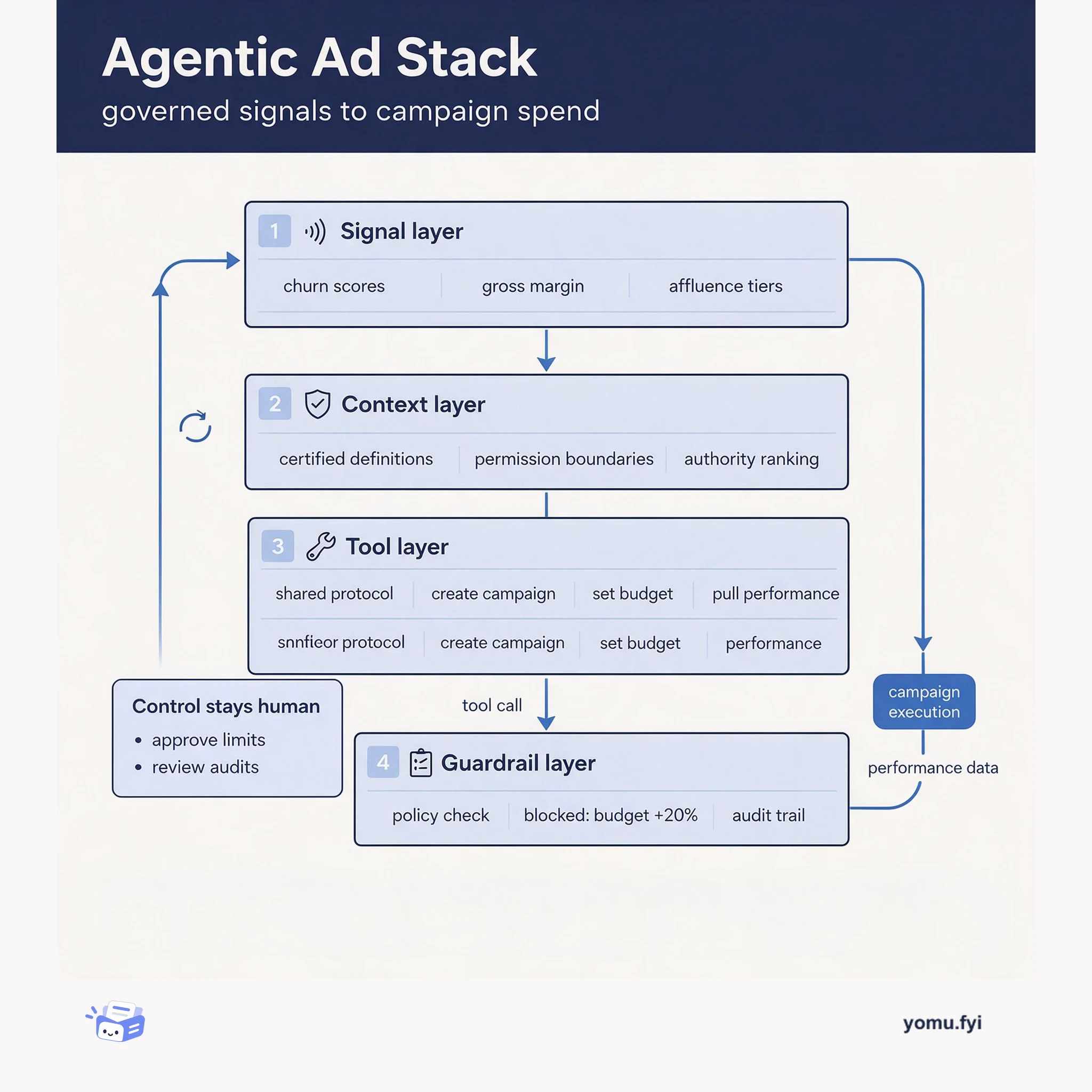
Databricks has announced general availability of the Genie One Model Context Protocol (MCP) server, now a managed service within Unity Gateway with centralized governance, fine-grained policies, and audit logging across every invocation. The MCP provides a single governed interface for any AI agent to access structured and unstructured data from Genie One, grounded in governed business context from Genie Ontology, eliminating agent sprawl and inconsistent answers. It exposes tools for asking questions, getting query results, checking incremental progress, and steering responses, with an optional MCP App for real-time interactive visualizations and Genie Ontology citations. Connected agent clients automatically interpret domain semantics via Genie Ontology across relational data and document repositories without custom connectors. Use cases include enriching slide creation with richer data, bringing customer usage context to outreach agents, and integrating business definitions into developer workflows, as noted by GetYourGuide.
Databricks
Business leaders often have access to plenty of data but still cannot get a reliable answer to a simple question like why net revenue declined 8% at their largest account last week. The answer may span sales, finance, promotions, inventory, and account data, with each source potentially correct in isolation yet different in definitions, detail, relationships, and authority. Without the right business context, general-purpose agents cannot reliably determine what metrics mean, which sources are authoritative, how data should connect, or what each user is allowed to see. Genie One MCP gives governed context to any MCP-compatible AI agent, connecting assistants like ChatGPT, Claude, Microsoft Copilot, and coding agents to Genie One. This lets them answer business questions using approved definitions, trusted data relationships, and permission-aware access controls, with traceable, permission-aware answers grounded in governed business context.
 Red Hat
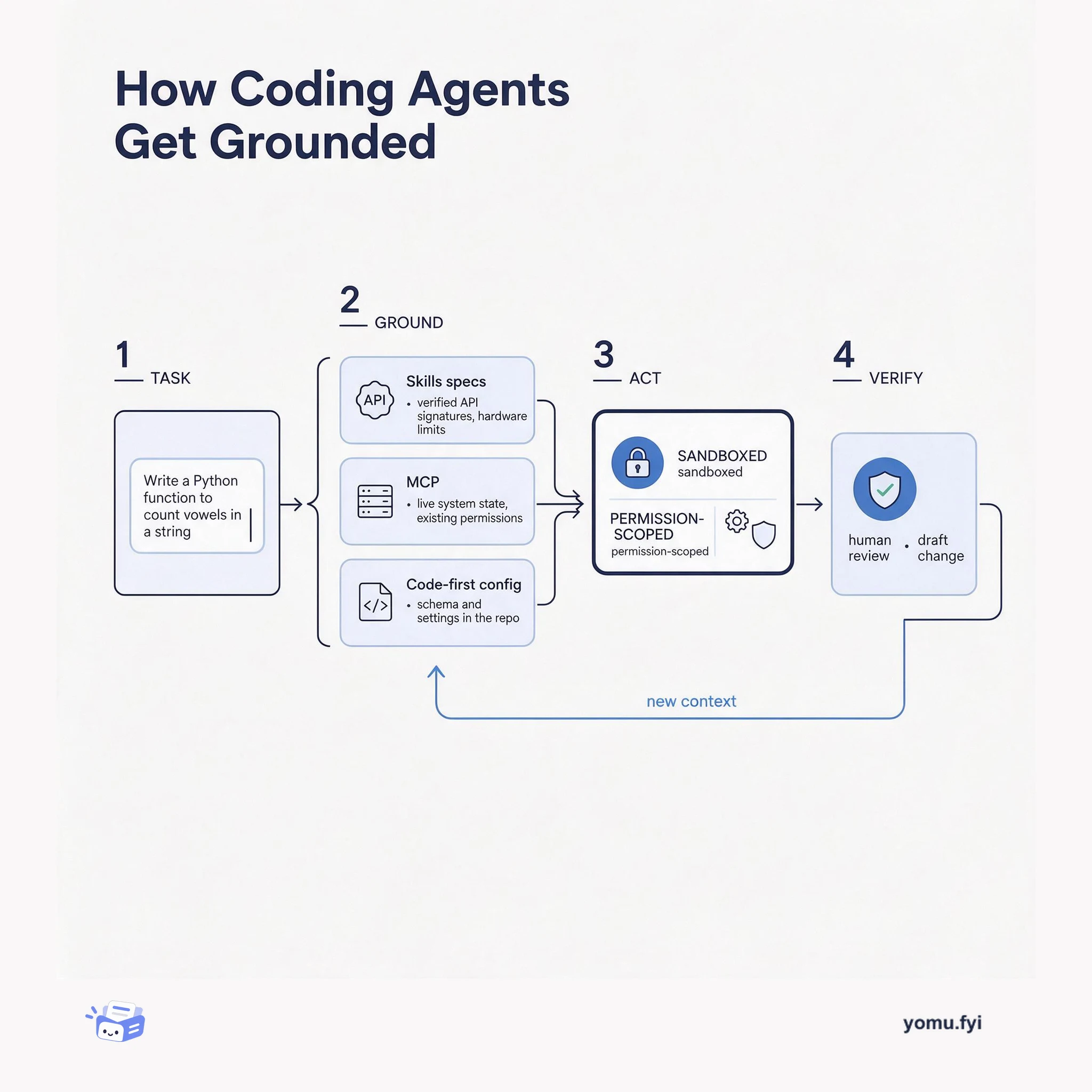
The article demonstrates extending Red Hat OpenShift Lightspeed by integrating the Red Hat Satellite MCP server and bring your own knowledge (BYOK). The Satellite MCP server exposes live operational data, such as kernel versions, CVEs, and errata, through the Model Context Protocol. BYOK enriches the assistant with private enterprise knowledge, enabling retrieval-augmented generation (RAG) to combine internal documentation with infrastructure data. The integration requires installing the OpenShift Lightspeed operator and deploying the Satellite MCP server in the openshift-lightspeed project. Authentication is handled by storing the header value in a Secret, and the MCP server expects clients to include appropriate Accept headers for the text/event-stream media type.
 Stripe
Stripe implemented WebMCP on its Checkout UIs, which processes around 0.45% of global GDP, to optimize the buying experience for AI agents. Previously, agents relied on slow browser automation, consuming an average of 1.8 million tokens and 38.83 tool calls per transaction, taking over 2.5 minutes. WebMCP exposes MCP tools from the client side, allowing agents to execute actions like get_order_summary or fill_payment_form instead of interpreting the DOM. The implementation uses progressive tool disclosure, revealing only relevant tools; in evaluations across six models, agents using WebMCP consumed 42% fewer tokens, made 38% fewer tool calls, and completed checkout 39% faster. Stripe reused existing UI state and forms via imperative and declarative APIs, avoiding a separate agent-only code path and keeping human and agent experiences aligned.
 Resend
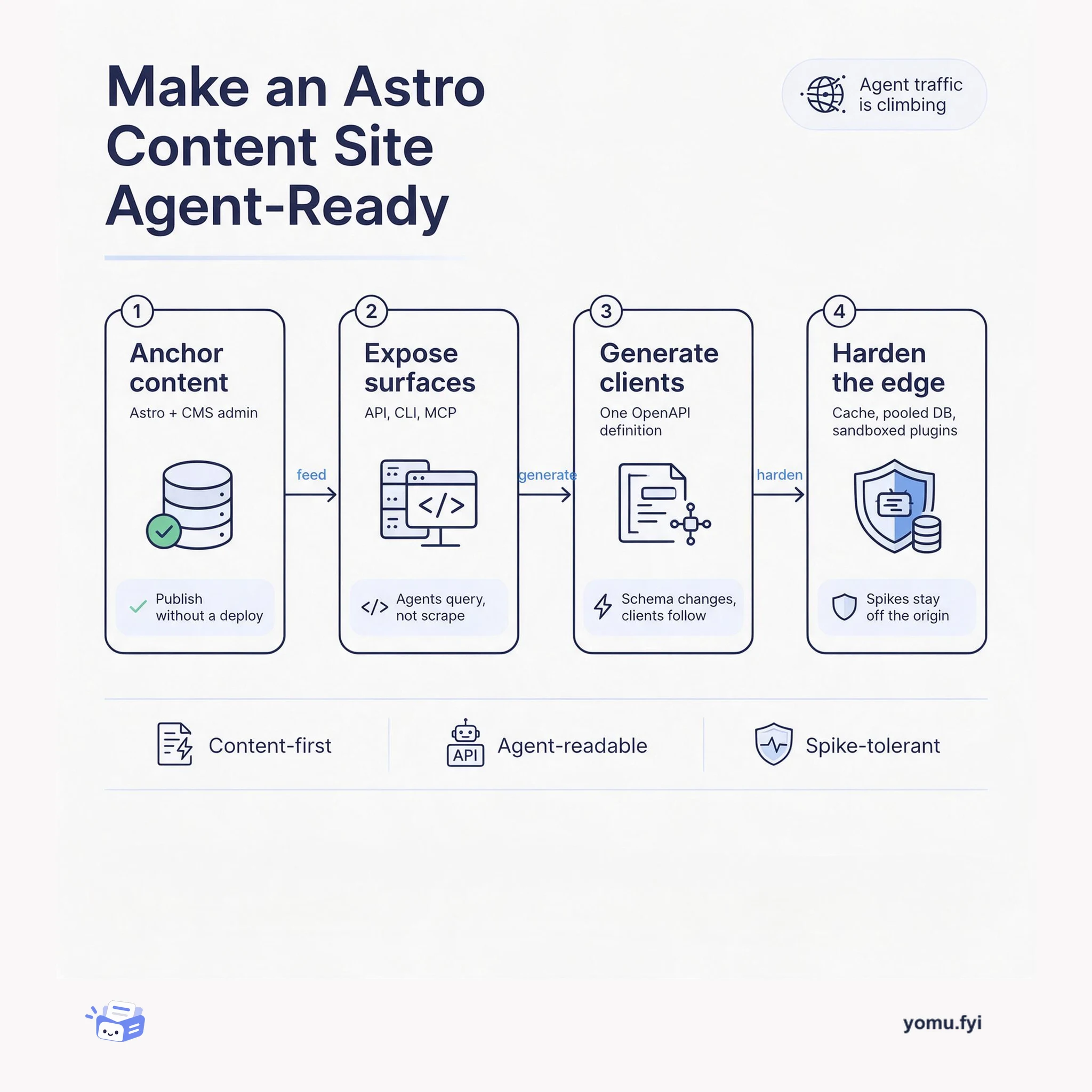
Resend announced a headless dashboard initiative to make all dashboard capabilities available programmatically via the MCP, CLI, and API. Recent releases include the Email Metrics API for deliverability and engagement data, a Headless Webhook API for listing events and replaying deliveries, and a Cancel Broadcast API. The Duplicate Broadcast API copies any broadcast into a draft, and the Share Email API provides expiring read-only email links. The team aims to make the dashboard best-in-class while committing to full headless operation for every future entity. Developers can start building today by connecting the MCP server or using the CLI.